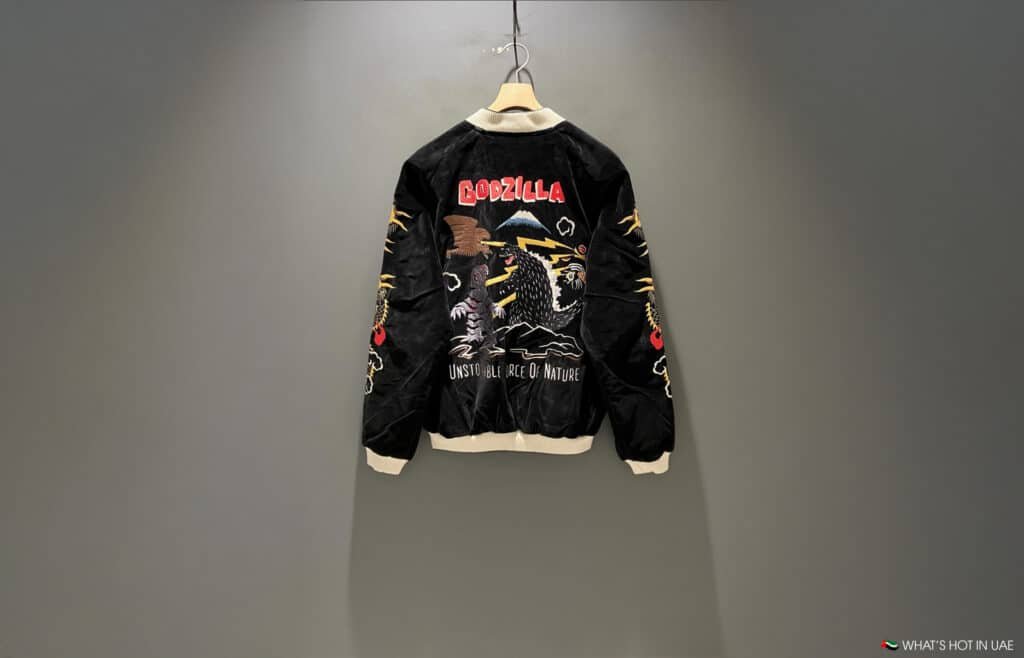
The back is the reason I’d choose this jacket. A little Godzilla badge would have been the easy option. The BEAMS JAPAN x Tailor Toyo sukajan goes for a whole monster scene, with colour and movement against black. I love that it commits. This is the jacket I’d build an otherwise quiet outfit around—not a purchase I’d justify by predicting its resale value.
There is a practical distinction to settle straight away: the January 2026 Japanese launch is history, not an upcoming online drop. The buying question now is whether a specific offered jacket has the size, condition and delivered price you want. Below are the design details worth paying attention to, the original release rules and the outfit I’d choose for a UAE evening.
What a sukajan is—and the history worth keeping
A sukajan is a souvenir jacket associated with embroidered imagery and a baseball-jacket outline. Tailor Toyo’s own history traces its origins to post-war souvenirs for American servicemen. The maker describes acetate used when silk was difficult to obtain—not a universal story that every early jacket was made from leftover parachute silk. That distinction is worth keeping when explaining the garment.
The same history connects the later “sukajan” name with jackets sold around the Yokosuka base and their spread among Japanese young people. What I like about the Godzilla version is that it gives the souvenir format a very particular subject. You do not need to care about fashion-anniversary collecting to enjoy a jacket full of monsters.
Why Tailor Toyo belongs in this collaboration
Tailor Toyo connects that history to its predecessor, Kosho & Co. It is a relevant maker for this format, not simply an unrelated label added to the sleeve. That background explains the collaboration; it does not let us certify the stitching or condition of an unseen jacket being offered today.
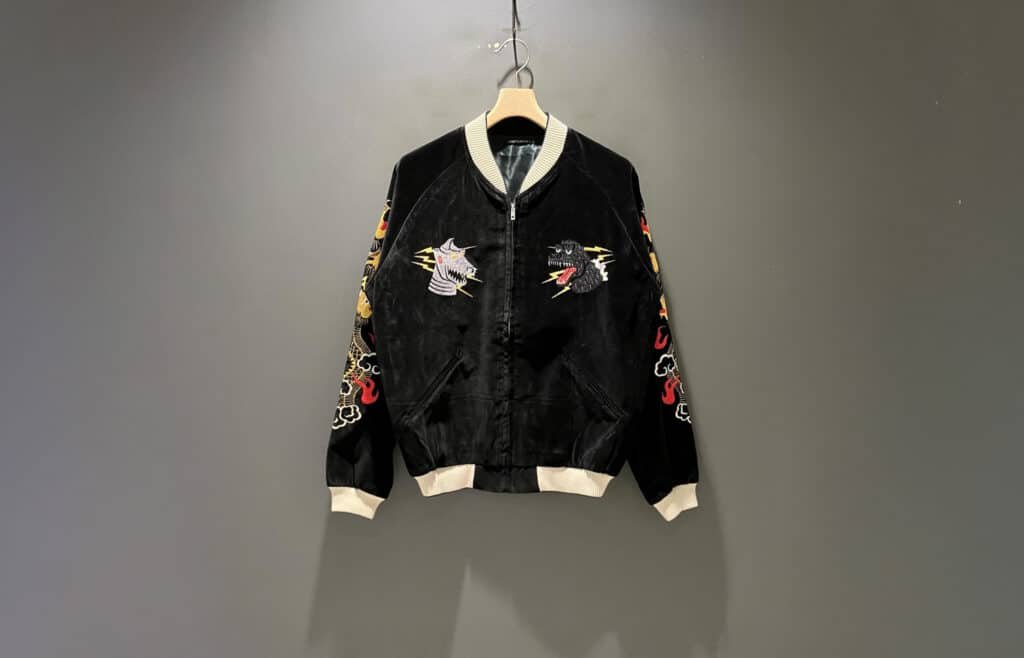
For me, the design earns its attention in the balance between the compact chest motifs and the much busier back. The front gives you two clear focal points; the reverse view rewards a longer look. I’d judge an actual example by the embroidery, seams and overall shape in its own photographs, rather than treating the maker’s reputation as a substitute for looking.
The BEAMS anniversary and the licensed design
This was part of BEAMS’ 50th-anniversary programme, not the BEAMS JAPAN project turning 50. The official notice describes a specially commissioned jacket and artwork. It also identifies Grace’s planning and manufacture under a Toho merchandising agreement. Here, the Godzilla connection has a stated licensing basis; it is not merely a nickname applied by a seller.
Why the artwork matters more to me than the anniversary
I find the monster choice more persuasive than the anniversary number. A date on a label is interesting to a collector, but it does little for an outfit. The artwork is what makes me want to turn the jacket over and look again. If that is not your reaction, a plainer souvenir jacket is the more sensible comparison.
A monster pairing, not one fixed film interpretation
The chest pairing sets up an immediate contrast: a monster and its mechanical counterpart. You can enjoy that image without assigning one fixed meaning to every film in the series. The histories change between incarnations. A useful guide should tell you what is on the jacket, not pretend the embroidery is a definitive explanation of the entire franchise.
This is why I prefer it to a large flat logo. There is something to follow from the chest to the sleeves and around to the back. That makes the jacket interesting from more than one angle. It also means a seller’s single front-on photograph is nowhere near enough to assess the design you are buying.
Front, sleeves and back: inspect the whole jacket
Look at the layout before getting distracted by rarity language. These are the three views I’d ask for when considering an offered jacket:
Where the monsters appear
The official artwork places the characters across the garment rather than confining the whole idea to the back. The layout is:
- Front: Godzilla faces Mechagodzilla across the chest.
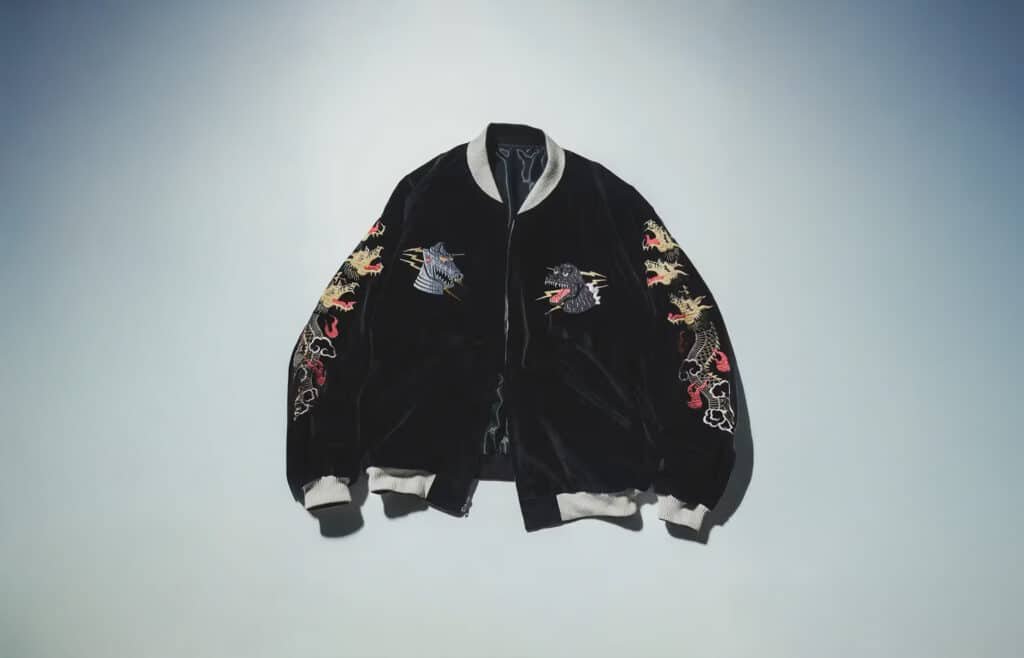
- Sleeves: King Ghidorah extends the monster theme along the arms.
- Back: Rodan, Mothra and Hedorah appear with Mount Fuji and the Godzilla title.
The back is my favourite view because the scene gives the eye somewhere to travel. In the retained image, the large red title sits above the monsters and mountain, while the pale ribbing frames the black body. I’d keep the rest of the outfit simple enough for those contrasts to stay visible.
Black velveteen and a plain reverse
BEAMS specifies black velveteen, a little extra body width and no padding. Those details matter more than calling it “premium” three times. They still do not establish how warm it will feel on a particular evening. Start with a light top and compare the actual measurements before planning a heavier layer underneath.
The plain black reverse gives the design a quieter alternative. I like having that choice, but I would not buy the jacket just to hide the artwork most of the time. Nor does “reversible” establish that both surfaces are velveteen. The care and composition labels on the actual garment are the place to settle that question.
A quick guide to the characters
The characters are easier to identify when you know their distinct shapes. The links below go to the franchise’s own Monsterpedia entries; film histories should not be collapsed into one universal storyline.
- Godzilla: the central monster reference. On the front, compare its organic outline with the mechanical figure opposite; those differences make the pairing work at a smaller scale.
- Mechagodzilla: the robotic counterpart has different origins across the films, including alien and human-made versions. Do not turn that changing history into one fixed explanation of the jacket.
- King Ghidorah: the three-headed dragon. Following its shapes along the sleeves is more rewarding than treating them as anonymous decorative dragons.
- Rodan: the pterosaur-like kaiju. The winged outline helps distinguish it from the other figures when inspecting the back scene.
- Mothra: the moth kaiju associated with protection and Infant Island. Look for the wing pattern rather than confusing every flying figure with Rodan.
- Hedorah: the pollution-feeding Smog Monster. Its irregular form provides a different shape from the winged characters in the same design.
The original release—not a live shopping offer
Ignore any instruction to mark your calendar for this release. The original sale has already happened. First identify a real offer, then decide whether you want this design enough to pay its total—not whether a launch article tells you to move quickly.
The Japanese launch price
The announced price was ¥90,200 including Japanese tax, with sizes S–XXL. It is not a UAE retail quote. For a current offer, add delivery, conversion and any applicable import charges to the actual asking price. A completed-sale record and a seller’s hopeful asking price are not the same evidence.
The January 2026 Launch Date
The launch date was 2 January 2026. It should not still be presented as a forthcoming opportunity or as 50 years of the BEAMS JAPAN project.
The Original Three-Store Release
The named stores were BEAMS JAPAN Shinjuku, Kyoto and Shibuya. The rules declined reservations, transfers to other stores and mail-order cash-on-delivery purchases. That is different from a guaranteed global website drop. For remaining retail stock, ask the store; for resale, identify the seller and transaction terms. We have not confirmed current size-specific stock or a UAE checkout.
How I’d wear it: keep everything else quiet
My outfit choice is a plain white tee, dark straight trousers and black low-tops. The light top picks up the pale trim without competing with the embroidery. There is already plenty happening on the jacket; it does not need a printed shirt trying to join the conversation.
For a darker evening look, I’d swap to a black tee and charcoal trousers. Keep enough distinction in the trouser colour or texture that the outfit does not become one flat block. A hoodie is an option only if you want the extra layer and the actual jacket has room for it. “Slightly roomy” is not a promise that every hoodie fits underneath.
Use the plain side when you genuinely want a less conspicuous outfit, rather than assuming it turns this into a formal jacket. Photograph both sides before a used purchase. On the embroidered side I’d examine loose threads, snags and the areas near the pockets; on the reverse I’d look for stains and wear that a front-only listing can conceal.
My design verdict: 4/5, with a clear buyer in mind
My design verdict: 4/5. The chest-to-back composition is the strength: a proper character-led design rather than a souvenir label doing all the work. It loses the last point for wardrobe flexibility. I’d reach for it when I wanted the jacket to be the centre of attention, not as a neutral layer for every occasion. This is a design judgment from the imagery and specification, not an in-hand quality or comfort test.
For a Godzilla fan who already wears bold outerwear, the attraction is obvious. There are details to enjoy beyond the first glance. For someone who only likes an occasional discreet reference, this is a lot of jacket. I’d choose a smaller piece of merchandise rather than pay for an embroidered side I planned to conceal.
For a souvenir-jacket collector, compare the actual garment rather than anniversary language alone. Is the outline what you want? Do the sleeves and body measurements suit the layers you wear? Is the embroidery intact? The commemorative context is useful, but it cannot answer those questions on a secondhand listing.
A high asking price needs more justification than “rare”. Set a budget for the jacket you would actually wear, including delivery, before making an offer. I would not buy this on the assumption that the collaboration, materials or reversibility guarantee a future profit. None of those establishes what another buyer will pay later.
| What you want from it | My recommendation | The deciding check |
|---|---|---|
| A jacket that leads a plain outfit | This is the strongest reason to choose it. | Clear back and sleeve photographs, plus the fit over your usual light top. |
| A discreet everyday Godzilla reference | Choose something less conspicuous. | Whether you genuinely want to wear the embroidered side. |
| A collector’s example | Assess the offered garment, not a generic rarity claim. | Both sides, measurements, condition, labels and the total price. |
My recommendation: buy the artwork, not a resale promise
Buy it for the back artwork—and be ready to let it lead. That is my recommendation. The design has enough personality to carry a plain outfit, and the front remains interesting when the back is out of view. It does not need a story about guaranteed investment returns to make it worth considering.
Before paying for a used jacket, ask for clear front, back and reverse photographs, plus close-ups of the cuffs, waistband, zip, seams and labels. Get measurements from that example, not a generic size chart copied from a different sukajan. Alterations and wear can make a label size a poor guide to the fit you receive.
For a UAE evening, a light base layer is where I’d begin. Check the care label before cleaning: the pile and embroidered areas deserve more thought than an ordinary sweatshirt. If the seller cannot show the condition of both sides, wait for an offer that lets you judge the whole jacket. The artwork is the reason to buy it; the evidence should let you see it properly.
Questions answered
Was the Godzilla jacket an online-only release?
No. BEAMS announced the January 2026 launch at its Shinjuku, Kyoto and Shibuya BEAMS JAPAN stores.
Whose 50th anniversary does it mark?
BEAMS’ 50th anniversary, not 50 years of the BEAMS JAPAN project.
Is ¥90,200 a UAE price?
No. It is the announced Japanese tax-inclusive launch price. Delivery and import costs need separate checks.
Does the jacket reverse?
Yes. The official design has a plain black reverse; inspect both sides when buying a used example.