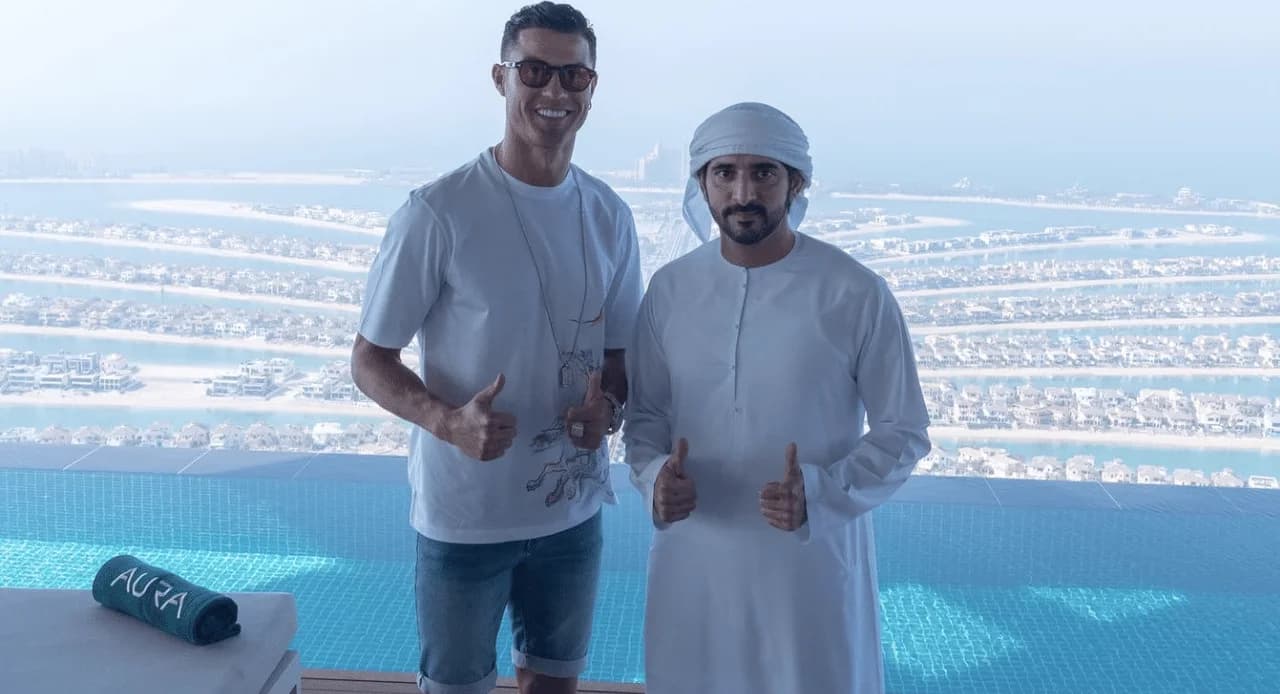
Cristiano Ronaldo’s name is a byword for football greatness. We’ve all seen the highlight reels, the gravity-defying goals, and the trophy lifts. It’s easy to praise his success, to label him a “natural talent” or a “born winner.” But this superficial admiration misses the point entirely. It fails to answer the most important question: how…
Cristiano Ronaldo’s name is a byword for football greatness. We’ve all seen the highlight reels, the gravity-defying goals, and the trophy lifts. It’s easy to praise his success, to label him a “natural talent” or a “born winner.” But this superficial admiration misses the point entirely. It fails to answer the most important question: how did he do it? How did a scrawny boy from the small island of Madeira engineer one of the most dominant careers in the history of sports?
The truth is, Ronaldo’s journey to becoming number one is not a mystery; it’s a doctrine. It’s a carefully constructed blueprint built on a foundation of extreme adversity, relentless physical engineering, and an unbreakable psychological framework. Most content only scratches the surface, admiring the finished product without deconstructing the process. This is where we go deeper.
Welcome to The Ronaldo Doctrine. This is the definitive, evidence-based deconstruction of how Cristiano Ronaldo built himself into a global icon. We will move beyond praise to provide an actionable blueprint, analyzing the crucible moments that forged his character, the scientific anatomy of his physical dominance, the psychological pillars of his winning mindset, and the data-driven timeline of his record-breaking journey. This is a masterclass in achieving and sustaining peak performance.
The Crucible: How Early Adversity Forged a Champion’s Resilience
Before the global brand and the record-breaking statistics, there was a boy defined by struggle. Cristiano Ronaldo’s legendary resilience wasn’t an innate trait; it was forged in a crucible of profound challenges. To understand his success, we must first understand how he learned to transform adversity—loneliness, a career-threatening health scare, and devastating personal loss—into the very fuel for his relentless drive.
Leaving Home: The Sacrifice of a Boy from Madeira
At an age when most children are still firmly rooted in the comfort of home, Cristiano Ronaldo made a life-altering decision. As a young teenager, he left his family on the island of Madeira to join Sporting Lisbon’s prestigious football academy on the mainland. This move was the first and perhaps most significant sacrifice of his career.
The distance was more than just geographical; it was an emotional chasm. Ronaldo has spoken openly about the immense loneliness he experienced, often crying daily as he struggled to adapt to a new life far from his family. Yet, it was in this isolation that the seeds of his legendary determination were sown. He channeled his homesickness into an obsessive focus on the one thing he could control: his performance on the football pitch. This early, painful experience taught him a foundational lesson in overcoming football adversity: that sacrifice and discipline were the non-negotiable price of his dream.

The Heartbeat of a Champion: Overcoming a Career-Threatening Condition
Just as he was beginning to make a name for himself in Sporting’s youth system, Ronaldo’s journey nearly came to an abrupt end. At age 15, he was diagnosed with tachycardia, a condition characterized by a racing heart that could have forced him to abandon football forever. For a young athlete whose entire future depended on peak physical conditioning, the diagnosis was devastating.
However, where many would have seen a roadblock, Ronaldo and his family saw only another obstacle to overcome. He underwent a delicate laser surgery to correct the heart pathway causing the issue. The procedure was a success, and he was back in training just days later. This was a pivotal moment. Facing the potential end of his career before it had truly begun, he confronted the challenge with the same resolve he would later show on the pitch. This health scare solidified his resolve, transforming a moment of vulnerability into a sign of his unwavering commitment.
Personal Tragedy and Professional Drive: The Impact of His Father’s Death
In 2005, as a rising star at Manchester United, Cristiano Ronaldo faced his deepest personal challenge. His father, José Dinis Aveiro, passed away from an alcoholism-related liver condition. Ronaldo was just 20 years old, establishing himself on the world stage while grappling with immense grief.
He has often expressed regret that his father never got to see the full height of his success. Yet, this profound loss became a powerful motivator. Instead of derailing his career, the tragedy sharpened his focus and intensified his professional drive. He channeled his pain into performance, using his father’s memory as a source of strength and inspiration. This period cemented a core tenet of his character: the ability to compartmentalize personal pain and use it as fuel, turning a story of loss into a narrative of relentless ambition and tribute.
The Anatomy of a Champion: Deconstructing Ronaldo’s Physical Dominance
What makes Cristiano Ronaldo so good? The answer lies in a combination of God-given talent and, more importantly, a man-made physical machine engineered through an unmatched work ethic. His dominance is not accidental; it is the result of a scientific, decade-spanning project to build the perfect athlete. By dissecting his training, diet, and physical evolution, we can assemble the blueprint for his superhuman physicality.
A televised performance demonstration is not the same as a published comparison showing Ronaldo jumps higher than an average NBA player. Specific physical measurements need the test protocol and a documented comparison. His aerial technique can be discussed through his football career without turning a documentary scene into a universal physiological finding. Timing, movement, training and the quality of the incoming ball all matter. This is career analysis, not a laboratory assessment of his body.

Training, Diet and Recovery: What This Guide Can Establish
There is no verified current weekly training plan in this article. A professional player’s routine changes with matches, travel, injury and coaching decisions. The checklist below is general context about training categories, not a prescription copied from Ronaldo. Do not treat a supposed three-to-four-hour daily schedule or a named workout circuit as the route every reader should follow. If applying the broader lesson of consistency, use a plan suited to your own health, experience and goals rather than imitate an unsupported elite-athlete timetable.
A sample weekly schedule often includes:
- Warm-ups: Crucial for injury prevention, including mobility exercises like hip twisters and side-lying T-stretches.
- Gym work: Strength and conditioning are categories of professional preparation. This article does not establish Ronaldo’s specific weekly circuits or a programme appropriate for every reader.
- On-Pitch Training: Focus on technical skills, including high-intensity drills (HIIT) that improve stamina and tactical awareness.
The article does not establish a current personal diet plan or prove that six meals increase metabolism. A professional athlete’s nutritional needs depend on workload and individual circumstances. The useful lesson is preparation and consistency, not a universal meal count or an assumption that avoiding one food recreates a player’s career. Readers making substantial training or dietary changes should use qualified advice appropriate to their own needs. Celebrity routines are not a substitute for that assessment.
Recovery matters, but there is no verified nightly sleep schedule or clinical finding here showing that Ronaldo’s reported use of cryotherapy makes it necessary for other people. Rest, load management and injury assessment should be appropriate to the individual. An expensive recovery device or a celebrity association does not establish a guaranteed benefit. We would take the broader lesson of allowing time to recover while avoiding a claim that one technique explains a career’s longevity or is required to train well.
The Physical Evolution: From Scrawny Winger to Superhuman Athlete
When Ronaldo arrived at Manchester United in 2003, he was a talented but physically slight teenager. He knew that to compete in the punishing English Premier League, he needed to transform his body. This marked the beginning of his evolution from a “scrawny teenager” to a “superhuman athlete.”
Under the guidance of figures like former Manchester United conditioning coach Mick Clegg, Ronaldo dedicated himself to the gym. Clegg noted Ronaldo’s unique obsession with becoming a complete physical specimen. He wasn’t just training for aesthetics; every exercise had a purpose—to build functional strength, explosive power, and core stability. He famously added significant muscle mass during his time at the club, a transformation that allowed him to withstand physical challenges from defenders, improve his aerial ability, and generate incredible shot power. This conscious decision to build his body was a cornerstone of his Cristiano Ronaldo success story.
A Technical Masterclass: Analyzing His Signature Skills
Ronaldo’s raw physical attributes are translated into devastating on-field weapons. His technical skills are not just impressive; they are a direct result of his physical conditioning.
- Aerial Dominance: Standing at 6 feet 1 inch (1.85 meters) and known for his aerial play, Ronaldo is one of the most formidable headers of the ball the game has ever seen. His ability to hang in the air, powered by his immense leg and core strength, allows him to out-jump defenders and score crucial goals.
- Unstoppable Shot Power: His signature “knuckleball” free-kick, which dips and swerves unpredictably, is a product of technique and pure power. The technique involves striking the ball with minimal spin, but it is his powerful leg muscles and core stability that generate the velocity to make it so effective. Football academy analysis highlights how this technique requires a unique combination of precision and force that few can replicate.
- Intelligent Movement: As his career has progressed, his explosive speed has evolved into intelligent, efficient movement. The 2011 tests also revealed his remarkable cognitive ability to anticipate the ball’s trajectory even in the dark, showcasing a mind-body connection that allows him to be in the right place at the right time.

The Unbreakable Mind: Four Themes of Ronaldo’s Winning Mentality
The mental aspects of a long sporting career can be considered without assigning an undocumented therapy programme to the player. There is no supporting club record here that Ronaldo underwent Stress Inoculation Therapy or a defined five-part psychological treatment. The following four sections are editorial observations about self-belief, improvement, coping and leadership. They are not a diagnosis, an interview with his sports psychologist or proof of a personal clinical regimen. The value is in considering practical habits, not inventing professional credentials behind them.
The mental habits of champions like Ronaldo are what separate them from the merely talented. By deconstructing his mentality, we can understand the psychological engine that drives the Cristiano Ronaldo success story.
Pillar 1: Unshakable Self-Belief
Ronaldo possesses a level of self-belief that borders on the absolute. It is often mistaken for arrogance, but it is the foundational element of his performance. He has famously stated, “In my mind, I am the best.” This is not just a boast; it is a core operating principle. This unshakable confidence allows him to demand the ball in high-pressure moments, to attempt the audacious shot, and to step up for the decisive penalty kick when the weight of the world is on his shoulders. This belief is reinforced by his obsessive preparation, creating a feedback loop where hard work validates his confidence, and confidence fuels his desire to work even harder.
Pillar 2: Obsessive Continuous Improvement
For Ronaldo, “good enough” is never enough. His career is a sign of a relentless pursuit of perfection. This is the growth mindset in its purest form. Former teammates have countless stories of him being the first to arrive at training and the last to leave. He obsessively works on his weaknesses, whether it was spending countless hours perfecting his weaker left foot early in his career or refining his free-kick technique until it became a lethal weapon. This obsessive drive for improvement is what has allowed him to adapt his game over two decades, evolving from a tricky winger into the most prolific goal-scorer in history.

Pillar 3: Resilience Through Mental Conditioning
Pressure is part of elite football, but this page cannot establish the clinical method Ronaldo personally used. The general steps below illustrate ways a coach might discuss preparation; they should not be presented as his documented therapy history. A missed chance, criticism or a demanding match can be handled in many ways, and one player’s public response does not reveal every private coping strategy. We would focus on a specific, manageable habit—reviewing a mistake and returning to the next task—rather than promise immunity to pressure.
- Conceptualisation: Identifying stressors, such as crowd noise, media criticism, or a missed chance, and recognizing negative self-talk.
- Skills Acquisition: Learning and rehearsing coping mechanisms, such as positive self-talk (“I will score the next one”) and relaxation techniques to manage anxiety.
- Application: Applying these skills in simulated high-pressure situations, like practicing penalties with recorded crowd noise, to practise handling pressure.
These general concepts do not establish the personal method behind his ability to bounce back immediately from a mistake and to perform at his best when the stakes are highest.
Pillar 4: Leadership by Example
Over his career, Ronaldo’s leadership style has evolved. While always a dominant personality, he grew from an individualistic turning point into a veteran captain who inspires and raises those around him. His primary mode of leadership is through action. When teammates see the best player in the world putting in the most work, it raises the standard for the entire squad. Anecdotes from former teammates at Real Madrid, Juventus, and Manchester United consistently highlight how his professionalism, discipline, and sheer will to win created a culture of excellence and accountability.
The Record-Breaking Journey: A Data-Driven Timeline of Greatness
Use dated records rather than a live total without a source. Guinness lists 146 international goals through 2 July 2026. The Saudi Pro League’s renewal announcement confirms an Al Nassr contract through 2027. Club titles, tournament results and wealth estimates are separate records. Different records need their own dates and definitions. A career can be exceptional without attaching an unsupported current achievement to every sentence.

Manchester United: The Making of a Superstar (2003-2009)
Under the mentorship of Sir Alex Ferguson, Ronaldo transformed from a raw, flashy winger into a lethal and efficient forward. This period was about developing his potential. Ferguson instilled in him a greater tactical discipline and a focus on end product. The culmination of this development came in the 2007–08 season, where he scored an astonishing 42 goals in all competitions, including 31 in the league, earning him the European Golden Shoe. This prolific season powered Manchester United to a Premier League and UEFA Champions League double and secured Ronaldo his first Ballon d’Or in 2008, officially anointing him the best player in the world.
Real Madrid: The Goal-Scoring Machine (2009-2018)
Real Madrid provides a direct record for his 2009–18 spell: the club credits him with 451 goals in 438 competitive appearances. Other statistical providers count 450, so the source and counting convention should be identified rather than silently treating every total as interchangeable. This is the club’s completed Madrid record. His four Champions League titles with Madrid and sustained scoring explain the importance of that period without an invented tally. Compare like-for-like competitions and periods when analysing the figures.
New Challenges and Continued Dominance: Juventus and Beyond
Many questioned if he could replicate his success outside of Spain. His move to Juventus in 2018 answered those questions emphatically. He adapted his game to the more tactical Italian league, scoring 101 goals in 134 appearances and winning two Serie A titles. His journey since, including a return to Manchester United and a move to Al Nassr in Saudi Arabia, has showcased his incredible longevity. Even as he approached his late 30s, his goal-scoring instincts remained sharp, proven by the fact that he ended 2023 as the world’s top men’s scorer with 54 goals. This final chapter of his career is a sign of his adaptability and the enduring power of his work ethic and winning mindset.

The Legacy of the Doctrine
The Ronaldo Doctrine is, ultimately, a blueprint for manufacturing greatness. It proves that while talent is a starting point, it is the relentless, methodical, and intelligent application of effort that forges a legacy. His success is not magic; it is a result of a deliberate and replicable philosophy.
From the crucible of early adversity, he forged unbreakable resilience. Through a scientific dedication to his craft, he built a physical specimen capable of defying time. With a psychological framework grounded in unshakable belief and obsessive improvement, he conditioned his mind for victory. And through a two-decade-long assault on the record books, he provided the statistical proof of his dominance. Cristiano Ronaldo’s greatest achievement is not any single trophy or record; it is the doctrine itself—a powerful sign of the idea that the pinnacle of human performance is not found, but built.
Choose one principle from the Ronaldo Doctrine—whether it’s his obsessive approach to improvement or his resilience in the face of setbacks—and apply it to your own goals this week. Start building your own legacy today.
This article is for informational and inspirational purposes only and does not constitute professional training, dietary, or psychological advice. Consult with a qualified professional before beginning any new fitness or mental conditioning program.
Questions answered
Is this Ronaldo’s verified current training plan?
No. The training sections are general context, not a documented personal timetable or medical prescription.
What is the sourced Real Madrid total?
The club credits 451 goals in 438 appearances; some other providers count 450, so identify the source and convention.
What dated international record is cited?
Guinness lists 146 international goals through 2 July 2026. It should not be presented as an undated live total.
Does the article establish that he underwent a named therapy?
No. The previous Stress Inoculation Therapy attribution had no documented personal or club source here.