The unreleased Nike PlayStation Air Force 1 2024 sample: design details, the reported ten-pair estimate, release status and provenance checks for UAE collectors.
Key Takeaways
- The 2024 Nike Air Force 1 Low PlayStation sample resembles the iconic 2006 collaboration and was never released to the public.
- This rare shoe features patent leather, a blue gradient heel, and gaming-inspired accents that make it a collector’s item.
- Release coverage attributes a ten-pair estimate to collector @pgknows. Nike has not supplied a verified production total here.
- In the UAE, sneaker culture intersects with gaming, making this sample highly appealing to both collectors and gamers.
- No public release has been confirmed for this sample. A resale or pre-order listing is not an official Nike launch announcement.
The surfaced PlayStation sample—not a retail relaunch
The glossy black panels and blue-gradient heel are why I want to look at this 2024 Nike Air Force 1 Low PlayStation sample twice. It has the sort of gaming-era visual identity that a small licensed logo alone cannot supply. Hypebeast’s image coverage describes a shelved retro project. I’d enjoy it as a design story, not treat the photographs as an announcement that UAE buyers can reserve a retail pair.
The 2006 original is a ghost. Most collectors have only seen it in low-resolution photos or high-priced auction listings. It is one of the most coveted grails in the game.
The reported story is that this pair was developed for a possible retro before the project stopped. It is not a Nike announcement of a returning retail model. A development sample can show a design direction without establishing what a final shoe would cost, which markets would receive it or whether it would ever enter production.
Seeing a sample like this surface online is a reminder of how fickle the release calendar can be. One day a project is in development, and the next it’s a secret. It is a different kind of hype than the Nike x Nigo Air Force 3, which follows a more traditional rollout.
Design details of the 2024 sample
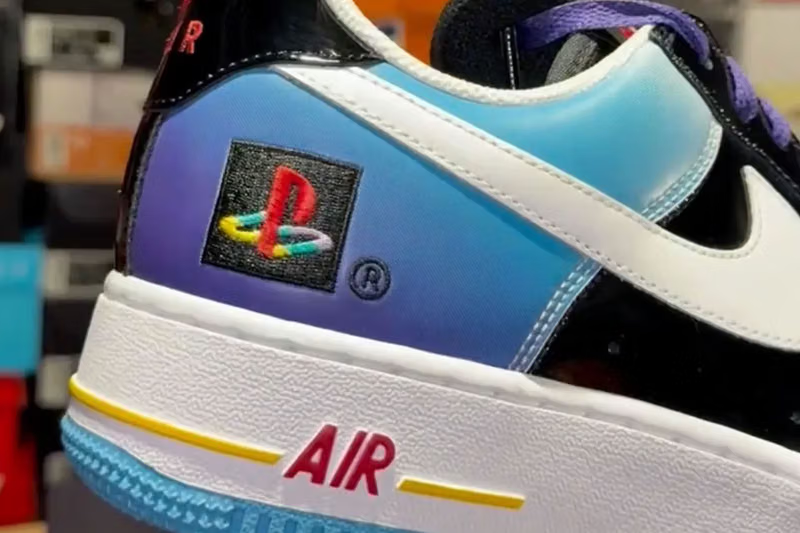
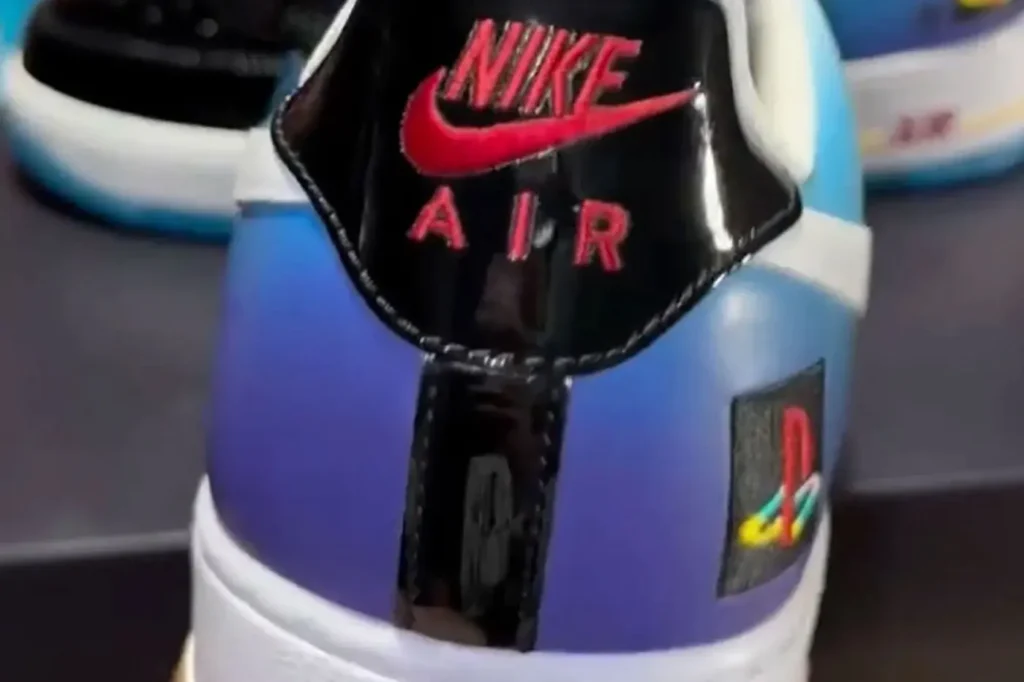
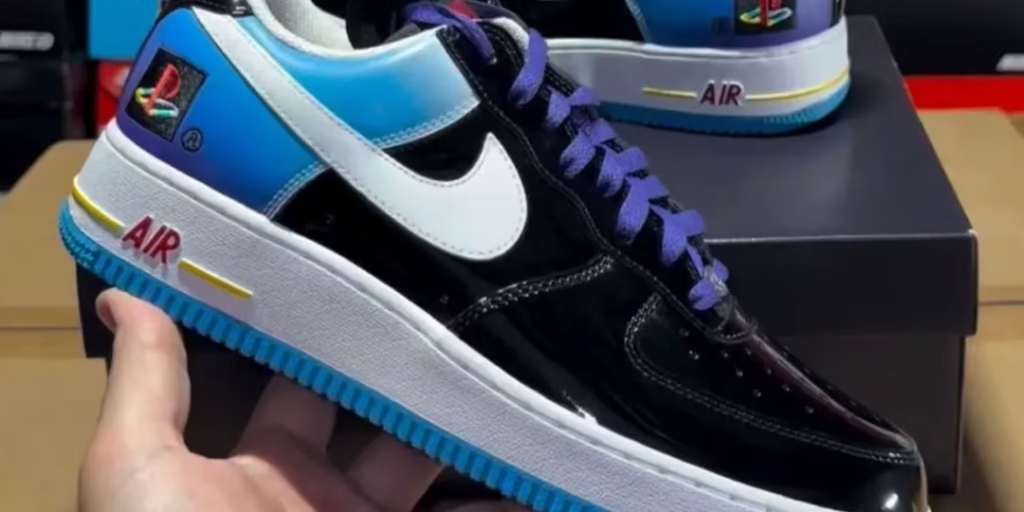
The sample features a faithful build to the 2006 original, boasting a full patent leather upper with glossy black front paneling. It includes a signature blue gradient on the heel, an embroidered PlayStation logo, purple laces, and a translucent blue rubber outsole.
The choice of patent leather is the defining feature here. It gives the shoe a high-shine, industrial feel. This mirrors the aesthetic of early 2000s electronics.
The blue gradient on the heel is a sharp detail. It wraps around the back and leads directly to the embroidered PlayStation logo on the lateral counter. It is a precise recreation of the original’s branding.
Nike also included controller button-inspired accents. These small touches are what make the shoe a piece of gaming history rather than just a branded sneaker. The purple laces add a contrasting pop of colour that breaks up the black and blue palette.
The sole is a translucent blue rubber. This allows some of the internal structure to peek through, adding to the tech-focused design. It is a bold look that would stand out in any rotation.
Why these sneakers are so rare
Hypebeast attributes the estimate of ten pairs to AF1 collector @pgknows. That is a collector-reported number, not a production total verified by Nike. It helps explain the interest around the photographs, but it should not be used as an independently proven scarcity claim when valuing a pair or assessing an offer.
Sample counts require context. Does the number refer to one size, one production stage or every surviving pair? Without that detail, a headline quantity can make a shoe seem easier to value than it is. Buyers should separate a reported manufacturing count from evidence about the individual pair they are being offered.
A sample purchase needs a different evidence trail from a regular retail release. Ask for the internal label, production information, ownership history and photographs of any accompanying box. If the seller says it came directly from an archive or employee, ask what supports that account. An interesting story is not the same as documented provenance.
This is why the leak is causing such a stir. It is not a retail drop that you can fight for on an app. It is a glimpse into a product that officially does not exist for the public.
The intersection of gaming and sneaker culture in the UAE
I can see the appeal for a reader who collects both games and sneakers: the PlayStation identity is part of the colour and finish, not an afterthought. That is a reason to enjoy this object. It is not evidence of how large the UAE market is or what local collectors would pay.
My favourite detail is the transition from glossy black into the blue heel. The restrained logo placement works because the surrounding panels have already set the mood. I’d keep the rest of an outfit simple; the shine is doing as much work as the colour.
For a buyer, the deciding question is whether the object matters as a shoe, a console-era collectable or both. Those are different reasons to spend money. A wearable pair needs a condition check; a display piece needs convincing provenance and preservation. Treat neither route as a promise that the purchase will increase in value.
The New Era x PlayStation collection provides another example of gaming graphics moving into clothing. That is a useful design comparison, not proof of UAE demand for this unreleased sample. A collector can appreciate both collaborations without assuming they share stockists, release channels or market value.
Where to track future PlayStation x Nike drops in the UAE
There is no confirmed public release for this 2024 sample. Follow Nike’s own announcements for any future PlayStation collaboration, then check the stated market and product code. A retailer carrying Nike or gaming merchandise does not mean it will receive a future collaboration. Avoid paying a reservation deposit on an announcement that the brand has not made.
A future retail release could use a different design, price or route to market. Do not assume that Nike SNKRS will be the launch channel until Nike identifies it. Likewise, sample photographs cannot establish a release date or a resale price. Keep the distinction between this surfaced pair and a hypothetical future retro clear.
For a sample offered locally, inspect it in person where practical and retain a record of the seller’s description. Patent leather condition matters: examine creasing, surface damage, sole separation and any signs of repainting. These checks do not authenticate the pair on their own, but they prevent a provenance discussion from overlooking its actual physical condition.
If the aim is an everyday gaming-themed shoe rather than a rare sample, compare released products with documented retail histories. That offers a clearer price and returns route. Our verdict on this AF1 is that the design is compelling as an archive story; the evidence needed to buy a sample is far higher than the evidence needed to enjoy its photographs.
I’d happily spend time looking at this one; I would be much harder to convince as a buyer. An unreleased sample needs a stronger ownership and condition record than a normal shop purchase. The design can be exciting without the evidence being sufficient to send a seller money.
My dividing line is display versus wear. For display, I’d prioritise provenance and preservation. For wear, I’d add fit, physical condition and practicality. If a sample seller cannot explain those basics, I would leave it as a photograph I admire rather than a purchase I regret.