I want a sneaker community with room to be interested, not a test of who owns the rarest pair. Tamila Kochkarova’s work with No Boys Allowed gives that idea a concrete UAE story; Hajar Al Tenaiji’s design project offers a different kind of creative contribution. Both are more interesting to me than another campaign telling women they are “breaking barriers” without showing what they actually made. And inclusion should reach the shop floor: the shoe you love still needs to come in a size and width that work for you.

The size-and-width check I would make before buying
| Actual manufacturer guidance | What I would do with it |
|---|---|
| Nike’s women’s chart aligns US women’s 8 with US men’s 6.5. | I would name both the number and its scale when asking a store for a pair. “Size 8” alone leaves too much room for a mistake. |
| The same Nike page warns that the CM value on a shoe label is different from measured foot length. | I would use the chart’s actual Foot Length row after measuring both feet, rather than read a box’s CM marking as my foot measurement. |
| New Balance’s UAE width guide lists B as women’s standard and D as women’s wide; D is men’s standard. | I would check the width as well as the converted length. “Standard” on two differently labelled products does not mean the same width designation. |
That is why I would not dismiss a design because a retailer files it under another gender, or buy it blindly because a conversion seems to match. Start with the exact model’s chart, width options and return terms. These examples explain the labels; they do not prove that two different shoes will fit identically or that a UAE shop has either one in stock.
The contributions worth knowing
Trailblazing Female Sneakerheads in the UAE
I would read these as two different stories, not squeeze them into one “female sneakerhead” label. One is about photographs, collecting and a community platform; the other is a multidisciplinary designer’s cultural collaboration. The distinction makes both contributions more compelling.

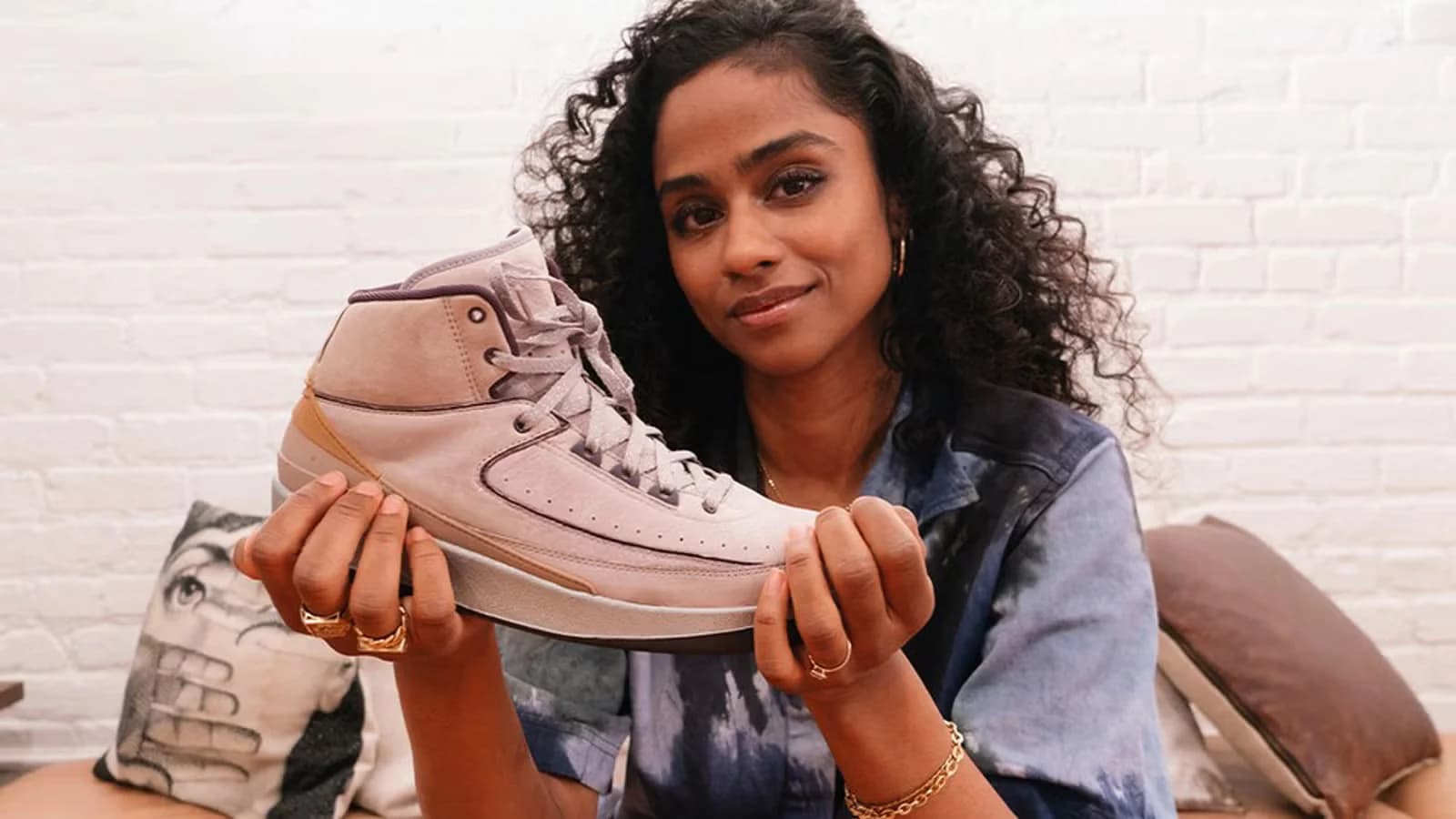
- Tamila Kochkarova: In her 4 September 2020 interview with Global Art Daily, the photographer and collector described starting No Boys Allowed for women interested in sneakers and streetwear in the Arab world. She discussed editorials and interviews alongside her Girls photography project. I like the substance of that: people making and sharing work, rather than just displaying a collection. This is her published account from 2020, not a new interview or a current membership announcement.

- Hajar Al Tenaiji: Grazia’s report documents Objects of Design with Level Shoes and Dubai Culture for Emirati Women’s Day. I would follow that story for its connection between object design and local heritage. It is not the same activity as running a sneaker-collector platform, and it deserves more than a generic celebrity-name check.

- Fit and access: A public figure’s fashion image is not evidence of an organised sneaker-advocacy role. For a buyer, the practical issue is whether the desired model exists in a suitable size and width, with clear conversion and return information. A gendered product label should not replace those checks or decide which design someone is allowed to enjoy.

The Evolution of Sneaker Culture in the UAE
For me, the strongest part of sneaker culture is the conversation around a pair: why someone chose it, what they make with it and how it fits into their style. I do not need a claim that the whole UAE follows one trend to find those stories worthwhile. The photographs, interviews and projects here are specific places to start.

Our 2024 Sole DXB coverage is an event archive, not a current invitation or ticket listing. I would use that kind of coverage to discover the artists, designers and collectors involved, then check an organiser’s current programme before making plans. A festival appearance and an ongoing community are different things.

Breaking Barriers and Building Communities
I judge a retailer’s inclusive message by the practical offer: is the desired design available in a useful size range, is the width clear, and can a poor fit be returned? A broad campaign image cannot answer those questions. The manufacturer examples above show why the labels need more attention than a quick men’s-to-women’s conversion.

Women in Sneakers
I would rather support a thoughtful photo project, an interesting custom design or a welcoming conversation than feel obliged to chase an expensive release. That is what I find appealing in Kochkarova’s account: a reason to make something together. A limited-edition purchase is not an entry requirement for enjoying sneakers.

Why It Matters
My verdict: give the work more space than the slogan. The most persuasive stories here are about a photographer building a platform and a designer connecting her practice with local heritage. I want to know what they made and why it matters to them—not see their names used as interchangeable proof of a trend.

Women in Sneakers
For the actual purchase, I would take the model name, both size scales where relevant, and the width designation into the conversation with the seller. Our Dubai sneaker store guide compares local routes and published return terms. Confirm the selected model and size before travelling; a brand offering a width somewhere does not establish that every UAE branch stocks it.
Update scope
20 October 2026: community interview and design-project coverage reread, plus Nike’s conversion/measurement guidance and New Balance’s UAE width guide. Added specific buyer examples and editorial judgments while preserving the existing profiles and images. No new interview, fitting, wear test, participation survey or current membership verification was conducted.