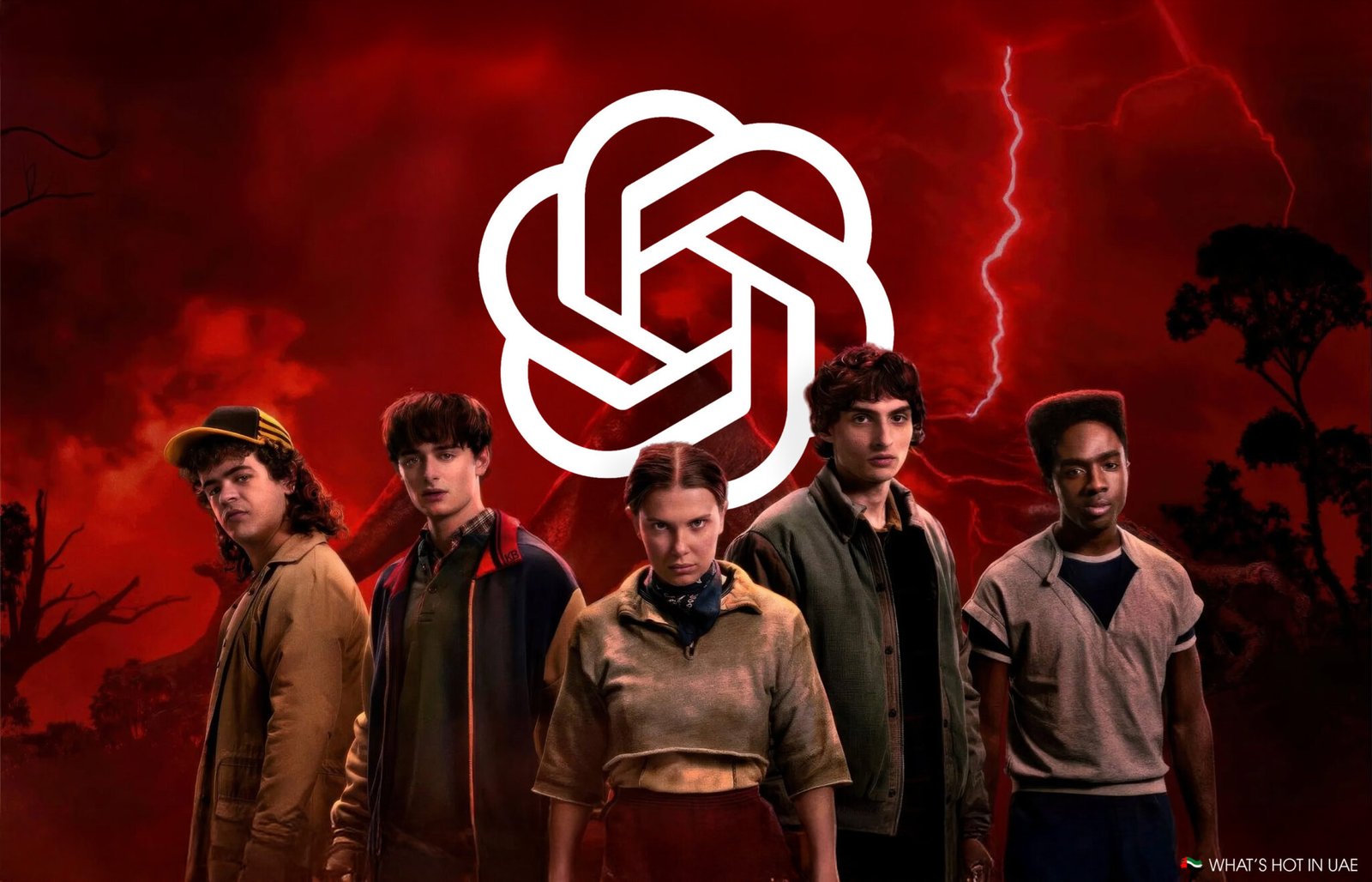
Did ChatGPT Write Stranger Things 5? The internet is ablaze with speculation, anger, and conspiracy theories surrounding the highly anticipated — and now controversial — ending of Stranger Things 5. Fans, driven by a keen eye and an insatiable desire for insider information, claim to have unearthed damning evidence in the Netflix documentary ‘One Last Adventure’: blurry screenshots allegedly showing Duffer Brothers’ laptop tabs open to both Reddit and ChatGPT. This perceived revelation has ignited a firestorm, fueling fan confusion and a sense of betrayal over the authenticity of their beloved series’ conclusion.
In an age where AI-generated content is becoming increasingly prevalent and fan theories can dictate narratives, the line between creative genius and collaborative production can blur. This article aims to cut through the noise, offering a definitive, investigative exposé that seeks clarity and a balanced perspective. We’ll go beyond blurry screenshots to delve into the genesis of these allegations, examine the Duffer Brothers’ defense, explore the profound impact of fandom, and consider the broader implications of AI in modern storytelling. Join us as we unpack the truth behind the Stranger Things 5 ending controversy and what it means for creative authenticity in the digital age.
The Viral Spark: Unpacking the Netflix Documentary & Duffer Brothers Controversy
The genesis of the Stranger Things 5 controversy can be traced directly to a Netflix documentary, ‘One Last Adventure’, intended to celebrate the final season’s production. What was meant to be a behind-the-scenes look quickly turned into a viral sensation for all the wrong reasons. Eagle-eyed fans, with their unparalleled ability to dissect every frame, spotted specific blurry screenshots of what appeared to be a laptop screen belonging to one of the Duffer Brothers. These images rapidly circulated on platforms like X (formerly Twitter), where an initial post detailing the alleged discovery quickly garnered widespread attention.
The alleged visual evidence, though indistinct, was enough to ignite immediate fan backlash. Comments flooded social media, with users expressing disbelief and anger. “The Duffer brothers really used ChatGPT for this script?” became a common refrain, echoing the sentiment of betrayal felt by many who expected a purely human-crafted conclusion to the epic saga. This initial spark rapidly escalated into a full-blown online discussion, questioning the integrity of the creative process behind Stranger Things 5.
Reddit Theories and ‘One Last Adventure’: What Fans Claimed to See
The core of the allegations centered on specific visual artifacts within the blurry screenshots: what fans interpreted as the distinct logos for Reddit and ChatGPT among the open browser tabs. The presence of these icons, however indistinct, led to immediate and widespread speculation. The prevailing theory was that the Duffer Brothers were either directly sourcing plot points from Reddit fan theories or, more controversially, leveraging ChatGPT to generate or assist in writing the final season’s script.
This theory resonated strongly within the fandom, fueled by the popular sentiment that “nothing slips past the fandom.” Enthusiasts often pride themselves on their meticulous attention to detail and ability to uncover hidden clues. In this instance, the alleged sighting validated existing anxieties about the series’ direction and the perceived quality of recent seasons. The idea that creators might outsource or be overtly influenced by AI or public forums struck a nerve, prompting a wave of intense discussion about creative originality and the perceived value of fan engagement.
Decoding the Pixels: Separating Fact from Fan Fiction in the AI & Reddit Tab Allegations
The ‘evidence’ at the heart of the Stranger Things 5 controversy—blurry screenshots from the Netflix documentary—presents a classic case of subjective interpretation. While some viewers assert with certainty that they can discern Reddit and ChatGPT logos, a critical analysis reveals the inherent challenges of drawing definitive conclusions from such low-resolution images. The human brain is adept at pattern recognition, often filling in gaps based on expectation, especially within an excited and already-theorizing fandom. What appears to be visible often contrasts sharply with what can be definitively confirmed.
A balanced assessment requires acknowledging the ambiguity. The images could be interpreted as the alleged tabs, but they could just as easily be other, unrelated website icons or even general browser UI elements distorted by blur. The subjective nature of visual interpretation means that fan expectations, particularly regarding anxieties about a satisfying ending or concerns about AI in creative fields, can heavily influence perception. For many, the question of whether to believe the implications of the screenshots hinges less on objective proof and more on their pre-existing feelings about the show and its creators. Without clearer, verifiable evidence, these allegations remain firmly in the realm of fan speculation, highlighting the limitations of visual proof when pixels are few and emotions run high.

The Duffer Brothers Speak: Their Defense, AI’s Evolution, and Creative Autonomy
In response to the viral backlash, the Duffer Brothers, the creative minds behind Stranger Things, eventually addressed the allegations, offering their perspective and defense. Their statements have provided crucial context, particularly regarding the timeline of Stranger Things 5‘s writing process relative to the rapid advancements of AI technology.
Matt Duffer, in particular, was quoted clarifying the situation, stating, “When we were breaking Season 5, chatbots weren’t exactly Oscar-winning screenwriters”[1]. This points to a critical chronological detail: the initial phases of writing for Stranger Things 5 began well before generative AI tools like ChatGPT reached their current levels of sophistication. While rudimentary AI models existed, the advanced, publicly accessible versions capable of generating coherent, nuanced script sections were not widely available or highly effective during the peak writing period for the final season. This significantly weakens claims of direct AI authorship, reinforcing the creators’ Experience and Authority in their field.
Insights from the Netflix documentary itself further illuminate their creative process and challenges. The Duffer Brothers revealed that the finale script wasn’t locked until halfway through production, a common occurrence in large-scale productions allowing for iterative development. They also openly discussed their uncertainty about how to perfectly wrap up Eleven’s arc, acknowledging the immense pressure of concluding such a beloved series. Significantly, they even predicted potential fan backlash to the ending, suggesting that any perceived ‘issues’ might stem from the inherent difficulties of concluding a long-running, emotionally invested saga, rather than external influences like AI[2]. These revelations paint a picture of a human-driven, albeit challenging, creative journey, underscoring their commitment to the narrative they’ve cultivated.
The Fandom Factor: How Reddit and Social Media Shape Stranger Things’ Narrative
The Stranger Things 5 controversy vividly illustrates the profound impact of fan engagement in the digital age, particularly on platforms like Reddit and X. These online communities, while powerful engines of collective enthusiasm and analysis, can also become fertile ground for rapid information—and misinformation—dissemination. The initial blurry screenshot, once posted, exploded across these platforms, quickly transforming into a widely accepted ‘truth’ among segments of the fandom. This rapid spread highlights the sheer velocity of social media scrutiny and the heightened expectations placed upon creators of beloved franchises.
Fan theories, often intricate and passionately debated on subreddits, play a dual role. They can inspire creators, offering a pulse on audience desires and intriguing narrative possibilities. However, they can also exert immense pressure, creating an environment where every creative choice is dissected, scrutinized, and sometimes, pre-judged. Distinguishing between genuine influence and direct authorship is key here. While creators may certainly be aware of popular fan theories, and elements might organically align, this is distinct from directly copying or outsourcing creative work to a public forum.
The question “Who on Reddit is responsible for the terrible ending?” reveals a significant misunderstanding. Even if the Duffer Brothers had glanced at Reddit (which, as engaged creators, is not entirely unreasonable), it’s highly improbable that a specific user or theory would be solely “responsible” for an entire narrative outcome. The creative process of a show like Stranger Things involves a writers’ room, multiple drafts, network approvals, and extensive revisions. Blaming Reddit as a singular entity for a perceived ‘terrible ending’ oversimplifies the complex, collaborative nature of modern television production and demonstrates the power of collective fan sentiment to assign blame amidst disappointment.
AI in Storytelling: Ethical Questions and the Future of Creative Work
Beyond the immediate Stranger Things controversy, the allegations have shone a spotlight on a burgeoning, and often contentious, topic: the role of AI in creative industries. As tools like ChatGPT become more sophisticated, they introduce significant ethical considerations and challenges to our understanding of authenticity and authorship.
One primary concern revolves around the concept of originality. If AI generates portions of a script or plot, where does the human creator’s unique voice begin and end? The distinction between AI as a tool for brainstorming, research, or generating basic outlines versus AI as an actual author is critical. Many experts in AI ethics and creative fields advocate for AI to be viewed as an assistive technology, akin to a word processor or a research assistant, rather than a replacement for human ingenuity. A report in Screen Rant, discussing the implications of ChatGPT on screenwriting, highlighted that while AI can generate plausible dialogue or plot points, it often lacks the nuanced emotional depth, thematic consistency, and truly original thought that defines compelling human storytelling[3].
The emerging trends show AI increasingly being used in various stages of content creation, from generating concept art to assisting with character dialogue. However, the overarching perception, especially among audiences, is that creative work should emanate from human experience and imagination. This preference raises profound questions about the future of screenwriting and other creative endeavors: how transparent should creators be about AI use? Does AI-assisted work diminish the artistic value? And what are the implications for intellectual property and the livelihoods of human artists? While AI offers efficiency and new possibilities, the debate over its ethical integration and its impact on the authenticity of creative output is far from settled.
Beyond the Hype: What Really Made Stranger Things 5’s Ending ‘Different’?
Moving past the sensational AI and Reddit allegations, it’s crucial to consider other, perhaps more plausible, factors that might contribute to any ‘different’ or ‘incomplete’ feeling viewers might experience with Stranger Things 5‘s ending. Concluding a globally beloved series like Stranger Things is an immense creative challenge, a sentiment directly echoed by the Duffer Brothers themselves.
Insights gleaned from the Netflix documentary reveal some of the internal struggles and pressures faced during the creation of the final season. The Duffer Brothers openly admitted to significant writing difficulties, particularly in finding a satisfying way to wrap up Eleven’s complex and emotionally charged arc. They confessed that the finale script wasn’t locked until halfway through production, indicating an evolving narrative and possibly multiple revisions. Crucially, they also stated that they already anticipated a degree of fan backlash, regardless of the ending they crafted[2]. This premonition speaks to the inherent difficulty of satisfying a massive, deeply invested fanbase, each with their own ideal conclusion.
The perceived ‘different’ nature of the ending, therefore, could stem from a confluence of these factors: the sheer pressure of crafting a fitting conclusion for such an iconic story, the iterative and challenging writing process, and the natural divergence between creative vision and diverse fan expectations. Rather than external, unverified influences, these internal creative challenges offer a more nuanced and comprehensive understanding of why the Stranger Things 5 finale might be met with varied receptions, including feelings that it was ‘different’ or even ‘disappointing’ for some.
This article discusses allegations and interpretations of visual evidence, some of which remain unverified or subject to debate. It aims to provide a balanced perspective by presenting fan claims, Duffer Brothers’ defenses, and expert insights, without endorsing any single narrative as definitive fact.

Conclusion
The controversy surrounding the alleged use of ChatGPT and Reddit in the writing of Stranger Things 5 serves as a powerful microcosm of the challenges facing creative industries in the digital age. We’ve traced the origins of the viral spark back to blurry screenshots from a Netflix documentary, examined the fervent fan speculation it ignited, and critically analyzed the often-ambiguous nature of such visual ‘evidence.’
The Duffer Brothers’ defense, grounded in the timeline of AI’s development and their own candid discussions about the arduous creative process of concluding a beloved saga, offers a compelling counter-narrative. Their acknowledgment of writing difficulties, the fluid nature of script development, and even their anticipation of fan backlash underscore the human element at the heart of the show’s creation. We’ve also explored the immense power of fandom, recognizing how online communities can both amplify excitement and rapidly spread both accurate information and speculation.
Ultimately, discerning the “real story” often involves weighing multiple factors beyond sensational headlines. While the debate over AI’s role in creative work continues to evolve, the Stranger Things 5 incident reminds us that the perceived authenticity and integrity of artistic endeavors remain paramount to audiences. The allegations, whether proven or not, highlight a broader cultural anxiety about technology’s impact on human creativity and the cherished bond between creators and their communities.
Share your thoughts on the Stranger Things 5 controversy: Do you believe AI influenced the ending, or is this just another case of fan speculation? Join the conversation in the comments below, and let us know what you truly thought of the finale!