The Air Jordan 4 “White Cement” dropped on 24 May 2025, right on schedule as part of Jordan Brand’s 40th-anniversary rollout, and it landed in the UAE via Nike.ae and SNKRS at AED 999. It sold through fast — the men’s sizing was gone from Nike.ae within days, and by the time the dust settled…
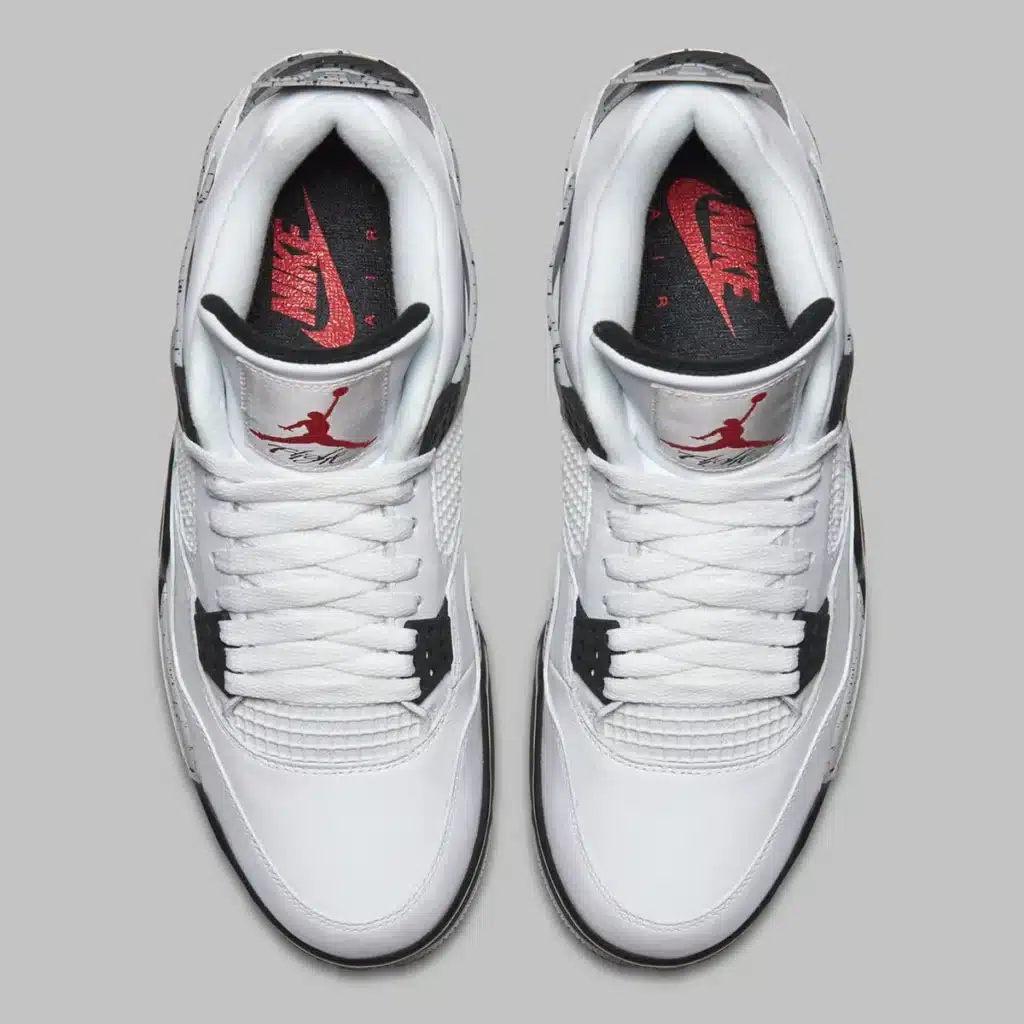
The Air Jordan 4 “White Cement” dropped on 24 May 2025, right on schedule as part of Jordan Brand’s 40th-anniversary rollout, and it landed in the UAE via Nike.ae and SNKRS at AED 999. It sold through fast — the men’s sizing was gone from Nike.ae within days, and by the time the dust settled it was already trading above retail on GOAT, StockX and Laced. Nike had promised a true-to-the-original build, and for once the sneaker world mostly agreed they delivered.

The Release Recap
Style code FV5029-100. Colourway: Summit White / Fire Red / Tech Grey / Black — the exact palette the 1989 original wore, and the one every retro since has been chasing. Retail was AED 999 for adults, with GS, PS and TD sizing coming in lower. Once the men’s sizes sold out on Nike.ae, resale pricing on the secondary market settled in the AED 1,100–1,300 range for common sizes, climbing higher for kids’ sizes and hard-to-find half sizes — GOAT was quoting AED 1,800+ for junior sizing at points.
What Else Came With the 40th-Anniversary Run
The White Cement 4 wasn’t a solo act. Jordan Brand used its 40th anniversary to work through a run of key retros either side of it, including:
- Air Jordan 3 “Black/Cement”
- Air Jordan 1 “Bred”
- Air Jordan 3 “Black Cat”
The White Cement 4 shared its production run with the AJ4 “Military Blue” and the February 2025 “Bred Reimagined”, which is part of why the quality control on this pair was noticeably tighter than some of the mid-2010s retros — same factory line, same attention, back to back.

READ MORE: YEEZY: The Final Drop
Historical Context
The White Cement 4 has been through more revisions than almost any other Jordan colourway:
- 1989: The original, designed by Tinker Hatfield, with the Nike Air logo on the heel.
- 1999: The first retro brought back the classic design.
- 2012: A retro release swapped in the Jumpman heel logo and a darker grey midsole, and took criticism for an altered toe-box shape that made the front end look boxier than the OG.
- 2016: The Nike Air heel branding came back, restoring the original aesthetic but keeping the boxier toe.
- 2025: The toe box got the closest correction yet, back toward the sleeker 1989 shape, alongside the original Nike Air heel branding.

Materials, Build and Fit
The 2025 pair uses full-grain leather across the forefoot and quarter panels, with the mesh underlays and ballistic-nylon-style mudguard wings that the OG made famous. The cement-speckle texture on the midsole and heel tab is screen-printed rather than moulded, matching the ’89 pair’s finish more closely than the 2012 or 2016 retros did. Underfoot, it runs the visible Air-Sole unit in the heel with a solid rubber cupsole — no Zoom Air, no React foam, just the same setup that’s defined the model for 36 years. On sizing, it runs true to size for most, though a handful of UAE buyers reported it snug through the toe box compared to the 2016 version — if you’re between sizes, size?, Level Shoes and Foot Locker UAE all stock half sizes, so try before you commit if you can.
Where to Find It in the UAE Now
Retail stock through Nike.ae, SNKRS and Foot Locker UAE moved fast and hasn’t been meaningfully restocked. If you missed the drop, resale platforms like StockX, GOAT and UAE-based Laced are the realistic route now, with pricing fluctuating by size — expect to pay a premium of roughly 15–40% over the AED 999 retail depending on size and condition.
Quick FAQ
How much did the Jordan 4 White Cement cost? AED 999 at retail in the UAE (US retail was $225), with GS, PS and TD kids’ sizing priced lower.
How can you tell a fake White Cement 4? Check the midsole speckle placement (fakes tend to cluster the speckles unevenly), the stitching around the ankle collar (should be tight and even, not narrow or puckered), and the Jumpman embroidery on the tongue, which is noticeably cleaner on retail pairs than on replicas.
The Bigger Picture
The 2025 White Cement 4 wasn’t just another retro — it was Jordan Brand closing the loop on a silhouette it had spent over a decade quietly correcting, one release at a time. Forty years on from the original, it’s arguably the closest anyone’s gotten the shape right since 1989, and it’s part of why the model keeps showing up in Dubai’s sneaker culture conversations well after the hype cycle usually fades.