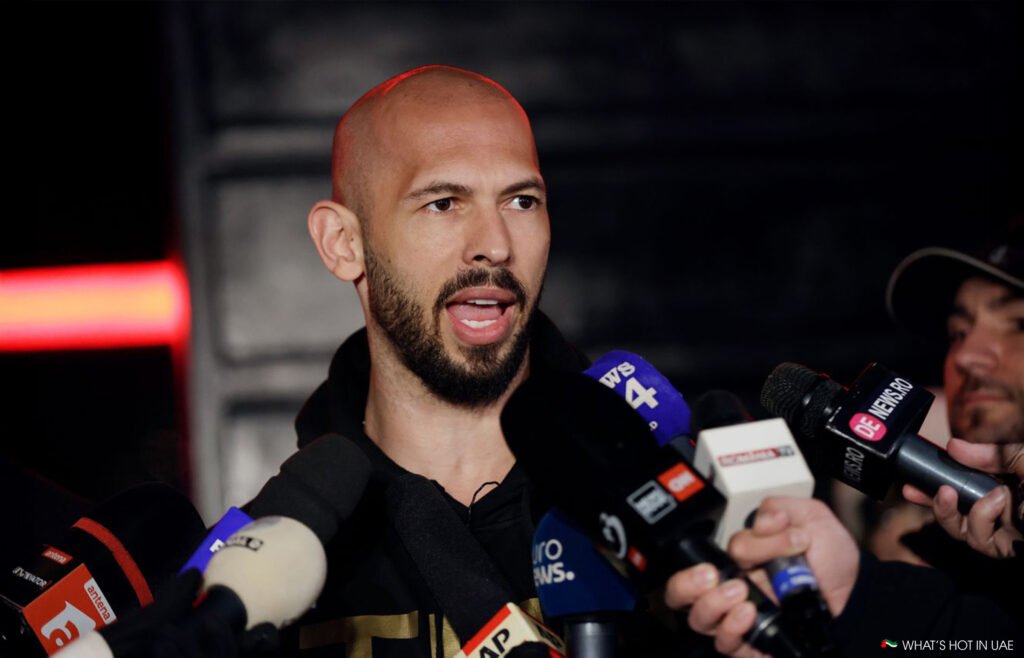
Andrew Tate’s public profile brings together provocative media, subscription products and serious legal allegations. This analysis separates the observable distribution model from disputed revenue claims and dated legal records. A large amount of online attention does not establish that he was the world’s most-searched person, that every platform banned him or that his businesses produced…
Andrew Tate’s public profile brings together provocative media, subscription products and serious legal allegations. This analysis separates the observable distribution model from disputed revenue claims and dated legal records. A large amount of online attention does not establish that he was the world’s most-searched person, that every platform banned him or that his businesses produced an audited monthly income. The charging decisions discussed below are allegations, which the brothers deny, not findings of guilt.
Understanding how this happened requires separating the strategic from the sensational. This article does exactly that: an honest, factually grounded analysis of how Andrew Tate built his online presence, how his business model works, what the allegations against him actually are, and where things stand in 2026. Readers should be able to come away with a clear picture — not a promotional pamphlet, and not a moral panic.
Note: Andrew Tate and his brother Tristan have denied all criminal allegations. Nothing in this article constitutes a legal finding. The charges and civil claims described are allegations; they have not all resulted in conviction.
Background: Who Andrew Tate Actually Is
Emory Andrew Tate III was born on 1 December 1986 in Washington DC, raised in Luton, England, and holds dual US-British citizenship. His father, Emory Tate, was an International Master chess player. His early adult life was defined by professional kickboxing — he won multiple world championship titles between 2009 and 2016, competing primarily in the UK and Europe, without an independently verified per-fight income record here.
Kickboxing made him credible in certain circles but was never going to make him wealthy. Tate understood this early. He and his brother Tristan began running a webcam model business — employing women to perform for paying clients online — which by his own account generated $300,000–$600,000 monthly. He has since described the psychological manipulation techniques used in that business in frank terms, presenting them as business strategy. Romanian prosecutors have a different characterisation of the same operation, which forms the basis of the human trafficking charges against him.
His first brush with mainstream public attention came in 2016, when he appeared on the UK’s Big Brother. He was removed from the show after a video emerged appearing to show him hitting a woman with a belt — a context producers felt was incompatible with the programme. A rape investigation by Hertfordshire Constabulary, opened in 2015 after a complaint relating to alleged events in 2014, was later closed without charge.
After Big Brother, Tate turned to online content, building an audience around kickboxing credentials, provocative statements on masculinity and wealth, and a carefully maintained image of extreme affluence. The strategy — inflammatory content, maximum algorithmic reach, direct monetisation — worked on a scale that few could have predicted.
The Media Strategy: How It Actually Works
Outrage as Distribution
Engagement can help distribute provocative content, but recommendation systems do not treat every approving and hostile interaction as identical. Platforms also use signals such as negative feedback and policy restrictions. The numbers in the earlier hypothetical example illustrate interaction volume, not a verified model of YouTube, TikTok or X ranking. The defensible analysis is that controversy can draw attention and repeated sharing; it should not become a technical claim that sentiment, user satisfaction and moderation never matter.
Tate understood this and engineered his content accordingly. Statements about women’s responsibility for assault, the inherent laziness of women, and the virtue of traditional male dominance are not accidental provocations. They are calculated to produce maximum engagement from both supporters and detractors, ensuring each piece of content spreads further than it would if it were simply agreeable or uncontroversial.
This is not a new technique. It is what tabloid newspapers discovered in the 1970s and what reality television producers codified in the 1990s. What Tate added was the direct monetisation loop: controversy generates reach, reach generates subscribers, subscribers generate revenue. The cycle is self-funding.
The Affiliate Army
What distinguished Tate’s rise from other controversial figures was his affiliate marketing system — arguably the most important structural element of his strategy. Members of Hustler’s University (later The Real World) were given promotional clips and financial incentives to post content about Tate across every available platform. They created hundreds of accounts, posted three to five pieces of content daily, and earned commissions when new subscribers signed up via their links.
This was not organic virality — it was a systematically incentivised content distribution network that operated at a scale no individual creator could replicate alone. When major platforms banned Tate in August 2022 for violations of hate speech policies, his content continued spreading through thousands of affiliate accounts, many of which were not explicitly branded as Tate-affiliated. The ban, paradoxically, increased public interest: the #AndrewTate hashtag had accumulated 14.1 billion TikTok views even after he was removed from the platform.
The affiliate system also partly explains why platform bans have been less commercially damaging than one might expect. His subscription platform operates through independent websites, not through app store gatekeepers. Subscribers pay directly. Revenue from The Real World continued even while Tate had no official presence on mainstream platforms.
Long-Form Control: Podcasts and Interviews
Short clips generated reach; long-form interviews generated authority. Tate’s appearances on major podcasts — most significantly with Tucker Carlson, Patrick Bet-David, and a Piers Morgan interview that became one of the most-watched political conversations of 2023 — allowed him to present extended, articulate accounts of his positions to audiences who were sceptical or unfamiliar with him.
These appearances serve a specific function: they allow him to frame controversies on his own terms, before critics can land their counter-narrative. His standard approach — claiming systematic persecution, asserting innocence, and pivoting to financial philosophy — is rehearsed and effective for his target audience.
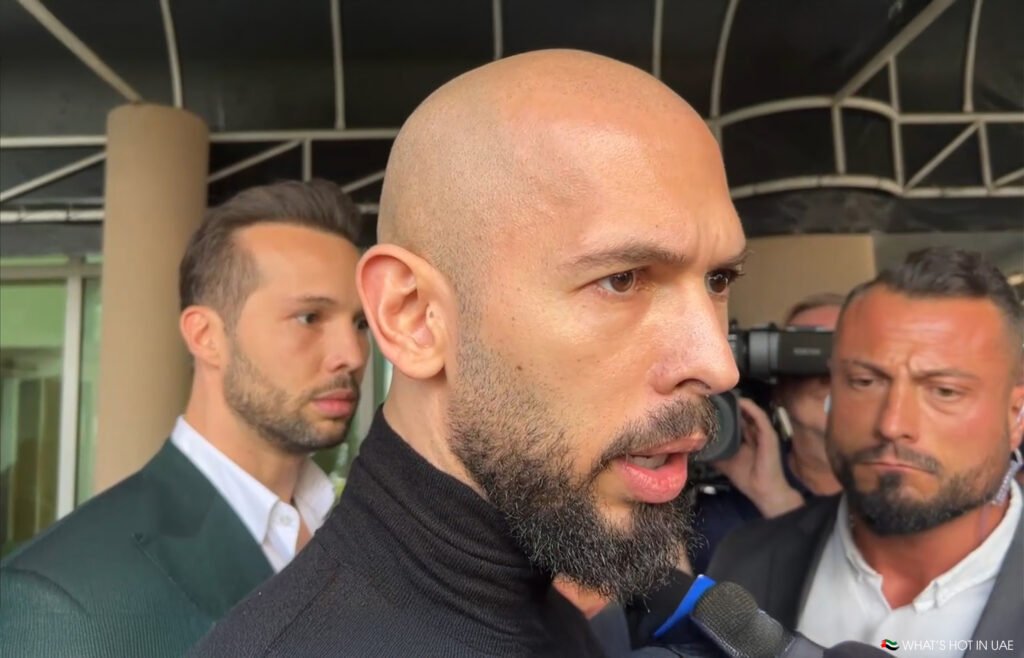
The Piers Morgan interview is worth noting specifically because Morgan, unlike many hosts, pushed back substantively on the rape and trafficking allegations. Tate’s responses — deflection, claims of fabrication, appeals to the absence of conviction — were revealing not because they were convincing but because they demonstrated the limits of the strategy under genuine adversarial questioning.
The Business Model: Revenue in Real Numbers
The Real World (Formerly Hustler’s University)
Hustler’s University launched around 2021, rebranded as The Real World in October 2022 after the original platform was shut down. The premise: a subscription community teaching members various income-generating skills — e-commerce, copywriting, cryptocurrency trading, freelancing — through video courses and live mentorship from “professors.”
Subscription prices and membership claims need a date and independent verification. A platform’s advertised subscriber count multiplied by its headline fee is a hypothetical gross figure, not audited revenue. It does not account for discounts, inactive members, refunds, fees, costs or taxes, and it cannot establish personal wealth. The monthly totals previously stated here should not be presented as verified business accounts. For this analysis, the relevant model is direct subscription and promotional distribution; its scale and profitability require records beyond the operator’s own marketing.
These are significant revenues from a single subscription product operating without mainstream platform distribution — a sign of how effectively the affiliate network and Tate’s notoriety drive direct traffic.
In December 2024, the BBC reported that the Tate brothers’ assets were seized a third time for failing to pay tax on $27 million of revenue from their online businesses. The tax seizure — in December 2024, the Westminster Magistrates’ Court ruled in favour of the Devon and Cornwall Police, allowing them to seize £2.8 million worth of unpaid taxes from the Tate brothers’ online businesses — indicates the scale of verifiable revenue passing through those businesses, even if the total net worth figure is disputed.
The War Room
The War Room is marketed as a premium networking community, but a quoted fee and an unverified member count do not establish annual receipts. Those figures should not be treated as audited results. Separate the community’s own sales claims from reporting about its conduct. The existence of a high-priced product can explain a revenue model without demonstrating how many people paid the full price, what they received or whether the business was profitable. Allegations about the webcam operation remain allegations and should be attributed to the specific investigation or reporting.
Cryptocurrency and Assets
In 2024, Tate introduced a meme token called $DADDY, which reached a market cap of over $200 million before dramatically declining. The token’s rise and fall followed a pattern common to celebrity meme coins: early hype driven by the creator’s audience, rapid price inflation, then collapse as early holders sell. Critics — including the YouTube channel Coffeezilla — accused Tate of benefiting from the inflation at subscribers’ expense. In October 2024, Tate doxxed Coffeezilla and encouraged his supporters to send abusive messages to the channel after it raised questions about the meme coin.
The assertion that a DIICOT release verified $384 million in digital assets is not supported by a cited primary document in this article. Do not equate seized property, a token’s market capitalisation and someone’s net worth. These are different measures. A seizure record describes particular assets and a legal process; it does not establish a person’s total wealth or prove the source of all funds. The large claimed crypto figure and conflicting wealth estimates should not be used as financial evidence here without the actual document, date, currency and asset description.
The Legal Reality: Where Things Actually Stand in 2026
The dated legal records below are separate from the business analysis and do not establish guilt.
The Romanian Case
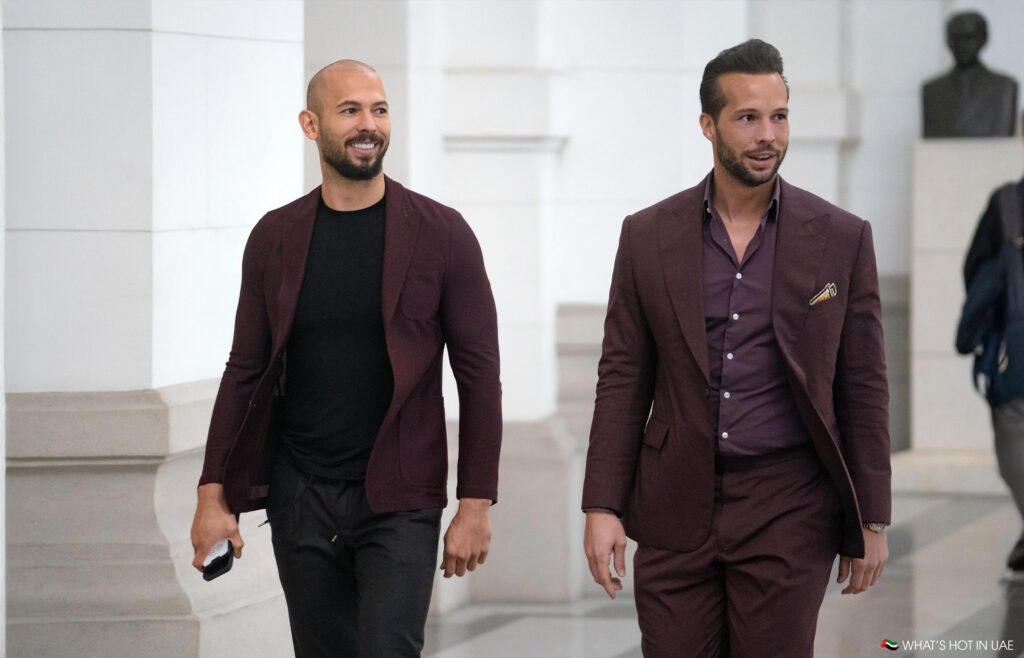
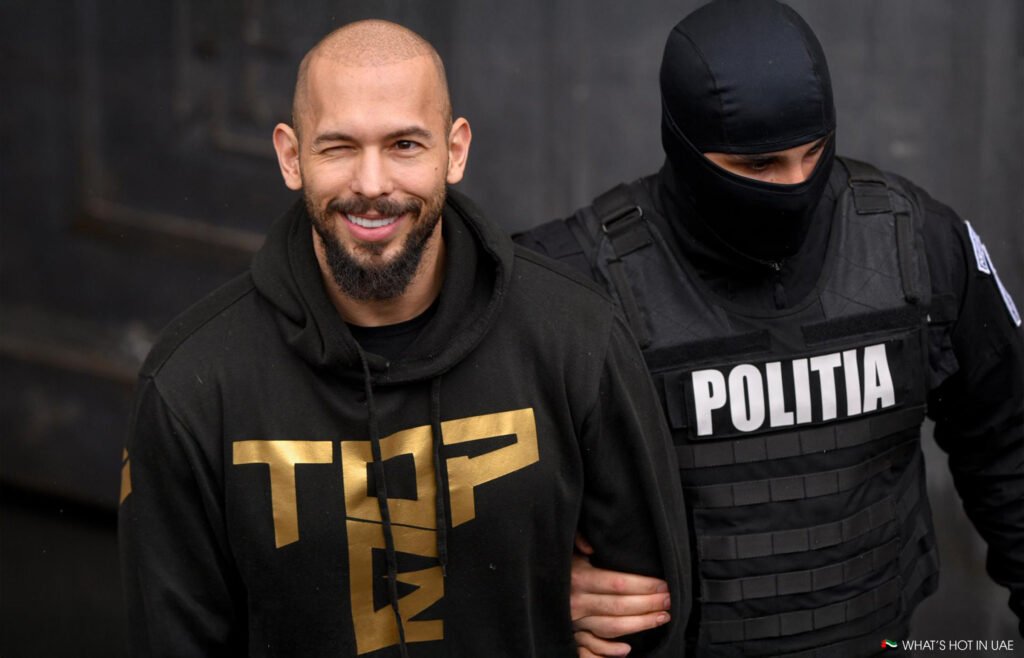
In December 2022, the brothers were arrested in Romania along with two women. In June 2023, all four were charged with rape, human trafficking, and forming an organised crime group to sexually exploit women.
The 360-page sealed indictment alleged that the Tates had tricked the women into believing they were in long-term relationships, then coerced them into pornographic work. The brothers had put them under surveillance, restricted their movements, and docked their pay if they cried on camera or broke other rules.
A first criminal case in Romania was sent back to prosecutors in December 2024 after the Bucharest Court of Appeal found flaws in the indictment. A separate court later ruled a trial could begin, but no date was set. A second DIICOT case — launched in August 2024 — investigates additional allegations including trafficking of minors, sexual intercourse with a minor, money laundering, and attempting to influence witnesses.
In February 2025, the Tate brothers left Romania by private jet for the United States after a travel ban imposed on them was lifted by Romanian prosecutors. Reports in The New York Times indicated that US diplomatic envoy Richard Grenell twice discussed the Tates’ case with Romanian officials, and that shortly after those conversations, prosecutors received approval to lift the travel restrictions — a sequence that outraged Romanian prosecutors who had long argued the brothers were a flight risk.
The brothers returned to Romania in March 2025 to comply with judicial control requirements, then travelled again. The appeals court also granted a UK request to extradite the Tates, but only after legal proceedings in Romania have concluded.
The July-only description is no longer the latest cited Romanian development. Associated Press reported a new Romanian indictment on 4 September 2026 involving allegations including trafficking minors, sex with a minor and money laundering. An indictment is not a conviction. Separate cases and procedural decisions should not be collapsed into one trial status. The brothers deny the allegations; this article does not establish every later hearing, custody decision or the final outcome.
UK Charges and Civil Cases
In May 2025, the Crown Prosecution Service brought 21 charges against the Tates, including rape, actual bodily harm, and human trafficking. At the time, their law firm said they intended to return to the UK to face the charges once Romanian legal proceedings concluded.
The CPS statement dated 19 July 2026 records further charging decisions and confirms the brothers’ arrest by US marshals on 18 July. It says prosecutors sought extradition over the original 21 charges and additional charges. Andrew’s further counts include rape, trafficking for sexual exploitation, assault and offences involving indecent images and extreme pornography; Tristan’s include sexual assault, rape and trafficking for sexual exploitation. These are prosecution allegations, not findings of guilt. The statement describes that date’s position; it cannot establish their custody status indefinitely.
Separately, four British women who accused Andrew Tate of sexual violence and physical abuse launched civil proceedings in the UK High Court, operating under the lower civil standard of proof — a balance of probabilities rather than beyond reasonable doubt. The trial, originally set for June 2026, was adjourned in early May 2026 after Hertfordshire Police reopened a criminal investigation into fresh allegations, with the BBC reporting the case would be heard “as soon as possible” once that inquiry concluded. It had not resumed as of late July 2026.
The four claimants allege Tate subjected them to physical or sexual violence between 2013 and 2015. Court filings state one woman was threatened with a gun as Tate allegedly said “you’re going to do as I say or there’ll be hell to pay,” while another alleges she was strangled until she was unconscious during sex. Tate denies all allegations.
US Investigations
In March 2025, Florida Attorney General James Uthmeier announced a criminal investigation into the Tate brothers following their arrival in Florida. That statement concerns the cited historical snapshot, not an independently verified current US docket.
In late March 2025, Brianna Stern filed a lawsuit against Andrew Tate for sexual assault, battery, and intentional infliction of emotional distress, alleging that on March 10, 2025, Tate choked her and beat her repeatedly at a hotel in Beverly Hills. The incident was reported to Beverly Hills police and a criminal investigation was opened. Tate denies the allegations.
The Tate Brothers’ Position
Andrew and Tristan Tate have consistently and emphatically denied every allegation across every jurisdiction. Andrew Tate’s public statements present the legal proceedings as coordinated political persecution — “lawfare” in his framing — intended to silence a politically inconvenient voice. He has compared his situation to that of Donald Trump. He has argued that Romanian prosecutors have no evidence and that the charges reflect corruption in the Romanian legal system.
These claims appeal powerfully to his audience, for whom institutional credibility is already low. Whether the claims are accurate will ultimately be determined by courts, not by social media reach.
Why the Strategy Works: The Actual Mechanics
Strip away the specific content, and Tate’s playbook is a precise exploitation of several structural features of the current media environment.
Engagement and platform controls. Provocative clips can attract replies and repeat viewing, but negative feedback, moderation and other ranking signals still matter. No universal formula here proves that every hostile interaction helps equally. Analyse observable distribution rather than assume access to a platform’s internal algorithm.
The persecution premium. Being banned, prosecuted, or deplatformed generates a specific kind of credibility with audiences who already distrust institutions. Every legal charge is reframed as proof of the threat he poses to powerful interests. Every platform ban is evidence of censorship. The legal reality that serious allegations have been brought by multiple women across multiple countries is reframed as the mechanism of persecution rather than its product. For followers already predisposed to distrust authority, this framing is highly adhesive.
Direct monetisation bypassing gatekeepers. Tate built his revenue infrastructure — subscription platforms, affiliate networks, direct website traffic — before he needed it. When platforms banned him, the income continued. This is genuinely instructive from a business model perspective: subscription revenue that bypasses platform intermediaries is substantially more resilient than advertising revenue or creator fund income.
Identity-based loyalty. The Real World and The War Room are not merely commercial products. They are identity communities. Members are not just subscribers; they are part of a tribe defined by specific beliefs about masculinity, financial independence, and institutional mistrust. Identity-based communities churn at far lower rates than transactional subscriptions, which is why The Real World continued generating millions monthly even through years of legal proceedings and reputational pressure.
What the Tate Phenomenon Reveals About the Attention Economy
Tate’s success is not primarily a story about one person. It is a story about structural features of digital media that any sufficiently willing and capable actor can exploit.
The specific content — misogyny, wealth signalling, anti-institutionalism — worked for a specific demographic: young men, disproportionately in their teens and early twenties, who felt economically and socially adrift and were looking for a compelling account of why this was happening and what to do about it. Tate provided a simple, confident narrative: the system is rigged, masculinity is under attack, wealth is achievable through hustle and the right mindset, and the people telling you otherwise are your enemies.
Claims linking media content to a particular killing need careful attribution and should not be simplified into a proven cause. The fact that a defendant viewed content before an offence does not by itself establish that its creator caused it. The broader discussion of misogyny and audience effects can be serious without making an unsupported legal or causal finding. Use the specific prosecution or court record for what was alleged or found, and distinguish that from an editorial interpretation of the content’s social impact.
This does not make every viewer of Tate’s content dangerous. But it does complicate any purely strategic analysis that treats his output as morally neutral marketing. The content is not neutral. Its effects on some consumers are severe.
The Outlook: 2026 and Beyond
The legal record has moved beyond the July snapshot. The dated CPS statement and September Romanian indictment reporting above establish specific developments; neither resolves all proceedings or verifies current detention arrangements. A charge, extradition request, civil claim and conviction are different legal events. This article keeps denials alongside the allegations and does not claim a final outcome from a social-media narrative. For any future update, use the relevant court or prosecutor record rather than treating an older account as a live custody report.
His business continues operating. The Real World retains a large subscriber base. His X account, restored by Elon Musk after the 2022 bans, has over 10 million followers. His ability to generate content and maintain public attention has not substantially diminished.
What has changed is that the legal proceedings are no longer distant abstractions. They involve court dates, extradition agreements, civil witnesses, and — in the UK civil case — a lower evidential threshold than criminal prosecution. The coming 12 months will determine whether the legal exposure translates into concrete legal consequences.
For now, the Tate playbook continues running: controversy generates reach, reach generates subscribers, subscribers generate revenue, and every adverse development is reframed as evidence of persecution. It is a self-sustaining machine — until it isn’t.
Frequently Asked Questions
What charges are documented here? The cited July 2026 CPS statement describes original and further UK charges and an extradition request. September 2026 reporting records a separate Romanian indictment. The allegations are denied; a charging decision is not a finding of guilt. See the dated sources rather than rely on a single undated combined total.
How is the business model described? Publicly marketed subscriptions, premium communities and promotional distribution are central to the model discussed here. Advertised membership multiplied by a fee is not audited income or proof of profit. Token valuations and assets also should not be substituted for business revenue.
Why was Andrew Tate banned from social media? In August 2022, Facebook, Instagram, TikTok, and YouTube banned Tate for violations of hate speech policies. His content included statements that women are responsible for being raped, that women are inherently subordinate to men, and other content platforms determined violated their community guidelines. Elon Musk reinstated his X (Twitter) account shortly after acquiring the platform.
What is The Real World platform? The Real World (formerly Hustler’s University) is Andrew Tate’s subscription-based online community, teaching members income generation skills including e-commerce, copywriting, and cryptocurrency trading. It operates through an affiliate marketing model where members earn commissions for recruiting new subscribers. Google and Apple removed the app from their stores in 2023; the platform continues to operate through its own website.
Do charges establish guilt? No. The CPS explicitly distinguishes its charging assessment from a court’s findings. This page does not provide an independently verified worldwide list of all convictions or current custody decisions. The allegations discussed are denied and their procedural status needs a dated record.
What happened with Andrew Tate’s travel ban? The Tate brothers were restricted to Romania from late 2022 until February 2025, when Romanian prosecutors lifted their travel ban. Reports in The New York Times indicated that US diplomatic envoy Richard Grenell raised the issue with Romanian officials on multiple occasions, and the ban was lifted shortly after those conversations. The brothers subsequently travelled to the US, returned to Romania to comply with judicial control requirements, and remain under obligation to appear before Romanian authorities when summoned.
This article is an analytical account of Andrew Tate’s media strategy, business model, and legal situation based on publicly available reporting. It does not constitute legal advice or findings. All criminal allegations cited are unproven charges that the Tate brothers deny.