
Follow the $HAWK launch dispute: overHere’s original allocation claims, the December 2024 complaint and counsel’s March 2026 account of amended allegations.
Key Takeaways
- The $HAWK token launched on 4 December 2024, drawing attention through Haliey Welch’s viral persona.
- The launch dispute concerns promotion, token distribution, liquidity and alleged sales of unregistered securities.
- Welch was not named in the initial 19 December 2024 complaint. Plaintiffs’ counsel’s 30 March 2026 account says an amended complaint names her.
- overHere’s original statement described several supply percentages; a wallet cluster and a contractual team allocation measure different things.
- Read the filing date and named parties: an original complaint, an amendment and a judgment are different records.
A viral catchphrase, a celebrity-backed token and a launch that quickly became a legal story. Haliey Welch’s $HAWK controversy began in December 2024, but the paperwork did not stop with the first complaint. Following its chronology matters: the original investor action named the launch’s promoters and entities; a later account from plaintiffs’ counsel describes an amended complaint naming Welch too. The interesting questions are who promoted the token, what buyers were told and how the launch’s allocation claims fit together.

The initial investor complaint filed on 19 December 2024 named overHere Limited, Clinton So, Tuah The Moon Foundation and Alex Larson Schultz. Welch was not named in that initial document. The plaintiffs challenged the token’s promotion and sale under US securities law. Wolf Popper’s case overview also records the 23 April 2025 appointment of lead plaintiff and co-lead counsel.
The Launch of Hawk Tuah Coin
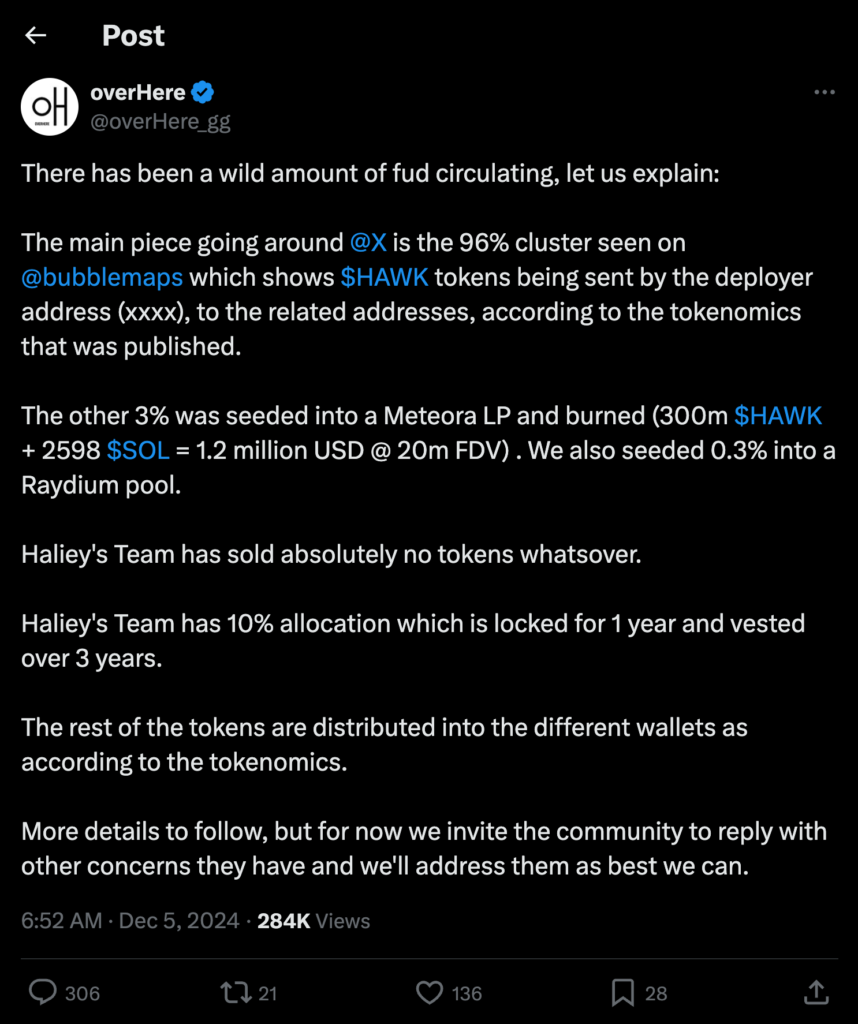
The token launched on 4 December 2024. The next day, overHere published a response to criticism of the distribution. Its figures describe different categories, rather than one clean list of separate allocations:
- The 96% cluster: overHere described tokens sent from the deployer to related addresses according to its published tokenomics. That was its explanation of an address cluster.
- Pool allocation: the statement said 3% went to a Meteora pool and a further 0.3% to Raydium. These were the project’s claimed liquidity arrangements.
- Team allocation: it described a 10% allocation for Welch’s team, with a one-year lock and three-year vesting. That contractual bucket should not be added to the address-cluster percentage as though they were separate populations.
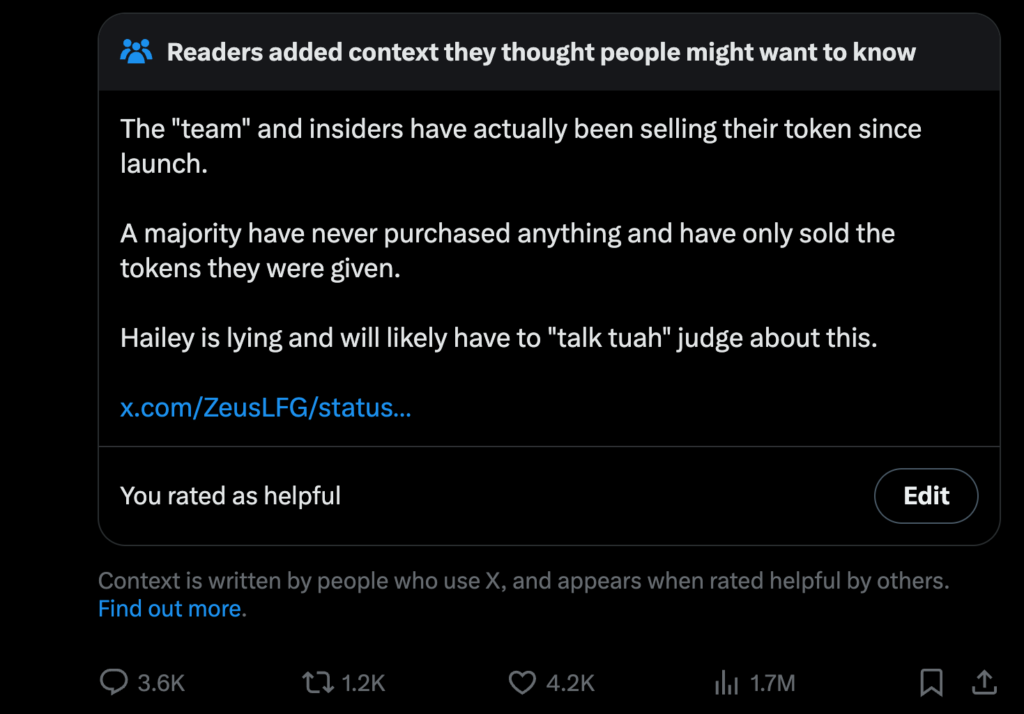
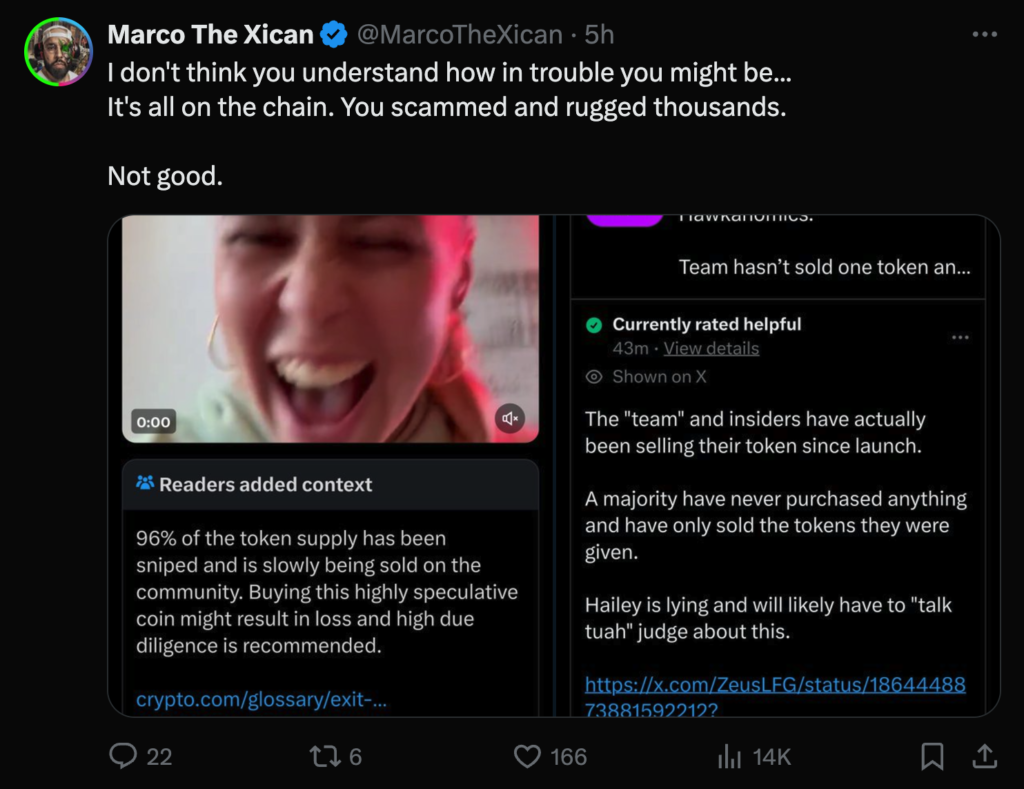
The project also said Welch’s team had sold none of its allocated tokens. This was a denial by a participant in the launch, rather than an independent account of every wallet’s activity. To examine it, a researcher would need the token contract, relevant addresses, transfer history and the basis for identifying who controlled each address.

The later chapter: in a 30 March 2026 case account, plaintiffs’ counsel Burwick Law says an amended complaint names Welch, her manager and operating entity among a wider set of defendants. It describes claims concerning promotion, launch services, public float and liquidity control. Those are allegations as presented by plaintiffs’ counsel—not a judgment resolving them. The later account is why an old statement that “Welch is not a defendant” needs its original-filing date attached.
Allegations of Fraud and “Sniping”
A nominal token valuation can shrink without a large executable sale
Hypothetical example — not market data
A price mark values every unit at the latest quote; a thin order book need not absorb all units at that level.
Methodology
Illustrative WHIUAE calculation. Linked references provide context, not observations for these inputs. Fictional fill assumptions, not HAWK trades, losses or conclusions about the lawsuit. Gross proceeds exclude costs.
Read chart data
| Scenario | Marked value | Gross proceeds |
|---|---|---|
| Every unit at last quote | 1,000.00 | 1,000.00 |
| Half fills 60% below quote | 1,000.00 | 700.00 |
Address-cluster analysis and transaction records answer related but different questions. A graph can show connected transfers; proving control requires more than two addresses sharing a funding source. A sale also needs to be distinguished from a transfer, a liquidity-pool deposit or an internal redistribution.
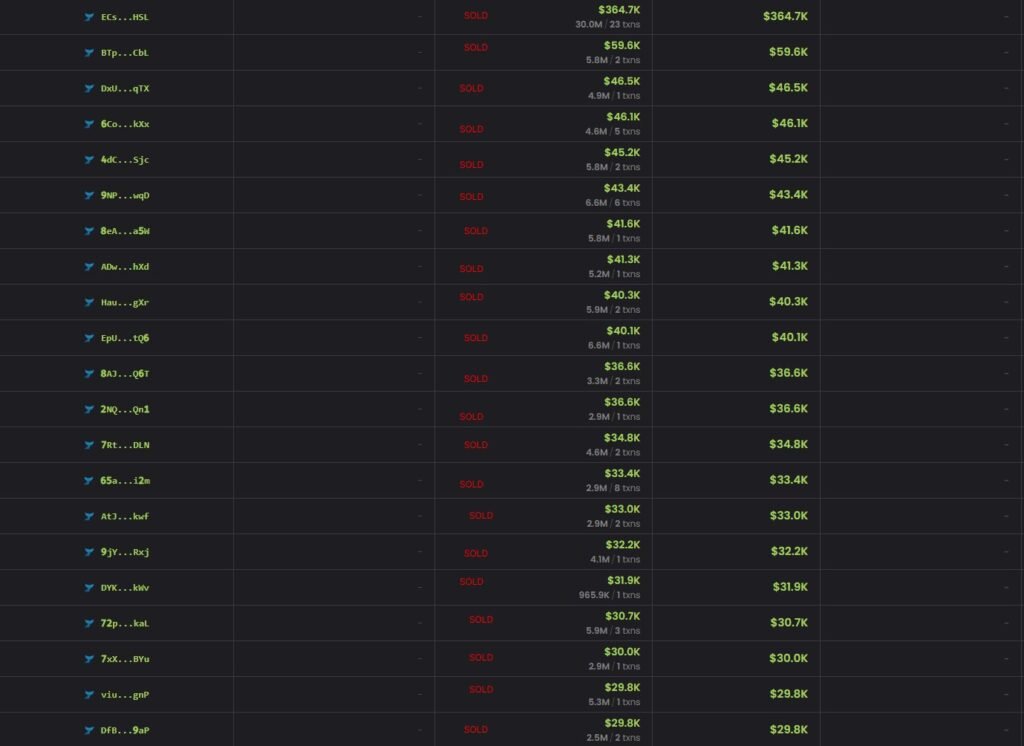
The phrase “insider dumping” compresses several claims into two words. A useful account identifies the seller, the token quantity, the execution route and the proceeds. That evidence can be examined separately from how much social-media criticism a project attracted.
Follow the units: token supply, pool reserves, a wallet balance, a quoted valuation and realised sale proceeds are different entries. A transaction-level explanation should say which entry it measured.
“Sniping” generally describes an attempt to buy quickly around a launch or liquidity event. A claimed profit requires the actual purchase and sale records, costs and the assets received. A rapid trade, a large wallet balance and a profit figure are separate observations. The purchase and exit prices, fees and transaction trail are what make a claimed return reproducible.

The Response from Welch’s Team
The overHere statement of 5 December 2024 explained the cluster as distribution under the tokenomics and asserted that Welch’s team had sold no tokens. It also specified the proposed team lock and vesting. This is the response to place beside the allegations, with its original date and author intact.
An allocation promise and an implemented control deserve separate checks:
A lockup describes when a defined allocation can move. Liquidity control concerns who can alter the pool that enables trading. The terms may affect different tokens and addresses. A statement about one does not automatically settle the other.
The dispute is clearer when each claim is attached to its source: the project’s explanation of distribution, the investors’ allegations and any later court findings. Popularity and online opinion cannot substitute for those records.
Celebrity Attention Versus the Token’s Economics
A recognisable face can bring a token to an audience that would not otherwise study a launchpad or liquidity pool. That is the commercial power of celebrity promotion. It also makes the promised product and the promoter’s actual role important details to establish.
For comparison, Ye’s reported crypto-promotion offer separates a proposed endorsement fee from token ownership and investor proceeds. HAWK’s supply and trading arrangements require their own records; the celebrity connection is only one part of the story.
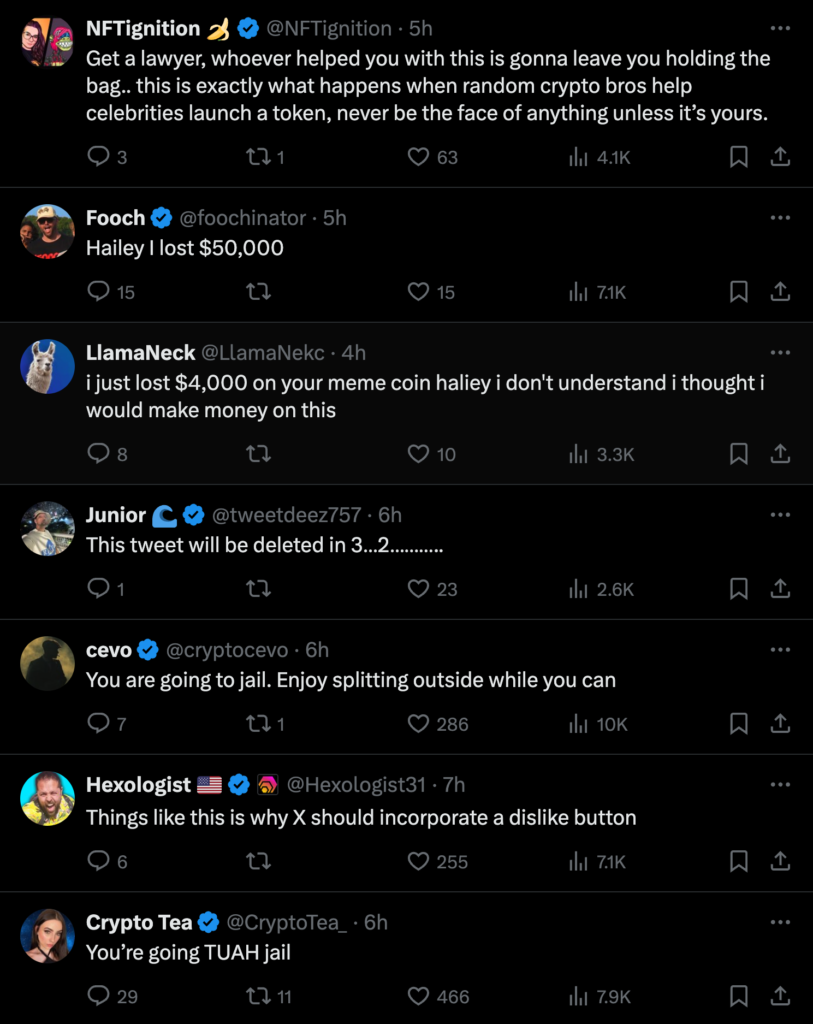
The Hawk Tuah Token Controversy
The Broader Implications
The December 2024 complaint and Burwick’s March 2026 account should be read as different stages in a civil dispute. A complaint sets out a party’s claims; an amendment can change the allegations and defendants. A court’s ruling on liability is another step. That chronology is more informative than either a forecast of jail or a blanket claim that the celebrity was never named.
Read the document’s caption, date and procedural purpose before drawing the legal conclusion. A party’s allegation and a court’s finding carry different weight.
Final Thoughts
The lasting lesson is to examine the relationship behind the famous name: promoter, issuer, token holder or service provider. For UAE readers, our crypto provider guide explains the separate entity-and-permission checks. For this controversy, keep the original launch claims and the later legal chronology together; neither an old headline nor a token’s price chart supplies the whole account.