Barbour opened its first two standalone Dubai stores in June 2025. Here are the locations, GCC partnership and practical collection checks.
Key Takeaways
- Barbour opened its first two standalone Dubai stores with Apparel Group in June 2025, at Dubai Hills Mall and City Centre Mirdif.
- The Dubai launch featured Spring/Summer 2025 clothing, including lighter pieces suited to the region’s climate.
- Barbour collaborates with various brands like Supreme and Ganni to blend its heritage with contemporary fashion trends.
- Despite its expansion, Barbour maintains its connection to its North East England roots, focusing on craftsmanship and durability.
Barbour already has a physical home in Dubai. Apparel Group announced the opening of its first two standalone stores in June 2025, at Dubai Hills Mall and City Centre Mirdif. That is the useful starting point for UAE shoppers: this is an established local retail launch, not an opening still due in Spring 2025.
Barbour’s Dubai Stores and GCC Expansion
The expansion marks a significant move for the fifth-generation, family-owned brand, which was established in 1894 in South Shields, North East of England. While Barbour has long been a staple of British countryside dressing, the distribution partnership announced with Apparel Group in September 2024 covered six key markets: the UAE, Saudi Arabia, Bahrain, Kuwait, Oman, and Qatar.
The June 2025 opening announcement identifies Dubai Hills Mall and City Centre Mirdif as the first two standalone Dubai locations. It does not establish that every collaboration or size is stocked there today. For a particular jacket, ask the branch for the exact style and size before travelling; a store opening and live product availability are different things.
The ‘All-Summer’ Strategy: Adapting Heritage for the Middle East
A common challenge for heritage brands rooted in temperate climates is relevance in high-heat environments. Apparel Group’s Dubai launch announcement highlighted Barbour’s Spring/Summer 2025 collection, including lightweight clothing alongside its familiar quilted and waxed jackets.
Rather than relying solely on its heavy-duty waxed jackets and insulating quilts—which are synonymous with the brand but less practical for the UAE summer—this collection is intended to complement the iconic ranges with lighter, seasonal alternatives. This approach allows the brand to maintain its aesthetic codes while providing functional, breathable options that suit the local lifestyle.
Why Barbour is Trending: The Power of Collaboration
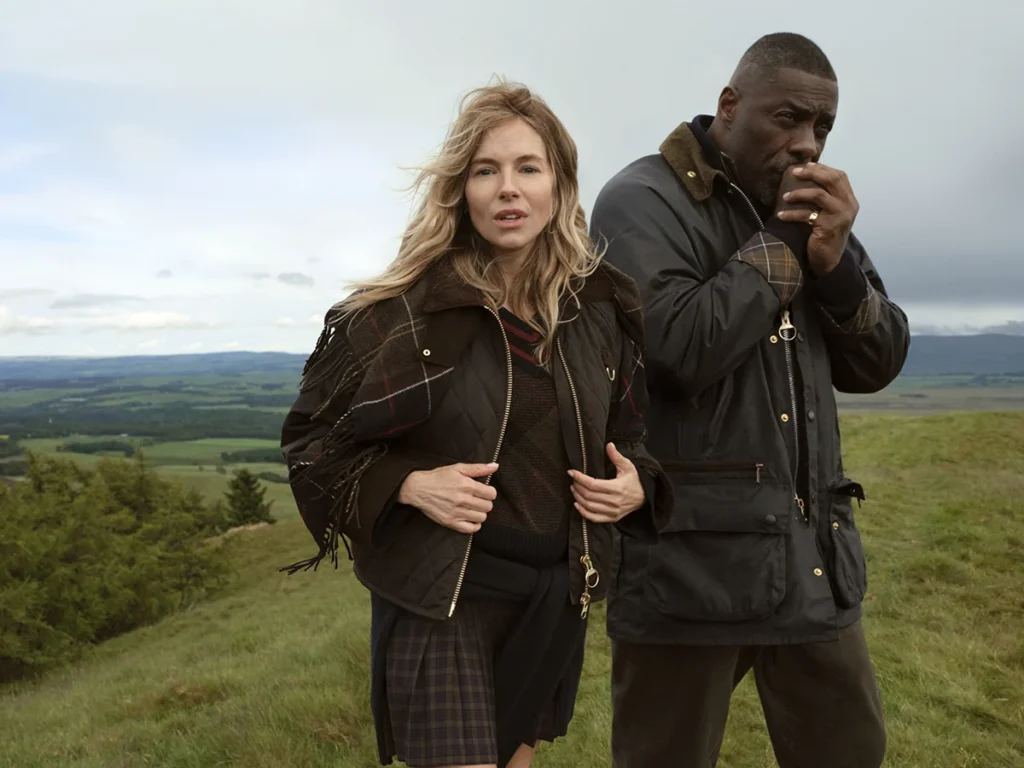
Barbour has successfully navigated the transition from a traditional utility brand to a contemporary fashion favourite by making its heritage “porous.” Instead of strictly adhering to its historical archives, the brand has engaged in a highly active and diverse collaboration strategy that keeps its designs in the cultural conversation.
Recent and notable collaborators include:
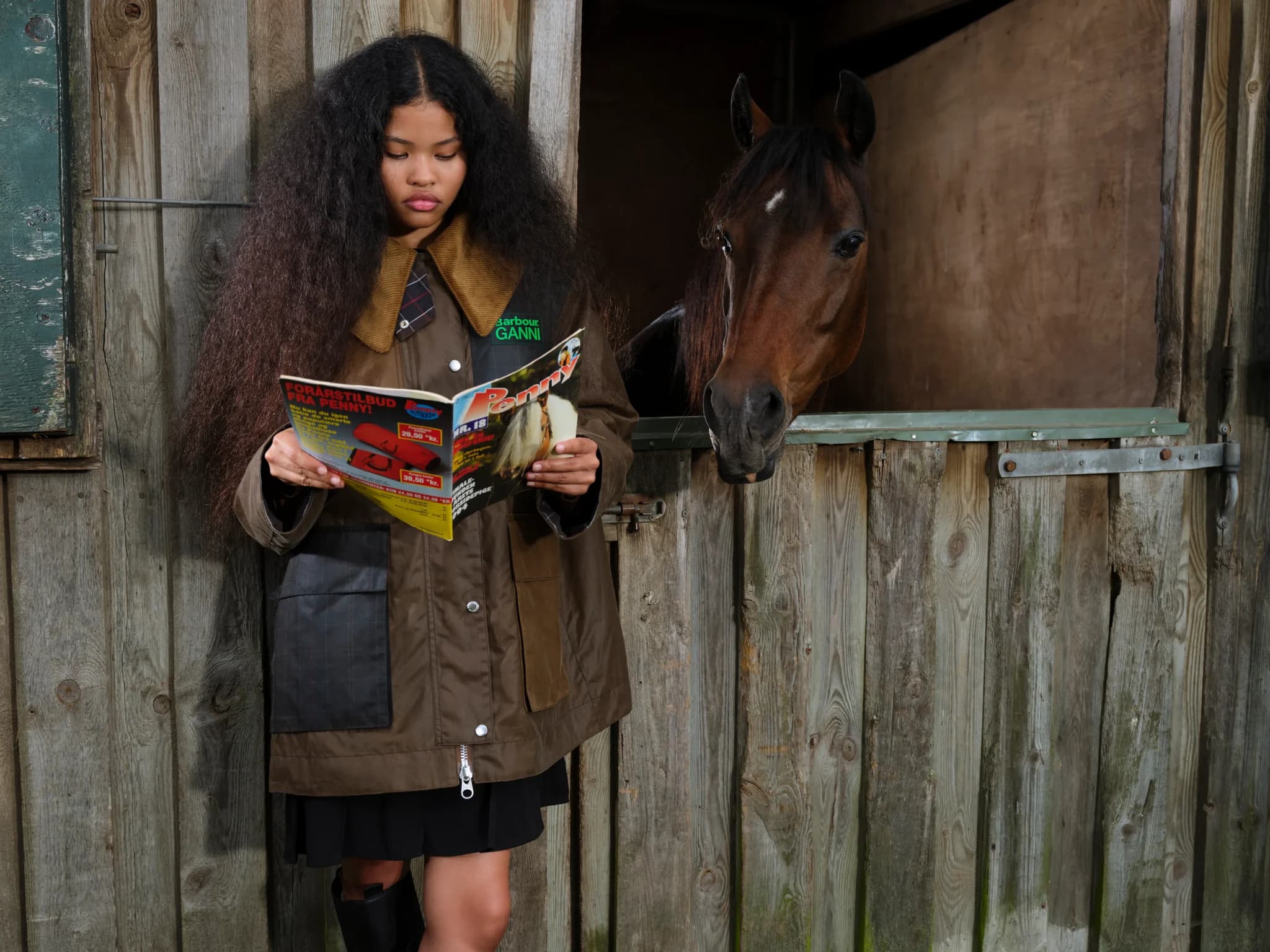
- Streetwear and High Fashion: Partnerships with Supreme, BAPE, and Ganni.
- Designer Labels: Collaborations with Erdem, Paul Smith, and Barbour x Feng Chen Wang.
- Lifestyle and Heritage: Projects with Levi’s and Land Rover.
By allowing these “co-conspirators” to interpret Barbour’s signature elements—such as tartan linings and waxed textures—through different lenses, the brand has managed to appeal to a younger, more fashion-conscious demographic without losing the core identity that has sustained it for over 130 years.
From South Shields to the GCC
Despite its modern resurgence in fashion capitals, Barbour remains deeply rooted in its North East England origins. The brand’s identity is built on craftsmanship and durability, a reputation reinforced by its history of producing practical outerwear for the British outdoors. In its Middle East retail presence, the brand aims to blend this sense of timeless British utility with the modern, luxury-driven retail landscape of the UAE.