In a digital age where cryptocurrency projects come and go with alarming speed, a few firmly cement themselves in the future narrative. BEAM is quickly becoming one of those names, particularly known as BEAM Crypto’s favourite in the rapidly expanding world of gaming blockchain. Calling a network crypto’s “favourite” would require a defined poll or…
Key Takeaways
- BEAM is emerging as a leading name in blockchain gaming, designed for speed, scalability, and low barriers to entry.
- Its focused approach allows for tailored features like native asset creation, built-in marketplaces, and gasless transactions.
- BEAM’s partnerships and ecosystem grants boost game development, enhancing its presence in the competitive gaming sector.
- The $BEAM token supports transaction fees, governance, and exclusive content access, crucial for the ecosystem’s growth.
- As 2025 progresses, BEAM’s sustained rise relies on completed game integrations and genuine player engagement.
In a digital age where cryptocurrency projects come and go with alarming speed, a few firmly cement themselves in the future narrative. BEAM is quickly becoming one of those names, particularly known as BEAM Crypto’s favourite in the rapidly expanding world of gaming blockchain.
Calling a network crypto’s “favourite” would require a defined poll or measure; it should not be treated as a factual industry ranking. Beam has a developer ecosystem and documented tools, but those should be assessed through actual implementation and use rather than a popularity slogan. This guide focuses on what the network and its APIs provide, which features depend on the game and what token ownership does not guarantee.
This article explores why BEAM is gathering so much momentum in 2025, how it carved out a niche in the hyper-competitive gaming sector, and what it means for players, developers, and investors alike.
What is BEAM?
Launched originally in 2023, BEAM isn’t just another gaming coin.
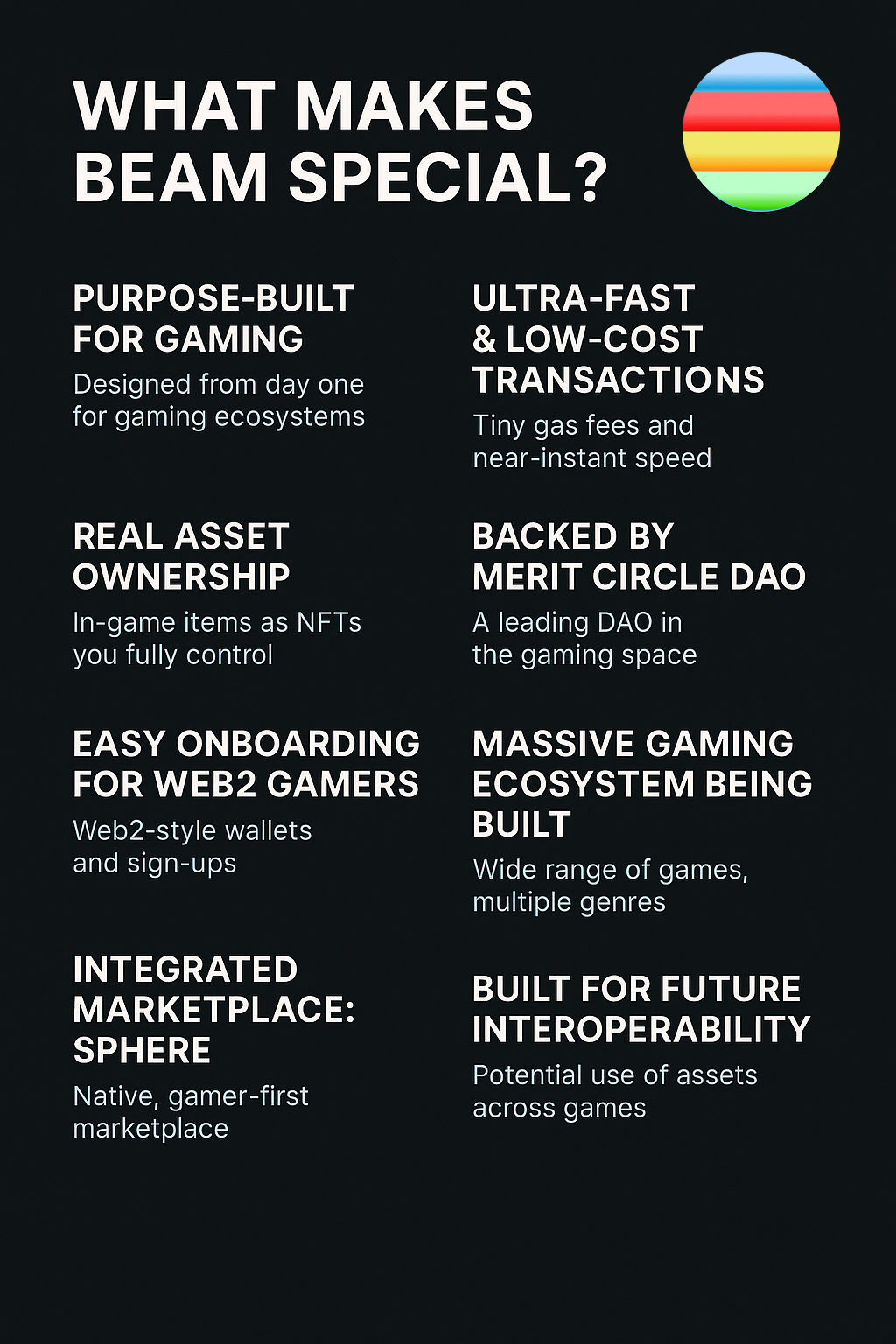
It’s a Layer-1 blockchain purpose-built for gaming ecosystems.
Beam’s technical documentation describes an open-source sovereign network using the Avalanche technology stack. It also documents APIs and SDKs for game integrations, including asset and transaction services. That is a more precise description than saying the chain was engineered entirely from scratch or guarantees negligible fees and instant gameplay. The network, middleware and individual game are different components; the existence of one does not mean every advertised feature is available in every title.
BEAM was developed under the Merit Circle DAO umbrella, a major player in the blockchain gaming and decentralised finance (DeFi) sectors.
This origin story already gave BEAM serious credibility before it even went live.
Why is BEAM Gaining So Much Popularity?
Several clear reasons explain BEAM’s rapid rise:
1. Focused Use-Case
Instead of trying to be everything to everyone, BEAM zeroes in on the gaming industry.
This precision focus means their blockchain is tailored perfectly to gaming needs: low latency, scalability, and flexible token economics.
2. Scalability and Speed
Performance claims need a defined benchmark, workload and release. A network’s block or transaction rate is not the time a game takes to complete matchmaking, update an item or settle a trade. Beam’s technical reference describes network and integration services; evaluate the actual game’s implementation, fee handling and account flow rather than assume that a headline throughput figure guarantees instant gameplay.
3. Low Barrier to Entry
Game integrations can simplify onboarding, but the implementation decides whether a player needs a wallet, who controls keys and who pays fees. A sponsored transaction is not necessarily free in every game or for every action. Check the account’s custody and recovery arrangements and whether items can be transferred outside the game. The availability of developer tools alone does not establish that each title offers the same experience.
4. Partnerships and Game Development
BEAM is already backing a wave of blockchain games through grants, partnerships, and in-house development.
Their portfolio includes RPGs, strategy games, PvP battle arenas, and even metaverse worlds.
Ecosystem announcements and game release states change. Before describing a title as playable on Beam, confirm its own current store or developer page and the specific deployed integration. Evaluate three separate questions:
- Release status: Is there a current playable build, rather than only a concept, grant announcement or branded ecosystem listing?
- Implemented services: Which Beam components does the game actually use, and are those features available on your platform and account?
- Item rights: Can items be transferred or sold, under which terms, and does another game actually support their use?
Key Features That Set BEAM Apart
| Feature | Details |
|---|---|
| Native Asset Creation | Developers can create in-game assets or currencies easily without needing complex smart contract setups. |
| Built-In Marketplace | Players can trade NFTs, skins, and items in a decentralised marketplace directly on BEAM. |
| Cross-Chain Compatibility | Bridge support is implementation-specific; verify the current supported chain, asset and bridge mechanism before transferring. |
| Governance | BEAM token holders participate in governance decisions shaping the ecosystem. |
| Gasless Transactions | In many cases, developers can pay transaction fees for players, making gameplay smooth. |
BEAM Token ($BEAM): Utility and Value
The $BEAM token is the lifeblood of the ecosystem.
Its primary uses include:
- Transaction fees (minimal, but essential to avoid network spam)
- Governance voting
- Access to exclusive in-game content
- Marketplace trading
- Incentives for players and developers
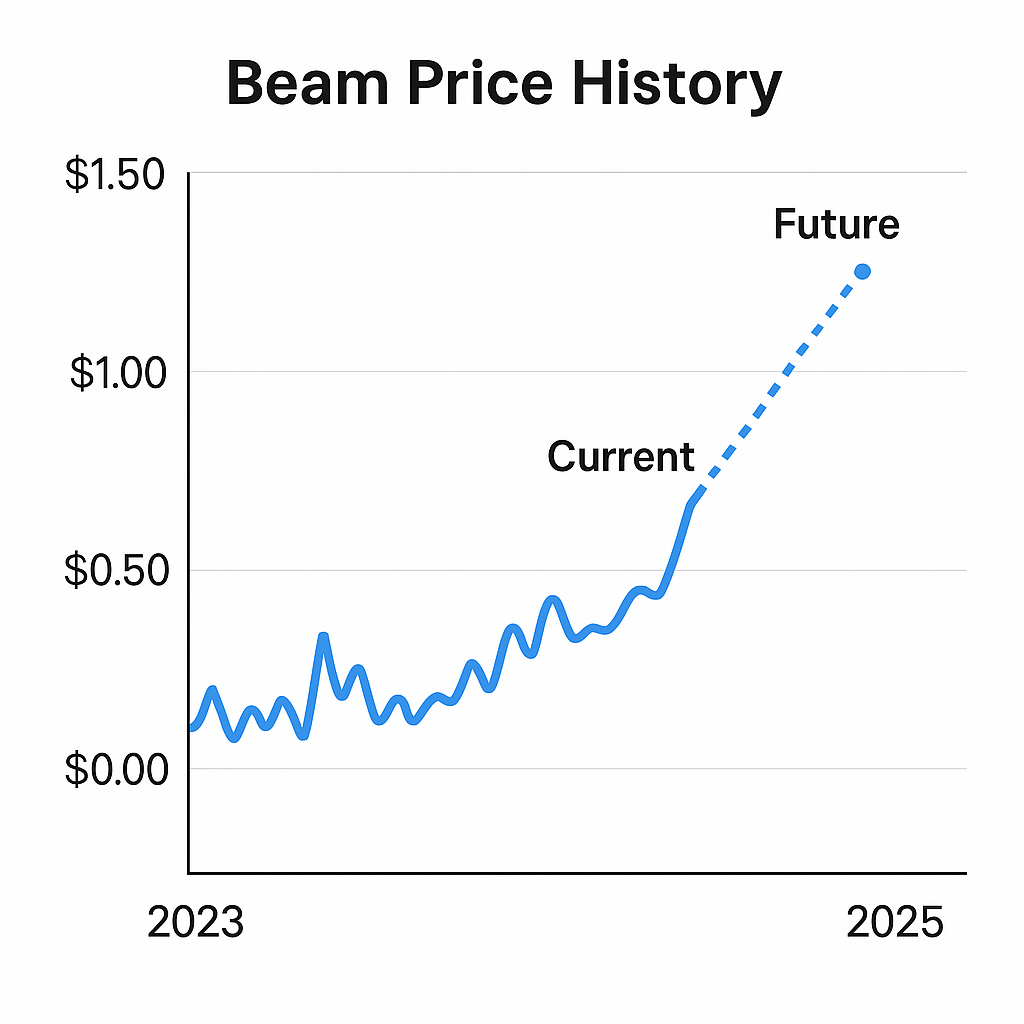
Game adoption can affect network activity, but it does not guarantee a proportional increase in BEAM demand or token price. Sponsored fees, transaction design, player retention and token supply all matter. Distinguish infrastructure use from a promise of financial gains, and measure actual game activity rather than rely on the number of announced partnerships.
BEAM’s market capitalisation and exchange availability vary over time and by product or customer region. An old $450 million snapshot is not a live valuation, and a global listing does not establish that the same market is available to a UAE account. For the technical role of the token, use the network documentation; for a transaction, check the exact asset, chain, fees and provider terms. A listing is not proof of investment quality or future demand.
BEAM’s Competitive Edge in 2025
Compared to other gaming blockchains like Immutable X, Ronin, or Mythos Chain, BEAM has a few powerful competitive advantages:
- Truly Decentralised: No single game publisher owns BEAM. It’s DAO-governed.
- Ecosystem Grants: BEAM is funding indie developers, fuelling grassroots growth.
- Player-Owned Economies: Games on BEAM allow true asset ownership via NFTS.
- Optimised SDKS: Developer toolkits are simple and intuitive, cutting development time.
The Future of Gaming on BEAM
Market-size forecasts for blockchain gaming need a named publisher, date and definition. They do not establish that Beam will capture the projected market or that BEAM will appreciate. A more useful assessment checks the games actually deployed, the services they use, their player retention and the economic rights of the assets. Distinguish completed integrations from announced support or grants, and the quality of a game from the financial outcome of its token.
Already, Web2 gaming companies are eyeing BEAM to migrate or launch hybrid models — bridging traditional gaming audiences with blockchain-powered economies.
Beam’s prospects depend on completed integrations and games people continue to play. An ecosystem announcement does not establish player retention, revenue or the token’s future role. Compare the deployed services with the game’s current requirements, and assess a game’s quality separately from the investment outcome of its associated assets. A familiar Web2 comparison is a metaphor, not evidence of equivalent adoption.
For an evidence-based explanation, use the network’s technical documentation rather than an unattributed quotation that cannot be traced to a named speaker and source.
The developer reference explains network connection, game APIs, player and automation services, governance and transaction handling. Those documented features are more useful for evaluating the platform than a promotional claim about where games “deserve” to belong.
Should You Pay Attention to BEAM?
If you’re a:
- Gamer looking for true asset ownership
- A developer wants easy access to blockchain technology
- Investor eyeing the next big move in Web3
- Crypto enthusiast wanting exposure to gaming
BEAM should absolutely be on your radar.
It’s a rare project where technology, community, and opportunity align so cleanly.
Final Thoughts
As we move deeper into 2025, it’s clear that BEAM is more than just a trend — it’s building a sustainable blockchain gaming economy.
Whether you’re ready to battle, build, or simply invest,
BEAM is fast becoming the platform where the next generation of gaming legends will be made.
Questions for Players and Developers
- Game status: Confirm whether the title is live, in testing or only announced.
- Asset rights: A token does not automatically confer copyright, access to every game or resale liquidity.
- Custody: Beam’s documentation distinguishes player and automation services; understand who controls the keys.
- Transaction costs: A sponsored transaction still has a cost borne by someone; verify which actions the game sponsors.
- Interoperability: A bridge or token standard is not a promise that another game will support the item.
Use the official API and SDK documentation for the integration you intend to use. An ecosystem logo, funding announcement or token holding is not evidence that a particular game feature is deployed. For another implementation, see our Off The Grid and GUNZ guide.