


The recent dip in the Dubai gold price to Dh489.75 has left many investors on edge, capping a month of tense, narrow swings. For those watching the market, this volatility can be frustrating. One moment, headlines point to a rally; the next, prices are easing, seemingly in response to cryptic signals from the U.S. Federal…
The recent dip in the Dubai gold price to Dh489.75 has left many investors on edge, capping a month of tense, narrow swings. For those watching the market, this volatility can be frustrating. One moment, headlines point to a rally; the next, prices are easing, seemingly in response to cryptic signals from the U.S. Federal Reserve. This constant uncertainty is a major pain point for anyone trying to make smart decisions about their gold holdings. But what if you could move from being a reactive spectator to a proactive strategist?
This article isn’t just another news report. It’s an investor’s playbook. We will break down the precise relationship between the Fed’s actions and the price of gold in Dubai and on the global stage. More importantly, we will give you a clear framework for decoding the key U.S. economic indicators that the Fed watches. By understanding these signals, you can learn to anticipate market movements, turning economic data into a powerful tool for navigating gold price volatility.
Why Is the Gold Price Dropping? Understanding the Fed’s Influence
To understand why gold prices fluctuate, we must first grasp a fundamental economic principle: the inverse relationship between interest rates and gold’s appeal. When the U.S. Federal Reserve signals it might keep interest rates high, or delays expected rate cuts, it puts downward pressure on the global bullion market, and those effects are seen directly in the 24k gold rate in Dubai.
This dynamic is rooted in the concept of “opportunity cost.” Gold is a non-yielding asset; it doesn’t pay interest or dividends. When interest rates rise, government bonds and high-interest savings accounts become more attractive to investors because they offer a guaranteed return. An investor might choose a U.S. Treasury bond paying 5% interest over holding gold, which pays nothing. This shift in demand—away from gold and toward interest-bearing assets—causes the price of gold to fall.
Conversely, when the Fed cuts interest rates, the opportunity cost of holding gold decreases. Those same bonds and savings accounts now offer lower returns, making gold a relatively more attractive store of value. This is why the prospect of a Fed rate cut often sends gold prices higher. Historically, cycles of Fed rate cuts have often coincided with significant bull runs in the gold market, as lower borrowing costs and reduced yields on other assets push investors toward the perceived safety of bullion.
The Inverse Relationship: Interest Rates vs. Gold’s Appeal
The mechanics are simple yet powerful. A potential Fed rate cut directly answers the question of “how does fed rate cut affect gold price?” by making the precious metal more competitive. Lower rates reduce the appeal of holding currency like the U.S. dollar, which is often inversely correlated with gold. When the dollar weakens, it takes more dollars to buy an ounce of gold, pushing its price up.
This dynamic creates the investor uncertainty that currently grips the market. Traders are constantly weighing new information to predict the Fed’s next move. As of this week, futures markets are pricing in a little over a 60% probability of a quarter-point rate cut next month. This suggests that while the market leans towards a cut, it is far from a certainty. This lack of conviction is what fuels the day-to-day gold price volatility. As one financial analyst might explain, every piece of economic data is scrutinized because it could tip the scales of opportunity cost, making investors either flock to gold or flee from it. This is why even subtle comments from Fed officials can cause significant price swings.

The Predictive Playbook: Decoding US Economic Data Before the Fed Acts
While many investors react to Fed announcements, the savviest players learn to anticipate them. The Federal Reserve doesn’t make decisions in a vacuum; its actions are a direct response to key economic data. By monitoring the same indicators the Fed uses, you can gain a critical edge and better forecast the probability of a rate cut. This playbook transforms you from a reactive news consumer into a proactive analyst.
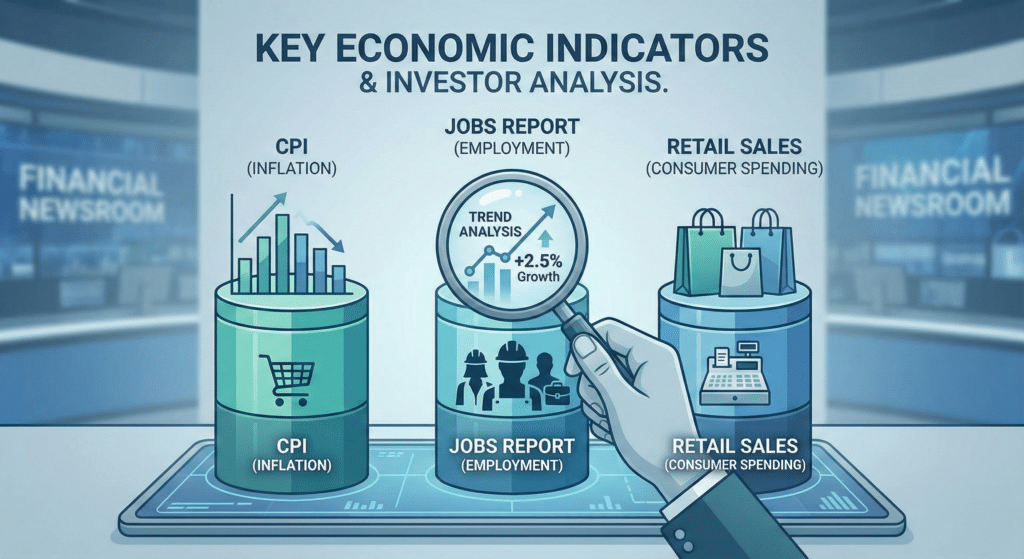
The Fed operates under a dual mandate: to achieve maximum employment and maintain stable prices (i.e., control inflation). Therefore, the data points that matter most are those related to inflation, jobs, and overall economic health. Here are the top three indicators to watch.
Indicator #1: Inflation Reports (CPI & PPI)
Inflation is the Fed’s primary adversary. The Consumer Price Index (CPI) and Producer Price Index (PPI) measure the rate of price increases for consumers and producers, respectively. When these reports show high inflation, the Fed is pressured to keep interest rates high—or even raise them—to cool down the economy. This is bearish (negative) for gold. Conversely, when inflation reports show prices are cooling, it gives the Fed the green light to consider cutting rates to stimulate growth, which is bullish (positive) for gold.
For example, if the upcoming PPI report comes in hotter than expected, the market will likely lower the Fed rate cut probability, causing a short-term drop in gold prices as investors anticipate a more hawkish Fed. Federal Reserve officials have repeatedly stated their commitment to taming inflation, making these reports the most crucial leading indicator.
Indicator #2: Employment Data (Jobs Reports & Jobless Claims)
The health of the labor market is the second pillar of the Fed’s dual mandate. A strong jobs report, characterized by low unemployment and robust wage growth, signals a healthy economy. This reduces the urgency for the Fed to cut rates and can be a headwind for gold. On the other hand, a weakening labor market, indicated by rising jobless claims and slowing job creation, can be a major catalyst for a Fed rate cut. If people are losing jobs, the Fed may lower interest rates to make borrowing cheaper and encourage economic activity.
The upcoming jobless-claims figures will be a key piece of this puzzle. A sudden spike in claims could significantly increase the Fed rate cut probability, providing a strong tailwind for the global bullion market and, consequently, prices in Dubai.
Indicator #3: Retail Sales & Consumer Spending
Consumer spending is the engine of the U.S. economy. Strong retail sales data suggests consumers are confident and the economy is expanding, giving the Fed less reason to cut rates. However, a slowdown in consumer spending can be an early warning sign of a potential recession. If consumers pull back, it could signal to the Fed that the economy needs a boost in the form of lower interest rates.
The upcoming release of retail sales data, which has been delayed, carries extra weight. As market strategists often note, the resilience of the U.S. consumer is critical. Any sign of weakness in this report could be the justification the Fed needs to loosen its policy, which would be highly supportive for gold. The uncertainty caused by these delayed reports only adds to the current gold price volatility.

The Dubai Gold Market: How Global Trends Impact Local Prices
The connection between a Federal Reserve meeting in Washington D.C. and the 24k gold rate in Dubai is direct and immediate. Dubai is a major global hub for gold, but its prices are not set in isolation. They track the international spot price of gold, which is primarily denominated in U.S. dollars. Therefore, any factor that moves the global bullion market—especially Fed policy—is reflected in the dirham price at local retailers.
The recent price movements in Dubai perfectly illustrate this link. The 24K rate stood at Dh489.75 on Monday, down from Dh492 last Friday, while the 22K rate slipped to Dh453.50 from Dh455.25. This decline mirrors the adjustment seen in international markets as traders reassessed the likelihood of a near-term Fed rate cut.
A look at the month’s activity shows this volatility in action:
- Mid-Month Spike: On November 12, the price for 24K gold jumped to a high of Dh504.75, aligning with a period of global strength and optimism about a rate cut.
- Consolidation and Easing: Since then, prices have gradually eased back as Fed officials struck a more cautious tone, causing investors to temper their expectations.
- Recent Stability: The price has settled near the Dh489.75 mark, suggesting that while buyers remain active, a sense of caution prevails as everyone awaits clearer signals from the upcoming U.S. economic data.
This demonstrates that for anyone following the latest gold price news in UAE, understanding U.S. monetary policy isn’t just an academic exercise—it’s the most critical factor shaping the value of their investment.
Investor Strategy: Navigating Gold Price Volatility Amidst Fed Uncertainty
Armed with an understanding of how to decode economic indicators, you can now build a strategic framework for managing your gold investments. Instead of reacting to headlines, you can anticipate market sentiment shifts. Here are two primary scenarios and potential strategies for navigating them.
Scenario 1: Economic Data Signals a Likely Rate Cut
If the leading indicators begin to flash warning signs—for instance, inflation (CPI) is consistently falling, jobless claims are rising, and retail sales are weakening—the probability of a future Fed rate cut increases. This environment is typically bullish for gold.
- Potential Action: Investors might consider this a favorable environment to add to their gold positions, anticipating that prices will rise as the Fed moves closer to cutting rates.
- Risk Management: It’s crucial to remember that this is a probabilistic assessment, not a guarantee. Staggering purchases over time (dollar-cost averaging) can help mitigate the risk of a sudden reversal in market sentiment.
Scenario 2: Data Suggests Rates Will Remain High
If economic data remains strong—inflation is stubborn, the jobs market is robust, and consumers are still spending—it suggests the Fed will likely hold rates higher for longer. This scenario is generally bearish for gold in the short term and can explain why the gold price is dropping.
- Potential Action: In this environment, investors might choose to hold their current positions or delay new purchases, waiting for a more favorable entry point.
- Long-Term Perspective: Even when interest rates are a headwind, it’s important to remember gold’s primary role as a long-term hedge. Its value is also supported by geopolitical risks, trade tensions, and concerns over government debt—factors that are independent of the Fed’s immediate actions. For long-term investors, short-term price dips can be viewed as buying opportunities rather than a reason to sell.
Conclusion: From Reactive Investor to Proactive Strategist
The recent drop in the Dubai gold price is not a random event but a direct reflection of the global market’s delicate dance with the U.S. Federal Reserve. The key takeaway from this playbook is that the Fed’s influence, while powerful, is not unpredictable. By focusing on the right signals, you can shift from being a reactive investor swayed by headlines to a proactive strategist who understands the forces shaping the market.
The leading indicators are clear: U.S. inflation reports (CPI/PPI), employment data, and consumer spending figures are the precursors to Fed policy changes. Monitoring this data provides a framework for anticipating shifts in investor sentiment and navigating the gold market with greater confidence. With this knowledge, you are now better equipped to interpret the latest gold price news in the UAE and make informed decisions that align with your financial goals.
For the latest analysis on gold prices and market-moving news, subscribe to our newsletter.
This article is for informational purposes only and should not be considered financial advice. Investing in gold involves risk, and you should consult with a qualified financial professional before making any investment decisions.


