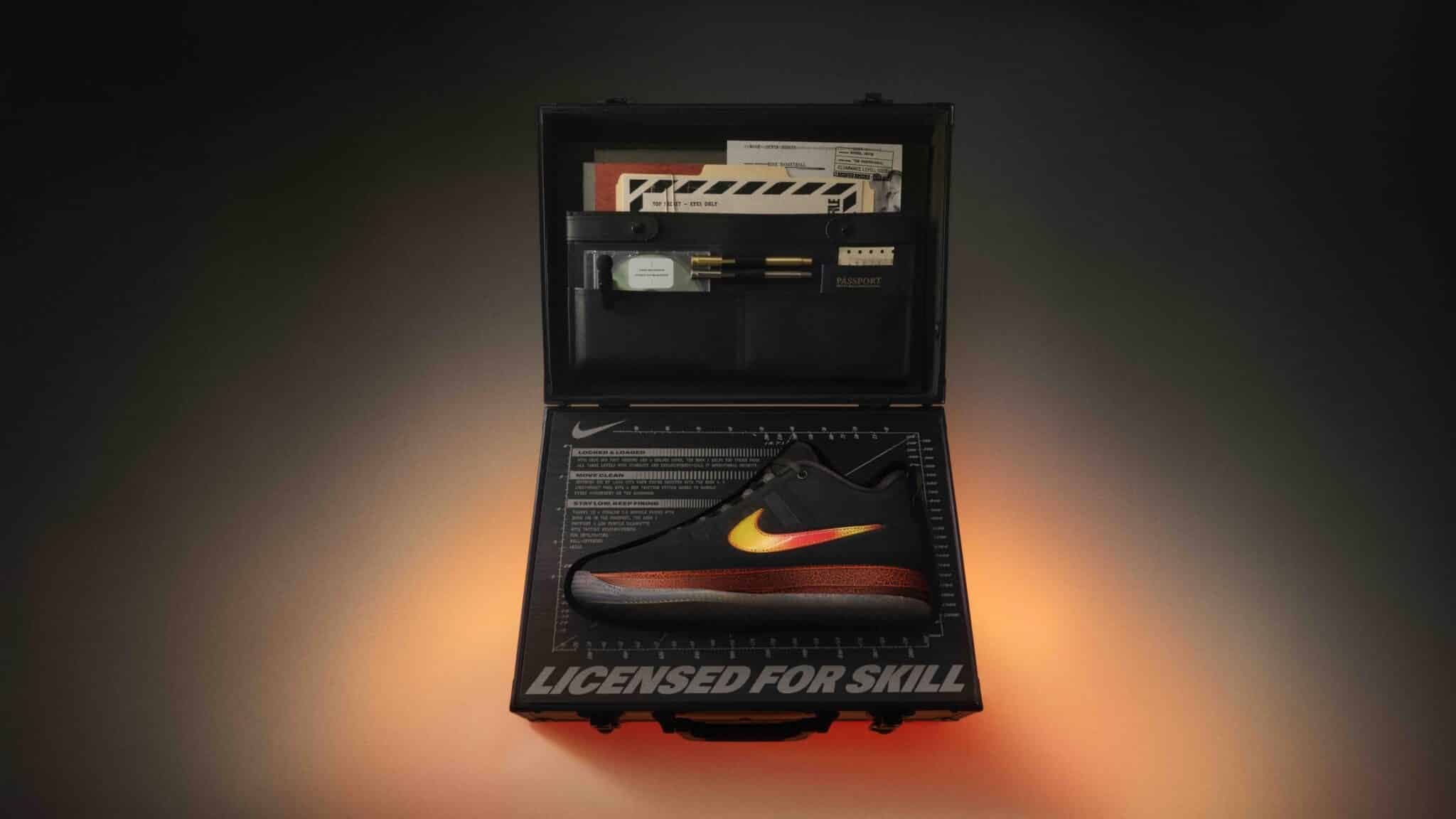
Verdict: the Nike Book 2 has a genuinely lively forefoot, strong lateral support and dependable grip on a clean indoor court. But the launch shoe’s stiff moulded upper, heavy build and dust-sensitive outsole are serious compromises. It makes most sense for a narrow-to-regular-footed guard who values containment and forefoot response. Wide-footed players, anyone who plays…
Verdict: the Nike Book 2 has a genuinely lively forefoot, strong lateral support and dependable grip on a clean indoor court. But the launch shoe’s stiff moulded upper, heavy build and dust-sensitive outsole are serious compromises. It makes most sense for a narrow-to-regular-footed guard who values containment and forefoot response. Wide-footed players, anyone who plays on dusty courts, and shoppers expecting a light successor to the Book 1 should look elsewhere—or at least try a mesh Book 2 colourway before buying.
Related: check our Dubai Sneaker Stores and Buying Checks for where to buy authentic releases and avoid fakes.
Testing disclosure: What’s Hot in UAE has not court-tested this pair. This independent review compares Nike’s published construction with WearTesters’ purchased-pair review, RunRepeat’s laboratory testing and HoopsGeek’s six-review summary. The reported test measurements and scores belong to those sources, not to our own wear test.
Nike Book 2 review: the quick answer
| Category | Evidence-led verdict | What matters on court |
|---|---|---|
| Traction | Good on clean courts; inconsistent once dust builds | Expect frequent wiping on poorly maintained floors |
| Cushioning | The strongest part of the shoe | Forefoot Zoom and Cushlon 3.0 favour a responsive, low ride |
| Support | Strong lateral containment | Wide forefoot base and outrigger resist rollover |
| Fit | Usually true to size, but snug and shape-sensitive | Wide feet should try before buying; colourway materials matter |
| Weight | Heavy for a guard shoe | RunRepeat measured 442g in its men’s US 9 test pair |
| Breathability | Poor in the moulded upper | RunRepeat scored its test pair 1/5 |
| Outdoor use | Not our first choice | The evidence is mixed; indoor use is the safer recommendation |
How we reached the verdict
The useful story is not a single score. The independent sources agree that cushioning and support are the Book 2’s strengths, while the upper, weight and dusty-court performance divide opinion. HoopsGeek’s six-review consensus gives the shoe 7.0/10 overall, with support at 8.3, cushion at 7.9, fit at 7.2, traction at 6.6 and materials at 6.0. WearTesters also found the cushion and support effective but judged the stiff launch upper difficult to recommend. RunRepeat’s instruments explain why the shoe can feel both responsive and cumbersome: high forefoot energy return, but above-average weight and stiffness.
That disagreement is important. Reviewers did not necessarily test the same upper or outsole compound, and court cleanliness changes traction. Nike officially produced both lightweight webbed-mesh versions and moulded-upper versions. A verdict on one colourway should not be presented as universal.
Why Nike Book 2 reviews disagree
Our cross-source comparison found a pattern that headline scores hide. The harshest conclusions cluster around moulded launch uppers and dusty courts; the most positive conclusions cluster around clean floors, strong containment and the forefoot cushioning. This is an inference from the cited tests—not a claim that every pair will behave identically—but it gives buyers a more useful way to interpret conflicting reviews.
| Finding | Confidence | Why |
|---|---|---|
| Forefoot cushioning is responsive | High | Nike’s construction, lab energy-return data and most court reviewers align |
| Lateral support is strong | High | Platform measurements, outrigger design and six-review consensus align |
| The moulded test shoe is heavy, hot and stiff | High | RunRepeat measured all three and court reviewers reported the same feel |
| Traction is dependable everywhere | Low | Results change sharply with dust, outsole and test environment |
| Every Book 2 colourway fits and flexes alike | Low | Nike uses materially different upper constructions |
The useful conclusion: shop the Book 2 as a colourway-specific performance shoe, not as one uniform model. Before paying, identify the upper, inspect the outsole, and judge it against the cleanliness of the court where you actually play.
Traction: strong bite, real dust risk
Nike uses a sun-dappled herringbone pattern inspired by the Air Force 1, with pivot zones and a lateral outrigger. On a clean indoor floor, the evidence points to useful multidirectional grip. The problem is dust. In HoopsGeek’s six-review set, traction opinions ranged from excellent to poor, but the recurring criticism was dust pickup and the need to wipe. WearTesters reported a tacky outsole that also collected dust.
RunRepeat measured a forefoot friction coefficient of 0.75, almost identical to its basketball-shoe average of 0.76. That supports a more precise conclusion than either “elite” or “terrible”: the outsole can grip, but its consistency depends on the surface and compound. If your local court is dusty, traction is the biggest reason not to buy blind.
Cushioning: the clearest Book 2 upgrade
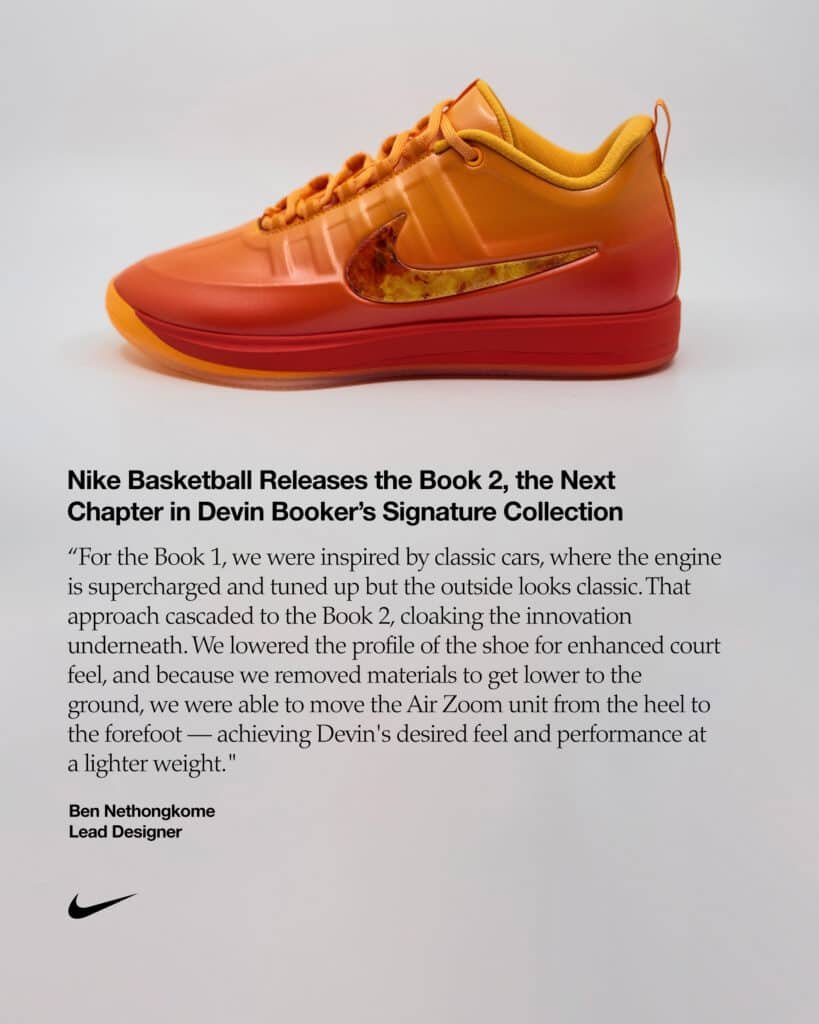
The Book 2 moves the Air Zoom unit from the Book 1’s heel to the forefoot and pairs it with a full-length Cushlon 3.0 midsole and foam sockliner. Nike designed this around Devin Booker’s request for a lower court feel. The independent evidence largely backs the claimed forefoot response.
| RunRepeat lab test | Nike Book 2 | Lab comparison |
|---|---|---|
| Heel shock absorption | 104 SA | Equal to the tested-category average |
| Forefoot shock absorption | 81 SA | Standard impact protection |
| Heel energy return | 64.3% | Above RunRepeat’s 57.8% average |
| Forefoot energy return | 75.1% | The standout measurement |
| Heel / forefoot stack | 28.0 / 21.1mm | Low, close-to-court geometry |
In plain English: expect a noticeable snap under the ball of the foot and adequate rather than maximal impact protection. Quick guards who load the forefoot should feel the benefit most. Players wanting a plush, deeply cushioned ride may not.
Support and stability: a genuine strength
The Book 2 combines a broad forefoot platform, pronounced lateral outrigger, rigid structure and substantial containment. HoopsGeek’s aggregate support score of 8.3/10 is its highest category result. RunRepeat measured a 119.5mm forefoot platform—wider than its 115.4mm comparison average—and high torsional rigidity. Those features should help resist lateral rollover during cuts.
The trade-off is freedom of movement. RunRepeat needed 26.9N to flex the Book 2, compared with 17.1N for the Book 1 in the same test. That extra structure can feel secure to one player and brick-like to another. Support is not the problem; comfort within that structure can be.
Upper, weight and breathability: choose the colourway carefully
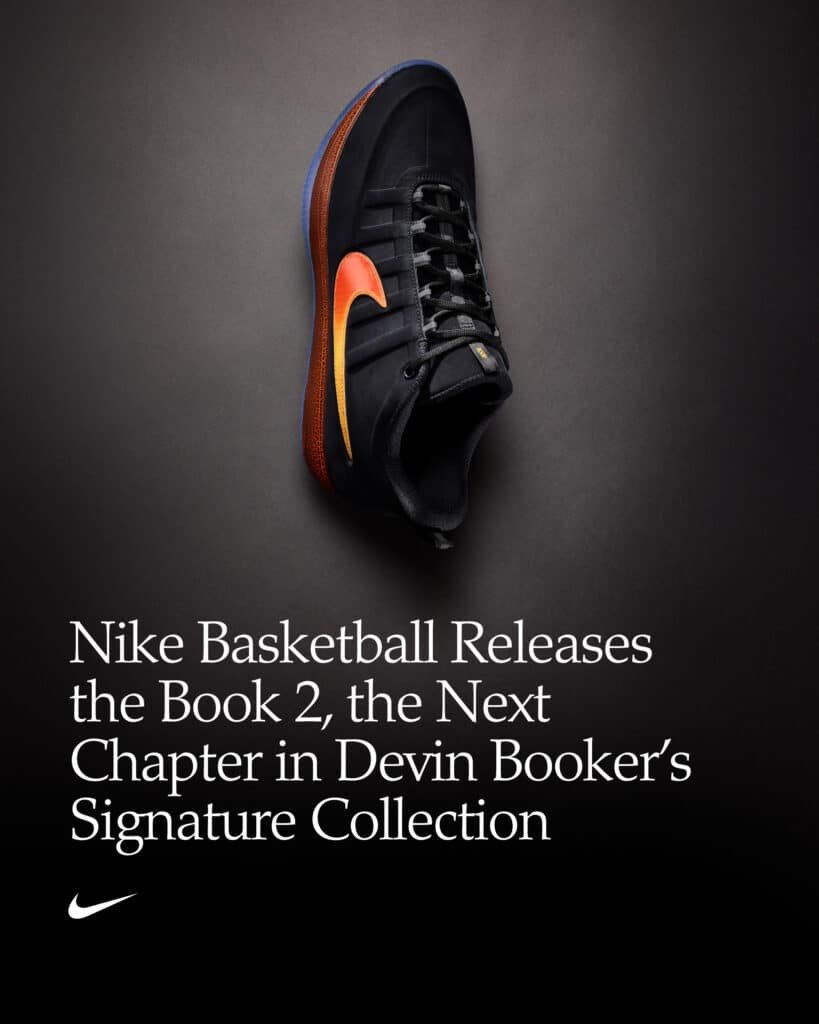
This is where a generic Nike Book 2 review becomes misleading. Nike says some versions use a webbed mesh upper, while others use a moulded upper. Most of the harsh launch reviews focused on the rigid moulded construction. It can deliver containment and durability, but several testers reported a long break-in, pressure or pinching.
RunRepeat’s moulded test pair weighed 442g (15.6oz) in men’s US 9, versus a 393g comparison average, and scored just 1/5 for breathability. Its durability results were much better: 4/5 at the toe, 5/5 for heel padding and only 0.5mm of outsole wear in its Dremel test. In other words, the dense build may last, but it runs hot and does not feel quick.
Practical buying rule: do not assume that two Book 2 colourways will feel identical. Check whether the pair has the moulded or webbed-mesh upper, and whether the outsole is translucent or solid. Try the exact version you plan to buy.
Nike Book 2 sizing and fit
- Narrow or regular feet: start with your usual Nike basketball size. Five of the six reviewers aggregated by HoopsGeek went true to size.
- Slightly wide feet: try true to size and half a size up side by side. Several reviewers found the midfoot or low-volume toe restrictive.
- Wide feet: this is a risky blind buy. A larger size may add length without solving pressure in the right place.
- Moulded upper: expect a firmer first wear and possible break-in.
- Mesh upper: likely the safer starting point if flexibility matters, but still try the exact colourway.
Fit evidence differs by source and edition. WearTesters described its purchased pair as snug and true to size, while Nike’s Phoenix listing recommends half a size up and RunRepeat’s wearer feedback indicates a small fit. Those are different evidence points, not one universal instruction. Try the exact upper and colourway if possible, checking toe room and heel hold together. A larger size can add length without resolving pressure in the midfoot, so do not accept discomfort simply to follow a headline fit verdict.
Nike Book 2 vs Book 1
| Change | Book 2 consequence |
|---|---|
| Zoom moved from heel to forefoot | More forefoot snap; less emphasis on heel cushioning |
| Cushlon 3.0 replaces Cushlon 2.0 | Responsive base with a low ride |
| Larger lateral outrigger | Stronger platform for side-to-side movement |
| Stiffer construction in tested launch pairs | More containment, but a harsher break-in |
| RunRepeat weight: 442g | The Book 2 feels substantially heavier than the first model |
The Book 2 is not a simple upgrade. It improves forefoot response and lateral structure, but sacrifices the Book 1’s easier, lighter feel. Book 1 owners who loved its flexibility should not order the sequel without trying it.
Who should buy the Nike Book 2?
Buy it if you play mainly indoors on clean courts, have narrow-to-regular feet, like a low ride with forefoot bounce, and prioritise containment over flexibility. A meaningful discount also makes the compromises easier to accept.
Skip it if your court is consistently dusty, your feet run wide or hot, you want a light guard shoe, or you dislike stiff uppers. Those are not minor caveats; they are the exact areas where independent tests found the Book 2 weakest.
UAE price and availability
The Rising edition’s recorded launch was 2 January 2026 at US$145; that is historical US context. The Nike UAE Booker collection now supplies current local offers by colourway: when checked on 11 October, the Spiridon edition was AED549 reduced from AED779, while Tiger Camo was AED729. Those are different editions from Rising and Phoenix, not a price for every Book 2. Check the exact code, upper, selected size, basket total and returns before paying. A mesh and a moulded-upper offer should not be treated as interchangeable just because their model name matches.
For more release coverage and explainers, browse our sneakers section.
FAQs: Nike Book 2
Has the Nike Book 2 actually released?
Yes — the Rising colourway launched January 2, 2026, followed by the Phoenix colourway later that month, both through Nike.com and select basketball retailers.
How does the Nike Book 2 compare to the Book 1 for UAE hoopers?
The Book 2 moves Zoom cushioning to the forefoot and adds Cushlon 3.0, giving it more forefoot response and stronger lateral containment than the Book 1. Independent tests also found the tested Book 2 heavier and less flexible. We do not recommend choosing it for dusty or outdoor courts without checking the outsole and trying the exact colourway first.
Sources and methodology
- Nike Newsroom: official construction, design variants and January 2026 release information.
- WearTesters: independently purchased pair and on-court performance assessment.
- RunRepeat: cut-open lab testing for weight, cushioning, traction, fit, stiffness, breathability and durability.
- HoopsGeek: category scores and consensus across six expert reviews.
Facts checked on 11 October 2026.