SeaWorld Abu Dhabi is my Yas Island shortlist for a marine-life day with habitats, presentations and eligible rides together. I’d give the realms time instead of treating the park as a coaster checklist. The point is the ocean-life focus. For a family, the right ticket still depends on what the children can use and which extras the group actually wants.
My verdict: follow the marine life, not just the rides
Editorial pick: 4/5. A guide-based recommendation for the outing described here, not a scored personal visit or a customer-rating average.
Four out of five as a marine-life-led family recommendation. I would prioritise the habitats and presentations that interest the group, then fit eligible rides around them. Standard admission, a specialist experience and a multi-park product need separate comparisons. The park does not feature orcas; that fact alone is not a complete welfare assessment. Choose the visit on its actual offering, not a borrowed description of another SeaWorld.
Compare Kryptonite Collider and Warner Bros. World for character-led indoor rides or Ferrari World for a coaster-focused shortlist. Check the operating attractions and individual restrictions before choosing a Yas pass.
Related: explore our full Yas Island area guide for Ferrari World, Yas Waterworld, Etihad Arena and things to do.
What I would check before buying for the children
I would plan this as a marine-life day, not buy on the assumption that every play attraction is running. On 22 October 2026, the operator’s Park & Rides Updates lists Shipwreck Cove, Kelp Climb, Penguin Play and Launch Bay as unavailable. That is a dated status, not a permanent-closure claim. If one is the main reason your child wants to visit, check the current notice before buying rather than discover the difference after admission.
For a break from stimulation, the park FAQ identifies a quiet room with a sensory nook in Abu Dhabi Ocean, as well as a mother’s lounge. I would locate those on arrival rather than leave the whole family plan dependent on rides. Ask staff about access and the child’s actual needs; the presence of a facility does not certify that every attraction suits every visitor.
Quick Reference
| Detail | Information |
|---|---|
| Location | Yas Island, Abu Dhabi (next to Ferrari World and Yas Waterworld) |
| Opened | 23 May 2023; operated by Miral Experiences |
| Opening hours (2026) | Use the selected-date operating information; regular hours and special-event access can vary. |
| Single-day tickets | Standard Single Day Ticket listed at AED 375; qualifying categories and multi-park products have their own terms. |
| Time to allow | Allow around 4–5 hours for the selected programme; add time for the group’s pace and extra experiences. |
| Getting there | Current road directions, complimentary shuttle timetables and free standard parking; organise the actual pickup and return. |
What Makes SeaWorld Abu Dhabi Special
The operator’s current FAQ describes five indoor levels covering approximately 183,000 square metres, more than 150 marine species and over 15 interactive experiences and rides. It also lists 17 dining options and 13 retail outlets. The park does not have orcas. Its associated Yas SeaWorld Research & Rescue Center combines marine research, rescue, rehabilitation and return work, which is a separate part of the organisation’s conservation activity.
The Eight Realms
The park is organised into immersive “realms,” each recreating a different marine environment:
| Realm | What to plan around |
|---|---|
| One Ocean | Central hub and the One Ocean presentation programme. |
| Endless Ocean | Multi-species aquarium habitats and observation areas. |
| Abu Dhabi Ocean | Regional marine-life and visitor-service setting. |
| Tropical Ocean | Tropical habitats, including dolphin and bird experiences as available. |
| Rocky Point | Sea-lion and seal habitats and presentations. |
| MicroOcean | Play and ride experiences with individual eligibility conditions. |
| Arctic | Polar Ocean realm with walruses, puffins, sea otters and Hypersphere 360. |
| Antarctica | Separate Polar Ocean realm with penguin habitats. |
Don’t Miss: The Endless Ocean Aquarium
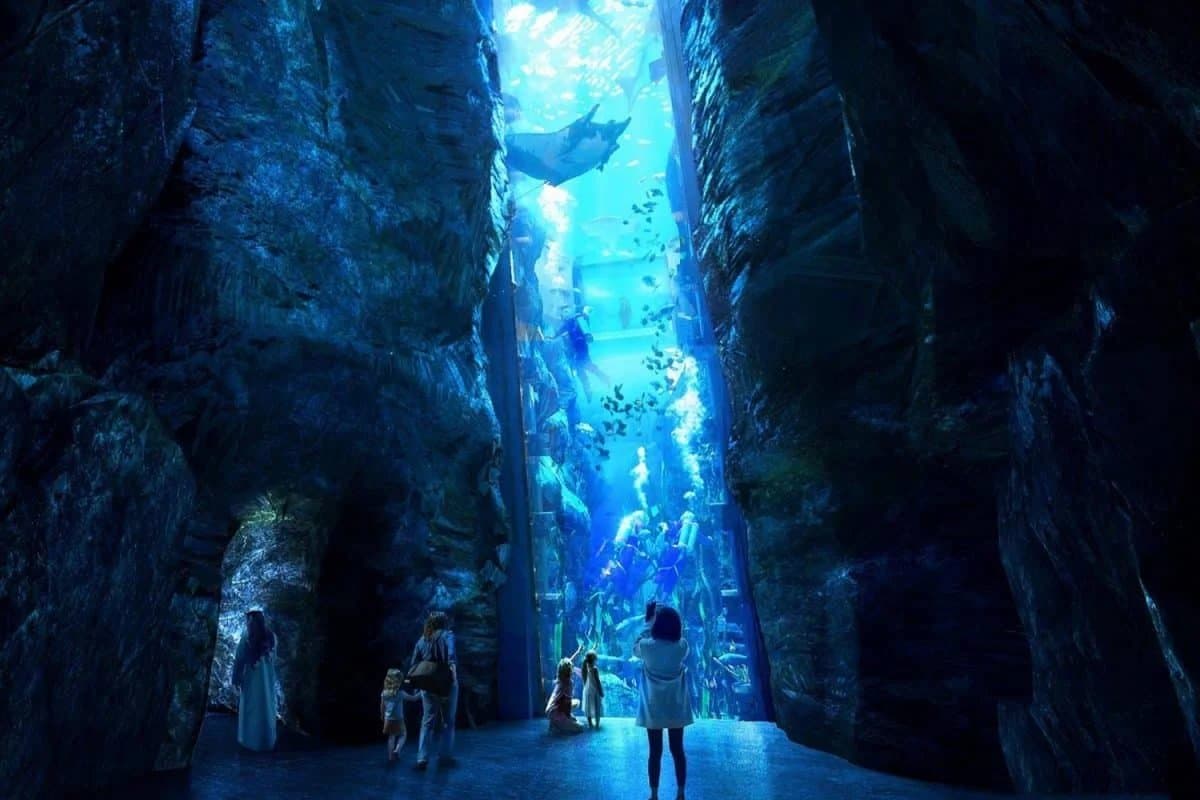
Our first stop would be Endless Ocean. The operator’s launch material describes a 25-million-litre aquarium with more than 68,000 marine animals; that is an animal count, not 1,800 species. The realm offers several habitats and viewing areas, including The Swirl. Allow time for the displays and the available presentation programme instead of treat the aquarium only as a photograph between rides.
Manta and Hypersphere 360 are rides with their own restrictions. Hypersphere is in the Arctic realm, not One Ocean. The operator’s restrictions set its rider height range at 1.2–1.95 metres and require guests to brace against ride forces. It should not be presented as a non-physical substitute for a visitor avoiding rides. Use the actual ride conditions before choosing it for a child or anyone with a relevant limitation.
Hypersphere: admission is not a reserved ride slot
The linked Hypersphere form’s published terms say reservations can only be made while at the park, with one request per calendar day and no more than five guests in one booking. An accepted request produces a QR ticket for a specific time; it does not promise immediate boarding or remove the general queue. I would check the ride conditions first, then the day’s booking arrangement with staff. A six-person group should not assume one request covers everyone. No advance slot or ride availability is guaranteed by this guide.
More Than a Theme Park: Rescue and Research
The Yas SeaWorld Research & Rescue Center focuses on marine conservation and works with relevant authorities to rescue, rehabilitate and return animals where appropriate. The operator describes it as a first-of-its-kind dedicated centre combining these functions in the region. That is more specific than claiming it is the only marine rescue facility. The centre’s education and research programmes are useful context, while the visitor ticket and any separately booked experience retain their own terms.
Tickets and Combos
The standard Single Day Ticket is listed at AED 375. It is one dated general-admission entry during regular operating hours. The current page does not establish the old AED 290 junior figure, so select the actual eligible category at checkout. Children aged two and under enter free with a responsible ticketed adult; ages 3–11 need admission and an accompanying responsible adult. Compare the official multi-park product if visiting more than one Yas attraction, and check which experiences or upgrades cost extra.
Best Time to Visit and Insider Tips
The indoor format makes SeaWorld an option when an outdoor park is less appealing, although temperatures differ between tropical and polar realms. The operator recommends layers or a jacket. Our plan would be a main aquarium visit, the presentations that interest the group and eligible rides, with breaks for food. Four to five hours is a planning allowance, not a guarantee of completing every show. Use the chosen date’s operating hours and programme before arranging the return.
How to Get There
SeaWorld is on Yas Island. Use the full park address, current road directions and the actual journey estimate from your departure point. The standard ticket lists complimentary shuttle transport and free parking; the operator also advertises valet at AED 52. We would plan the arrival and return together, rather than guarantee a seven-minute airport transfer or one fixed travel time from every part of Dubai.
The operator publishes Yas Express routes and timetables for complimentary shuttles from Dubai, Sharjah, Ras Al Khaimah and Ajman, plus an Abu Dhabi City route and an island service. Intercity instructions require a valid e-ticket and arrival at the stop five minutes before the bus. Use the actual timetable and pickup point: approximate bus timings depend on traffic, and transport access does not grant admission to another park.
Useful family services: the operator lists stroller rental at AED 40 and lockers at AED 45 in Abu Dhabi Ocean. Wheelchairs are complimentary, subject to availability. These are service details, not a guarantee that every ride is suitable for every visitor.
Before arrival: read the Park Updates for unavailable experiences and the ticket’s date-change conditions. The current Single Day Ticket page says it is non-refundable and permits changes before 7pm on the day before the visit for an AED 50 fee per ticket; other products can have different terms. The general FAQ also describes review of expired and non-expired ticket exchanges and revalidation. That is not an automatic refund or a waiver of the dated ticket’s deadline: contact Yas Concierge on 600 511115 with the actual product and status rather than assume all tickets use one rule.
Frequently Asked Questions
How much are SeaWorld Abu Dhabi tickets in 2026?
The current standard Single Day Ticket page lists AED 375. Children aged two and under enter free with a responsible ticketed adult; ages 3–11 require a valid ticket and accompanying adult. Select the actual ticket category and any eligible offer at checkout.
What are the opening hours?
Use the operator’s current selected-date operating information and the booked ticket. Regular hours can change, and special events have their own conditions. The expired March 2026 Ramadan schedule is not a current opening-hours promise.
How long do you need at SeaWorld Abu Dhabi?
Four to five hours is a useful planning allowance for selected realms, presentations and eligible rides. The actual programme, availability and the group’s pace determine the visit; it is not a guarantee of experiencing every show.
Is SeaWorld Abu Dhabi indoors?
Yes. The operator describes SeaWorld as an indoor park across five levels. Conditions differ by realm, with colder Arctic and Antarctica areas, so layers or a jacket can be useful.
What is the Endless Ocean?
Endless Ocean is a multi-species aquarium realm. The operator’s launch material describes 25 million litres and more than 68,000 marine animals, while its current overall park FAQ records more than 150 marine species. Animal totals and species counts are different measurements.
Does SeaWorld Abu Dhabi have a rescue centre?
Yes. The associated Yas SeaWorld Research & Rescue Center works on marine research, rescue, rehabilitation and return. The operator describes this combination as first-of-its-kind in the region, rather than the only marine rescue facility.
How do I get to SeaWorld Abu Dhabi?
Use current road directions or the operator’s complimentary shuttle timetable. Yas Express publishes intercity, Abu Dhabi City and Yas Island services. Select the actual pickup, departure and return; a free shuttle does not include admission to another park.
Is it suitable for young children?
Families can plan around the habitats, presentations and eligible play or ride experiences. Children aged two and under enter free with a ticketed responsible adult, but individual rides have height and other restrictions. Hypersphere 360 requires a height of 1.2–1.95 metres.
Can I bring my own food and water into SeaWorld Abu Dhabi?
The published park-entry rules exclude outside food and beverages except medically required food or beverages and baby food/formula in non-glass containers. The separate Research & Rescue Center terms mention a small water bottle under one litre; that should not be imported as a general park-entry allowance. Check the operator’s applicable policy for the visit or experience you have booked.