Vintage Armani is at its best when the clothes do the talking. Give me a generous jacket, an easy trouser and a quiet colour over a logo bought for its own sake. The attraction is the silhouette: tailoring with presence, without the outfit looking as though it has been assembled for a board meeting.
But I would not buy a garment just because a listing calls it “archive.” An original period piece, a newly made re-edition and a photograph in the brand’s archive are different things. That distinction matters more to a buyer than another promise that every old suit is an investment.
Vintage, archive or re-edition: choose the thing you actually want
| Your aim | My starting point | What I would establish before paying |
|---|---|---|
| Own an original period garment | A specific pre-owned piece, not a general style description | Label, supported dating, composition, actual measurements and condition. |
| Wear a historical design made again | The current Armani/Archivio re-edition listing | Exact reference, production description, size, return terms and delivery market. |
| Understand the original silhouette | The brand’s archive photographs and collection records | Season, look and design details; viewing a record does not reserve a garment. |
| Build an everyday wardrobe | The cut and condition I can use now | Whether it works with my clothes and whether the complete cost makes sense. |
Armani describes its archive project as documenting looks from 1975 onwards, with material for public research and selected archival garments offered for purchase. Separately, its current men’s re-edition collection lists designs identified with seasons including SS1979, SS1983 and SS1990. The US storefront is a collection reference here, not a UAE price or availability promise.
I would ask a seller to finish the sentence: “Archive means…” If the answer is only “it looks old,” that is not enough to establish an era, rarity or premium. A design year in a product name is not proof that the particular garment was manufactured that year.
Why the shape still deserves attention
The brand’s own archive places its 1975 beginnings in the meeting of Armani’s ready-to-wear experience at Cerruti and the lightness of Neapolitan tailoring. That is a more useful starting point than the idea that tailoring suddenly appeared from nowhere: the achievement was in the way those influences were combined.
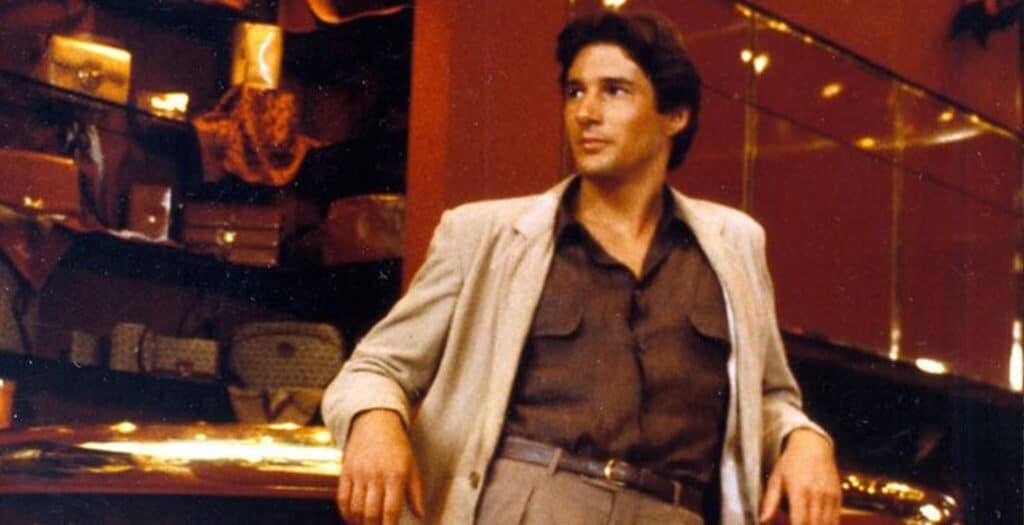
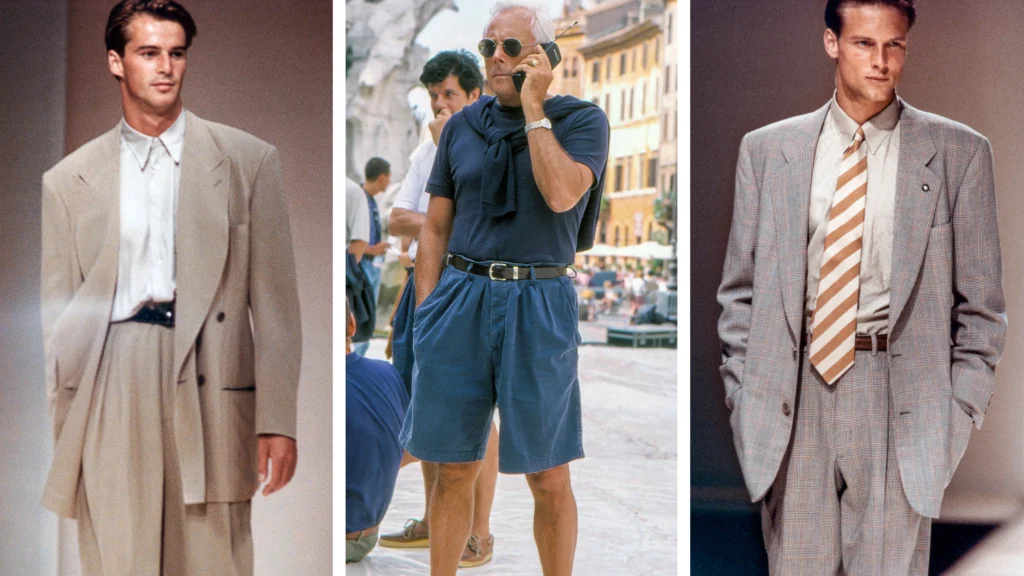
What I like in the images here is the room around the body. A jacket can have a broad shoulder and still look relaxed; a trouser can be generous without becoming shapeless. The beige double-breasted look below has enough presence that I would keep the shirt and shoes restrained, rather than load it with competing accessories.
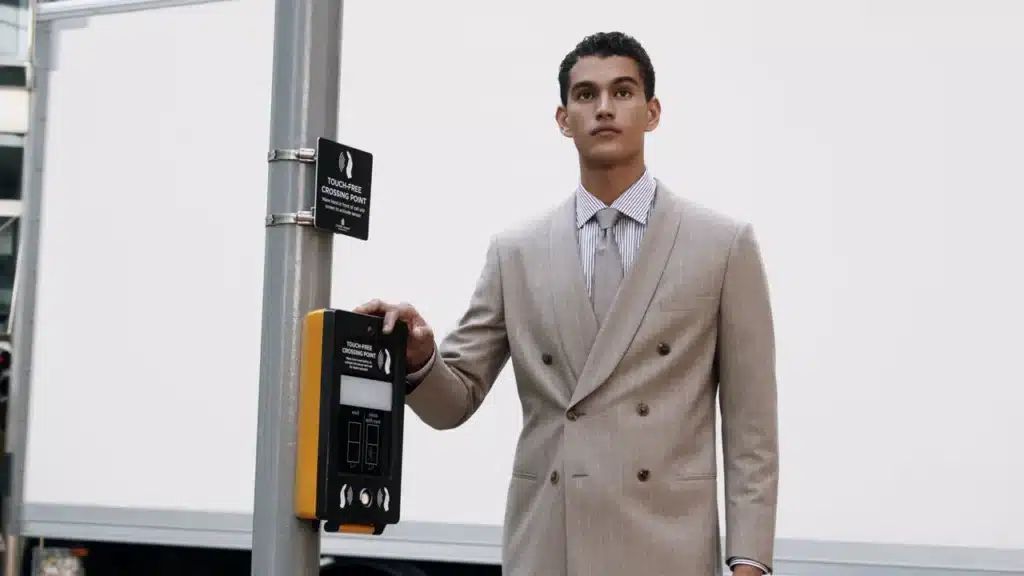
I would use those proportions as inspiration, not order an arbitrary size up. An oversized garment and a deliberately generous pattern are not the same thing. Compare the actual shoulder, chest, sleeve and length measurements with a jacket you already like, and get a tailor’s assessment before relying on major alterations.
Soft tailoring is not a lifetime condition guarantee
A beautiful cut does not make every surviving example sound. GQ’s October 2025 feature uses specific garments and a vintage specialist’s account to explore the fabrics behind Armani’s drape. That is useful context, not an inspection of the piece in your shopping basket.
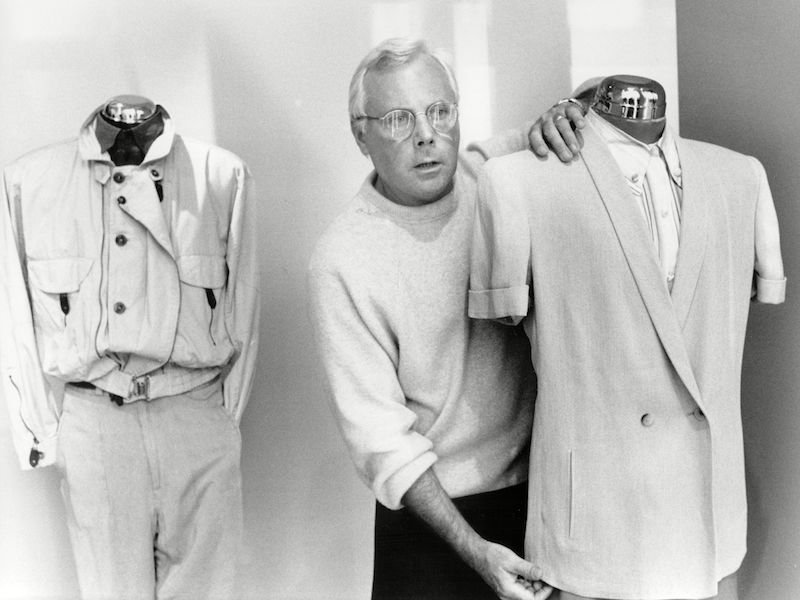
For a purchase, I would want clear close-ups of the collar, underarms, cuffs, lining, seams and trouser seat, plus disclosure of stains, holes, repairs and previous alterations. Ask for the composition and care labels as well as the brand label. A glamorous photograph cannot answer those questions.
I would also ask whether a suit is still a matching set. A jacket and trousers in similar colours are not automatically the original pair. For a complete suit, request photographs together in the same light and compare labels and measurements; for a separate jacket, judge it as a separate jacket rather than pay for an imagined missing outfit.
My styling choice: borrow the ease, not the entire costume
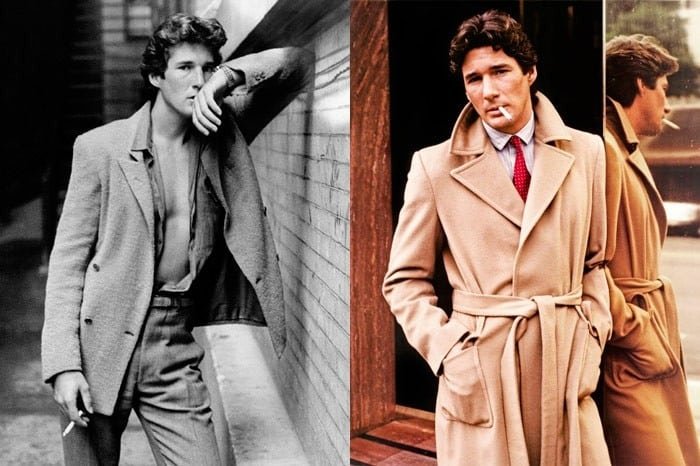
The two-panel image above is why I prefer one strong tailoring idea at a time. I would borrow the relaxed jacket with a simple shirt, or the long belted coat over something quiet. I would not reproduce every period detail merely to prove that I understood the reference.
| The piece | How I would use it | What would make me pass |
|---|---|---|
| A generous neutral jacket | Over a plain shirt or T-shirt, with the jacket doing the work | A shoulder or length that needs an expensive reconstruction. |
| Pleated trousers | With a quieter top so the line and volume remain visible | Unclear waist, rise, inseam or past alterations. |
| A statement coat | As the main feature, not one of several competing features | A purchase justified only by rarity, with no realistic occasion to wear it. |
These are styling preferences, not a claim that I have worn or tested the garments pictured. For a UAE wardrobe, I would decide when I will actually use the piece before spending: regular indoor wear, a particular evening or travel are different briefs. A beautiful coat that never leaves the cupboard is not my idea of a successful buy.
The cost I care about is the one after repairs
I would not put a universal AED value on vintage Armani. The line, garment, period, condition and evidence all matter, and an asking price is not a completed sale. “Increasingly collectible” does not tell me whether one particular jacket is fairly priced.
Here is my buying calculation, using illustrative figures rather than a current quote: an AED 900 jacket plus AED 250 of agreed alterations and AED 80 of cleaning costs AED 1,230 before any delivery or other charges. An otherwise suitable AED 1,350 option needing neither service is only AED 120 more. The cheaper ticket is not automatically the better deal; I would decide after comparing the actual fit, condition and return terms.

Buying an existing garment puts it back into use. I like that practical advantage, but I would not attach an automatic environmental saving to every vintage purchase without a proper assessment. The useful question is whether I will keep wearing it—not whether the listing has a reassuring green adjective.
A living archive does not mean its founder is still alive
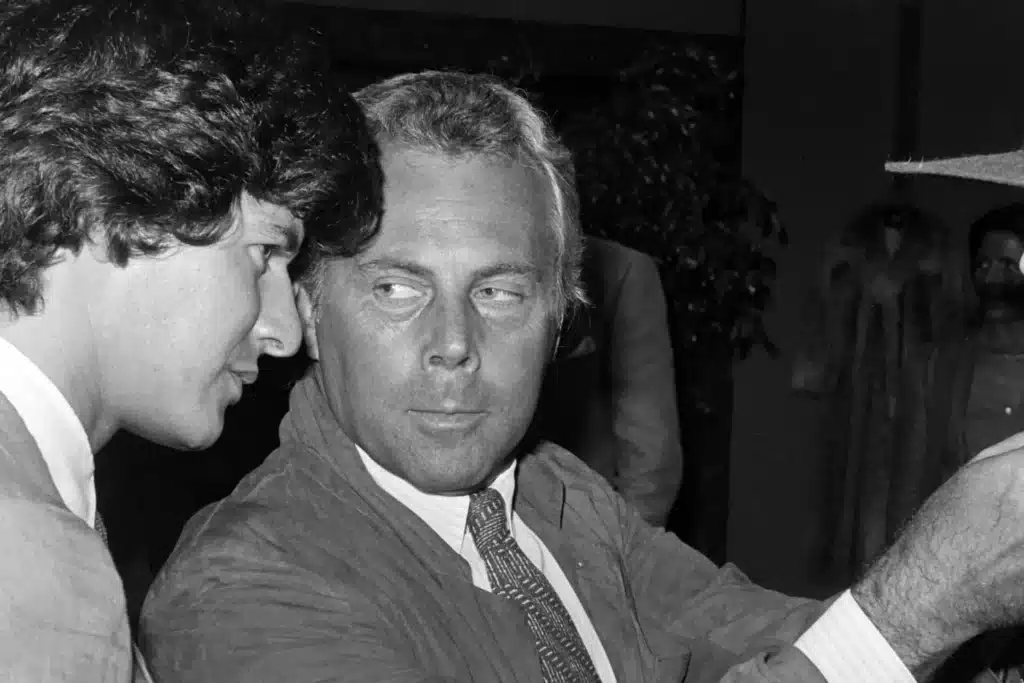
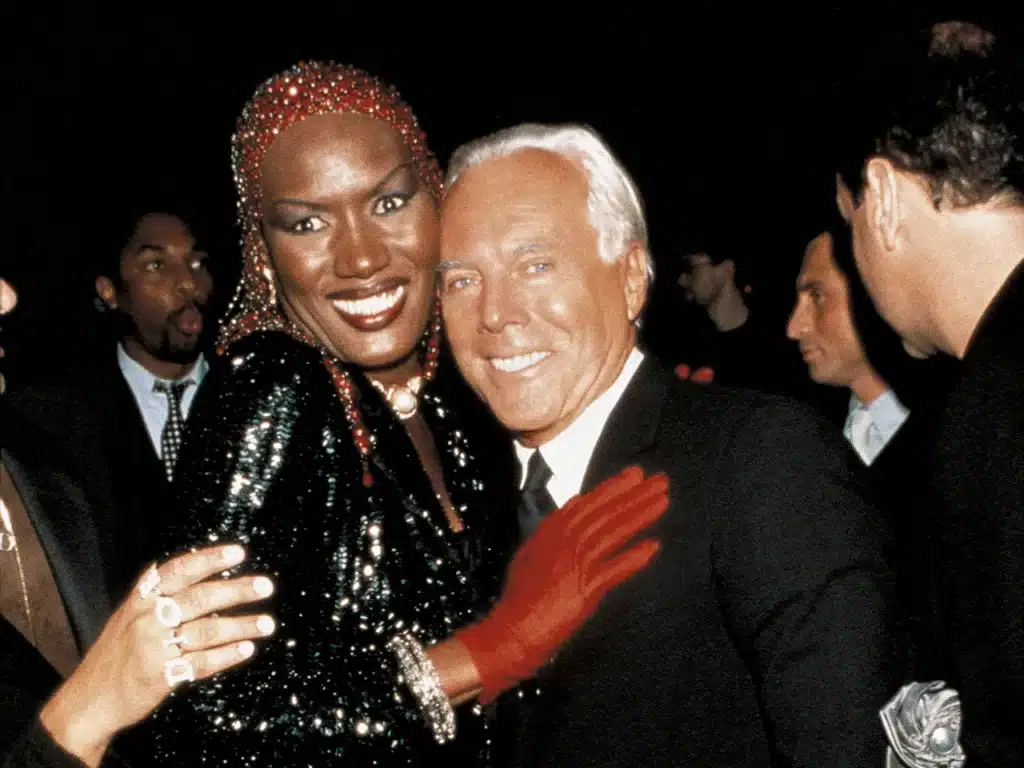
Giorgio Armani died on 4 September 2025. The Armani Group’s announcement published by Olimpia Milano confirms his death and the continuation of the company by his family and employees. His archive and historical runway photographs remain part of the fashion story; they should not be mistaken for current appearances.
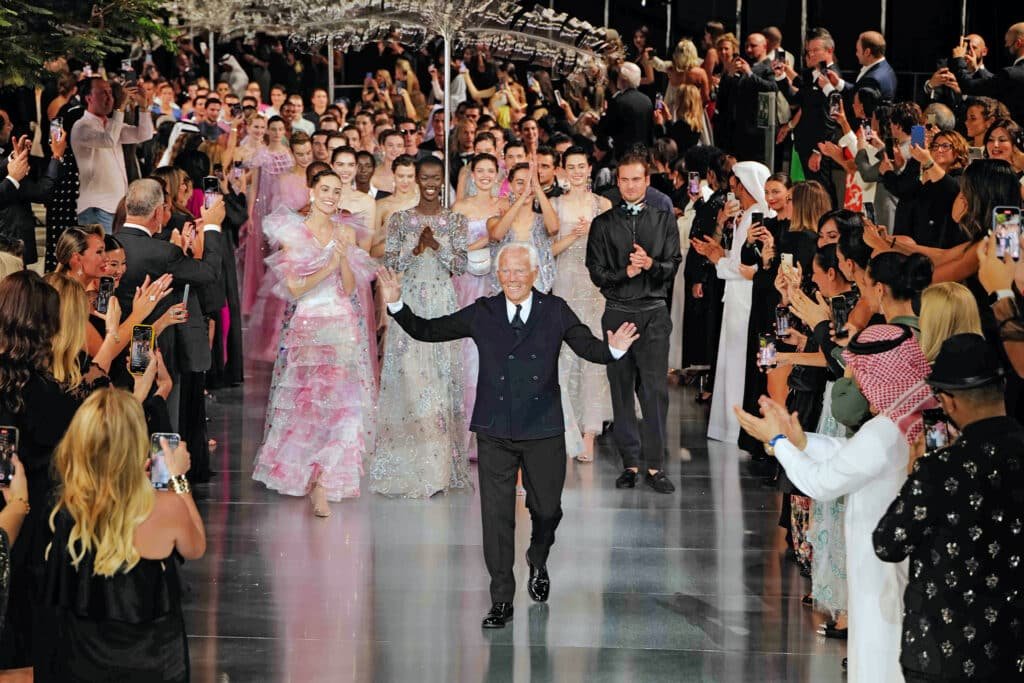
Wallpaper’s April 2026 coverage discusses the reissued designs as a new chapter in that archive project. For me, that makes the distinction between original and re-edition more important, not less: both can be appealing, but they answer different buying goals.
Where to start from the UAE
Dubai Mall’s official directory lists Giorgio Armani on the Ground Floor, with P3 Fashion Parking and contact number +971 4 570 7125. That confirms a boutique contact, not a promise of vintage stock or access to any garment in Milan. I would call with the exact re-edition reference and size before making a trip.
For a pre-owned listing, ask the seller where the item is held, where it will ship from, what authentication or dispute process applies and which returns are allowed. A UAE-facing website is not, by itself, confirmation of local inventory or a duty-free delivered total. Neither is an A|X product automatically an original Emporio or Giorgio Armani archive garment.
For the wider fashion context, our Balenciaga history guide separates another house’s historical design story from current shopping routes. The Lifestyle section collects the magazine’s broader fashion coverage.
My verdict: buy the silhouette, then insist on the evidence
I love tailoring that looks composed without looking uptight. That is why these Armani proportions still interest me. But the best buy is the garment I want to wear, in a condition and fit I accept, at a complete price I understand. I would take that over an impressive archive label and a vague promise of future value every time.
Frequently asked questions
Is Giorgio Armani still alive?
No. The Armani Group announced his death on 4 September 2025. The company and its archive project continue; historical photographs should not be read as current appearances.
Is an Armani/Archivio re-edition an original vintage garment?
Not automatically. A newly made re-edition references an earlier design. For an original period garment, ask for its label, dating evidence, composition, measurements and condition.
Can a Dubai boutique order any vintage Armani piece from Milan?
No such universal service is verified here. Dubai Mall lists a Giorgio Armani boutique, but an address does not confirm vintage stock, archive access or a particular re-edition. Ask about the exact reference before travelling.
What is a fair AED price for vintage Armani?
There is no reliable universal range in this guide. Compare the exact line, period, garment, condition and complete purchase cost, including any cleaning, repairs, alterations and delivery.
What would I buy first?
For a wearable wardrobe rather than a collection, I would start with a jacket or trousers whose proportions I love and whose measurements work. I would pass on an expensive label attached to a poor fit.
Does buying vintage guarantee a sustainable purchase?
No. Reusing a garment is the practical benefit, but this guide does not calculate its environmental footprint. I would buy something I will actually wear rather than assume every vintage purchase is automatically low-impact.
Source and image note
Archive, collection and UAE boutique information checked on 21 October 2026. Original article images are retained as historical and style illustrations; no new fitting, garment authentication, valuation or environmental assessment is claimed.