Experiencing unpaid wages can be one of the most stressful and debilitating challenges for any employee, particularly in a foreign country. In the lively economy of the UAE, where expatriates form a significant portion of the workforce, understanding your rights and the legal avenues for recourse is not just important – it’s essential for securing…
Experiencing unpaid wages can be one of the most stressful and debilitating challenges for any employee, particularly in a foreign country. In the lively economy of the UAE, where expatriates form a significant portion of the workforce, understanding your rights and the legal avenues for recourse is not just important – it’s essential for securing your financial stability and peace of mind. Our journey will be underscored by a compelling recent case in Abu Dhabi, where an employee successfully recovered an astonishing Dh228,666 in unpaid wages – a sign of the UAE’s solid labour laws and judicial system. From understanding the specifics of Federal Decree-Law No. 33 of 2021 to engaging with the Ministry of Human Resources and Emiratisation (MoHRE) and, if necessary, the Labour Court, we’ll cover every critical step. Discover what evidence you need, what the law demands of your employer, and how a landmark court victory can illuminate your path to justice.
Know Your Rights: UAE Labour Law and Unpaid Wages
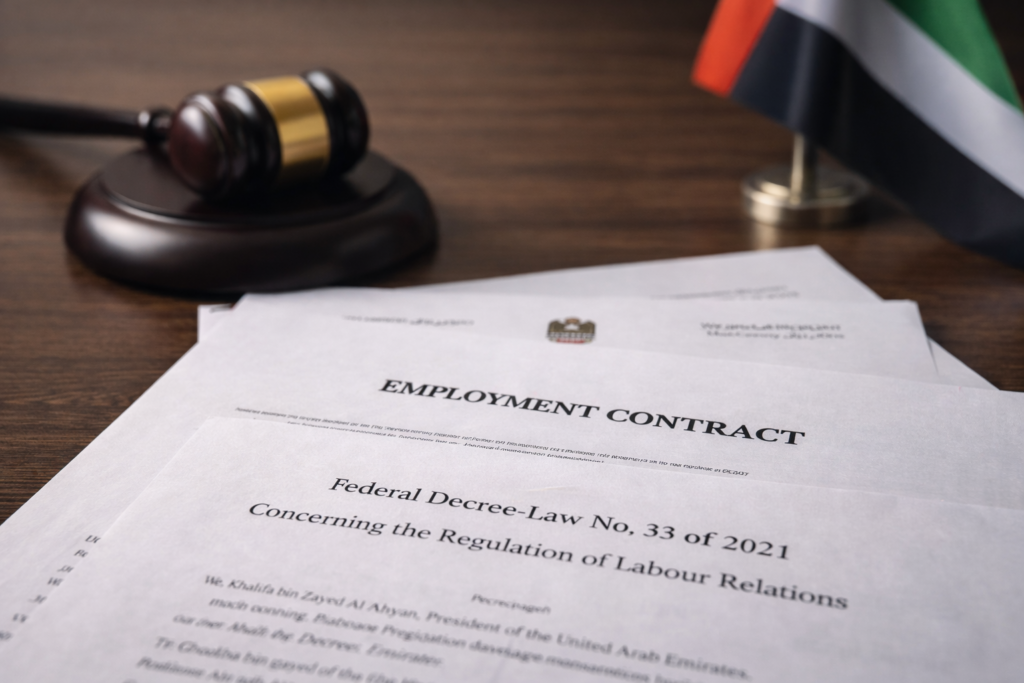
The UAE has established a strong legal framework to protect employee rights, particularly concerning timely and complete wage payment. Federal Decree-Law No. 33 of 2021 concerning the Regulation of Labour Relations (often referred to as the New UAE Labour Law) and its Executive Regulations, Cabinet Resolution No.1 of 2022, are the cornerstones of these protections. Understanding these laws is the first step in asserting your rights regarding unpaid salary in the UAE.
These legal instruments are designed to ensure fair treatment and serve as the foundation upon which courts, like the Abu Dhabi Labour Court, base their judgments in cases of UAE employment contract wage disputes. The recent Dh228,666 case, which saw an employee reclaim substantial overdue payments, directly highlights the judiciary’s reliance on these specific articles to uphold worker protections.
The Legal Mandate: What the Law Says About Your Pay
The UAE labour law is explicit about employer obligations regarding wage payment. Federal Decree-Law No. 33 of 2021[1] mandates that an employee’s salary, including its type, amount, currency, and payment method, must be clearly specified in their employment contract (Article 22). This clarity comes first, as it forms the basis of any future claim for unpaid wages. If a contract fails to specify the wage, Article 22 also empowers the court to determine the wage based on similar work or prevailing customs, ensuring employees are not left without recourse.
Further bolstering these protections, Cabinet Resolution No.1 of 2022[2], which outlines the Executive Regulations, states in Article 16 that wages must be paid on the due date specified in the employment contract. This period should not exceed one month from the date the wage became due. Companies that fail to pay salaries on time in UAE can face severe penalties, including administrative fines and other punitive measures, signaling the government’s zero-tolerance policy towards salary delays.
For a complete practical guide to life in the Emirates, explore our full Living in the UAE hub.

The Wage Protection System (WPS): Your Digital Safety Net
A crucial element of the UAE’s wage protection framework is the Wage Protection System (WPS). Introduced to safeguard employees’ rights, the WPS system UAE explained simply means a mandatory electronic salary transfer system that ensures wages are paid on time and in full. It facilitates the payment of workers’ wages through banks, bureaux de change, and other financial institutions approved by the Central Bank of the UAE.
Article 16 of Cabinet Resolution No.1 of 2022[2] explicitly mandates that employers must pay wages through the WPS or any other system approved by the Ministry of Human Resources and Emiratisation (MoHRE). This system creates an official, verifiable record of salary payments, offering a digital safety net for employees.
The significance of the WPS was starkly illustrated in the Dh228,666 unpaid wages case. A key factor in the court’s decision was the company’s inability to provide proof of payment via WPS or any other credible means[3]. This failure underscored the employer’s negligence and ultimately strengthened the employee’s claim, proving that the UAE wage protection system is not just a regulatory requirement but a powerful tool in wage protection system UAE lawsuits.
Taking the First Step: Filing a Complaint with MoHRE
When faced with the distressing situation of a company not paying salary in UAE, the first step is usually to file a complaint with MoHRE. Under new rules that took effect in 2026, private-sector salaries must be paid by the first of each month, the old 15-day grace period has been scrapped, and if wages are still unpaid by the 16th day MoHRE automatically registers a labour dispute. You have two years from the date the salary fell due to claim (Article 54(9) of Federal Decree-Law No. 33 of 2021). You file through the MoHRE app or eServices using UAE Pass, under Services for Employees and then Labour Complaint, and MoHRE pulls your record from your Emirates ID and work permit. If your complaint is registered and either referred to court or your employer has not paid for more than two months, you can apply for a temporary work permit to take another job while the case proceeds. In short, the starting point is still to file a complaint with the Ministry of Human Resources and Emiratisation (MoHRE). MoHRE is the primary governmental body responsible for regulating labour relations and resolving labour disputes in the private sector. Understanding how to file a labour complaint in UAE effectively can significantly impact the speed and success of your claim.
The MoHRE dispute resolution committee serves as an essential initial platform for addressing grievances, including those involving unpaid wages. In the Dh228,666 case, the employee first pursued the matter through MoHRE, a sign of the correct procedural approach before escalating to judicial action[3].
Pre-Complaint Essentials: Gathering Your Documents
Before you approach MoHRE, meticulous preparation is vital. Having your documents for a labour case in UAE in order comes first, as concrete evidence can make or break your claim. The court’s reasoning in the Dh228,666 case highlights the importance of solid personal records to counter any lack of proof from an employer[3].
Here’s a checklist of crucial documents you’ll need as proof of unpaid wages UAE:
- Employment Contract: As per Article 22 of Federal Decree-Law No. 33 of 2021[1], this document details your agreed-upon wage, job title, and start date.
- Offer Letter: If different from the contract, this can provide additional context.
- Salary Slips/Paystubs: Any slips you received, even partial ones.
- Bank Statements: Personal bank statements clearly showing received payments (or lack thereof) for the disputed period.
- Communication Records: Emails, WhatsApp messages, official letters, or any other written communication with your employer regarding your unpaid salary. These should include your attempts to resolve the issue internally.
- Visa and Emirates ID: For identification purposes.
- Labour Card/Work Permit: If applicable.
- Resignation Letter/Termination Letter: If your employment has ended.
The MoHRE Complaint Process: A Step-by-Step Walkthrough
The steps to report unpaid salary in UAE through MoHRE are designed to be accessible and provide a mediation pathway before judicial intervention.
- Online Submission: The easiest way to initiate a complaint is through the MoHRE website or smart application. You will need to register, provide your details, and accurately describe your grievance, attaching all supporting documents. Alternatively, you can visit a MoHRE customer service center.
- Initial Review and Contact: Once submitted, MoHRE officials will review your complaint. They typically contact both the employee and the employer to gather more information and attempt an amicable resolution.
- Mediation Session: MoHRE usually schedules a mediation session (either in person or remotely) where a labour disputes officer acts as a mediator to help both parties reach a settlement. This committee is an initial resolution platform, seeking to find common ground.
- Referral to Labour Court: If mediation fails, or if a settlement cannot be reached, MoHRE will issue a “No Objection Certificate” (NOC) or referral letter. This document formally grants you the right to escalate your case to the Labour Court. The Dh228,666 case followed this exact procedural path, moving to the judicial system after initial MoHRE proceedings[3].
It’s critical to note that the MoHRE process is generally quick, aiming for resolutions within a few weeks. The officer will assess the evidence and make a recommendation, often reflecting the legal position.
When MoHRE Isn’t Enough: Navigating the UAE Labour Court
While MoHRE successfully resolves many disputes, Since January 2024, MoHRE can issue final, enforceable decisions on claims up to AED 50,000 without going to court. Larger or unresolved disputes are mediated within 14 days and then referred to the labour court, where claims under AED 100,000 carry no court fees. Some cases, particularly complex or high-value claims like the Dh228,666 landmark case, may still require judicial intervention. If MoHRE mediation does not lead to a satisfactory resolution, the next step is to navigate the UAE Labour Court system. This process ensures that employees can pursue justice through the formal legal channels, answering the question, “How does the UAE Labour Court handle wage disputes?”
The Abu Dhabi Labour Court of First Instance played a pivotal role in the Dh228,666 case, showcasing its authority and willingness to rule in favour of employees when employers fail to provide evidence of payment[3]. The court’s proceedings can also address situations where wages are not explicitly stated in the contract, drawing upon Article 22 of Federal Decree-Law No. 33 of 2021 to determine appropriate compensation based on market rates or customary practices[1]. The specifics of the Abu Dhabi Labour Court cases, including the Dh228,666 verdict, were reported by the Al Khaleej Arabic daily, lending further credibility and public awareness to such outcomes[3].
From Mediation to Court: Understanding the Transition
The transition from MoHRE to the Labour Court signifies that an amicable resolution could not be reached. The MoHRE referral letter is your ticket to formal legal action. Yes, an employee can sue a company for unpaid salary in UAE, and the Labour Court provides that avenue.
Once you receive the MoHRE referral, you or your legal representative must file a lawsuit with the Labour Court. This involves submitting the MoHRE referral along with your complaint, detailed facts of the case, and all supporting evidence. The court will then officially register your case, initiating the formal labour court procedures UAE. The initial steps often involve serving notice to the employer, followed by scheduled hearings where both parties present their arguments and evidence before a judge. This structured legal escalation, following the initial MoHRE attempt, is the correct procedural approach, as demonstrated by the Dh228,666 case[3].

The Burden of Proof: Why Employer Records Matter Most
In the context of unpaid wage disputes in the UAE Labour Court, a critical legal principle comes into play: the burden of proof for salary payments primarily lies with the employer. This means that if an employee claims non-payment, the employer must provide concrete evidence that they fulfilled their obligation to pay the wages. Their failure to do so can be a decisive factor in the court’s ruling.
This principle was vividly demonstrated in the Dh228,666 case. The Abu Dhabi Labour Court specifically stated, “The court concluded that the company had failed to submit sufficient evidence confirming that the employee’s wages had been paid and therefore ruled in his favour”[3]. This highlights the immense importance of proper record-keeping by employers, especially through systems like WPS. When a company failed to pay salary UAE and cannot produce solid evidence—such as WPS records, bank transfers, or signed salary receipts—the court is likely to side with the employee, given the employee has also provided their own corroborating evidence of non-payment. This legal stance is a powerful protection for employees striving to prove unpaid wages.
What to Expect: Compensation, Penalties, and Legal Support
A successful labour case in the UAE can lead to significant compensation for unpaid wages, reflecting the full amount owed to the employee, and sometimes additional damages. The Dh228,666 compensation awarded by the Abu Dhabi Labour Court, covering nearly 23 months of unpaid wages, serves as a powerful example of the potential recovery employees can achieve[3]. This substantial sum demonstrates the court’s commitment to ensuring employees receive what they are legally entitled to, addressing the common question of “compensation for unpaid wages UAE.”
Beyond the direct recovery of unpaid salaries, the UAE labour law salary delay penalty system also provides for administrative fines. Employers who consistently fail to adhere to the Wage Protection System (WPS) or delay wage payments can face administrative penalties imposed by MoHRE, separate from any court-ordered compensation. These fines underscore the serious consequences of non-compliance and act as a deterrent.
While employees have the right to represent themselves, given the complexities of legal proceedings, consulting with an employee lawyer UAE unpaid salary disputes is often advisable. A qualified legal professional can provide invaluable guidance, assist with drafting legal documents, represent you in court, and help strategize your case, ensuring the strongest possible outcome. Their expertise can be crucial in navigating procedural requirements and effectively presenting your evidence.

Beyond the Case: Essential Advice for UAE Employees
While the Dh228,666 landmark case offers a beacon of hope and a clear path for employees facing unpaid wages, prevention and preparedness are always better than reaction. Understanding your employee rights UAE and taking proactive steps can help you avoid or more easily resolve future disputes.
Here is some essential advice for all employees in the UAE:
- Understand Your Contract: Thoroughly read and understand your employment contract before signing. Ensure the wage, payment terms, and job responsibilities are clearly stipulated. Ask for clarification on any ambiguous clauses.
- Maintain Meticulous Records: This cannot be overstressed. Keep copies of your employment contract, offer letter, visa, Emirates ID, and labour card. Crucially, maintain personal records of all salary payments received (e.g., bank statements) and any communication related to your pay, particularly if there are delays or discrepancies. These records are your strongest defense in proving unpaid wages, as highlighted by the Dh228,666 court victory where the employer’s lack of records was detrimental[3].
- Keep Communication Formal: If you experience a salary delay, communicate with your employer in writing (email, official letters) and keep copies of all correspondence. Clearly state the issue, the periods affected, and your expectation for payment.
- Know the WPS: Understand how the Wage Protection System (WPS) works and confirm that your employer is using it for your salary payments. If your salary is not being processed through WPS, it’s a red flag.
- Seek Early Advice: If you foresee or experience recurring wage issues, do not delay in seeking professional legal guidance. A labour lawyer in the UAE can provide personalized advice, review your specific situation, and help you formulate an expert legal strategy, potentially preventing the situation from escalating into a prolonged court battle. Empower yourself with knowledge and prepare for any eventuality.
Understanding More..
The issue of unpaid wages in the UAE is a serious one, but as demonstrated by the Dh228,666 landmark court victory in Abu Dhabi, employees are not without powerful legal recourse. The UAE’s Federal Decree-Law No. 33 of 2021 and its Executive Regulations, coupled with the mandatory Wage Protection System, provide a solid framework to protect employee rights.
Understanding your entitlements, carefully documenting your employment and payment records, and following the clear, step-by-step process from MoHRE mediation to the Labour Court, if necessary, are critical. The burden of proof predominantly rests with the employer, and a failure on their part to demonstrate timely payment can lead to significant compensation for employees.
If you are facing unpaid wages in the UAE, do not delay. Understand your rights and seek professional legal guidance to explore your options for recovery. Empower yourself with knowledge and take action towards securing the justice you deserve.
Disclaimer: This article provides general information and insights based on UAE labour law and publicly reported court cases. It is not intended as legal advice. Readers experiencing issues with unpaid wages should consult with a qualified legal professional in the UAE for advice tailored to their specific situation.
References
- United Arab Emirates. (2021). Federal Decree-Law No. 33 of 2021 Concerning the Regulation of Labour Relations. Retrieved from [Official UAE government or legal portal for legislation, if accessible].
- United Arab Emirates. (2022). Cabinet Resolution No.1 of 2022 Concerning the Executive Regulations of Federal Decree-Law No. 33 of 2021. Retrieved from [Official UAE government or legal portal for legislation, if accessible].
- Al Khaleej Arabic daily. (Date of publication, if available). [Title of article reporting Dh228,666 case, if specific title available]. Abu Dhabi Labour Court awards Dh228,666 to worker for unpaid wages.