
The United Arab Emirates is rapidly emerging as a global hub for cryptocurrency innovation and adoption. Amidst this exciting landscape, a powerful trend is capturing the attention of savvy investors: crypto staking. Imagine making your digital assets work for you, generating passive income simply by holding them. This promise is incredibly appealing, yet for many in the UAE, it’s shadowed by crucial questions: Is it legal? Is it safe? How do I even start, especially with local currency and regulations? Crypto staking in the UAE is growing, but the knowledge about it has been minimal at best.
The lack of clear, localized guidance has left many prospective stakers hesitant.
Over the next sections, we’ll break down the essentials: from understanding what staking truly is, to unraveling the UAE’s specific regulatory framework, offering a step-by-step staking tutorial, recommending top platforms and cryptocurrencies, and finally, equipping you with strategies to maximise returns while safeguarding your investments. Get ready to unlock the potential of passive income in the Emirates.
Understanding Crypto Staking: The Basics for UAE Residents
At its core, crypto staking is a method of earning rewards by participating in the operations of a blockchain network. It’s a fundamental component of cryptocurrencies that use a Proof-of-Stake (PoS) consensus mechanism. Unlike Proof-of-Work (PoW) systems (like Bitcoin) that rely on intense computational mining, PoS networks secure transactions and create new blocks by requiring participants to “stake” or lock up a certain amount of their cryptocurrency as collateral.
When you stake your crypto, you are essentially committing your assets to support the network’s security and operations. In return for locking up your funds and helping to validate transactions, the network rewards you with additional cryptocurrency. It’s akin to earning interest in a savings account, but with digital assets and often higher potential returns.
The global staking economy has witnessed significant growth. According to Staked.us, the total market capitalization of staked assets grew substantially, with estimates placing the value of staked crypto well into the hundreds of billions of dollars globally. This demonstrates the increasing mainstream adoption and importance of staking within the broader cryptocurrency ecosystem.
How Crypto Staking Works:
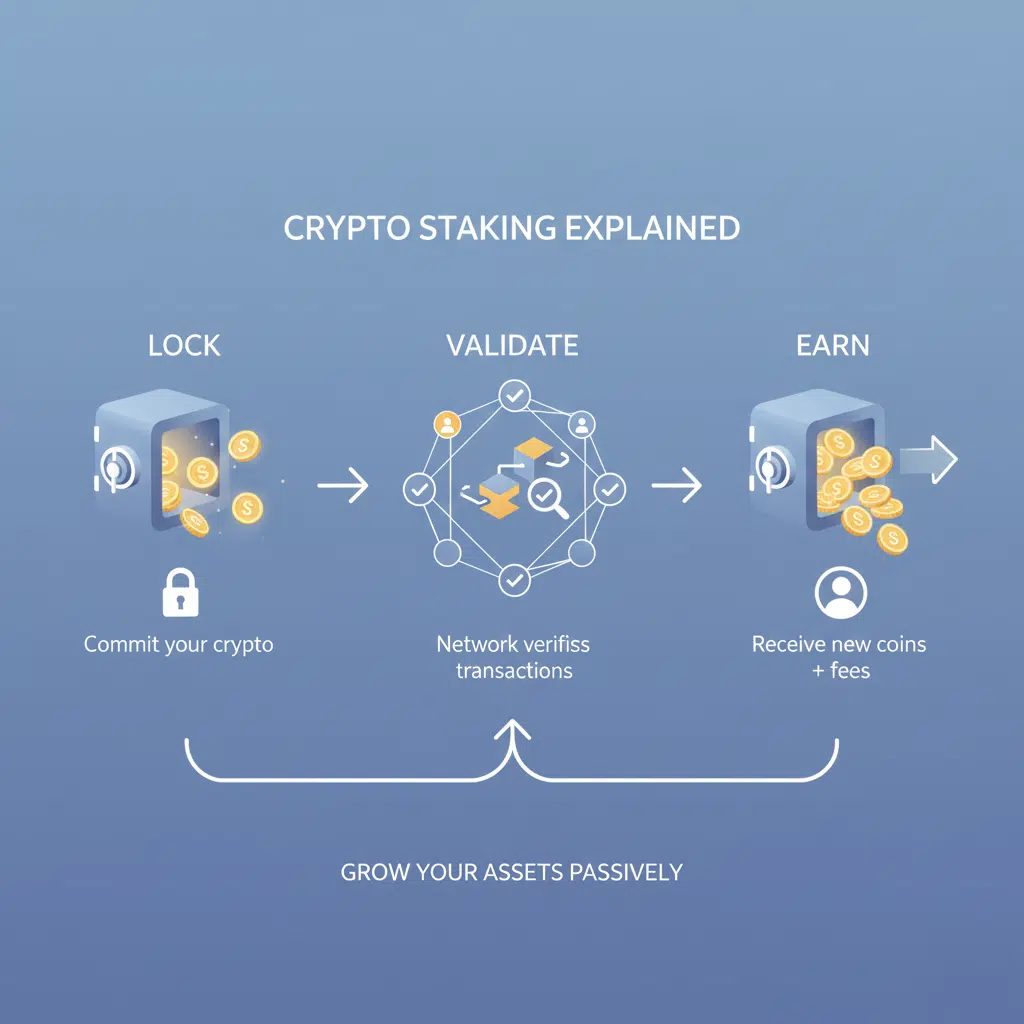
- Lock-up: You commit a specific amount of cryptocurrency to a staking pool or directly to a validator node.
- Validation: Your staked assets help the network select validators to propose and attest to new blocks. The more crypto staked, the higher the chance of being chosen.
- Rewards: When your staked assets successfully participate in validating blocks, you receive rewards, typically in the native cryptocurrency of the network.
Benefits of Staking Crypto:
- Passive Income: Earn rewards on your cryptocurrency holdings without actively trading.
- Network Security: You contribute to the security and decentralization of the blockchain, making it more robust.
- Accessibility: Staking is generally more energy-efficient and accessible than traditional mining, requiring less specialised hardware.
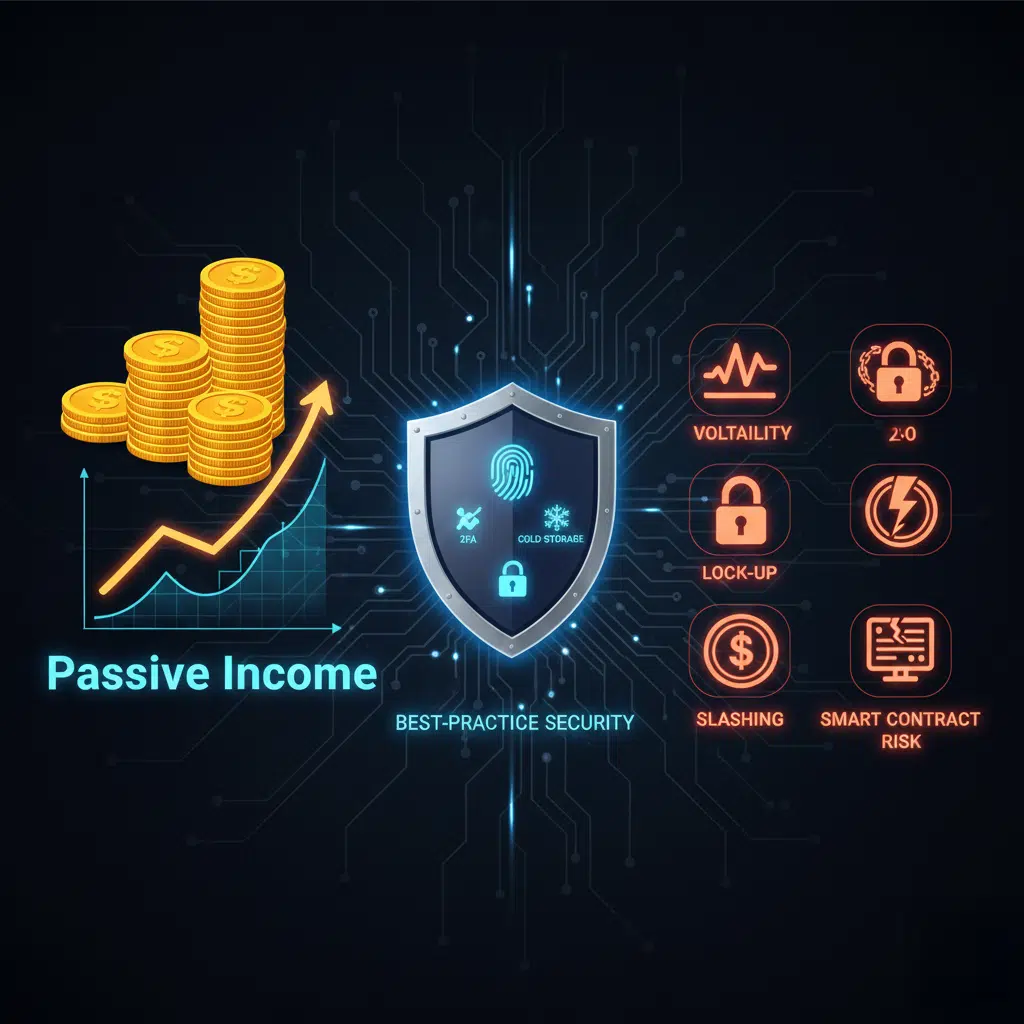
Inherent Risks of Crypto Investment UAE Staking:
While attractive, staking is not without risks:
- Price Volatility: The value of your staked cryptocurrency can fluctuate significantly, potentially offsetting staking rewards or leading to a loss of principal.
- Lock-up Periods: Staked assets are often locked for a specific duration, making them inaccessible for trading during market downturns.
- Slashing: If a validator node acts maliciously or performs poorly (e.g., goes offline), a portion of its staked assets (and potentially yours, if you delegated to them) can be “slashed” or forfeited as a penalty.
- Smart Contract Risks: If you stake through a platform or pool, you rely on the security of their smart contracts, which can be vulnerable to bugs or exploits.
Understanding these fundamentals is crucial for any UAE resident considering crypto staking as a passive income strategy.
Navigating the Legal Landscape: Is Crypto Staking Legal in the UAE?
On tax, the position is favourable. Staking rewards earned by an individual in a personal capacity are not taxed in the UAE, which levies no personal income tax and no capital gains tax. Tax only enters the picture if you stake as a business — for instance running validators commercially — in which case the Federal Tax Authority’s 9% corporate tax can apply on profits above AED 375,000. Staking itself is legal; the key is to use a platform licenced by VARA, the DFSA or ADGM’s FSRA.
One of the most pressing concerns for individuals considering crypto investment UAE staking is the legal standing of such activities. The good news is that the UAE has taken proactive steps to regulate the virtual assets sector, positioning itself as a forward-thinking jurisdiction. However, the legal landscape is dynamic and requires careful understanding.
Crypto staking is generally permissible within the UAE, provided it adheres to the evolving regulatory frameworks established by key authorities. The nation’s approach aims to foster innovation while safeguarding investors and maintaining financial stability.
Key Regulatory Bodies and Their Stance:
- Virtual Assets Regulatory Authority (VARA) in Dubai:
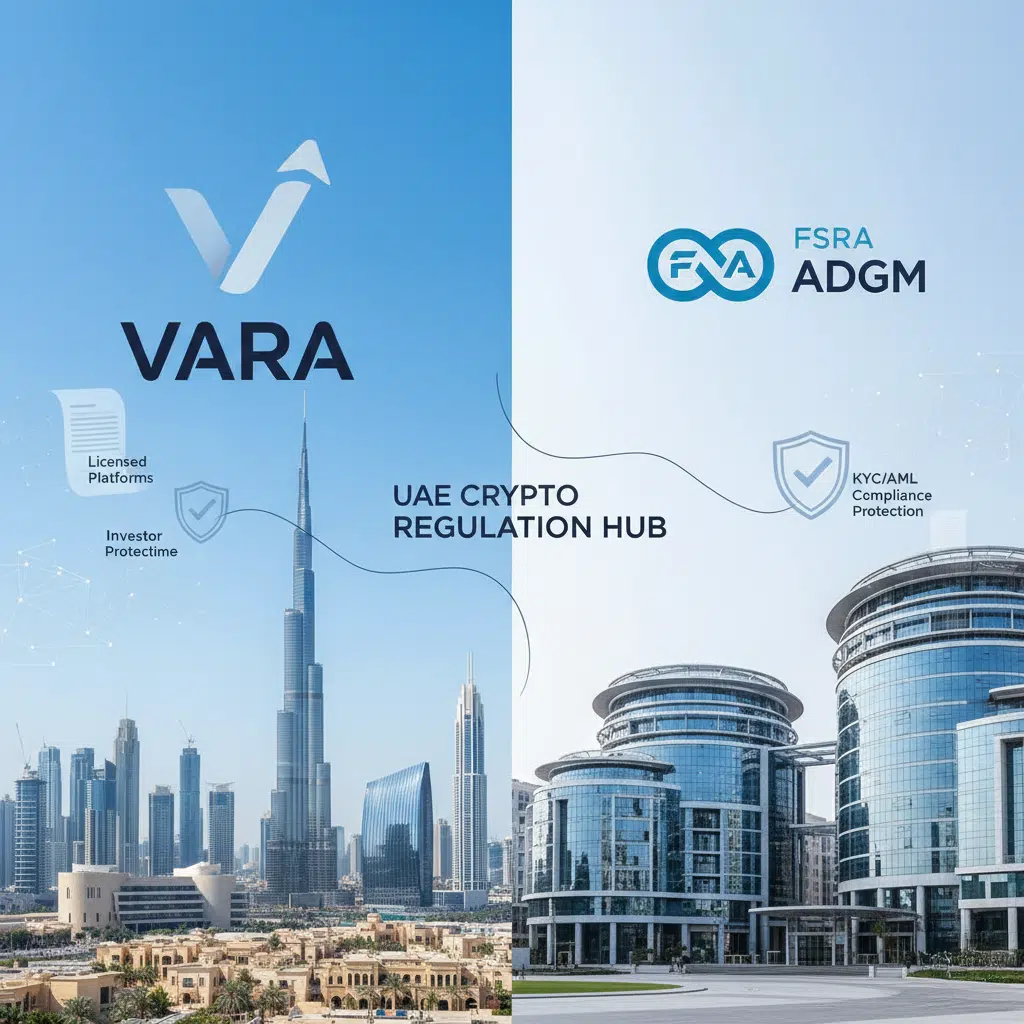
VARA, established in Dubai, is the world’s first independent regulator for virtual assets. Its mandate covers all virtual asset-related activities across Dubai’s mainland and free zones (excluding the Dubai International Financial Centre, DIFC). VARA issues specific regulations and licences for Virtual Asset Service Providers (VASPs). While direct guidance specifically on “staking” as a service for retail investors is still evolving, VARA’s framework broadly covers activities like exchange, broker-dealer services, and asset management. Platforms operating under VARA’s jurisdiction must obtain appropriate licences and comply with stringent KYC/AML (Know Your Customer/Anti-Money Laundering) requirements. For the latest regulatory updates, refer to VARA’s official website. - Abu Dhabi Global Market (ADGM):
ADGM, an international financial free zone in Abu Dhabi, has one of the most comprehensive and progressive virtual asset frameworks globally. It regulates a wide range of virtual asset activities, including exchanges, custodians, and brokers. ADGM’s Financial Services Regulatory Authority (FSRA) provides clear guidelines for firms wishing to operate within its jurisdiction. While ADGM’s focus is on licenced entities, their clear stance on virtual assets provides a strong legal precedent for the permissibility of related activities, including structured staking services offered by regulated firms. For details on their virtual asset framework, visit ADGM’s Virtual Asset Framework. - UAE Central Bank:
The UAE Central Bank also plays a vital role, particularly concerning the broader financial system and traditional banks’ interactions with virtual assets. Their guidance typically focuses on mitigating risks for licenced financial institutions dealing with virtual assets. This includes ensuring banks have solid systems to manage risks associated with VASP clients.
What is Permissible and Grey Areas:
- Permissible: Engaging in crypto staking through platforms regulated by VARA (in Dubai) or ADGM (in Abu Dhabi) or reputable international platforms that serve UAE residents and adhere to local KYC/AML standards is generally considered permissible.
- Grey Areas: The direct operation of a staking validator node by an individual for commercial purposes without appropriate licensing may fall into a grey area depending on the scale and nature of the activity. However, for most individuals looking to stake, using a regulated platform or a decentralized protocol directly is the common and safer approach.
The UAE’s regulatory bodies are keen on fostering innovation while maintaining market integrity. For individuals, participating in crypto staking through established, compliant platforms is generally within the bounds of the current legal framework. However, it’s crucial for platform providers to ensure they hold the necessary licences for offering staking-as-a-service, especially if they are operating within or targeting UAE residents directly.
This emphasises the importance of choosing regulated and reputable platforms for your UAE crypto regulations staking activities.
The regulatory environment is dynamic, constantly evolving to keep pace with technological advancements. What’s Hot in UAE is committed to providing fresh, fast updates to help you stay informed.
Your Step-by-Step Guide to Staking Crypto in the UAE
Embarking on your crypto staking journey in the UAE can seem daunting, but with a clear, step-by-step approach, it’s an accessible path to passive income. This section provides a comprehensive staking crypto UAE tutorial designed for beginners, addressing the common pain points and offering specific tips on how to stake crypto Dubai and beyond.
Choosing a Reputable Staking Platform Accessible in the UAE
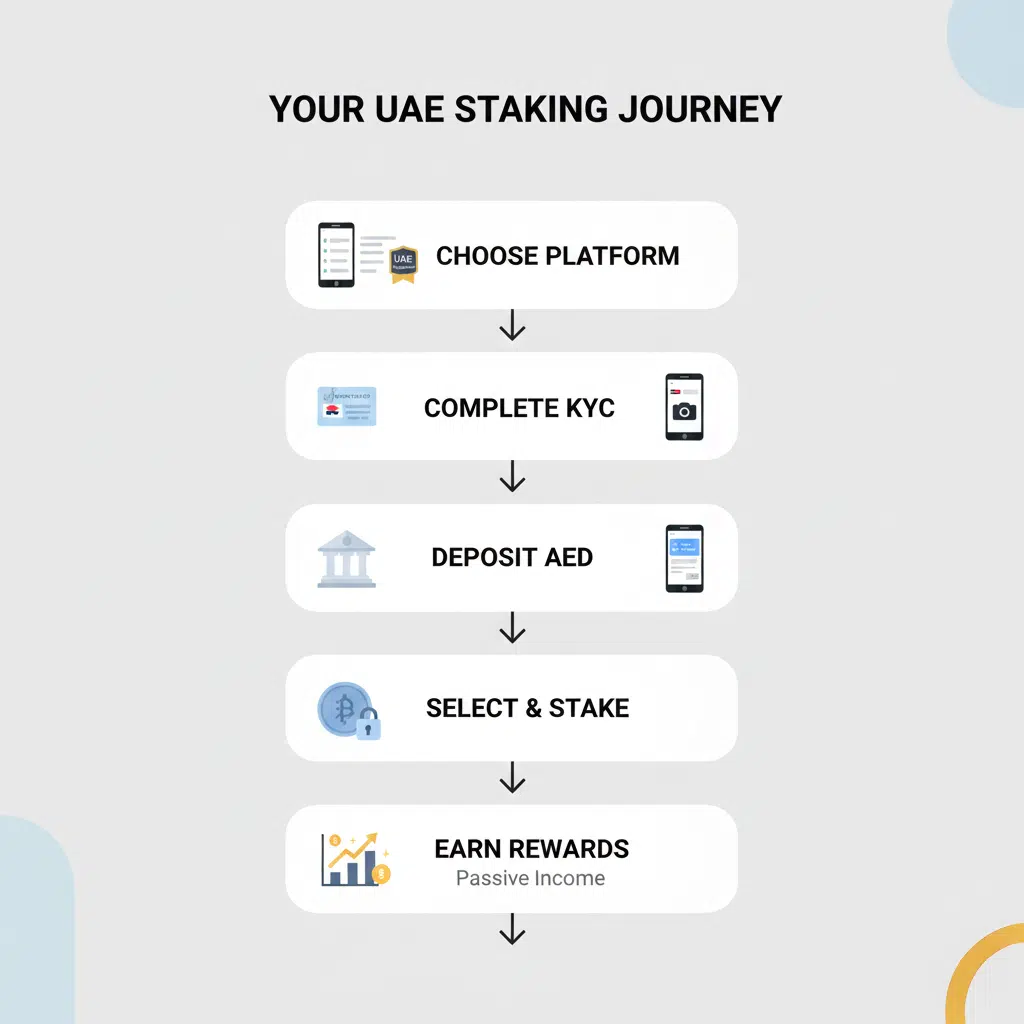
The first critical step is selecting a trustworthy platform that complies with UAE regulations and caters to your needs. This directly contributes to safe crypto staking UAE practices. When evaluating crypto staking platforms UAE, consider the following criteria:
- Regulatory Compliance: Prioritize platforms that are licenced by VARA or ADGM, or internationally recognised exchanges with a strong track record of compliance with global financial regulations, including KYC/AML.
- Security Features: Look for solid security measures such as two-factor authentication (2FA), cold storage for a significant portion of assets, insurance funds, and regular security audits.
- Available Cryptocurrencies: Ensure the platform supports the cryptocurrencies you wish to stake.
- User Interface (UI) & Experience (UX): A user-friendly interface makes the staking process straightforward, especially for beginners.
- Customer Support: Reliable and responsive customer support, ideally with local language options, is invaluable for troubleshooting.
- Fee Structure: Understand all associated fees, including staking fees, withdrawal fees, and potential network transaction fees.
- APY (Annual Percentage Yield): While high APYs are attractive, balance them with the platform’s reputation and security.
- Reputation: Check independent reviews, community feedback, and industry watchdogs’ assessments to gauge a platform’s reliability.
Funding Your Account with AED or Other Currencies
Once you’ve chosen a platform, the next step is to fund your account. Many reputable platforms accessible in the UAE offer various deposit methods, including options to fund crypto with AED.
- Verify Your Identity (KYC/AML): Before depositing funds, you’ll need to complete the platform’s Know Your Customer (KYC) and Anti-Money Laundering (AML) verification process. This typically involves submitting government-issued ID (like your Emirates ID or passport) and proof of address. This is a crucial step for regulatory compliance in the UAE.
- Choose a Deposit Method:
- Bank Transfer: Many platforms allow direct bank transfers from UAE banks using AED. This is often the most cost-effective method for larger sums.
- Debit/Credit Card: A convenient option for smaller, quicker deposits, though it often comes with higher fees.
- Peer-to-Peer (P2P) Trading: Some platforms offer P2P marketplaces where you can buy crypto directly from other users using AED, with various payment methods. Exercise caution and only use P2P services on reputable, escrow-protected platforms.
- Cryptocurrency Deposit: If you already hold crypto elsewhere, you can transfer it directly to your chosen staking platform. Be sure to use the correct network and wallet address to avoid loss of funds.
When making a UAE crypto exchange deposit, always double-check exchange rates and fees before confirming your transaction.
Selecting a Cryptocurrency and Initiating the Stake
With your account funded, you’re ready to select an asset for staking and initiate the process.
- Research Cryptocurrencies for Staking:
- APY: Compare the Annual Percentage Yield (APY) offered by different cryptocurrencies. Remember that APY can fluctuate based on network conditions and the number of stakers. Understand the difference between APY (compounded returns) and APR (simple interest).
- Lock-up Periods: Some cryptocurrencies require your assets to be locked for a fixed period (e.g., 7 days, 28 days, or longer), while others offer flexible staking. Consider your liquidity needs.
- Unbonding Period: After you decide to unstake, there might be an “unbonding” period during which your assets are still locked and not earning rewards, before they become fully liquid.
- Market Stability & Risk: High APY often comes with higher risk. Evaluate the long-term viability and volatility of the cryptocurrency. Choosing less liquid or highly volatile assets for staking can amplify risks.
- Slashing Risk: Understand the slashing conditions for the specific blockchain.
- Initiate the Stake:
- Navigate to the Staking Section: On most platforms, you’ll find a dedicated “Earn,” “Staking,” or “Savings” section.
- Select Asset & Amount: Choose the cryptocurrency you want to stake and the amount.
- Review Terms: Carefully read the terms, including estimated APY, lock-up period (if any), unbonding period, and any associated risks (like slashing).
- Confirm: Once you’re comfortable, confirm the staking transaction. Your assets will then be locked, and you’ll start earning rewards.
Platforms will typically display your active stakes and accumulated rewards, often allowing you to claim or re-stake these rewards (compounding your earnings) at regular intervals. This beginners guide to staking crypto UAE outlines a clear path to starting your passive income journey.
Top Crypto Staking Platforms & Best Cryptocurrencies for UAE Investors
For UAE investors looking to dive into crypto staking, identifying the right platforms and the best crypto for staking in UAE is paramount. This section provides a curated list of reliable options and top cryptocurrencies, tailored for the local crypto investment UAE staking audience.
When considering crypto staking platforms UAE, look for those with a strong reputation for security, regulatory compliance, and user experience.
Curated Platforms for UAE Residents (Examples, not endorsements):
- Binance: One of the world’s largest exchanges, Binance offers a wide range of staking options for various cryptocurrencies. It supports AED deposits and withdrawals through various methods and maintains solid security measures. They offer both locked and flexible staking products.
- Pros: Extensive selection of assets, competitive APYs, good liquidity, AED support.
- Cons: Very large platform can be overwhelming for absolute beginners.
- Security: High-grade security infrastructure, SAFU (Secure Asset Fund for Users) insurance fund.
- Coinbase: A well-known global exchange with a user-friendly interface, Coinbase offers staking for popular assets like Ethereum and Solana. While its AED support might be less direct than some regional players, its reputation for security and ease of use makes it attractive.
- Pros: Highly reputable, excellent for beginners, strong security.
- Cons: Fewer staking options compared to Binance, potentially less direct AED integration.
- Security: Insured USD balances, solid security protocols.
- Kraken: Another veteran exchange, Kraken provides a solid staking service with competitive APYs and a good range of assets. It emphasises security and offers comprehensive support for various cryptocurrencies.
- Pros: Good selection of staking assets, strong security track record, good for more experienced users.
- Cons: UI might be less intuitive than Coinbase for absolute beginners.
- Security: Extensive security measures, proof-of-reserves audits.
(Note: Always conduct your own due diligence before choosing a platform, as availability and specific features can change.)
Best Crypto for Staking in UAE (High APY Crypto UAE with considerations):
The “best” cryptocurrency to stake depends on your risk tolerance, investment horizon, and desired APY. Here are some popular options known for their staking potential:
- Ethereum (ETH 2.0 / Consensus Layer Staking):
- Overview: The transition to Ethereum 2.0 (now known as the Consensus Layer) made staking ETH possible. It’s one of the most significant staking opportunities due to Ethereum’s market capitalization and network activity.
- Expected APY: Typically ranges from 3-5% for direct staking. Staking pools might offer slightly different rates.
- Risk Profile: Medium. While Ethereum is a blue-chip crypto, price volatility remains a factor, and staked ETH is locked until withdrawals are enabled after subsequent network upgrades.
- Relevance to UAE: Highly liquid, widely supported on major exchanges accessible in the UAE.
- Solana (SOL):
- Overview: Solana is a high-performance blockchain known for its speed and scalability. Staking SOL contributes to network security.
- Expected APY: Often in the 5-8% range.
- Risk Profile: Medium-High. While prominent, Solana has faced network stability challenges in the past, and its price can be more volatile than Ethereum.
- Relevance to UAE: Popular among investors seeking high-throughput blockchains; widely available.
- Cardano (ADA):
- Overview: Cardano is a proof-of-stake blockchain focused on research-driven development. Staking ADA is user-friendly and doesn’t require a lock-up period, making it flexible.
- Expected APY: Generally in the 3-5% range.
- Risk Profile: Medium. A well-established project with strong community support.
- Relevance to UAE: Accessible on most major exchanges; its flexible staking makes it appealing.
- Polkadot (DOT):
- Overview: Polkadot enables different blockchains to communicate and share data. Staking DOT involves selecting validators or delegating to a pool.
- Expected APY: Typically 10-14%, but this can vary significantly with network dynamics.
- Risk Profile: Medium-High. Higher APY often comes with increased complexity or higher volatility.
- Relevance to UAE: Available on major exchanges; appeals to those interested in interoperability.
The key for UAE investors is to balance attractive APYs with the project’s long-term fundamentals and the platform’s security. While high APYs are tempting, prioritizing established networks like Ethereum or Cardano with a strong development roadmap, alongside regulated platforms, is a prudent strategy for sustainable passive income.
This expert insight underscores the importance of a balanced approach to safe crypto staking UAE.
Maximizing Your Returns & Ensuring Safety in UAE Crypto Staking
Earning passive income crypto UAE through staking requires not only understanding the basics but also implementing smart strategies and solid security measures. This section will dig into advanced tactics to maximise your returns and provide detailed advice on how to identify safe staking opportunities, mitigate risks, and protect your investments.
Strategies for Maximizing Returns
- Re-staking (Compounding Rewards):
The simplest way to maximise returns is by re-staking your earned rewards. This strategy, known as compounding, means your earnings start earning additional rewards, accelerating your growth over time. Many platforms offer automatic re-staking features. - Diversify Your Staking Portfolio:
Just like traditional investments, diversification is crucial in crypto staking. Instead of putting all your capital into one cryptocurrency or one platform, spread your staked assets across different coins with varying risk profiles and different, reputable platforms. This mitigates risks associated with price volatility of a single asset or potential issues with a particular platform. Reputable financial institutions consistently emphasise diversification as a core principle for managing investment risk. - Monitor APY and Network Changes:
Staking APYs are not static; they fluctuate based on network participation rates, transaction volumes, and overall market conditions. Regularly monitor the APYs of your staked assets. Be aware of any significant network upgrades or changes that might affect staking mechanics or rewards. - Understand Tax Implications (or Lack Thereof):
Currently, the UAE generally does not impose income tax on individuals, including on capital gains or profits from crypto investments and staking rewards. However, this is subject to change, and it’s always advisable to consult with a local tax expert for the most up-to-date and personalized advice. This favourable tax environment is a significant factor for those looking to earn passive income crypto UAE.
Ensuring Safety and Mitigating Risks
Protecting your crypto investments is paramount, especially in a rapidly evolving space. Safe crypto staking UAE practices involve a multi-layered approach to security.
- Choose Reputable Platforms (Reiterated):
Stick to well-established platforms with a proven track record, strong security features, and a clear regulatory stance in relevant jurisdictions (as discussed earlier). - Hardware Wallets for Cold Storage:
For larger amounts of cryptocurrency, transfer your assets to a hardware wallet (e.g., Ledger, Trezor) whenever they are not actively being staked. Hardware wallets keep your private keys offline, making them highly resistant to online hacks. Only move assets to the staking platform when you intend to stake. - Enable Two-Factor Authentication (2FA):
Always enable 2FA on your exchange or staking platform accounts. Use authenticator apps (like Google Authenticator or Authy) rather than SMS-based 2FA, which can be vulnerable to SIM-swap attacks. - Beware of Phishing Scams:
Be extremely cautious of unsolicited emails, messages, or websites promising exceptionally high returns. Verify URLs before clicking and never share your private keys or seed phrases with anyone. Cybersecurity experts consistently warn against the sophistication of phishing attempts, emphasizing vigilance and skepticism as primary defences. - Understand Slashing Risk and Validator Performance:
If you are delegating your stake, research the validator you choose. A validator with a poor track record of uptime or malicious behaviour can lead to your staked assets being “slashed.” Choose validators with high uptime and a good reputation. - Smart Contract Audits:
If you’re using a decentralized staking protocol, check if its smart contracts have undergone independent security audits by reputable firms. Audits help identify vulnerabilities before they can be exploited. - Stay Informed:
The crypto space is dynamic. Regularly educate yourself on new security threats, best practices, and regulatory changes in the UAE. Following reputable news sources and official government guidance on digital asset security is crucial.
By combining smart earning strategies with meticulous security precautions, UAE residents can confidently explore crypto staking, maximizing their potential for passive income while protecting their valuable digital assets.
Conclusion
The potential for crypto staking to generate passive income in the UAE is undeniable. As we’ve explored, it offers an exciting opportunity for individuals to grow their digital assets by actively participating in the security and operation of blockchain networks. However, success in this innovative space hinges on a clear understanding of the underlying mechanics, a firm grasp of the evolving legal landscape in the Emirates, and a commitment to solid security practices.
We’ve demystified what crypto staking entails, navigated the crucial question of its legality within the UAE’s progressive regulatory framework – highlighting the roles of VARA and ADGM – and provided a practical, step-by-step tutorial from choosing a platform to initiating your stake. Furthermore, we’ve offered insights into top platforms and recommended cryptocurrencies, alongside essential strategies to maximise your returns and safeguard your investments against inherent risks.
“What’s Hot in UAE” remains your leading source for real insider knowledge and sharp, local coverage on trending financial opportunities in the Emirates. Our aim is to empower you with the precise, localized information needed to make informed decisions. With the right knowledge and a responsible approach, UAE residents can confidently explore and benefit from the exciting world of crypto staking.
Ready to make your crypto work for you? Explore the platforms and strategies outlined in this guide to begin your crypto staking journey in the UAE today, responsibly and informed.
Disclaimer: This article is for informational purposes only and does not constitute financial, investment, or legal advice. Cryptocurrency investments are highly volatile and carry significant risk, including the potential loss of principal. Readers should conduct their own research and consult with qualified financial and legal professionals before making any investment decisions. Laws and regulations regarding cryptocurrencies in the UAE are subject to change.