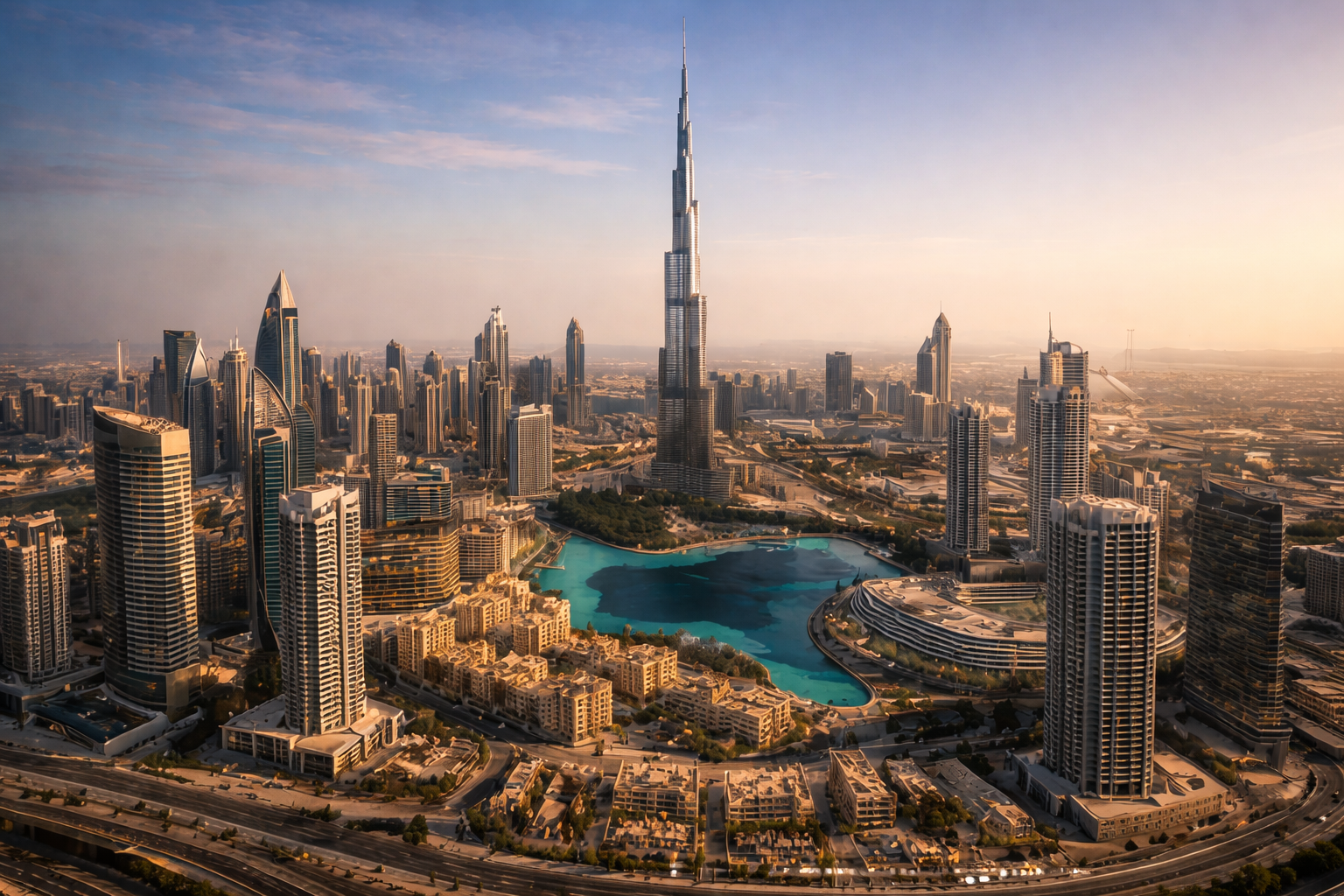
The Dubai real estate sector has once again captivated global attention, concluding 2025 with an unprecedented Dh917 billion in real estate transactions. This monumental achievement is not merely a number; it is a resounding testament to the emirate’s strategic vision, economic resilience, and its unwavering commitment to fostering a top-tier investment environment. This article provides a definitive roadmap for navigating Dubai’s unprecedented real estate boom, offering comprehensive and actionable insights for both new and experienced investors. We will dig into the historic growth, explore the ambitious strategic plans like the Dubai Economic Agenda D33 and the Real Estate Sector Strategy 2033, uncover diverse investment opportunities, and highlight Dubai’s enduring competitive advantages, charting its course towards a projected Dh1 trillion market by 2033.
Dubai’s Historic Real Estate Performance: A Record-Breaking Year in Review (2025)
The year 2025 marked an extraordinary chapter in Dubai’s property market history, with real estate transactions reaching Dh917 billion, well above previous years. This record-breaking performance underscores the market’s inherent strength, unprecedented growth trajectory, and solid investor confidence, firmly answering the question: “What were Dubai’s real estate transactions in 2025?” The achievement was celebrated by His Highness Sheikh Mohammed bin Rashid Al Maktoum, Vice President and Prime Minister of the UAE and Ruler of Dubai, who announced the figures and expressed gratitude to investors for their trust[1].
For a complete practical guide to life in the Emirates, explore our full Living in the UAE hub.
Unprecedented Growth in Volume and Value
The scale of activity in 2025 shows how fast the market expanded. The market witnessed a total of 215,700 property sales transactions. Compared to 2024, this represented an impressive 18.7% growth in transaction volume and a remarkable 30.9% jump in sales value[1]. The overall real estate activity reached 3.11 million total transactions for 2025 (spanning sales, leases and services). Property investments alone topped AED 680 billion across roughly 258,600 deals, and the investor base grew to about 193,100, including some 129,600 first-time buyers. That volume covered, reflecting the rapid expansion and dynamism across all facets of the sector[1]. These figures clearly demonstrate why terms like “record real estate growth Dubai” and “Dubai property market growth” are so fitting for the emirate’s performance.
The Pillars of Trust: Resilience and Strategic Planning
Sheikh Mohammed bin Rashid Al Maktoum emphasized that these record results reflect “trust in Dubai’s vision, the resilience of its economy, and the clarity of its development path”[1]. This investor confidence in Dubai real estate is rooted in the emirate’s carefully laid plans, transparent regulatory frameworks, and a balanced approach to development. The economic resilience of Dubai, coupled with its forward-thinking leadership, provides a stable and attractive environment for sustained investment.

The Strategic Blueprint: Dubai Economic Agenda D33 & Real Estate Sector Strategy 2033
Dubai’s current market success is not accidental; it is a direct outcome of meticulous strategic planning. The city operates under an overarching framework designed to solidify its global standing, with the real estate sector playing a pivotal role. Investors often ask, “What is the Dubai Real Estate Sector Strategy 2033?” and “What is the Dubai Economic Agenda D33?” These two strategies are intrinsically linked, guiding the emirate’s journey towards its ambitious future.
Dubai Economic Agenda D33: Doubling the Economy
The Dubai Economic Agenda D33 is an ambitious plan aimed at doubling Dubai’s economy over the next decade, solidifying its position among the world’s leading economic cities[2]. This grand vision recognizes the real estate sector as a vital component, instrumental in attracting foreign direct investment, fostering economic diversification, and enhancing the emirate’s overall competitiveness on the global stage. The D33 economic impact is set to be transformative, with real estate acting as a primary engine.
Real Estate Sector Strategy 2033: The Path to Dh1 Trillion
Within the broader D33 framework, the Dubai Real Estate Sector Strategy 2033 sets specific, aggressive targets for the property market. Its primary objective is to raise the annual transaction volume by 70%, propelling the market to an astounding Dh1 trillion in transactions by 2033[3]. Sheikh Mohammed’s original strategy had set this Dh1 trillion goal, and the current 2025 numbers are not just meeting, but “surpassing expectations,” indicating the sector is well ahead of schedule[1]. This focused strategy ensures that Dubai’s property market remains dynamic, sustainable, and poised for sustained growth towards the Dh1 trillion Dubai real estate target.
Understanding the Investor Landscape: Who is Investing in Dubai Real Estate?
The burgeoning success of Dubai’s property market is fueled by a remarkably diverse and expanding investor base. Understanding this landscape is crucial for anyone seeking to participate in “Dubai real estate investment.” This section addresses critical questions such as: “How has the investor base in Dubai’s real estate market changed?” and “How do women contribute to Dubai’s real estate investments?”
Expanding Investor Base and Record Investments
In 2025, Dubai’s property sector attracted investments exceeding Dh680 billion, representing a significant 29% increase in value compared to the previous year[1]. This surge was mirrored by a 20% rise in the number of deals, totaling 258.6 thousand. The overall investor base expanded by 24%, reaching 193.1 thousand unique investors[4]. Notably, 129.6 thousand of these were new investors, marking a 23% increase and highlighting the market’s appeal to first-time entrants. Resident investors continued to form the backbone of the market, accounting for 56.6% of the total investor pool[4]. These “real estate investment Dubai statistics” underscore a solid and growing interest in Dubai property investors.
The Rise of Women in Dubai’s Property Market
A significant and compelling trend is the increasing contribution of women investors to Dubai’s property market. In 2025, women collectively invested Dh154 billion through 76.7 thousand deals, demonstrating a remarkable 31% growth in value and a 24% increase in the number of transactions compared to 2024[4]. This substantial participation of “women’s real estate investment Dubai” highlights the emirate’s inclusive investment landscape and its success in attracting a broad spectrum of savvy individuals.
From Renter to Owner: The Shortened Journey
Another notable trend observed in 2025 is the accelerated journey from renting to property ownership. Official reports indicate that the average period for a renter to transition into a property investor has significantly shortened to just 4.8 years[4]. This reflects the increasing attractiveness and accessibility of property ownership in Dubai, appealing to “first-time investors Dubai real estate” and reinforcing the ease with which residents can become stakeholders in the emirate’s growth story.

Top-Performing Areas and Investment Hotspots in Dubai
For prospective investors, identifying the “top areas real estate Dubai” comes first. The 2025 data provides clear insights into where transactional activity is concentrated across various categories, addressing the question: “Which areas are top-performing in Dubai’s real estate market?” This detailed breakdown, derived from Dubai Land Department (DLD) data, highlights key “Dubai property hotspots” and offers a guide for making informed investment choices[4].
Areas with Highest Transaction Volume
In terms of the sheer number of real estate transactions in 2025, the following areas recorded the highest activity, indicating lively and accessible markets:
- Al Barsha South Fourth
- Business Bay
- Wadi Al Safa 5
- Dubai Airport City
- Dubai Marina
- Jebel Ali First
- Al Yelayiss 1
- Wadi Al Safa 3
- Dubai Investment Park Second
- Al Thanyah Fifth[4]
These areas are characterized by a high turnover, suggesting diverse property types and strong demand for sales in “Dubai property transaction volume areas.”
Value-Driven Investments: Where Money Flows
When considering the total value of transactions, the focus shifts to areas attracting significant capital and often featuring higher-priced properties. These locations represent premium investment opportunities:
- Business Bay
- Dubai Marina
- Palm Jumeirah
- Burj Khalifa
- Al Barsha South Fourth
- Mohammed Bin Rashid Gardens
- Dubai Airport City
- Wadi Al Safa 5
- Wadi Al Safa 3
- Al Yelayiss 1[4]
Areas like “Palm Jumeirah real estate value” and Burj Khalifa consistently rank high, signifying luxury and high-value property areas Dubai.

Mortgage Market Activity: Key Areas for Financing
The mortgage market provides another lens into activity, highlighting areas where property financing is most prevalent, reflecting buyer confidence and developer offerings.
Top 10 Areas by Number of Mortgage Transactions:
- Al Barsha South Fourth
- Dubai Marina
- Jebel Ali First
- Wadi Al Safa 5
- Burj Khalifa
- Al Thanyah Fifth
- Business Bay
- Madinat Hind 4
- Al Merkadh
- Al Hebiah Fourth[4]
Top 10 Areas by Value of Mortgage Transactions:
- Palm Jumeirah
- Dubai Marina
- Business Bay
- Al Barsha South Fourth
- Burj Khalifa
- Al Wasl
- Mohammed Bin Rashid Gardens
- Al Thanyah Fifth
- Jebel Ali First
- Al Thanyah Fourth[4]
These lists offer invaluable intelligence for understanding “Dubai mortgage transactions” and “property financing Dubai,” guiding investors to areas with strong financial support infrastructure.

Dubai’s Competitive Edge: Trust, Transparency, and Innovation
Dubai’s real estate market stands out globally, implicitly addressing the question: “How does Dubai’s real estate market compare to other global cities?” Its competitive advantages are built on a foundation of trust, transparency, and a relentless pursuit of innovation. Sheikh Mohammed bin Rashid Al Maktoum consistently highlights “trust in Dubai’s vision, the resilience of its economy, and the clarity of its development path” as key drivers of success[1].
A Resilient and Diversified Economy
The emirate’s economic strategy has been one of astute diversification, moving beyond traditional revenue streams to establish itself as a hub for trade, tourism, finance, and technology. This diversified economic base provides a stable and solid foundation for its real estate sector, attracting sustained investment even amidst challenging global conditions. Sheikh Mohammed emphasized “the strategic role of the real estate sector in Dubai’s diversified economy,” underscoring its foundational importance[1]. This ensures a “stable real estate market Dubai” even as global economies fluctuate.
Transparent Regulations and Careful Planning
A cornerstone of Dubai’s appeal to international investors is its commitment to transparent property market Dubai and meticulous urban planning. The Dubai Land Department (DLD) has implemented stringent regulations and digital services that enhance clarity, protect investor rights, and streamline processes. Sheikh Mohammed acknowledged the critical role of “careful planning, transparent regulations, and a balanced approach” in supporting progress and maintaining a high quality of life for residents and investors alike[1]. This proactive governance fosters immense confidence in “Dubai property regulations” and long-term “real estate planning Dubai.”
Innovation and Human-Centric Development
Innovation is not just a buzzword in Dubai; it is a guiding principle that shapes every sector, including real estate. The emirate continually embraces leading technologies and sustainable practices in its development projects. Importantly, this innovation is always coupled with a strong focus on human interest and improving the quality of life. As Sheikh Mohammed articulated, “innovation continues to guide the sector with a focus on human interest and the pursuit of a prosperous future”[1]. This approach ensures that developments are not just economically viable but also create attractive living and investment environments, making “innovation in Dubai real estate” a key differentiator and elevating “quality of life Dubai property” as a core value proposition.

Update, July 2026: Momentum has continued into 2026. Dubai Land Department figures show H1 2026 closed with roughly Dh286.4 billion across 86,005 transactions — the second-strongest first half on record, behind only H1 2025. Q1 2026 alone brought in around Dh252 billion, before activity moderated slightly into Q2, a normal seasonal pattern rather than a slowdown. The market remains firmly on track for the Dh1 trillion by 2033 target outlined below.
Navigating Investment Opportunities: Future Projections and Expert Advice
For individuals seeking to capitalize on this dynamic market, understanding “investing in Dubai real estate 2025″ and beyond requires strategic insight. This section aims to synthesize practical advice, addressing common investor pain points such as navigating market complexities and identifying optimal opportunities.
Strategic Considerations for Local and International Investors
Both local and foreign investment Dubai real estate are flourishing, but each requires specific strategic considerations. Investors should conduct thorough due diligence, staying abreast of market dynamics and potential regulatory changes. Engaging with certified real estate professionals who possess deep local knowledge is crucial for making informed investment decisions. Understanding the nuances of property types, master plans, and long-term infrastructure projects will be key to opening up significant returns. The market is liquid and competitive, demanding a well-researched approach to succeed in “Dubai property market dynamics.”
Identifying Emerging Trends and Long-Term Value
The 2025 market trends offer valuable foresight for future investments. The increased participation of women investors signifies a broader, more solid market base[4]. The shortened period for renters to become investors (average 4.8 years) points to growing accessibility and a strong local demand pipeline[4]. What’s more, the emphasis on balanced geographical growth across the emirate, as seen in the diverse list of top-performing areas, suggests opportunities beyond the traditional hotspots[4]. According to leading Dubai real estate analysts, these trends indicate a sustainable growth trajectory, rather than a speculative bubble. Looking towards and beyond the 2033 vision, properties that align with Dubai’s focus on sustainability, smart living, and community-centric development are likely to offer the best long-term property investment Dubai value.
Dubai’s real estate sector has not just achieved remarkable growth; it has redefined expectations, culminating in an extraordinary Dh917 billion in transactions for 2025. This historic accomplishment is a lively reflection of an emirate driven by visionary leadership and strategic planning, particularly through the Dubai Economic Agenda D33 and the ambitious Real Estate Sector Strategy 2033, which charts a definitive path towards a Dh1 trillion market by 2033.
Dubai stands as a beacon of opportunity, distinguished by its economic resilience, transparent regulatory environment, and unwavering commitment to innovation and human-centric development. It continues to attract a diverse and expanding investor base, including a significant rise in women investors and an accelerated journey from renter to owner, making it a genuinely inclusive and dynamic market. For savvy investors seeking a destination rich with potential and anchored in trust, Dubai’s real estate market offers an unmatched landscape for growth and prosperity.
Stay ahead of the curve and unlock your investment potential. For the latest updates, trends, and deeper insights into Dubai’s dynamic property market, keep an eye on What’s Hot in UAE. For personalized investment advice, consult a certified real estate professional.
Disclaimer: This article provides general information for educational purposes only and does not constitute financial, investment, or legal advice. Readers should consult with qualified professionals before making any investment decisions. Real estate market performance is subject to change.
References
- Al Maktoum, Mohammed bin Rashid. (2025). Official Announcement on Dubai’s Record-Breaking Real Estate Transactions for 2025. Government of Dubai.
- Government of Dubai. (N.D.). Dubai Economic Agenda D33. Retrieved from Government of Dubai
- Dubai Land Department. (N.D.). Dubai Real Estate Sector Strategy 2033. Retrieved from Dubai Land Department
- Dubai Land Department. (2025). Annual Real Estate Market Report 2025. Retrieved from Dubai Land Department