✅ Updated 31 July 2026 — The security picture below reflects the February–March 2026 attack series in detail, but the situation has continued to evolve since. A US–Iran ceasefire was agreed on 8 April 2026 and extended on 21 April, before being declared over by the US on 8 July. Regional tension has flared intermittently since, including reports in the past two weeks of an incident at a petroleum facility, with Iranian officials publicly stating they have “no plan to target the UAE.” By the UAE’s own figures, the fuller tally of intercepted threats through the conflict (not just the initial ten-day window) stands at 537 ballistic missiles, 2,256 drones and 26 cruise missiles, underscoring the scale and sustained nature of the air-defence response described below. For the current, live security and travel status, always check UAE MoFA (mofa.gov.ae), your embassy’s travel advisory, and official Dubai/Abu Dhabi government channels rather than relying on any single article.
The question travellers ask when regional tensions rise is usually the wrong one. “Is it safe?” invites a binary answer — yes or no — that cannot honestly capture what safety actually means for a country that borders the Gulf, sits at the intersection of global aviation, and has spent two decades building the most sophisticated civilian-military protection architecture in the Arab world. Considering the topic of UAE Tourism Safety provides a more nuanced understanding of what visitors should expect.
The better question is: how does the UAE actually perform when tested?
The past ten days have provided the most rigorous real-world test of that infrastructure in the country’s history. On 28 February 2026, Iran launched retaliatory strikes against Gulf states following the onset of US-Israeli military operations against Tehran. More than 700 ballistic missiles, cruise missiles, and suicide drones were launched at the UAE in the first two days — a volume of aerial attack that, for context, exceeded what Tehran fired at Israel during the same period, according to Semafor’s analysis citing Emirati government officials. Three lives were lost. The UAE’s air defence systems intercepted and destroyed 132 of 137 ballistic missiles fired, while shooting down 195 drones — a rate of above 90% across all categories of threat, according to UAE government tallies reported by Middle East Eye.
That is not a marketing claim. That is a documented operational outcome from a live conflict event, and it is the foundation on which the UAE’s safety case now rests. No amount of promotional language produces that result. A decade of investment, training, and layered system integration does.
The UAE has always described itself as a safe destination. In the first week of March 2026, that claim was tested harder than it has ever been before — and the infrastructure held.
The Air Defence Architecture: What the UAE Actually Has
The UAE’s air and missile defence network is the most sophisticated in the Arab world and one of the most capable outside the permanent members of the UN Security Council. It was built over two decades and integrates systems from five countries — the United States, Russia, Israel, South Korea, and the UAE itself — into a single command and control framework.
At the highest tier, the UAE operates the American-made Terminal High Altitude Area Defence (THAAD) system, of which it was the world’s first international customer. The UAE signed for THAAD in December 2011 and received its first battery in October 2015, making it the operator of one of the world’s most sophisticated ballistic missile defence systems outside the United States. THAAD’s AN/TPY-2 radar detects and tracks incoming missiles at ranges of up to 3,000 kilometres, providing intercept capability against short-, medium-, and intermediate-range ballistic missiles both inside and outside the atmosphere. The system proved its capability in its first real-world engagement in January 2022, successfully intercepting multiple Houthi medium-range ballistic missiles. It has been deployed continuously since.
At the mid-tier, multiple Patriot PAC-3 batteries — the most combat-proven missile defence system in the world — are distributed across the UAE to address tactical ballistic missiles and aircraft at medium altitudes. The PAC-3 variant uses hit-to-kill technology, destroying incoming threats through direct body-to-body contact rather than proximity detonation.
At the lower tier, the UAE operates Russia’s Pantsir-S1 system for interception of low-altitude drone swarms and cruise missiles; South Korea’s Cheongung II (M-SAM) for medium-range threats; Israel’s Barak-8 system for medium-range air defence; and the domestically developed SkyKnight for close-in short-range threats. This gives the UAE what defence analysts describe as three walls of protection: if THAAD does not neutralise a high-altitude ballistic threat, mid-range Patriot systems engage; if those are passed, short-range Pantsir-S1 and SkyKnight provide the final layer.
The result across the February–March 2026 attack series was a reported 96% interception rate — a figure cited by MEXC News drawing on Emirati government data and regional security analysis. Defence experts caution that no system is infallible and that effectiveness may vary against the most advanced elements of Iran’s multi-range missile arsenal, including the Fateh-110 and Shahab-3. But the operational record of the past two weeks represents the most comprehensive real-world validation of an integrated air defence architecture outside a major peer-state conflict.
The UAE’s hardware investment is complemented by human capital built over a decade of partnership with the United States. Emirati operators graduated through THAAD training programmes at Fort Bliss in 2015 and 2016, and have maintained operational proficiency through regular exercises. This is a distinction that defence analysts consistently emphasise: the UAE does not merely own sophisticated systems — it has the trained personnel to operate them effectively under combat conditions.
AIR SHIELD
Aviation: How Dubai Manages One of the World’s Busiest Hubs Under Pressure
Dubai International Airport (DXB) handled 102.9 million passengers in the first eight months of 2025 — a 5.3% year-on-year increase and a figure that places it in the top tier of global aviation hubs by traffic volume. The UAE’s airports collectively processed more than 108 million passengers across the nine-month period to September 2025. Aircraft movements at UAE airports exceeded 6.4 million in the decade to 2024. Managing a hub of this complexity under normal conditions requires world-class operational capability. Managing it through a regional security crisis requires something more.
The UAE General Civil Aviation Authority’s response to the February 28 airspace closure illustrates how that system actually functions. On the afternoon of February 28, as Iranian strikes began, the GCAA enacted partial closure of UAE airspace as “an exceptional precautionary measure amid evolving regional security developments.” Flights already airborne were safely diverted to Abu Dhabi, Al Ain, Dubai World Central, and Muscat.
Within four days — by the evening of March 2 — Dubai International and Al Maktoum International airports resumed limited commercial operations, specifically to repatriate stranded passengers. By March 3, 17,498 passengers had been returned on 60 flights. By March 5, Emirates alone had carried approximately 30,000 passengers out of Dubai in a single day, operating 82 destinations globally with 100 or more daily departures.
By March 7, Emirates was targeting 106 daily return flights to 83 destinations — representing nearly 60% of its global route network — with a return to 100% anticipated within days.
The sequential logic of this response reflects a governance model built for precisely this kind of disruption. Close coordination between the GCAA, Dubai Airports, airline operations centres, and UAE security authorities produced a phased, managed restoration rather than a chaotic breakdown. Airlines communicated directly with affected passengers; airports restricted terminal access to confirmed travellers; flight corridors were rerouted via Saudi and Omani airspace where UAE airspace remained constrained. The entire response from closure to partial recovery took less than 72 hours.
This is the operational infrastructure that the UAE’s aviation safety record is built on — not a claim about serenity, but a demonstrated capacity to manage disruption with a speed and coordination that few global hubs can match.
The Economic Stakes: Why Safety Is Not Optional for the UAE
The UAE’s commitment to visitor safety is not solely a humanitarian or reputational concern. It is an economic structural necessity, which means the incentives to maintain it are as powerful as any political commitment could be.
Tourism contributed AED 257.3 billion — approximately USD 70.1 billion — to the UAE’s GDP in 2024, representing 13% of national output. That figure represents a 3.2% increase on 2023 and a 26% increase over pre-pandemic 2019 levels, according to the World Travel and Tourism Council’s Annual Economic Impact Research. International visitor spending alone reached AED 217.3 billion in 2024, up 5.8% year-on-year and 30.4% above 2019. The sector supports 898,600 jobs — nearly one in eight of all positions in the country. Hotel revenues reached AED 45 billion in 2024, with average occupancy of 78% — among the highest globally. Dubai alone welcomed 18.72 million international overnight visitors in 2024, up 9% on the previous year.
The UAE Tourism Strategy 2031 targets a sector contribution of AED 450 billion and 40 million hotel guests annually. These are not aspirational figures designed to impress investors — they are the operating targets of a government that has staked substantial political capital on the continued growth of tourism as a post-hydrocarbon economic pillar. When an industry represents 13% of GDP and nearly one in eight jobs, the governmental imperative to protect it is not diplomatic language. It is structural.
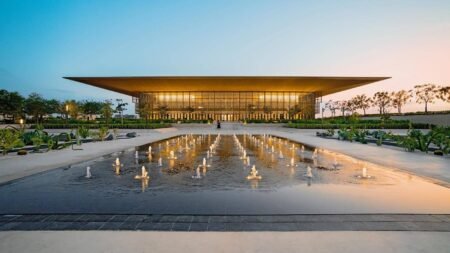
Tourism investment rose from AED 28.8 billion in 2023 to AED 32.2 billion in 2024, with AED 35.2 billion projected for 2025. These investments include airport expansion — Sheikh Mohammed bin Rashid Al Maktoum recently approved designs for a new passenger terminal at Al Maktoum International Airport — alongside hotel development, attraction diversification, and sustainable tourism infrastructure. The UAE now operates 1,243 hotels with over 216,000 rooms.
In the first half of 2025, hotel guests reached more than 16 million — a 5.5% increase on H1 2024 — with revenues of AED 26 billion. The WTTC’s 2025 forecast projected tourism’s contribution rising to AED 267.5 billion for the full year, accounting for almost 13% of GDP and supporting more than 925,000 jobs. These projections were made before the February 2026 events and will require revision. But the structural incentives they represent — the reasons the UAE has invested so heavily in security infrastructure — have not changed.
Resilience
257bn
Information Management: How the UAE Communicates During a Crisis
One of the original article’s premises — that responsible communication is a pillar of UAE safety management — is correct, but it needs to be grounded in what that actually looks like in practice rather than described in abstract.
During the February–March 2026 disruption, the UAE’s official communication framework operated on several parallel tracks simultaneously.
Dubai Airports maintained active updates on X (formerly Twitter), providing timestamped guidance to passengers throughout the closure and staged reopening. At 11:38 AM Dubai time on March 7, Dubai Airports confirmed temporary suspension at DXB with an immediate public statement. At 12:27 PM — less than an hour later — it confirmed partial resumption. Emirates issued at least four separate operational updates in a single day, including guidance on rebooking, refunds, and which destinations were operating. The GCAA issued formal advisories through the official WAM news agency, providing the regulatory framework for each stage of the reopening process.
The UAE’s regulations on misinformation — which are strict and enforced through federal law — exist not as a mechanism for suppressing legitimate reporting but for preventing the spread of unverified information during security-sensitive periods when false information can cause panic and complicate emergency management. During the current crisis, official channels have been the most reliable source of flight status information, and the UAE authorities have maintained continuous public communication rather than retreating behind official silence.
Travellers navigating the UAE during regional tension should know where to look. The authoritative sources are: Dubai Airports (dubaiairports.ae and @DubaiAirports on X); the UAE General Civil Aviation Authority; Emirates (emirates.com and @emirates on X); and official UAE government channels including the UAE Government Media Office. These sources have maintained hourly updates throughout the current disruption. Home country travel advisories — from the US State Department, UK FCDO, Australian DFAT, and equivalents — provide the governmental risk assessment that should anchor any travel planning decision.
The Track Record: What History Actually Shows
The UAE’s resilience record predates the current conflict. Several historical stress tests are instructive.
The 2022 Houthi attacks were the first time ballistic missiles struck the UAE’s populated areas in its history. Three people were killed in Abu Dhabi on 17 January 2022 when a Houthi ballistic missile evaded interception — a tragic failure with a very low death toll relative to the scale of the attack. THAAD successfully intercepted multiple other missiles in the same attack series, and the UAE authorities’ response — maintaining daily life, keeping airports operational, and projecting governmental calm — was widely cited by security analysts as a model of crisis management. Dubai’s tourism sector recorded its then-highest-ever visitor numbers in 2022 despite the attack series.
COVID-19 represented a different category of threat: a global shutdown of international travel. The UAE’s tourism sector fell from a pre-pandemic contribution of approximately 11.5% of GDP in 2019 to significantly lower during the pandemic years. By 2023, the sector had not merely recovered to 2019 levels — it had surpassed them by nearly 15%, according to WTTC data. Dubai welcomed 17.15 million international visitors in 2023, a new record. In 2024, that record was broken again: 18.72 million. The recovery trajectory from a global pandemic that shut down travel entirely is perhaps the clearest evidence available of the UAE tourism sector’s structural resilience.
Ongoing regional tensions from 2014 to 2024 — including the Yemen conflict, periodic Houthi threats, and US-Iran tensions — produced no sustained decline in UAE visitor numbers during that decade. Emirates NBD Research, in a mid-2024 market analysis, noted specifically that “while geopolitical tensions in the wider MENA region continue to make headlines, there is no indication that this has had a material effect on deterring visitors to Dubai.” The 2024 figures — 18.72 million visitors, AED 217.3 billion in international spending, 78% hotel occupancy — confirmed that assessment.
The current conflict is a different order of magnitude from previous regional tensions, and the short-term impact on visitor numbers will be significant. But the structural patterns of UAE tourism resilience — rapid recovery from disruption, continued investment during uncertainty, diversified source markets that include Western Europe (20% of Dubai visitors), South Asia (17%), Russia and Eastern Europe (15%), and GCC neighbours (14%) — suggest the medium-term trajectory will follow the patterns established by every previous regional stress event.

The Diversity Advantage: Why the UAE Does Not Depend on Any Single Tourism Category
One of the UAE’s genuine structural advantages in sustaining tourism through volatility is the breadth and diversity of what it offers. A destination dependent on a single attraction type — beach tourism, cultural tourism, business travel — is exposed when that category faces disruption. The UAE is not that destination.
Dubai Mall is the world’s most visited retail destination, attracting 99% of Dubai visitors in 2024. The Burj Khalifa and Palm Jumeirah draw 48% and 38% respectively. The Museum of the Future and Global Village attract 31% and 34%. Beyond Dubai, Abu Dhabi’s cultural district anchors Louvre Abu Dhabi, Guggenheim Abu Dhabi (under construction), and the Warner Bros. World theme park. Ras Al Khaimah’s Wynn Al Marjan Island has opened as the region’s first legal casino resort. Therme Dubai — a AED 2 billion wellness destination — is under development. The UAE’s adventure, desert, marine, and culinary tourism portfolios have all expanded substantially in the 2020s.
Business travel through Dubai functions independently of leisure travel patterns. DIFC and Abu Dhabi Global Market position the UAE as the premier financial services hub in the Gulf, attracting corporate travellers who continue to move regardless of regional tensions. The UAE’s convention and exhibition calendar — GITEX, Arab Health, Gulf Food, Dubai Airshow — generates visitor traffic that is structurally distinct from leisure patterns and more resistant to short-term sentiment shifts.
The UAE Tourism Strategy 2031, which targets AED 450 billion in sectoral GDP contribution and 40 million annual hotel guests, is built explicitly on this diversity. The strategy explicitly identifies tourism ecosystem breadth as the mechanism by which the UAE will continue to grow through regional volatility rather than being held hostage to it.
Frequently Asked Questions
Is it safe to travel to the UAE right now? The honest answer requires you to check the current travel advisory issued by your home country’s government. As of early March 2026, several governments including the US, UK, and Australia had issued elevated advisories for the UAE in response to the conflict between the US, Israel, and Iran. These advisories should be the primary basis for any immediate travel decision. This article addresses the UAE’s structural safety infrastructure and historical resilience record, not short-term travel recommendations during an active military conflict. Check the US State Department (travel.state.gov), UK FCDO (gov.uk/foreign-travel-advice), or your national equivalent for current guidance.
How does UAE air defence actually work? The UAE operates a five-layer integrated air and missile defence network: THAAD at the highest tier for interception of ballistic missiles at altitude; Patriot PAC-3 batteries for medium-altitude threats; South Korea’s Cheongung II and Israel’s Barak-8 for medium-range coverage; Russia’s Pantsir-S1 for drone and cruise missile threats; and the domestically developed SkyKnight for close-in defence. These systems are integrated into a single command and control framework. During the February–March 2026 attack series, the UAE reported interception of 132 of 137 ballistic missiles and 195 drones, representing an overall rate above 90%.
How resilient is UAE tourism historically? Exceptionally resilient across every measured stress event. Following COVID-19 — the most severe disruption to global travel in modern history — Dubai’s visitor numbers surpassed their 2019 peak by 2023 and set a new record of 18.72 million international overnight visitors in 2024. Following the January 2022 Houthi missile strikes on Abu Dhabi, the UAE’s tourism sector recorded its then-highest-ever full-year visitor numbers. Sustained regional tensions from 2014 to 2024 produced no lasting deterrent effect on visitor growth, which compounded at approximately 9% year-on-year through the decade.
How quickly did Dubai airports recover after the February 2026 closure? UAE airspace was closed on 28 February 2026 following Iranian missile and drone strikes. Limited commercial flight operations resumed from Dubai International and Al Maktoum International on 2 March — within four days. By 5 March, Emirates had carried approximately 30,000 passengers in a single day. By 7 March, Emirates was operating 106 daily return flights to 83 destinations — approximately 60% of its global route network — with a return to 100% anticipated within days. More than 1,140 flights were handled in the 84-hour period from the initial limited resumption to March 6, providing approximately 105,000 outbound seats to more than 80 countries.
How significant is tourism to the UAE economy? Tourism contributed AED 257.3 billion (approximately USD 70.1 billion) to UAE GDP in 2024, representing 13% of the national economy — up 26% from pre-pandemic 2019 levels. The sector supports 898,600 jobs, equivalent to nearly one in eight positions in the country. International visitor spending reached AED 217.3 billion in 2024. The UAE Tourism Strategy 2031 targets sectoral GDP contribution of AED 450 billion and 40 million hotel guests annually. These figures explain why the UAE’s investment in security infrastructure is not merely a governmental priority but an economic structural necessity.
This article draws on data from the World Travel and Tourism Council (WTTC) Economic Impact Research 2024–2025, UAE Ministry of Economy Tourism Indicators, Arabian Business, The National, Semafor, Middle East Eye, Lockheed Martin THAAD programme documentation, Emirates NBD Research, and Dubai Department of Economy and Tourism visitor data. Readers are encouraged to consult current official travel advisories from their home country’s foreign ministry before making any travel decisions.