


Uncover how 800,000 daily AI-driven cyberattacks impact the UAE. Grasp essential defence strategies & protect your finances and data. Get vital insights.
Imagine an invisible war being waged every single day, not with bombs, but with data packets and malicious code. In the UAE, this isn’t a hypothetical scenario; it’s a stark reality where an astonishing 800,000 cyberattack attempts are recorded daily, even during periods of calm. These aren’t just isolated hacking incidents; they represent a complex, AI-driven cyber warfare targeting everything from national infrastructure to personal finances. Understanding these evolving UAE cyberattacks and how to defend against them is no longer optional – it’s essential for every resident and business.
What’s Hot in UAE provides the definitive, localised guide to navigating this intricate digital landscape. We’ll delve into the escalating scale of threats, the pivotal role of AI, and crucial defence strategies for residents and businesses across the Emirates. This article will equip you with essential knowledge, from unmasking digital deception to understanding your data protection rights, ensuring you’re prepared for the continuous challenge of cyber security.
TL;DR: The UAE faces 800,000 daily cyberattacks, increasingly AI-powered, demanding vigilance from all.
In This Article
- The Escalating Scale of Cyber Threats in the UAE
- AI’s Pivotal Role in Modern Cyberattacks Targeting the UAE
- What UAE Residents Need to Know About Digital Threats
- Unmasking Digital Deception: Verifying Apps and Investment Offers in the UAE
- Your First Line of Defence: Essential Digital Hygiene for UAE Residents
- The UAE Cyber Security Council: Leading the National Defence
- Staying Ahead: Future Trends and Continuous Vigilance
The Escalating Scale of Cyber Threats in the UAE
The sheer volume of digital assaults targeting the Emirates is a stark reminder of the persistent and evolving nature of these threats. What was once a landscape dominated by direct and isolated hacking attempts has now morphed into a far more complex reality, demanding robust defence strategies against UAE cyberattacks.
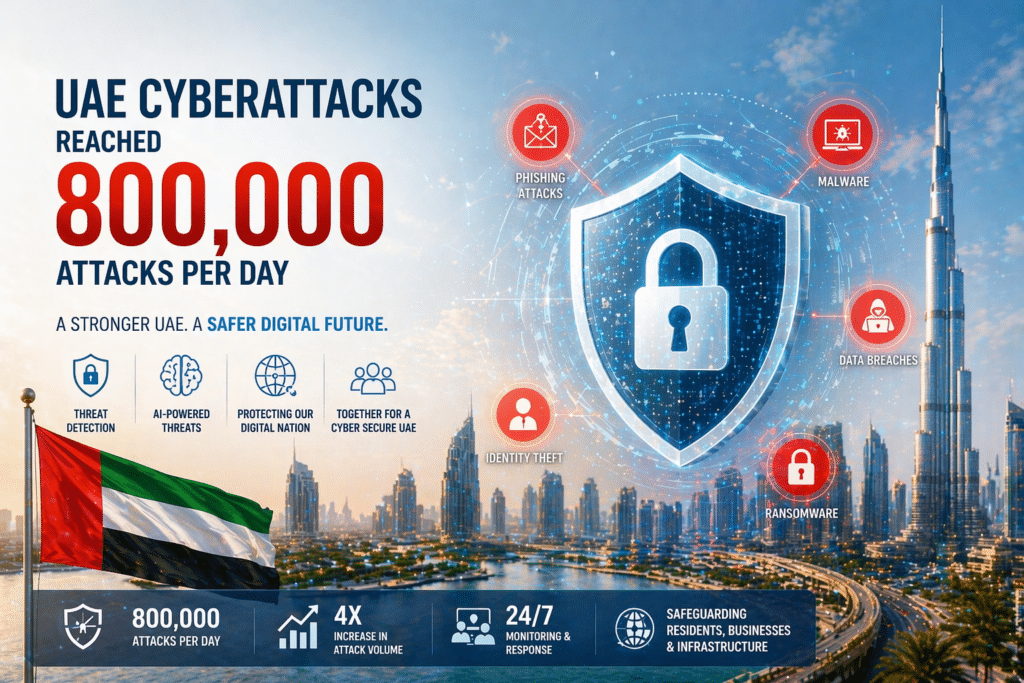
The UAE is experiencing a significant surge in cyberattacks, with approximately 800,000 attempts daily, a fourfold increase from previous estimates. These threats have evolved from simple, isolated hacking incidents into sophisticated, layered, and coordinated assaults that target institutions, systems, and individuals simultaneously, underscoring a persistent and adaptive digital threat landscape.
According to Dr Mohammed Al Kuwaiti, head of the UAE Cyber Security Council, the nation fends off approximately 800,000 cyberattacks every single day. This figure represents a dramatic surge from previous estimates of around 200,000 daily attempts, underscoring the intensified frequency and sophistication of these assaults, as reported by Emarat Al Youm. This isn’t just about numbers; it’s about a fundamental shift in tactics. Dr Al Kuwaiti highlighted that today’s attacks are “layered and coordinated,” targeting institutions, systems, and individuals simultaneously through multiple channels. This means a single malicious campaign might involve phishing emails, malware deployment, and social engineering efforts all at once, making defence far more challenging against these evolving cyber threats. The continuous increase in volume and complexity underscores the critical need for advanced cyber security measures to protect against UAE digital threats.
AI’s Pivotal Role in Modern Cyberattacks Targeting the UAE
Artificial Intelligence is not just a tool for innovation; it has become a formidable weapon in the hands of cyber adversaries. The UAE’s cyber security landscape is actively combating advanced financial scams and disinformation campaigns, which are increasingly leveraging AI to automate and refine their targeting of both individuals and critical systems, as highlighted by Dr Mohammed Al Kuwaiti. This integration of AI allows attackers to operate with unprecedented speed, precision, and scale, fundamentally reshaping cyber warfare UAE.
Artificial intelligence plays a pivotal role in modern cyberattacks targeting the UAE by automating and refining malicious activities. AI enables attackers to execute operations at scale with minimal human intervention, significantly increasing the speed, precision, and sophistication of threats, from financial scams to efforts aimed at swaying public opinion.
Dr Al Kuwaiti explicitly stated that AI “automates and refines attacks,” enabling them to be carried out with “minimal human intervention,” which drastically increases both their “speed and precision.” This means that what once required extensive human effort can now be executed by algorithms, allowing for broader campaigns and more convincing deception. For instance, AI-powered tools can generate highly convincing phishing emails, analyse vast datasets to identify vulnerable targets, and even develop new malware variants, making AI in cyberattacks UAE a significant concern. The result is a new era of cyber warfare that is largely fought out of sight, driven by digital financing tools like cryptocurrencies and involving actors across multiple jurisdictions, making these AI-powered cyber threats truly borderless and harder to trace.
What UAE Residents Need to Know About Digital Threats
The evolving nature of cyber threats means that every resident in the UAE, from the bustling streets of Dubai Marina to the quiet communities of Fujairah and the vibrant capital of Abu Dhabi, must be aware of the specific risks they face. From financial scams to coordinated efforts to sway public opinion, the threats have widened, now increasingly powered by artificial intelligence that automates and refines attacks.
UAE residents face evolving digital threats, including sophisticated financial scams and coordinated efforts to sway public opinion, increasingly powered by AI. Authorities monitor thousands of malicious channels, highlighting the continuous and adaptive nature of these borderless attacks. Understanding these local nuances is crucial for personal and organisational digital resilience.
The UAE Cyber Security Council actively monitors this landscape, tracking a wide ecosystem of hostile actors, including 350 organised groups, 320 amateur hackers, and 120 entities linked to malicious software activity. They even monitor around 5,000 channels on Telegram as part of ongoing surveillance efforts, demonstrating the scale of digital threats in Abu Dhabi and across the Emirates. Dr Al Kuwaiti also revealed that around 20 countries and more than 40 organisations have been identified as targeting the UAE, including groups with links to Iran. This global reach underscores that digital threats are not confined by physical borders, making collective vigilance paramount for all residents and businesses.
Navigating Financial Scams and Data Breaches in the Emirates
Financial scams are a constant menace, and many residents across the UAE have received sophisticated phishing attempts disguised as messages from major local banks like Emirates NBD or FAB. These often arrive during peak salary transfer periods, cunningly designed to trick users into divulging online banking credentials. Local community WhatsApp groups across JBR and Dubai Marina frequently share screenshots of convincing scam messages, from fake RTA fines to fraudulent visa renewal services, serving as an informal, but often effective, first line of defence against common phishing tactics.
To navigate financial scams and data breaches in the UAE, residents should be vigilant against unsolicited communications, verify the legitimacy of offers, and use strong, unique passwords. Always secure online transactions with reputable payment gateways and be wary of requests for personal information, especially those promising high returns.
Dr Al Kuwaiti’s advice to adopt basic digital hygiene practices is crucial here, specifically to reduce “exposure to fraud and data breaches.” Always scrutinise unsolicited emails, SMS messages, or calls, especially those demanding urgent action or personal financial details. Legitimate institutions will rarely ask for sensitive information via unverified channels. Protecting against financial scams UAE requires constant awareness and a healthy dose of scepticism towards unexpected offers or urgent requests. Practising secure online shopping UAE habits is also vital to prevent data breaches UAE.
Understanding UAE Data Protection Laws and Your Rights
The UAE is proactive in establishing robust legal frameworks to protect its digital citizens. The Federal Decree-Law No. 45 of 2021 on Personal Data Protection (PDPL) provides a comprehensive legal framework that businesses must adhere to, making the consequences of data breaches significantly more severe for companies operating in the Emirates, especially following the surge in AI-powered attacks. This commitment to cyber security frameworks and legal protections reinforces the government’s proactive stance against digital threats.
UAE data protection laws, such as Federal Decree-Law No. 45 of 2021, establish comprehensive regulations for handling personal data, granting individuals rights over their information. These laws mandate data controllers to implement robust security measures, ensure transparency, and obtain consent, significantly enhancing data privacy and security for residents and businesses across the Emirates.
This law grants individuals rights over their personal data, including the right to access, rectify, and erase their information, and to restrict its processing. For a detailed breakdown of these rights, refer to our guide on UAE data privacy rights. For businesses, compliance is not just a legal obligation but a critical defence mechanism against the reputational and financial fallout of data breaches. Understanding these rights empowers residents to demand better data handling practices from the organisations they interact with, ensuring greater data privacy UAE. The UAE data protection laws explained clearly define the responsibilities of data controllers and processors, reinforcing the importance of digital rights UAE.

Unmasking Digital Deception: Verifying Apps and Investment Offers in the UAE
In the UAE’s fast-paced digital economy, the line between legitimate opportunities and sophisticated scams can be incredibly thin. It is paramount to thoroughly verify the credibility of mobile applications and online investment offers. Dr Mohammed Al Kuwaiti specifically advised individuals to “verify the credibility of apps and investment offers” as a key digital hygiene practice, emphasising that this due diligence can significantly “reduce exposure to fraud and data breaches.” This advice is crucial for effective online fraud prevention UAE.
To unmask digital deception in the UAE, always verify apps by checking official app stores, developer reputations, and user reviews before downloading. For investment offers, research the company thoroughly, check for regulatory licences with UAE authorities like the SCA or DFSA, and be sceptical of promises of unusually high returns. Never rush into decisions.
This is a critical area where proactive steps can save significant financial and personal distress. The ease with which malicious apps can mimic legitimate ones, or fraudulent investment schemes can promise unrealistic returns, makes careful verification indispensable. Before you verify apps UAE or engage with any platform, consider the source and the claims being made. The digital landscape is rife with attempts to deceive, making informed caution your best defence. Always seek independent verification for any offer that seems too good to be true.
Red Flags to Watch Out For in Apps and Online Platforms
Vigilance is your strongest defence. When evaluating apps or online platforms, several red flags should immediately raise suspicion. Be wary of applications requesting excessive permissions that seem unrelated to their core function (e.g., a simple photo editor asking for access to your contacts or microphone). Poor reviews, generic branding, or a lack of transparent developer information are also warning signs. Any platform employing pressure tactics, demanding immediate action, or promising returns that seem “too good to be true” should be treated with extreme caution, as these are common phishing red flags.
Red flags for suspicious apps and online platforms include excessive permission requests, vague privacy policies, generic branding, and numerous negative reviews. Be wary of platforms demanding immediate action or personal financial details, or those with unprofessional design and poor grammar, as these often indicate a scam.
Other indicators of potential online platform scams include unprofessional design, poor grammar, or a lack of secure payment options. Always check the privacy policy and terms of service; if they are vague or non-existent, it’s a major warning sign for your app security UAE. Leading electronics retailers across Dubai Mall and Mall of the Emirates, such as Sharaf DG and Jumbo, have seen an uptick in sales of advanced antivirus software and VPN subscriptions as individuals seek to bolster their personal digital defences. This trend highlights a growing awareness among residents about the need for robust personal security measures.
Due Diligence for Investment Opportunities: A Local Perspective
Dubai’s status as a global financial hub means its Free Zones, particularly DIFC, face a disproportionately high number of financially motivated cyberattacks and business email compromise attempts targeting high-value transactions. This makes due diligence for investment offers even more critical. Always verify the company’s registration and licensing with the relevant UAE regulatory bodies. For instance, check with the Securities and Commodities Authority (SCA) for mainland UAE entities or the Dubai Financial Services Authority (DFSA) for those operating within the Dubai International Financial Centre. This is crucial for UAE investment scam prevention.
For investment opportunities in the UAE, conduct thorough due diligence by verifying the company’s registration and licensing with relevant authorities like the Securities and Commodities Authority (SCA) or Dubai Financial Services Authority (DFSA). Always seek independent financial advice, scrutinise business plans, and be highly sceptical of guaranteed high returns, as these are common hallmarks of scams.
Never invest based solely on social media recommendations or unsolicited emails. Always seek independent financial advice from licensed professionals and scrutinise business plans thoroughly. If an offer guarantees unusually high returns with little to no risk, it is almost certainly a scam. Understanding SCA regulation and DFSA licensed investments is paramount to safeguard your assets and avoid falling victim to fraudulent schemes.
Your First Line of Defence: Essential Digital Hygiene for UAE Residents
Public awareness remains the first line of defence against the relentless tide of UAE cyberattacks. Dr Mohammed Al Kuwaiti’s message is clear: “The threat is constant,” and individuals and organisations must adopt basic digital hygiene practices. These aren’t complex, technical manoeuvres; they are fundamental habits that significantly reduce your vulnerability and form the bedrock of cyber security awareness UAE.
Essential digital hygiene for UAE residents involves regularly updating devices and software, using strong, unique passwords, and enabling multi-factor authentication. Always be cautious of suspicious links or attachments, and verify the credibility of apps and investment offers. Vigilance is paramount in protecting against fraud and data breaches.
This includes everything from regularly updating devices and changing default passwords to verifying the credibility of apps and investment offers. These simple yet effective steps are crucial for reducing exposure to fraud and data breaches, forming a collective shield against sophisticated digital threats. Adopting robust digital hygiene UAE practices is the most effective way for individuals to contribute to their own online safety tips UAE residents and the nation’s overall cyber resilience.
Basic Practices: Passwords, Updates, and Device Security
The foundation of strong cyber security begins with basic practices. Always use strong, unique passwords for every online account. A password manager can help you manage these complex credentials effortlessly, ensuring strong passwords UAE. Dr Al Kuwaiti specifically recommended “updating devices and changing default passwords,” a simple yet often overlooked step.
Basic digital hygiene includes creating long, complex passwords unique to each account, ideally using a password manager. Regularly update all operating systems and applications to patch security vulnerabilities. Ensure devices have up-to-date antivirus software and firewalls enabled to prevent unauthorised access and malware infections.
Regular software updates for your operating systems, applications, and antivirus software are non-negotiable. These updates often contain critical security patches that close vulnerabilities exploited by attackers, making software updates security a top priority. Furthermore, ensure your devices have up-to-date antivirus software and firewalls enabled. Consider enabling multi-factor authentication (MFA) wherever possible; this adds an extra layer of security, making it much harder for unauthorised users to access your accounts even if they have your password, significantly enhancing your device security tips.
Secure Online Shopping and Browsing Tips
Navigating the digital marketplace safely requires conscious habits. When shopping online, always ensure the website uses “https://” in its URL and displays a padlock icon, indicating a secure connection. Avoid making purchases or entering sensitive information when connected to public Wi-Fi networks, as these are often unsecured and vulnerable to eavesdropping, posing a risk to public Wi-Fi security.
For secure online shopping and browsing, always check for ‘https://’ and a padlock icon in the URL, indicating a secure connection. Avoid making purchases or entering sensitive information on public Wi-Fi networks. Be cautious of suspicious links, pop-ups, and unsolicited offers, and regularly review privacy settings on all online accounts.
Be cautious of suspicious links, pop-ups, and unsolicited offers that promise incredible deals. Regularly review the privacy settings on all your social media and online accounts to control what information you share and with whom. A reputable VPN (Virtual Private Network) can also add a layer of encryption when browsing, especially on public networks, providing safe browsing tips and enhancing secure online shopping UAE.

The UAE Cyber Security Council: Leading the National Defence
At the forefront of the nation’s digital defence is the UAE Cyber Security Council, under the leadership of Dr Mohammed Al Kuwaiti. The Council plays a pivotal role in monitoring, strategising, and implementing measures to protect the UAE from the relentless barrage of digital threats. Their efforts extend to tracking “hundreds of hostile actors,” including “350 organised groups,” “320 amateur hackers,” and “120 entities linked to malicious software activity.”
The UAE Cyber Security Council, led by Dr Mohammed Al Kuwaiti, spearheads the nation’s defence against evolving digital threats. The Council actively monitors and identifies hostile actors, including organised groups and malicious software entities, implementing comprehensive strategies to protect critical infrastructure, systems, and individuals from the persistent and sophisticated cyberattacks targeting the Emirates.
This comprehensive oversight highlights the Council’s deep understanding of the diverse and sophisticated nature of the adversaries targeting the Emirates. Their proactive approach is crucial in safeguarding critical infrastructure, government systems, and the digital well-being of the population, forming the backbone of national cyber security UAE. The Council’s continuous monitoring and strategic planning are essential components of UAE cyber defence strategies, adapting to the ever-changing threat landscape.
Dr Mohammed Al Kuwaiti on the Front Line
Dr Mohammed Al Kuwaiti’s insights are a cornerstone of the UAE’s cyber security strategy. He consistently warns that “The threat is constant,” and that “vigilance, rather than timing, now defines resilience in the digital age.” This means that the fight against cyber threats is not a battle to be won once, but an ongoing commitment to awareness and adaptation, reflecting key UAE cyber security insights.
Dr Mohammed Al Kuwaiti, head of the UAE Cyber Security Council, consistently warns that the cyber threat is ‘constant’ and that ‘vigilance, rather than timing, now defines resilience in the digital age.’ He stresses that proactive digital hygiene and public awareness are the first lines of defence against the persistent and evolving nature of digital attacks.
His emphasis on public awareness as the “first line of defence” underscores that national security in the digital realm is a shared responsibility. Every individual’s actions, from updating devices to verifying investment offers, contribute to the overall resilience of the UAE’s digital ecosystem. Dr Mohammed Al Kuwaiti’s leadership and clear communication are vital in fostering a culture of vigilance digital age among residents and organisations.
Staying Ahead: Future Trends and Continuous Vigilance
The landscape of cyber warfare is ever-shifting, driven by technological advancements and geopolitical dynamics. Dr Al Kuwaiti has highlighted the “borderless” nature of cyber threats and the increasing role of “digital financing tools such as cryptocurrencies” in funding and facilitating these illicit operations. Cyber warfare, he notes, is “largely fought out of sight,” making it challenging to track and attribute attacks, representing significant UAE cyber security trends.
Staying ahead of cyber threats involves understanding emerging trends like the increasing use of cryptocurrencies in cyber warfare and the borderless nature of attacks. Continuous vigilance and proactive digital hygiene are paramount. Public awareness campaigns and community engagement remain critical for building a resilient defence against the ever-evolving tactics of cyber adversaries.
This continuous evolution necessitates an equally continuous commitment to vigilance and adaptation from both national authorities and individual citizens. The implications of cyber warfare being “largely fought out of sight” mean that traditional defence mechanisms are often insufficient, requiring advanced intelligence gathering and proactive countermeasures against emerging cyber threats. The proactive measures taken today will define the resilience of the UAE’s digital future, making cyber security awareness UAE a perpetual necessity.
Promoting Cyber Security Awareness: Community and Events
Building a robust national cyber defence isn’t solely the responsibility of government bodies; it requires active community engagement. Promoting cyber security awareness through local initiatives and events is vital for educating residents and businesses. Platforms like What’s Hot in UAE regularly cover Dubai cyber security events and workshops, providing residents and businesses with crucial updates and practical knowledge. These efforts build a collective defence, ensuring a more informed and resilient digital community.
Promoting cyber security awareness in the UAE involves active participation in community initiatives and local events. Platforms like ‘What’s Hot in UAE’ regularly cover ‘Dubai cyber security events’ and workshops, providing residents and businesses with crucial updates and practical knowledge. These efforts build a collective defence, ensuring a more informed and resilient digital community.
These community-focused efforts, from public awareness sessions in Fujairah to workshops in Abu Dhabi, are instrumental in fostering a culture of digital hygiene. By staying informed and participating in these educational opportunities, residents contribute directly to the UAE’s collective cyber resilience and strengthen community cyber defence.

Frequently Asked Questions
How many cyberattacks does the UAE face daily?
The UAE fends off approximately 800,000 cyberattack attempts each day, a significant increase from previous figures. This highlights the persistent and evolving nature of digital threats, which have grown in both frequency and sophistication, targeting various sectors and individuals across the Emirates.
How is AI changing cyberattacks in the UAE?
AI is fundamentally transforming cyberattacks by automating and refining malicious activities. It enables attackers to execute operations at scale with minimal human intervention, dramatically increasing the speed, precision, and sophistication of threats, from financial scams to disinformation campaigns, making them harder to detect.
What are common financial scams targeting UAE residents?
Common financial scams include sophisticated phishing attempts disguised as messages from major local banks like Emirates NBD or FAB, often during salary transfer periods. These scams aim to trick users into divulging online banking credentials or personal information through fake offers or urgent requests.
What are the UAE’s data protection laws?
The UAE’s Federal Decree-Law No. 45 of 2021 on Personal Data Protection (PDPL) provides a robust legal framework. It grants individuals rights over their personal data and mandates businesses to implement strong security measures, ensure transparency, and obtain consent for data processing, enhancing privacy for all.
How can I verify the credibility of investment offers in the UAE?
To verify investment offers, always check if the company is registered and licensed with relevant UAE regulatory bodies such as the Securities and Commodities Authority (SCA) or the Dubai Financial Services Authority (DFSA). Be highly sceptical of promises of unusually high returns and always seek independent financial advice.
What basic digital hygiene practices are recommended for UAE residents?
Essential practices include regularly updating devices and software, using strong, unique passwords for every account, and enabling multi-factor authentication. Residents should also be cautious of suspicious links and attachments, and always verify the credibility of apps and investment offers before engaging.
Conclusion
The scale of UAE cyberattacks, with 800,000 daily attempts, is a stark reality that demands constant attention. The pervasive role of AI in automating and refining these threats has ushered in a new era of digital warfare, making vigilance more critical than ever. From national defence efforts led by the UAE Cyber Security Council and Dr Mohammed Al Kuwaiti, to the essential digital hygiene practices of every individual, a collective, informed approach is our strongest defence.
Stay informed and protect your digital life in the UAE by regularly visiting What’s Hot in UAE for the latest cyber security updates and local insights.


