Natural History Museum Abu Dhabi opened on 22 November 2025 in the Saadiyat Cultural District. Its subject is bigger than dinosaurs: the galleries connect the origins of the universe, the formation of Earth, the evolution of life and the natural history of this region. Stan the T. rex and the Murchison meteorite give visitors obvious…
Natural History Museum Abu Dhabi opened on 22 November 2025 in the Saadiyat Cultural District. Its subject is bigger than dinosaurs: the galleries connect the origins of the universe, the formation of Earth, the evolution of life and the natural history of this region. Stan the T. rex and the Murchison meteorite give visitors obvious starting points, but the most useful visit follows the connections between those objects. This guide covers what to prioritise, how admission works and how to plan a museum day without rushing through the displays.
Related: explore our full Saadiyat Island area guide for the Cultural District, Louvre Abu Dhabi, beaches and things to do.
Our recommendation is to give this museum its own place in your itinerary, rather than squeezing it into a spare hour between other Saadiyat attractions. The collection combines fossils with planetary history and living ecosystems, so it rewards visitors who read the explanations as well as looking at the largest specimens. Choose a few subjects you care about and spend time with them.
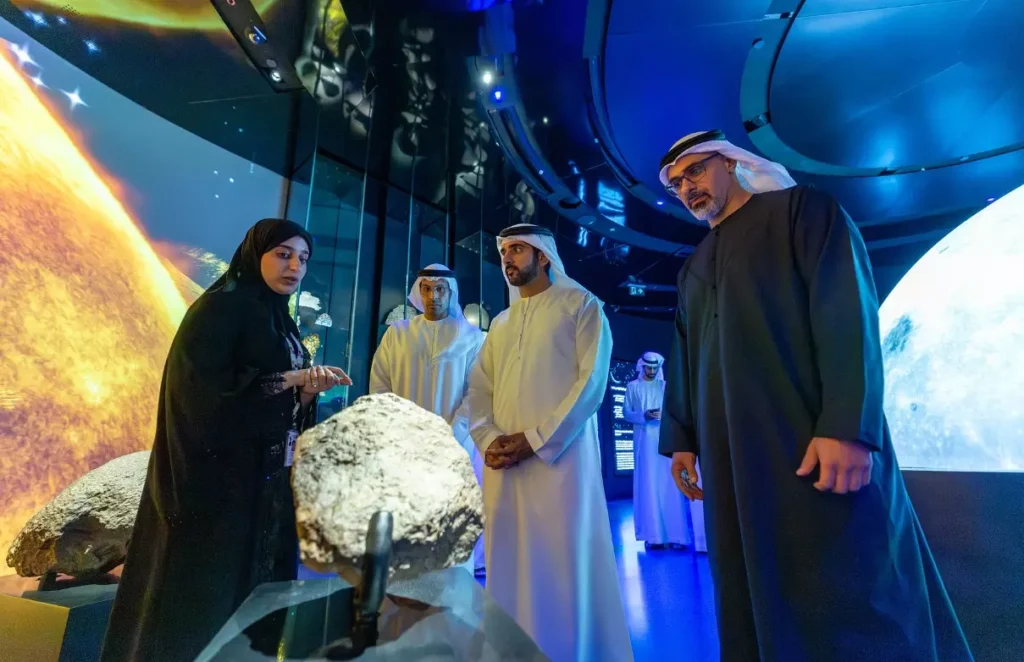
Stan and the Murchison meteorite make an effective pair of starting points. One concerns an animal that lived on Earth; the other helps explain material from before our solar system formed. The distinction gives families a useful question to discuss: what can a fossil tell us that a meteorite cannot? Read the labels around each specimen before moving on. The museum’s scientific value lies in the evidence those objects carry, rather than their size or the drama of the display alone.
For architecture enthusiasts, look at the museum as a building and a landscape together. Mecanoo’s project description explains the rock-formation inspiration and the public routes around it. That gives you something specific to look for beyond a general verdict that the design is impressive. A visit focused on architecture can include the exterior as well as the galleries; the two experiences have different access arrangements.
For a first visit, our suggested allowance is two to three hours for the galleries. Add time for food, a booked activity or the separately ticketed theatre. This is a planning recommendation, not a compulsory route or an official promise about queues. If visiting with young children, agree a few priority exhibits and leave room for breaks instead of turning the day into a race to finish every display.
From the universe’s origins to life on Earth
The museum’s story begins with the universe’s origins around 13.8 billion years ago. Earth formed much later, roughly 4.6 billion years ago: the two ages should not be used interchangeably. The galleries move from cosmic and planetary origins into the history of life and ecosystems. Following that sequence helps explain why meteorites, dinosaurs and present-day environmental questions belong in the same museum rather than treating each as an unrelated attraction.
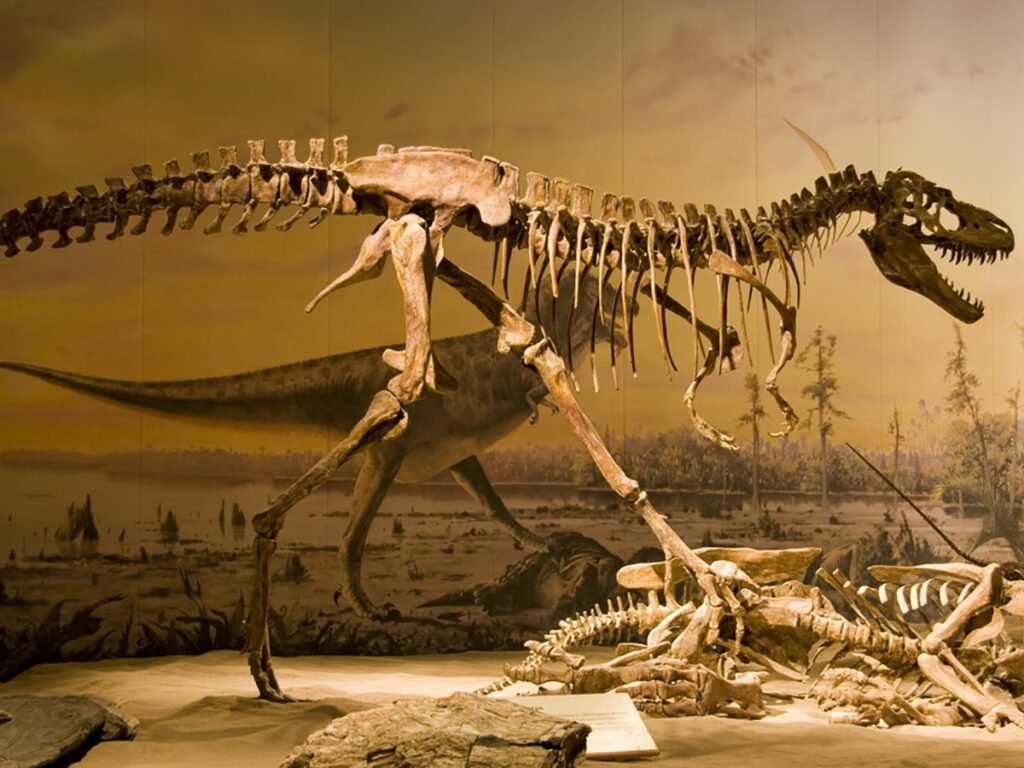
Stan the T. rex: a starting point
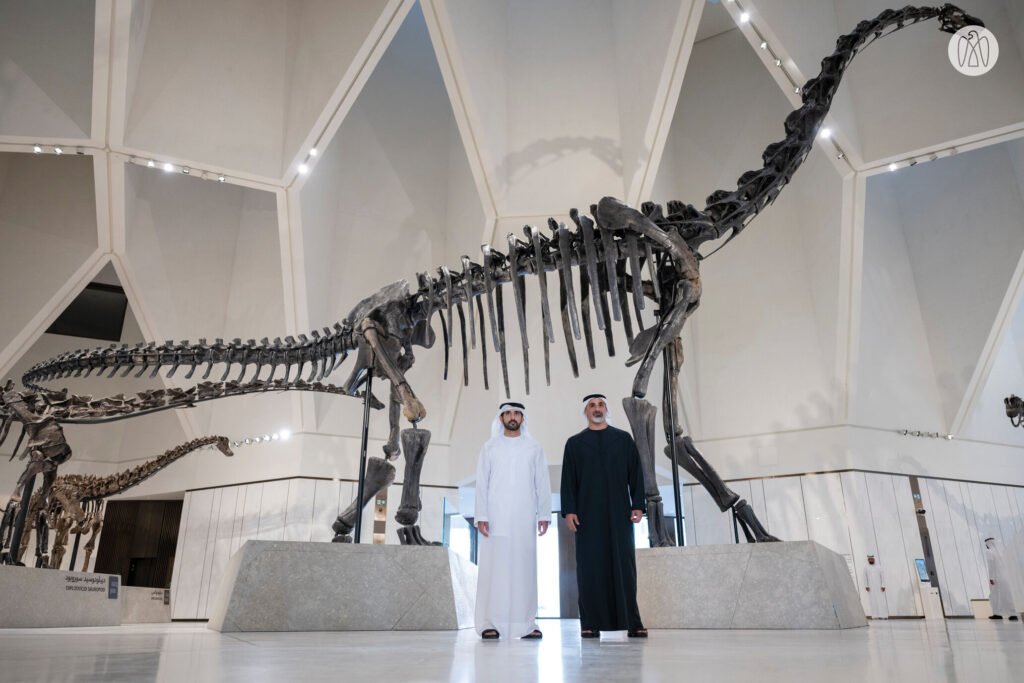
Stan is one of the museum’s best-known specimens and a clear starting point for visitors interested in dinosaurs. The Abu Dhabi tourism authority describes it as one of the most complete T. rex skeletons discovered. That is more informative than an unsupported claim that this is the world’s largest dinosaur collection. Look for the exhibition’s explanation of the specimen and its scientific context; a dramatic skeleton is the beginning of the story, not the whole explanation.
The UAE’s ancient landscapes
The regional material makes this museum especially relevant to a UAE visit. Ancient fossils challenge the assumption that the landscape has always looked like today’s desert. The local elephant material, associated with Stegotetrabelodon emiratus, belongs in that longer environmental story. Read the exhibit labels for the find’s place and period rather than assuming every specimen on display was discovered beside the museum. That distinction connects the Arabian account to the broader history of life without flattening different locations into one site.
Why the meteorite matters
The Murchison meteorite is another priority. It offers a different kind of evidence from a fossil: the story concerns cosmic materials and the formation of our solar system, rather than a preserved animal or plant. Use that contrast to shape your route. A dinosaur-focused visit can still gain a great deal from the origins displays, especially if you are interested in how scientists reconstruct events too old for human observation.
Mecanoo’s building and landscape
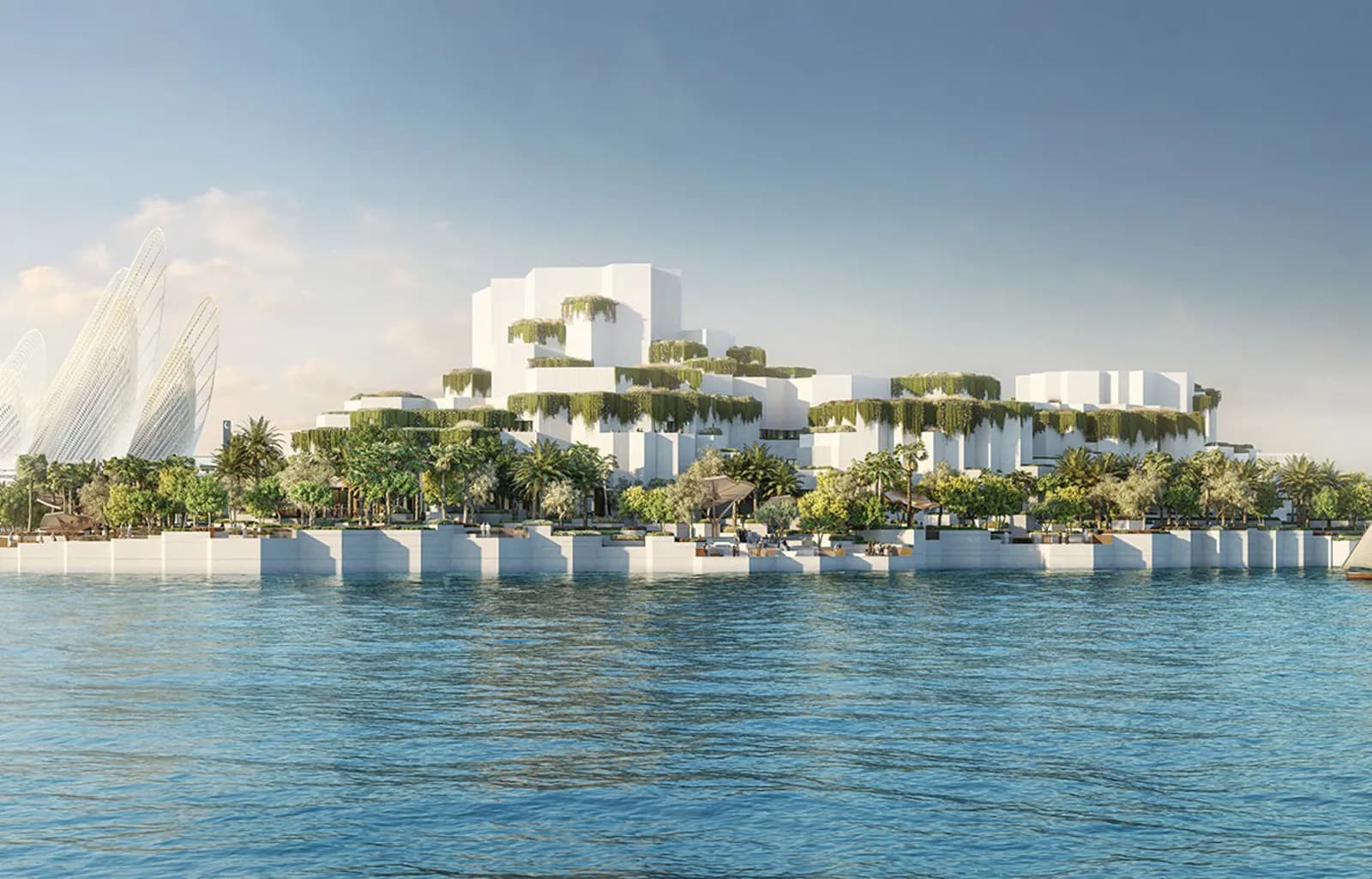
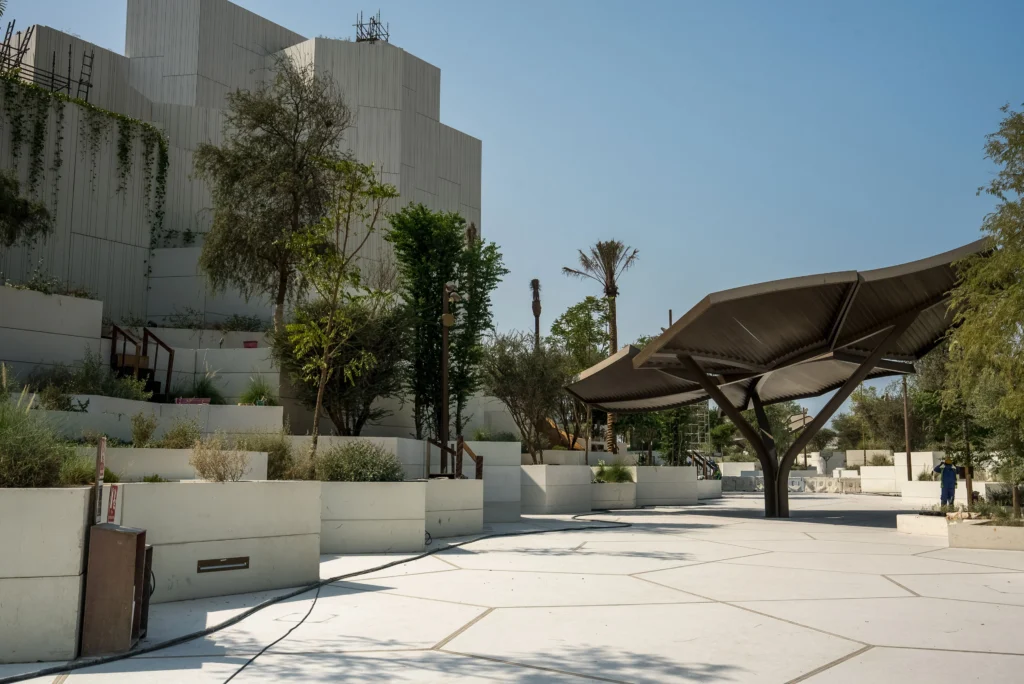
The museum was designed by Mecanoo. Its published project record lists a 35,000-square-metre museum on an 82,000-square-metre site and describes a design influenced by geological formations. This makes the exterior part of the visit’s appeal, but it also sets a practical expectation: leave walking time around the building and check the actual entrance when arranging a drop-off. A photograph of the overall site is not a route to your ticketed gallery.
What to look for outside
The architect describes pentagonal patterns inspired by cellular structures, sculpted volumes related to rock formations, and water and vegetation woven into the design. Look for those features when approaching the building instead of treating every striking shape as arbitrary decoration. Mecanoo also identifies three public pathways connecting the waterfront and surrounding cultural institutions, open without a ticket. Those public routes do not make museum-gallery admission free for every visitor.
Combining it with other Saadiyat museums
The museum sits among Saadiyat’s cultural institutions. Louvre Abu Dhabi, Zayed National Museum and teamLab Phenomena are separate attractions with different subjects and admission arrangements. Zayed National Museum is now open; it should not be described as an upcoming attraction. If combining visits, choose the second stop because you want its content, not simply because it is nearby. Natural history, national history, art and immersive installations are distinct experiences, and a full day can become tiring if you attempt all of them.
Making the visit useful for families
For families and students, the educational value comes from asking what the specimens show and how researchers know it. Rather than memorising every label, choose a question for each part of the route: how Earth changed, what a fossil preserves, or how an ecosystem works. Check the museum’s current programme for a workshop that suits the visitors’ ages and interests. A listed gallery activity and a separately booked event are not automatically the same thing.
The separately ticketed theatre
The immersive theatre is an optional addition to the galleries and requires a separate ticket. Decide whether you want it before filling the rest of your schedule. A theatre slot can give the day structure, but it also commits part of the time you might otherwise spend reading the exhibitions. For a short first visit, the galleries are the priority; for someone particularly interested in the universe’s origins, the extra screening can make sense alongside the specimen displays.
Permanent Galleries and Rotating Exhibitions
The permanent route covers the universe and Earth’s beginnings, the evolution of life, current ecosystems and the planet’s resilience. Those subjects are connected: the environment shapes life, and living systems also change their surroundings. Follow the museum’s current signs and map rather than relying on a fixed gallery count in an older description. Leave room to revisit a specimen after reading its context; the second look often answers questions the first glance raised.
Temporary exhibitions change independently of the permanent displays. The museum’s current programme lists LEGO SHOWS Natural Brickstory through 8 November 2026. Before planning a visit around a temporary exhibition or workshop, read that programme’s dates and booking details. An older mention of Wildlife Photographer of the Year or a dinosaur exhibition does not establish that it is still running. Choose your date for the programme you actually want to see, while keeping the permanent collection as the visit’s main anchor.
Planning your visit
Start with the official visit page, choose your day and book the appropriate category. Then decide whether to add the theatre or an activity. This is more useful than arriving with a list of old promotional offers: a museum ticket, annual membership and multi-museum pass are different products. Check what your chosen product includes and what needs another booking, especially when arranging a visit for several adults and children.
Location and transport
The museum is on Jacques Chirac Street in the Saadiyat Cultural District, Abu Dhabi. Use the museum’s own location link for navigation and check the entrance before booking a pickup. Driving from Dubai depends on your starting point and traffic; a single journey-time claim cannot cover every visitor. If using public transport, plan the route and final walk for your date rather than assuming a named bus serves the entrance throughout the day.
Tickets, Timings and Facilities
Opening hours are 10am–6:30pm Monday to Thursday and 10am–8:30pm Friday to Sunday. The official visit page gives last entry 45 minutes before closing, not one hour. Adult admission is AED70 in the museum’s government-published programme; under-18s enter free, and eligible concession categories are available. Confirm the category and required evidence in the official booking flow. The immersive theatre is separately ticketed and is not included in standard gallery admission.
The visit page lists Nayzak café and restaurant, seating and family facilities. It also states that single strollers may enter the galleries, while double strollers go in the cloakroom; bags larger than 58 by 43cm must be stored. Those details are worth checking before leaving with young children or luggage. Pack for the museum visit rather than carrying everything for a full day of other activities. If accessibility arrangements affect your visit, contact the museum with your specific needs before booking.
Choosing your route
To truly make the most of your visit, consider these tailored tips:
- For families: choose a few priority specimens, include breaks and check the age guidance for any booked activity. Let children describe what they can actually see before supplying an explanation.
- For science enthusiasts: read how the objects support an interpretation, not just their age or size. Compare the evidence supplied by a meteorite with the evidence supplied by a fossil.
- For researchers: contact the museum about your subject and the access you need. Do not treat admission as a promise of archives, laboratory access or a specialist appointment.
A practical first-visit plan is to spend the opening part on the origins story, then give the major specimens proper attention, and finish with the ecosystems and resilience themes. Adjust that order to the museum’s route and your own interests. Our two-to-three-hour allowance is a suggested pace, consistent with the tourism authority’s guidance; it is not an attributed recommendation from unnamed curators. Add a break and extra time if your group wants every display.
The work beyond the galleries
A museum’s contribution is not limited to the public display. Collections can support research, education and future questions that were not obvious when an object was first acquired. Visitors see one part of that work. The distinction matters when judging a museum: an impressive public gallery and an active research programme are related, but they are not identical achievements, and research access is not something a general admission ticket can promise.
Research and public understanding
The museum’s own website describes research across Earth, life and people. That gives visitors a useful way to think beyond individual objects: geological history concerns the forces shaping the planet, biodiversity concerns living systems, and public engagement concerns how that knowledge reaches communities. A specimen’s importance can lie in what scientists learn from it rather than its visual impact. If you are visiting for academic work, contact the relevant museum team rather than assuming the public route provides access to laboratories or collections storage.
Who should make time for it
For residents, the museum adds a science-focused option to a cultural day in Abu Dhabi. It is a different proposition from a beach afternoon or a theme park: the enjoyment depends on curiosity, attention and the questions you bring to the displays. For a mixed-age group, that makes pacing important. Choose the exhibits everyone wants to see, then leave optional time for a specialist interest instead of expecting each person to spend equally long at every case.
Frequently Asked Questions
Is the Natural History Museum Abu Dhabi open?
Yes. It opened on 22 November 2025 in the Saadiyat Cultural District.
How much are Natural History Museum Abu Dhabi tickets?
Adult admission is AED70 in the museum’s published government programme, with free admission for under-18s and eligible concession categories. Check your category and proof requirements when booking. The theatre requires a separate ticket.
What are the museum’s opening hours?
10am–6:30pm Monday to Thursday and 10am–8:30pm Friday to Sunday. The official visit page gives last entry 45 minutes before closing.
How long should I plan for a visit?
Our suggested allowance is two to three hours for the galleries. Add time for food, a booked activity or the separately ticketed theatre.
Where is the museum located?
On Jacques Chirac Street in the Saadiyat Cultural District, Saadiyat Island, Abu Dhabi. Use the official location link for your entrance and transport route.
Our verdict
Our verdict: prioritise this museum if your interests include dinosaurs, Earth science, the universe or the UAE’s ancient landscapes. Stan is an obvious draw, but pairing the major specimens with their scientific explanations gives the visit more substance. Allow enough time to read, budget separately for the theatre, and check the live temporary programme before choosing a date. The public architecture routes offer another angle on the site, while ticketed galleries provide the core museum experience. Combining those elements makes a more satisfying plan than racing between several Saadiyat museums just to tick them off.
Book through the museum’s official website and keep the ticket conditions handy. For a return visit, look at what has changed in the temporary programme rather than assuming you need to repeat the same route. For a first visit, keep the schedule simple: the permanent collection deserves room to hold your attention.
References
- Natural History Museum Abu Dhabi: official visiting information.
- Mecanoo: Natural History Museum Abu Dhabi project record.