No luxury fashion house has a story quite like Versace’s. There is the founding genius — a self-taught designer from southern Italy who arrived in Milan with nothing but talent and an eye for the spectacular. There is the murder that shocked the world and left an entire fashion house to be rebuilt by grief.…
No luxury fashion house has a story quite like Versace’s. There is the founding genius — a self-taught designer from southern Italy who arrived in Milan with nothing but talent and an eye for the spectacular. There is the murder that shocked the world and left an entire fashion house to be rebuilt by grief. There is the three-decade second act of a sister who had never sought the spotlight suddenly becoming one of fashion’s most recognisable figures. And then, in 2025, there is the closing chapter of one era and the opening of another: Versace passing from American corporate ownership into the hands of the Prada Group — the most Italian of endings for the most Italian of brands.
Understanding Versace means understanding all of it: the audacity of the early collections, the cultural dominance of the 1990s, the struggles of the Capri Holdings period, and what the brand’s integration into Prada’s portfolio signals for its future. This is that story, told in full.

Origins: Gianni Versace and the Making of a Designer
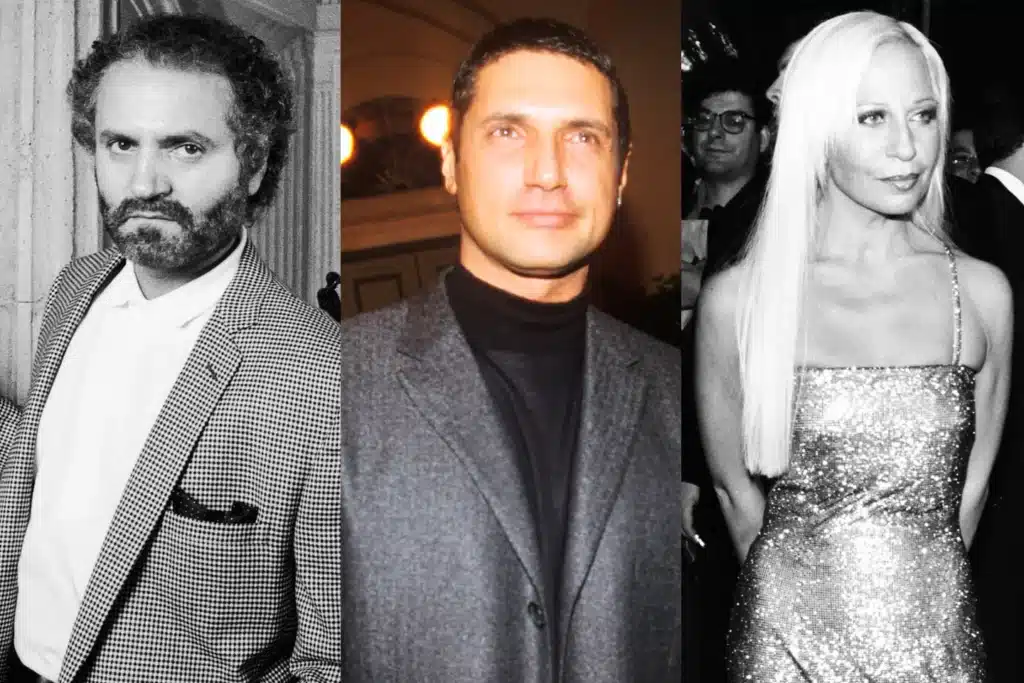
Gianni Versace was born in 1946 in Reggio Calabria, the capital of Italy’s southernmost mainland region — a city of Byzantine churches, ancient ruins, and the kind of artisanal culture that shapes a designer’s eye before they ever set foot in a studio. His mother, Francesca, ran a successful dressmaking business, and Gianni spent his childhood watching fabrics become garments, absorbing an understanding of cut, construction, and the relationship between cloth and body that no fashion school can teach.
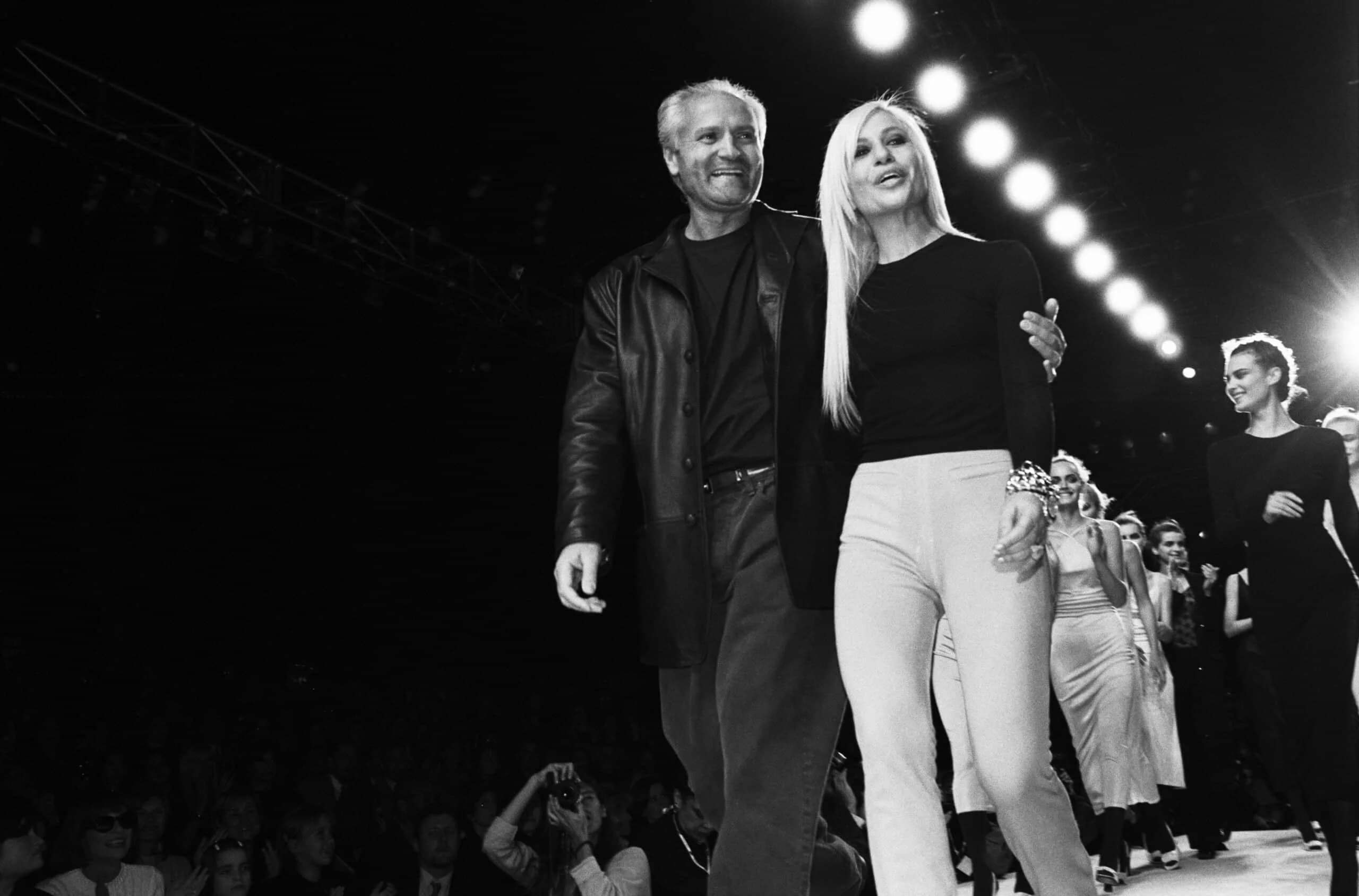
He moved to Milan in the early 1970s, working as a freelance designer for labels including Genny and Callaghan — relatively unglamorous work that nonetheless gave him an industrial understanding of how fashion collections are produced and commercially positioned. By the time he launched his own label in 1978 with a debut womenswear collection at the Palazzo della Permanente in Milan, Gianni was not a young unknown taking a leap of faith. He was a skilled professional with a fully formed vision and the technical ability to execute it.
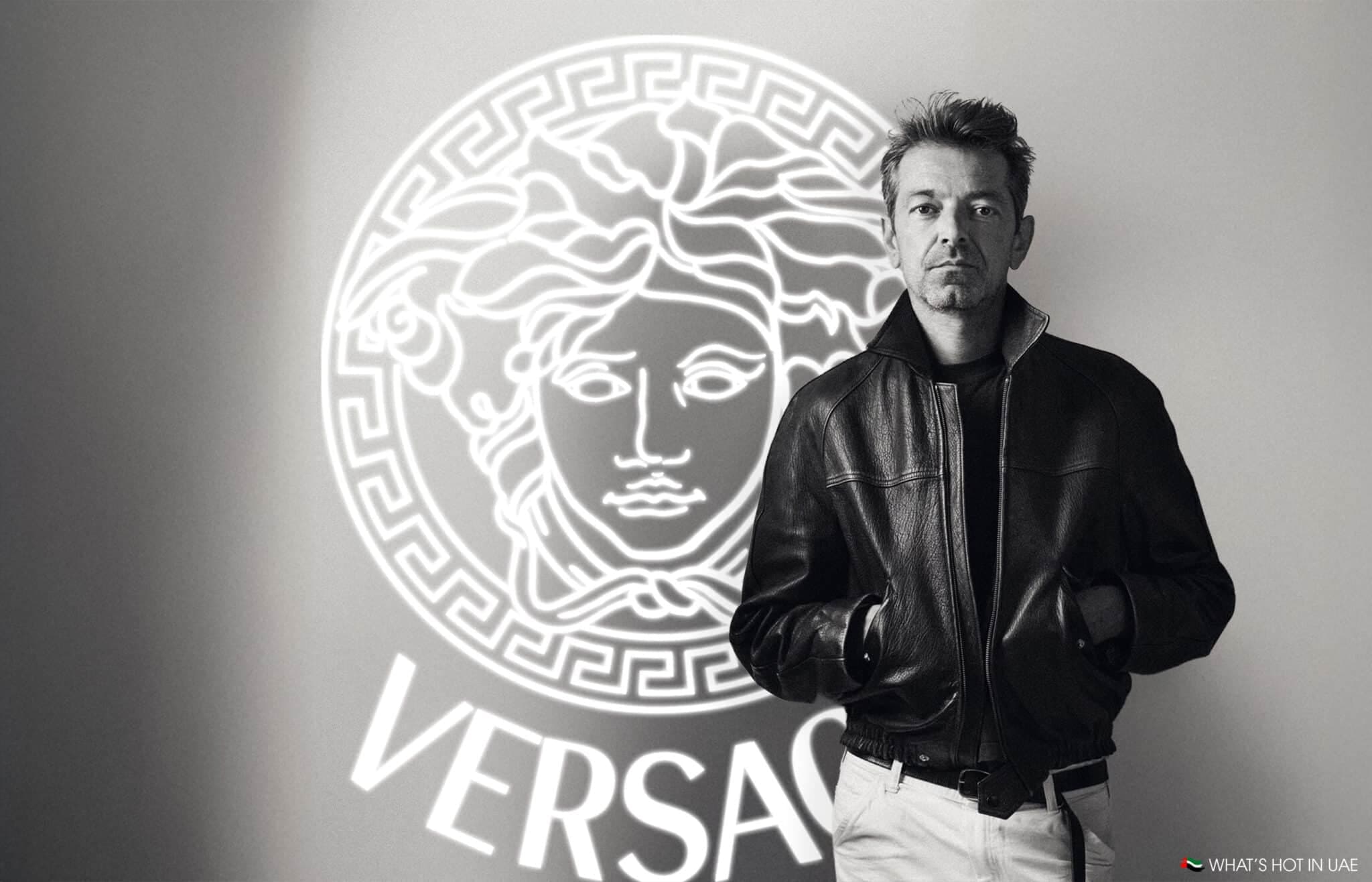
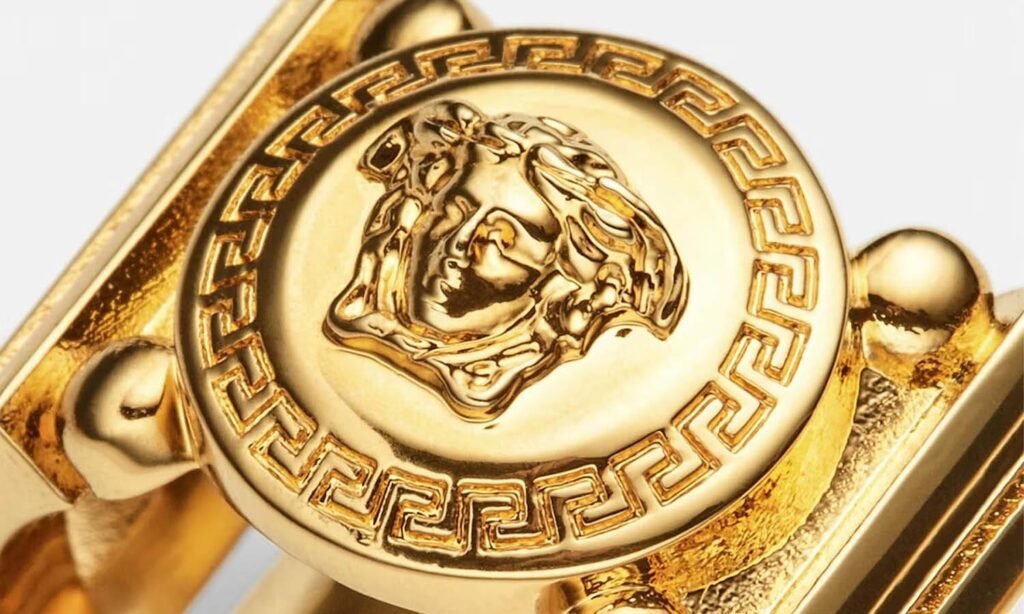
That first collection announced the aesthetic that would define the house for decades: classical antiquity reinterpreted through the lens of contemporary sensuality. Gianni had spent years studying Greek and Roman art, and the influence ran deeper than surface decoration. The way ancient sculptors rendered drapery falling across the body — fluid, dynamic, seemingly in motion — informed his approach to cut. The Medusa head he chose as the brand’s emblem was not arbitrary. In Greek mythology, Medusa’s gaze was said to be inescapable, to make anyone who looked upon her unable to look away. It was an entirely deliberate symbol for a designer whose ambition was to create clothes no one could ignore.
The 1980s: Building an Empire on Glamour and Provocation
The early 1980s were a period of rapid establishment. Gianni launched a menswear line in 1979, followed by accessories, a fragrance range, and the beginnings of the lifestyle expansion that would eventually encompass hotels, homewares, and china. He showed in Milan, and the city’s fashion press quickly understood that he was doing something different from any of his peers.
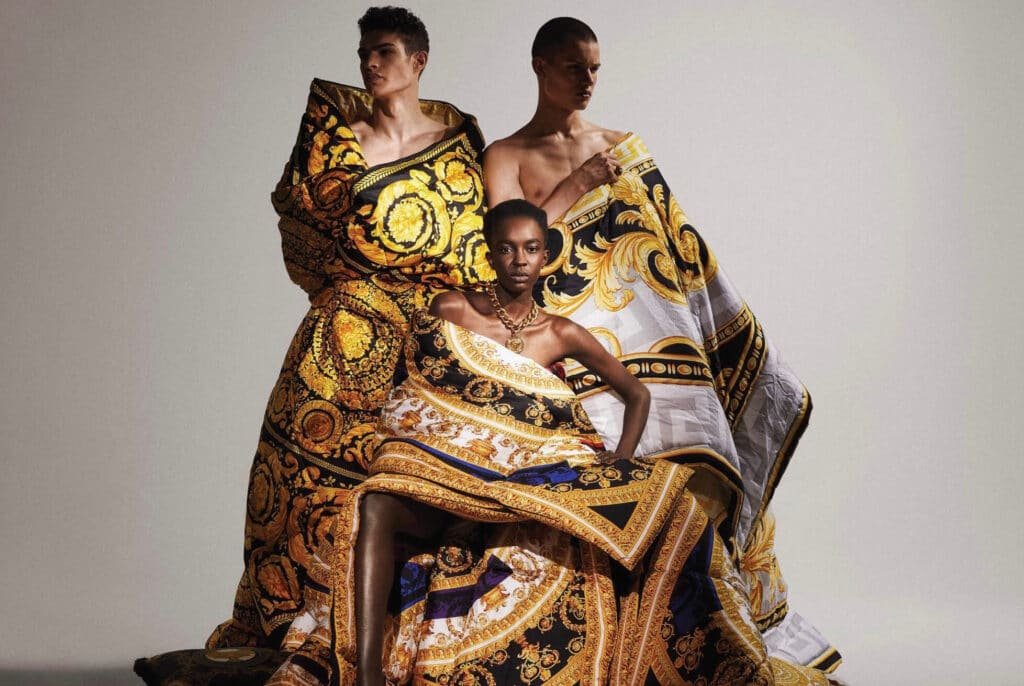
The signature materials and techniques that became Versace tropes emerged in this period. Leather and silk worn together, at a time when the conventions of luxury fashion kept them firmly separated. Metal mesh — the oroton chainmail that became one of the house’s most recognised fabrications — applied to evening dresses with a craftsmanship that gave the most provocative garments an unmistakable quality. Prints drawn from ancient Greek key patterns, Byzantine mosaics, and baroque decorative traditions, rendered in the saturated jewel tones that became as recognisable as the Medusa itself.
Gianni dressed Elton John in an era when dressing Elton John required real commitment to spectacle. He dressed Princess Diana in a more restrained register that nonetheless remained distinctly Versace — jewelled eveningwear and tailored suits that communicated confidence and presence rather than the decorative propriety of most royal fashion. He cultivated relationships with artists, photographers, and musicians — Andy Warhol, Richard Avedon, Annie Leibovitz — treating fashion as a cultural practice rather than a commercial enterprise.
By the late 1980s, Versace was one of the most commercially successful and critically discussed fashion houses in the world. Revenue was in the hundreds of millions. The boutiques in Milan, New York, London, and Paris were among the most prominent in their respective cities. And Gianni himself had become a public figure — photographed with the celebrities he dressed, profiled in major international publications, a figure who embodied the new idea that fashion designers could be stars.sed the daring and provocative spirit of Versace.
The 1990s: Supermodels, Safety Pins and Cultural Domination
If the 1980s built Versace’s reputation, the 1990s turned it into a cultural force of a different order entirely. The mechanism was the supermodel — and Gianni was more responsible than any other designer for inventing the concept.
In the late 1980s, Gianni began booking the same group of models for every show: Naomi Campbell, Linda Evangelista, Christy Turlington, Cindy Crawford, Claudia Schiffer. He paid them unprecedented fees, styled them as personalities rather than clothes horses, and — crucially — put them at the centre of his shows’ narratives rather than the periphery. The 1991 Versace autumn/winter show, in which these four women walked together to George Michael’s “Freedom! ’90”, was not simply a runway presentation. It was a theatrical event that redefined what a fashion show could be and made the women in it into global celebrities in their own right.
The garments of the 1990s were precise expressions of Versace’s philosophical position: that glamour and provocation could coexist with genuine craftsmanship; that a dress could be technically perfect and sexually charged simultaneously; that luxury fashion had no obligation to be decorous. Cut-out dresses. Chainmail eveningwear. The baroque prints that seemed to announce their own arrival.
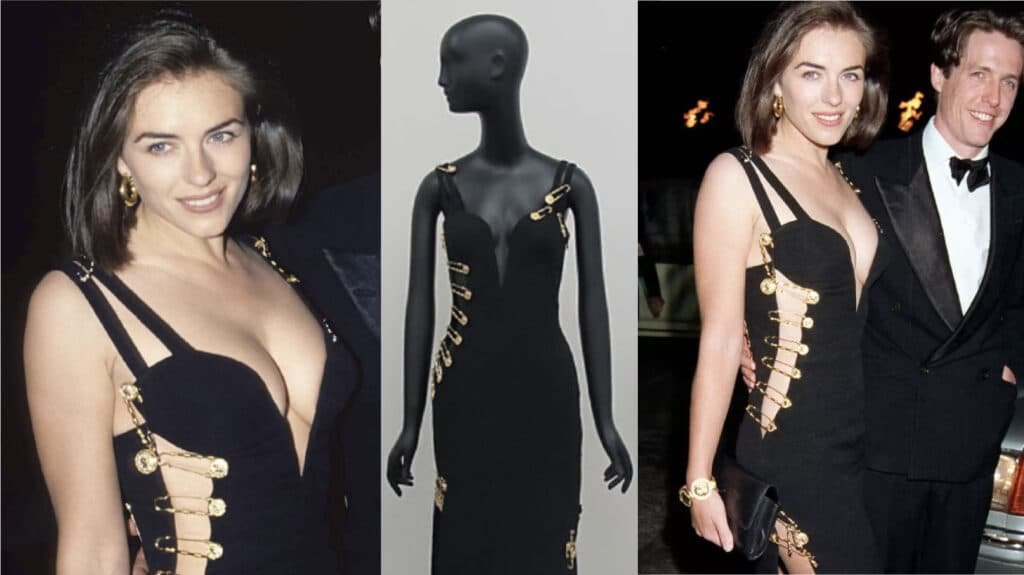
The single garment that defined the decade for Versace was the 1994 safety pin dress worn by Elizabeth Hurley to the London premiere of Four Weddings and a Funeral. Hugh Grant had been invited as the film’s lead actor. His then-girlfriend Hurley wore a Versace dress held together at the side by a chain of gold safety pins, exposing a run of skin from hip to shoulder. The images circulated globally, generating media coverage that money could not have bought, and establishing a template for what the right celebrity in the right dress at the right moment could do for a brand’s visibility.
READ MORE: Tyler The Creator and Supreme Collab
July 1997: The Murder That Changed Everything
On 15 July 1997, Gianni Versace was shot dead outside his Miami Beach mansion, Casa Casuarina, by Andrew Cunanan — a spree killer who had murdered four other people before turning up on Ocean Drive. Gianni was 50 years old. He had been returning from buying the morning papers.
The news broke across the world within hours. The fashion industry’s response was one of genuine grief, complicated by bewilderment at the sudden, violent nature of the loss. Gianni had been in robust health, creatively prolific, and at the height of his cultural influence. His death was an ending that made no narrative sense.
The question of succession was urgent and painful. Gianni’s brother Santo had long managed the business side of the house. His sister Donatella had worked alongside Gianni for years, primarily on the Versus diffusion line — a position that gave her design experience but not the independent creative authority she would now be required to exercise.
Donatella Versace became creative director. She was 42, she had lost her closest collaborator and the defining influence of her professional life, and she was now solely responsible for the creative direction of one of the world’s most watched fashion houses. The scale of what was being asked of her is difficult to overstate.
Donatella’s Era: Almost Three Decades of Reinvention
Donatella’s first collections in 1997 and 1998 were acts of tribute as much as design — the immediate emotional response was to honour what Gianni had built rather than immediately impose her own vision. But over the following years, her interpretation of the house evolved.
She retained the fundamentals: the Medusa, the prints, the commitment to glamour and sensuality, the celebrity relationships. But she shifted the emphasis toward fluid, romantic silhouettes and a stronger focus on red carpet eveningwear, and she deepened the brand’s relationships with the entertainment industry in ways that suited the cultural landscape of the early 2000s rather than the 1990s. Jennifer Lopez’s jungle-print chiffon dress at the 2000 Grammy Awards — green, low-cut, barely there — remains one of the most discussed garments in the history of award ceremony fashion, and it triggered the creation of Google Image Search, according to Google’s own account of the platform’s origins.
Donatella navigated the financial crisis of the 2008–2010 period, a debt restructuring in the mid-2010s, and the industry-wide disruption of fast fashion’s rise — all while maintaining Versace’s position as a relevant cultural reference point. Her final years as creative director were marked by a series of genuinely memorable moments: Jennifer Lopez reprising the jungle-print dress on the Versace runway in 2019, an extraordinary piece of brand mythology collapsed into a single theatrical gesture.
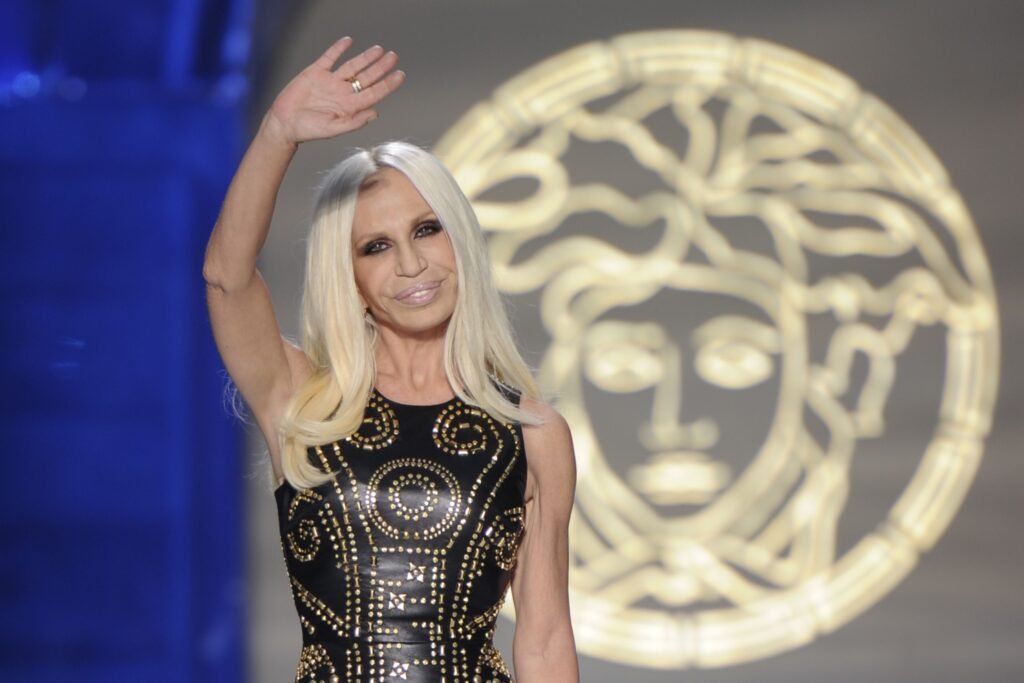
In March 2025, after nearly 28 years in the role, Donatella Versace stepped down as chief creative officer. She took on the title of chief brand ambassador instead — a transition that acknowledged her continuing symbolic importance to the house while formally ending her operational role. Her departure preceded the Prada acquisition announcement by weeks, and while executives were careful to describe the two events as unrelated, the coincidence of timing is striking. Dario Vitale — previously head of design at Miu Miu — was named as the new creative director.
The Capri Holdings Interlude: 2018 to 2025
In December 2018, the Versace family sold the brand to Michael Kors Holdings — subsequently rebranded as Capri Holdings — for approximately $2.1 billion including debt. It was the end of Versace as a family-controlled business. Santo and Donatella retained roles, but the commercial and strategic direction now sat with an American corporate group whose other assets were Michael Kors and Jimmy Choo.
Capri’s stated ambition was to grow Versace’s annual revenue to $2 billion, up from approximately $800 million at the time of acquisition. That target was never reached. The brand reported revenue of $1 billion in 2024 — meaningful but significantly below the growth trajectory Capri had projected. The “quiet luxury” trend that dominated global fashion conversation between 2022 and 2024 was particularly unkind to Versace’s maximalist, logo-forward identity. Capri’s Versace also operated at a loss in several of its final quarters under the group’s ownership.
The corporate episode illustrates a persistent tension in luxury fashion acquisition: American corporate structures tend to prioritise scalable revenue growth on short-to-medium timescales, while the most enduring luxury brands grow slowly, protect scarcity, and treat cultural relevance as a primary asset rather than a byproduct of distribution. Versace under Capri produced capable fashion. It did not produce the transcendent cultural moments that define the house at its best.
The Prada Acquisition: A New Chapter for Italian Fashion
In April 2025, Prada Group announced a definitive agreement to acquire Versace from Capri Holdings for €1.25 billion — roughly $1.375 billion — representing a significant discount to the $2.1 billion Capri had paid seven years earlier. The transaction was completed on 2 December 2025, after receiving all required regulatory clearances.
The deal united two of the most important houses in Italian fashion under a single roof for the first time. Prada Group — which also owns Miu Miu, Church’s footwear, and Marchesi 1824 — now has Versace as its third-largest brand by revenue, at approximately 13% of the group’s pro-forma revenues against Miu Miu’s 22% and Prada’s 64%.
The strategic logic runs in both directions. For Prada, Versace offers access to a maximalist, high-glamour customer base that is entirely distinct from Prada’s own minimalist positioning. The two houses have almost no audience overlap — owning both means capturing a far broader spectrum of the luxury market without cannibalisation. Prada CEO Andrea Guerra acknowledged that the turnaround would require patience, describing the challenge clearly rather than with corporate optimism.
For Versace, the move into Italian hands represents a return to the conditions under which the house produced its best work: family-led creative stewardship, Italian manufacturing infrastructure, and a long-term perspective unconstrained by quarterly reporting cycles. Prada heir Lorenzo Bertelli — son of Miuccia Prada and Patrizio Bertelli — is set to become executive chairman of Versace, extending the family’s direct involvement in the brand.
Donatella Versace welcomed the acquisition publicly, posting on the day the deal closed: the day was also the birthday of Gianni Versace, who would have been 79. The photograph she chose showed Gianni with Miuccia Prada in 1996 — a reminder that the relationship between the two houses had been warm long before the commercial transaction formalised it.
The New Creative Direction: Dario Vitale and Versace’s Next Phase
The first collection from new creative director Dario Vitale was previewed during Milan Fashion Week in September 2025. Reviews were mixed — the challenge of taking over one of fashion’s most strongly coded visual identities is immense, and a debut collection inevitably invites comparison with decades of predecessor work. The collection itself, described as a colourful riff on 1980s maximalism, received more positive feedback from buyers than from critics — often the more commercially meaningful signal of the two.
Vitale’s background at Miu Miu — a house that has grown its retail sales at extraordinary rates by marrying intellectual credibility with commercial appeal — suggests a designer capable of managing the balance between heritage and evolution that Versace will require. The Prada manufacturing infrastructure, which already produces leather goods for both Prada and Miu Miu at its Scandicci facility outside Florence, will extend to Versace — bringing a consistency of craft that the house’s most discerning customers will notice.
Versace’s Cultural Legacy: What the Brand Has Always Meant
Beyond the business history, Versace’s enduring significance lies in what it has represented culturally. It is the house that told women — and men — that desire and glamour were legitimate values rather than frivolous distractions. It is the house that treated celebrity as a cultural practice, building relationships with musicians, athletes, and film stars at a time when most high fashion maintained a careful distance from popular culture. It is the house whose prints, metals, and Medusa have been referenced, quoted, and sampled by hip-hop artists, pop stars, and streetwear designers for four decades.
When Migos released “Versace” in 2013, Drake remixed it, and the track spent months in heavy rotation, they were not simply referencing a luxury brand. They were invoking a specific value system — confidence, ambition, the projection of unapologetic success — that Gianni Versace had spent the 1980s and 1990s encoding into those prints and that Medusa head. The brand had become a symbol capable of carrying meaning independently of its current collections, which is the rarest and most durable form of cultural power.
The Palazzo Versace Dubai — the luxury hotel on the Dubai Creek that has operated since 2015 — is a physical embodiment of that cultural power in the UAE context, where Versace’s maximalist aesthetic and unabashed opulence aligns naturally with the design language of the region’s premier hospitality properties. It remains one of Dubai’s most distinctively designed hotels, a building that could not have been conceived by any other brand.
Expert Perspective: What the Prada Era Means for Versace
The Prada acquisition is the most significant ownership change in Versace’s history since Gianni’s murder transferred the house from founder to family stewardship. Its success will be measured not in years but in decades — by whether Prada’s platform and manufacturing excellence can unlock the creative potential that was constrained during the Capri Holdings period.
The indicators are cautiously positive. Prada’s own brand trajectory under Miuccia’s creative leadership — from near-insolvency in the early 1990s to a global cultural reference point by the 2000s — demonstrates the group’s capacity to nurture complex, idiosyncratic luxury identities over the long term. Miu Miu’s recent performance, growing at rates that outpaced the entire luxury sector, demonstrates that the group knows how to build rather than simply manage.
Versace at its best was not simply successful — it was necessary. It articulated something about desire, glamour, and the relationship between the body and clothing that no other house was saying at the same time. Whether Dario Vitale and the Prada Group can locate and express that necessity for 2026 and beyond is the central question the fashion world will be watching this house to answer.
Frequently Asked Questions
Who owns Versace now? Versace is now owned by the Prada Group, which completed its acquisition of the brand from Capri Holdings on 2 December 2025, for approximately €1.25 billion ($1.375 billion). The deal makes Versace the third-largest brand in the Prada portfolio by revenue, alongside Prada, Miu Miu, and Church’s footwear.
Why did Donatella Versace step down? Donatella Versace stepped down as chief creative officer in March 2025 after nearly 28 years in the role. She took on the position of chief brand ambassador, remaining connected to the house her brother founded. Dario Vitale, formerly head of design at Miu Miu, was appointed as the new creative director. Donatella and company executives said the creative transition was separate from the Prada acquisition, though both occurred in the same year.
Who founded Versace and when? Gianni Versace founded the house in Milan in 1978, presenting his debut womenswear collection at the Palazzo della Permanente. He grew up in Reggio Calabria, where his mother’s dressmaking business gave him an early immersion in fabric and tailoring. He moved to Milan in his twenties, worked for several Italian labels, and launched his own house at the age of 31.
What is the significance of the Versace Medusa logo? Gianni Versace chose the Medusa head as the house’s emblem deliberately. In Greek mythology, Medusa’s gaze was said to be impossible to escape — anyone who looked upon her was held captive. For Gianni, it was the perfect symbol for a fashion house whose ambition was to create clothes no one could ignore. It remains one of the most recognisable symbols in luxury fashion.
How did the Elizabeth Hurley safety pin dress become so famous? In June 1994, Elizabeth Hurley wore a black Versace dress held together by gold safety pins to the London premiere of Four Weddings and a Funeral. The dress exposed a running cut from hip to shoulder and generated global media coverage that turned Hurley from a relatively unknown actress into an international celebrity overnight. It is widely cited as one of the most effective pieces of celebrity dressing in fashion history.
Does Versace have a presence in Dubai and the UAE? Yes. Versace’s most significant UAE presence is the Palazzo Versace Dubai, a luxury hotel on the Dubai Creek waterfront that opened in 2015. The property embodies the brand’s maximalist design language across its interiors, restaurants, and suites. Versace boutiques are also present in The Dubai Mall and other premium retail locations across the region.
This article draws on publicly available information from corporate announcements, fashion publications, and historical records. All revenue figures and acquisition details reflect information available as of early 2026.nd.