“Altcoin season” describes a period of broad altcoin outperformance relative to Bitcoin. It is often invoked during market excitement, but an index reading is a retrospective measurement rather than a guarantee of future returns. This guide explains the definition, how common indices select assets and why dominance, price gains and capital flows should not be…
Key Takeaways
- Altcoin Season refers to periods when altcoins outperform Bitcoin, but past performance doesn’t guarantee future gains.
- The Altcoin Season Index measures the top 50 coins’ performance relative to Bitcoin over 90 days, with specific asset exclusions.
- Various factors contribute to Altcoin Seasons, including leveraged yield, capital rotation, new use-cases, and media hype.
- Investors should diversify, set stop-loss orders, and conduct fundamental research while being aware of volatility, scams, and regulatory risks.
- Checking current Altcoin Season conditions requires timely metrics and not relying solely on past market observations.
“Altcoin season” describes a period of broad altcoin outperformance relative to Bitcoin. It is often invoked during market excitement, but an index reading is a retrospective measurement rather than a guarantee of future returns. This guide explains the definition, how common indices select assets and why dominance, price gains and capital flows should not be treated as identical signals. The useful goal is to understand what a metric measures and where it can mislead, rather than promise that a reader can ride a market wave safely. Different tools use different asset sets, so identify the provider and time window before comparing a score with another chart.
What Exactly Is Altcoin Season?
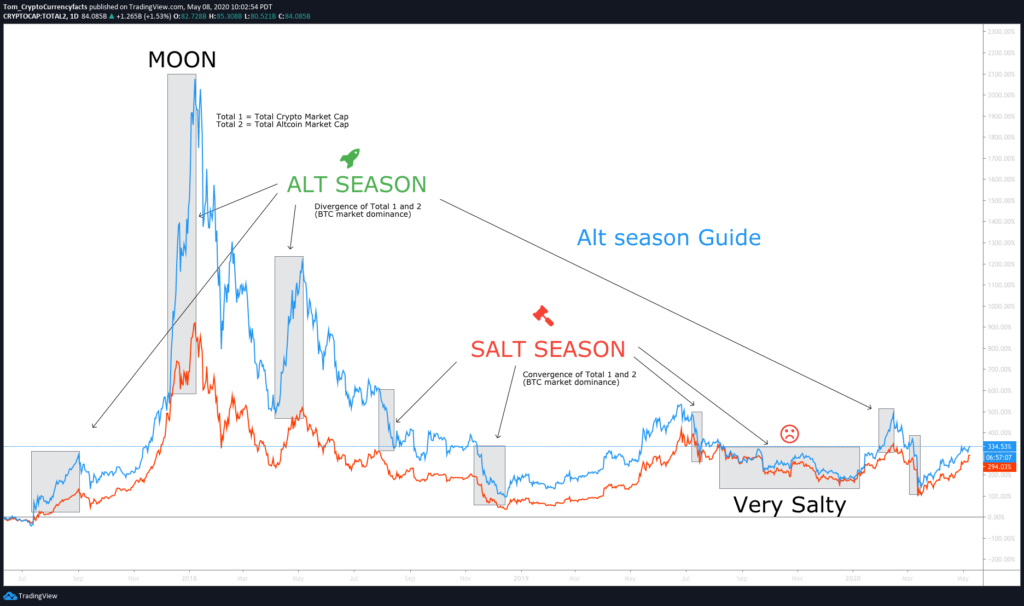
A commonly cited measure is BlockchainCenter’s Altcoin Season Index. Its definition uses the share of the top 50 eligible coins outperforming Bitcoin over the preceding 90 days, with an altcoin-season threshold of 75%. The asset-selection exclusions matter, and this is not the same as every coin rising or “over two thirds” meeting a current forward-looking signal. Read the provider’s current methodology. A score can describe relative outperformance even when market conditions are poor, and it cannot tell you that the next 90 days will repeat the last 90.
Historical Altcoin Seasons
- Spring–Summer 2017: Ethereum surged from $8 to $400, and ICO mania peaked.
- Late 2021: ETH peaked at $4,800, while thousands of Memecoins spawned.
- Summer 2020: “DeFi Summer” saw DeFi tokens explode on surge in TVL (Total Value Locked).
Each season created extraordinary returns — and dramatic busts. Ethereum’s +12,500% in 2017 was followed by deep corrections. The key takeaway? Timing trends matters, but strategy matters more.
Why Altcoin Seasons Happen
Leverage & Yield
DeFi introduces yield-bearing products on altcoins, creating amplified gains.
Rotating Capital
As Bitcoin consolidates, holders reinvest gains into altcoins seeking higher yields.
New Use-Cases
DeFi, NFTs, Web3—all foster altcoins with distinct utility and interest.
Media Hype
When one altcoin rallies, FOMO draws investors, accelerating the wave.
Identifying Altcoin Season Early
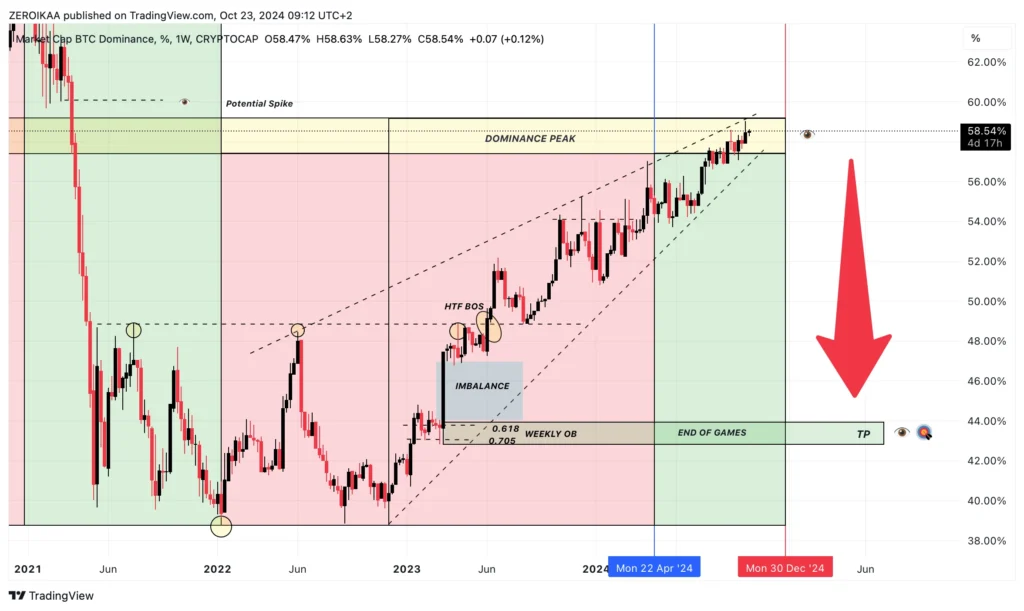
- Monitor leading indicator metrics like ETH vs BTC dominance on TradingView.
- Track altcoin volume surges on exchanges.
- Watch out for Bitcoin stagnation above support zones, signalling funds entering altcoins.
- Use altcoin season index tools (e.g., www.bitcoinblockhalf.com/altcoinseason-index).
Risks to Manage
- Altcoins are highly volatile — a 30% dip within days is common.
- Beware of scams & rug pulls, especially in the lower-tier altcoin space.
- Liquidity risk on small tokens can cause sharp price swings when large holders exit.
- Regulatory risk—from token bans to delistings worldwide.
Crafting Your Strategy for Altcoin Season
- Diversification: Avoid putting everything into one coin. Allocate across tiers.
- Stop-loss orders: Secure profits and limit exposure—especially in altcoin mania.
- Fundamental Research: Analyse on-chain metrics like active addresses and developer activity.
- Exit Plan: Know your entry, exit, and scaling strategy before it all happens.

How to Check a Current Altcoin-Season Claim
An article’s old market observations should not be used to establish whether an altcoin season exists today. Read a current index with its timestamp and asset coverage, then compare individual returns and breadth. Bitcoin trading sideways does not by itself prove that capital is flowing into altcoins. A rising token price, increased DeFi activity and a lower Bitcoin-dominance percentage are different observations and need their own data. Do not turn a historical list of bullish signs into a forecast for the current market.
- Bitcoin extending sideways around $60K
- Ethereum setting seasonal highs
- TVL in DeFi steadily increasing
- Renewed institutional interest
It’s not a guarantee, but many indicators align with historical altcoin cycles.
How to Ride the Green Pumps
Investors hoping to capitalise on Altcoin Season should consider the following strategies:
- Research Fundamentals: Not all altcoins will deliver sustainable gains. Focus on projects with solid use cases, strong teams, and active development.
- Set Targets: With rapid price swings, it’s crucial to set clear entry and exit points to avoid FOMO (Fear of Missing Out) and unnecessary losses.
- Diversify: Spread investments across multiple altcoins to mitigate risks associated with any single asset.
- Stay Updated: Keep an eye on market trends and news. Tools like CoinMarketCap and social media channels can provide valuable insights.

Risks to Watch Out For
While the potential for profit is high, Altcoin Season also comes with significant risks, including:
- Volatility: Prices can plummet just as quickly as they rise.
- Scams and Rug Pulls: The hype can attract bad actors looking to exploit inexperienced investors.
- Market Sentiment Shifts: A sudden surge in Bitcoin’s dominance could halt altcoin growth.

UAE Crypto Context
Crypto meetups in Abu Dhabi and Dubai increase during market surges, signalling local awareness.
VARA was established in 2022. Its public register records providers’ legal entities, status and permitted activities. An altcoin-season reading does not establish a provider’s authorisation, and a licence does not guarantee a token’s return.
A wave of UAE‑based altcoin projects (like utility tokens and metaverse assets) is gaining traction.
Relative Outperformance Is Not Guaranteed Profit
An altcoin can outperform Bitcoin by falling less. For example, a hypothetical token losing 10% while Bitcoin loses 20% has outperformed over that period, but its holder has still lost value. That distinction matters when interpreting an index. A falling dominance reading also needs its denominator checked: stablecoins and changing asset coverage can affect it. Use our Bitcoin dominance guide for the calculation. An index cannot ensure liquidity, fill a stop-loss at the expected price or eliminate counterparty and token risks.