How Amazon’s Digital Arabic Library works, what its launch figures mean, and how UAE readers can check formats, editions, samples and the actual price.
I’d start Amazon’s Digital Arabic Library with one book I want to read—not a mission to collect free downloads. The value is finding the right Arabic edition in a format I can actually use. A Kindle eBook, an Audible recording and a promotional free title can have different access terms. Choose the work first, then check the edition, sample and offer.
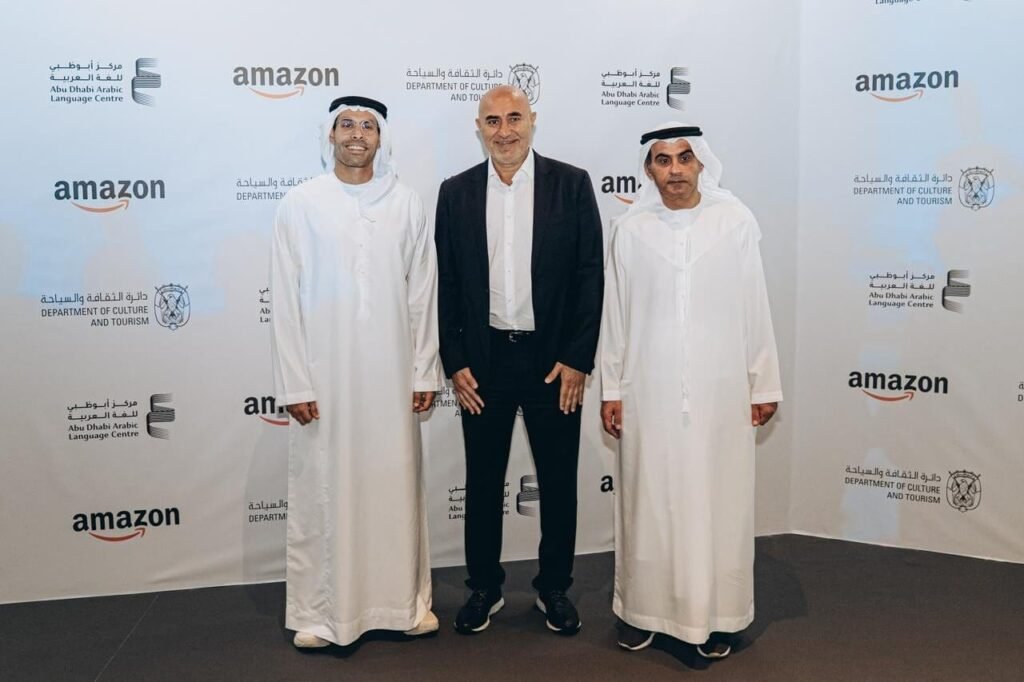
Amazon’s launch announcement describes its partnership with the Abu Dhabi Arabic Language Centre and more than 38,000 titles: over 33,000 Kindle eBooks and 5,000 audiobooks, with more than 1,000 no-cost titles at launch. I’d treat those as launch figures, not a live catalogue total we have independently recounted. The individual book is the useful next click.
Start at the official storefront
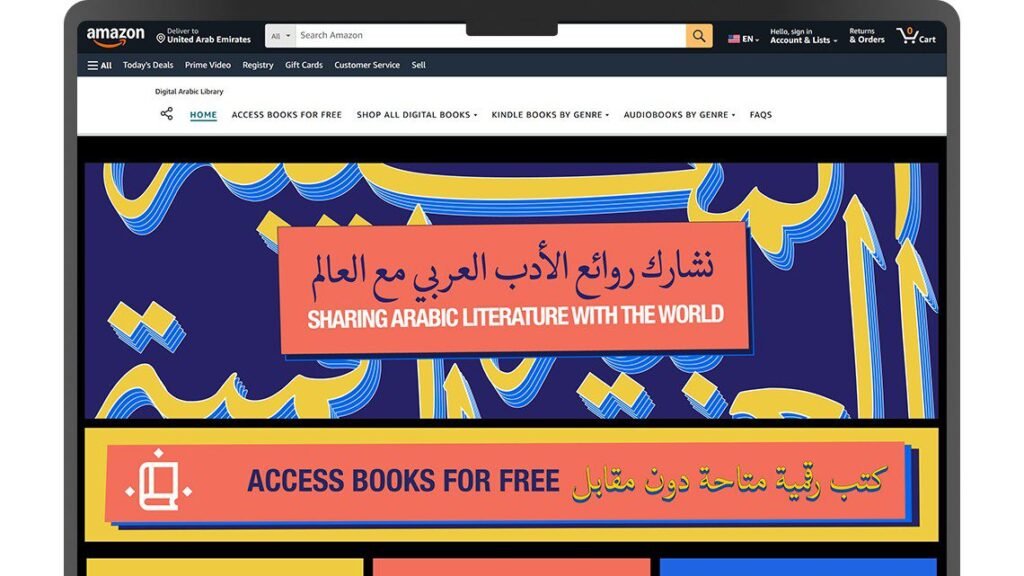
I’d begin at the official Digital Arabic Library storefront, then open the exact title. The storefront brings discovery together; it does not make every edition free or included in the same subscription. For a UAE reader, the actual account and selected listing still decide the offer.
I’d check the book through the account I plan to use before relying on a displayed price. Match the format, publisher or seller and the purchase conditions. If the title is not offered for that account, I would not try to solve that by treating a global announcement as permission to bypass territorial terms.

Kindle, Audible or a printed edition?
| Format | Best suited to | Check before choosing |
|---|---|---|
| Kindle eBook | Reading on a compatible device or app. | Language, edition, sample layout and device compatibility. |
| Audiobook | Listening when you prefer not to read a screen. | Narrator, language, runtime, sample and purchase or membership terms. |
| Printed book | A physical copy with a particular layout or binding. | Whether a separate print edition exists and which publisher supplies it. |
My first decision would be reading or listening. I would not buy audio expecting the eBook to arrive too, or a digital edition expecting the layout of a particular printed copy. Read any explicit bundle terms; the same title on two buttons can still mean two purchases.
How to check whether a title is really free
I would check what “free” means on the selected offer. A sample, a trial, membership access and a zero-price purchase are not the same arrangement. Before confirming, look for eligibility, renewal and future-payment terms. A free sample is useful—but it is not the whole book.
Keep a record of the order and the account it belongs to. If you are choosing books for a family member, school or workplace, do not assume one personal purchase creates permission to distribute copies to everyone. The appropriate access arrangement matters as much as the displayed price.

Choose an edition, not just a familiar title
I’d give the edition the same attention as the title. Compare author, translator where relevant, publisher and the supplied publication details. A cover I recognise is not enough: I want to know whether this is the complete work, an abridgement, an adaptation or an annotated edition, where the listing establishes that.
I’d keep two or three candidate editions open long enough to compare their samples, then choose one. The translator and editorial treatment can matter more to the reading experience than a small price difference. If the listing does not identify the version clearly, I would keep looking rather than call it definitive.
Arabic display: use the sample as a practical test
I’d inspect Arabic text before buying, not stop at the cover. Look at right-to-left order, paragraphs, headings, punctuation, notes and any illustrations in the available sample. Use the device or app you intend to read on. A sample that looks good on a different screen has not tested my own setup.
Adjustable text would be one of my first checks if I planned to read for long stretches. Test the actual title’s controls; fixed-layout or image-heavy books can behave differently. For study, I’d also look at navigation, search and how I would identify a passage later. Those are practical reasons to choose one edition over another.
My sample test before choosing an Arabic eBook
- Read a paragraph at the text size you would actually use. Check joined letters, punctuation and any diacritics.
- Try a chapter jump or contents link where the sample allows it.
- Inspect a note, table or illustrated page if that feature matters to the work.
- Check search or navigation where available, and decide whether the format suits leisure reading or study.
If the sample does not expose a feature, I would record it as untested, not assume it works. This is a proposed buyer check, not a test already performed on every edition.
Audiobooks: the voice and edition matter
I’d listen before committing to a long audiobook. Check the narrator, language or Arabic variety, runtime and whether it is abridged. For language practice, I’d choose a sample whose vocabulary and pace I can follow; for a commute, I’d choose a recording I want to keep listening to. A famous title is not automatically the right starting point.
The voice is part of the choice, not a minor extra. I would not infer narration quality or dialect from a cover image. Use the exact recording’s details and sample rather than a review of a different edition.
Three ways to narrow a large catalogue
- For a returning reader: search a writer or subject you already enjoy, then compare the available editions and samples. This reduces the chance of buying a familiar title in an unexpected adaptation.
- For a learner: choose a manageable sample whose vocabulary and pace you can follow. A famous classic may be rewarding but is not automatically the best starting point.
- For a listening habit: start with a subject and runtime that fit the time you actually have. Check the narrator before committing to a long recording.
Those are my suggested selection routes, not claims that our team has read or heard every title. I’d also check which edition a customer review concerns: a complaint about a paperback’s binding tells me nothing about the Kindle layout or narrator. Reviews can give me questions to investigate, not an excuse to skip the sample.
The UAE price question
I would not quote one AED subscription price for the whole library: that would blur different books, formats and account offers. Check the actual purchase or membership terms and final charge. A converted USD figure is not automatically the amount a UAE reader will pay.
Before paying, I’d save the exact edition, format, price and account. For a membership, I’d check renewal and cancellation separately. Cancelling access and returning an individually purchased book are different questions; read the terms of the product you are choosing.
What the initiative means for publishers
Amazon says ALC will work with regional publishers to expand the collection over three years, with Amazon promoting the titles. I’d read that as a programme intention, not a promise to select every manuscript or deliver an author a sales result. Discovery, rights and a well-made digital edition still need their own work.
For a self-publisher, I’d start with KDP’s current Arabic guidance. It supports Arabic eBooks and says Arabic paperback publishing is not currently available through KDP. That does not mean no publisher can sell an Arabic printed book elsewhere. The storefront and a self-publishing submission route are separate things.
A pre-purchase checklist you can keep
| Check | Your note |
|---|---|
| Identity | Exact title, author, translator and publisher. |
| Format | eBook, audio or a separately offered print edition. |
| Fit | Sample tested on your device, or audio sample heard. |
| Terms | Purchase versus membership; actual price and any renewal. |
| Access | Correct account and eligibility for the selected edition. |
My verdict: use the library to find a book you will actually read or hear. I’d take a clear edition, a readable sample and an understandable offer over a much larger pile of uncertain downloads. Easier discovery is the attraction; the right individual choice is the result worth aiming for.
Verification scope, 19 October 2026: the Amazon announcement and KDP Arabic guidance were rechecked. The storefront is linked by Amazon, but a current signed-in account offer was not tested; no live title count or universal UAE eligibility is claimed. The selection advice is ours, not a firsthand review of every book or recording.
Questions answered
Are all Digital Arabic Library books free?
No. Amazon announced more than 1,000 no-cost titles at launch within a larger collection. Check the exact format and offer terms.
Does an audiobook include its Kindle edition?
Not automatically. Check any explicit bundle or purchase terms for that exact recording and eBook.
Is 38,000 a live catalogue count?
No live recount is claimed here. More than 38,000 is the figure in the linked Amazon launch announcement.
Where should UAE readers begin?
Start at the official Amazon.com Digital Arabic Library storefront, then check the edition, format, account eligibility and final offer.