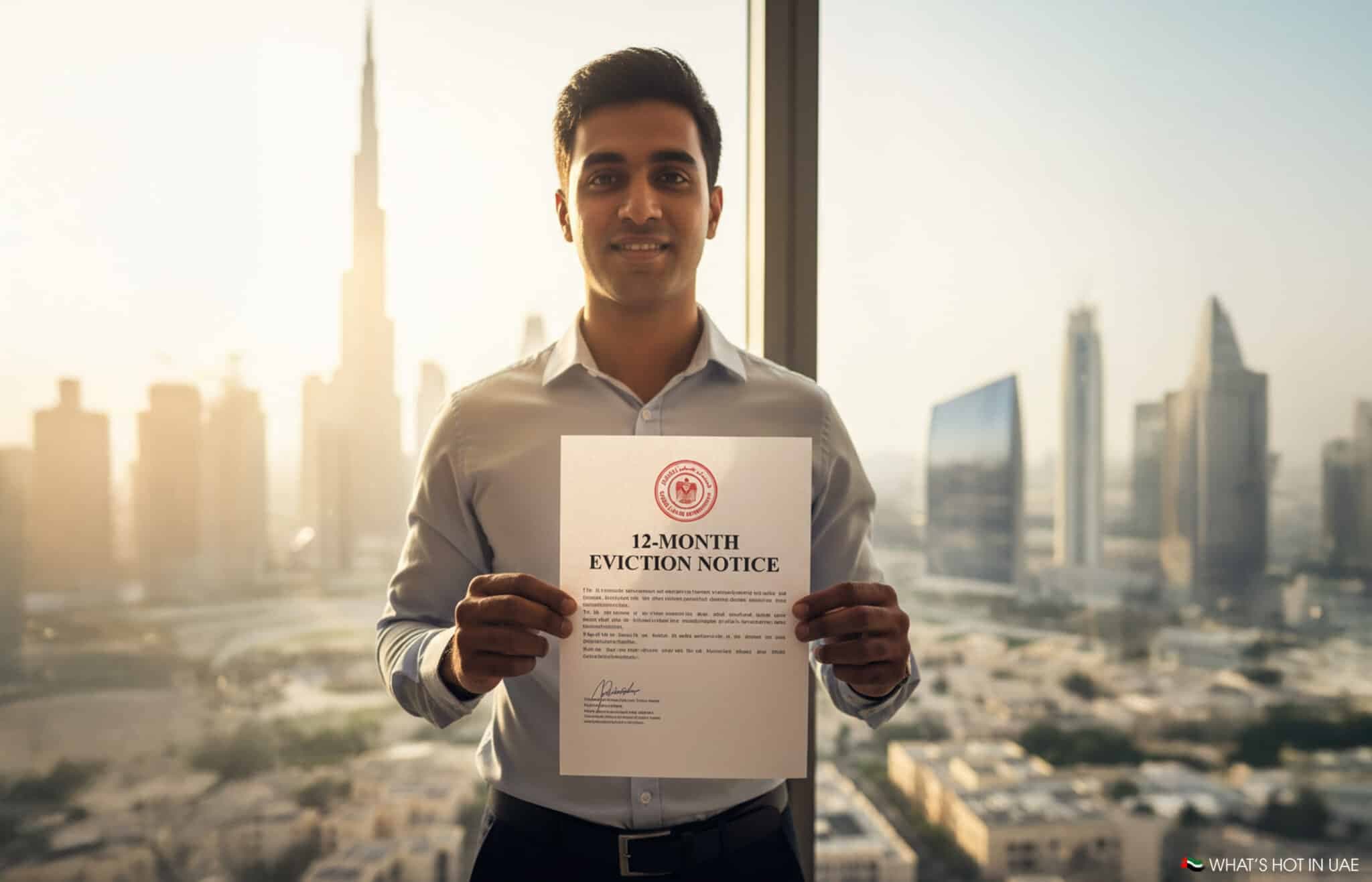
Is your Dubai home truly protected? You’ve locked the door and set the alarm, but in a city as unique as this, standard security measures often leave dangerous gaps. The transient nature of the community, the long summer holidays, specific architectural styles, and a distinct regulatory landscape mean that generic advice simply isn’t enough. You’re…
Is your Dubai home truly protected? You’ve locked the door and set the alarm, but in a city as unique as this, standard security measures often leave dangerous gaps. The transient nature of the community, the long summer holidays, specific architectural styles, and a distinct regulatory landscape mean that generic advice simply isn’t enough. You’re left wondering: have I done enough to secure my apartment? Is my Dubai Home Security perimeter truly safe? How do I navigate the complex rules set by authorities like SIRA?
This guide covers home security in Dubai specifically — from SIRA compliance for villa owners, to renter-friendly solutions for apartment tenants, to the practical checklist most residents have never worked through.
Why Standard Security Advice Fails: The Unique Dubai Context
Applying generic home security tips from another country to your Dubai residence is like using a city map to navigate the desert. To truly protect your property, you must understand the specific vulnerabilities and considerations unique to the emirate.
First, the lifestyle itself presents challenges. Many residents travel for extended periods, especially during the long summer holidays, leaving properties vacant and potentially vulnerable. A transient expat community means you may not know your neighbors as well as you would elsewhere, reducing the effectiveness of informal neighbourhood watch systems.
Second, the environment plays a crucial role. The intense summer heat and frequent dust storms can wreak havoc on outdoor security equipment. A standard outdoor camera might fail under the relentless sun, and fine dust can obscure lenses or damage sensitive electronics. For this reason, deep expertise dictates choosing equipment with a high Ingress Protection (IP) rating, such as IP67, which ensures it is dust-tight and can withstand harsh weather conditions.
Finally, the architectural norms—from sprawling villas with multiple ground-floor access points to apartments with large, interconnected balconies—create specific security challenges that one-size-fits-all advice fails to address. These factors combined mean that a locally-focused, expert-led approach isn’t just better; it’s essential for creating a truly secure home.
The Dubai Security Rulebook: Understanding SIRA and Legal Must-Knows
Navigating Dubai’s local regulations is one of the biggest hurdles for residents, but it’s non-negotiable for effective and legal home security. The primary authority you need to know is the Security Industry Regulatory Agency (SIRA). SIRA is the government body responsible for licensing, regulating, and setting the standards for the entire security industry in Dubai.
According to SIRA’s mandate, which is based on laws such as Law No. (10) of 2014 concerning security surveillance, specific regulations are in place to enhance safety and aid in crime prevention. Understanding these rules is the first step toward building a compliant and effective security system. Beyond SIRA, the Dubai Land Department (DLD) and its regulatory arm, the Real Estate Regulatory Agency (RERA), have guidelines that affect what tenants can and cannot do within a rental property.
For Villa Owners: Mandatory CCTV and the ‘Villa Secure’ Program
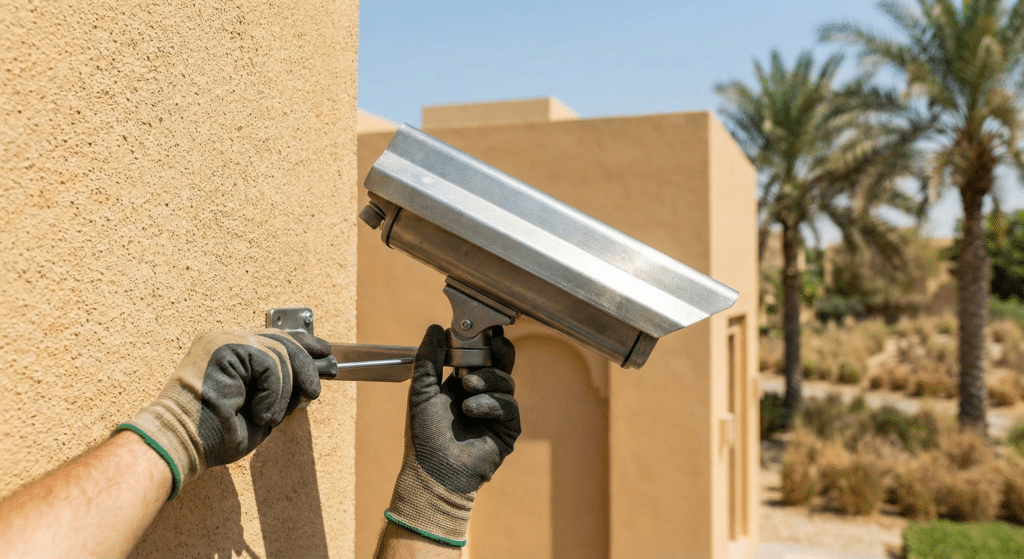
If you own a villa in Dubai, SIRA compliance is not optional—it’s mandatory. Under a program known as ‘Villa Secure’, SIRA requires all villas to have a CCTV system installed. The primary goal of this initiative is to deter crime and provide law enforcement with crucial evidence in the event of an incident.
The key requirement is that the system must be installed by a SIRA-approved provider. This ensures that the equipment meets specific quality standards and that the installation is performed correctly and legally. When planning your villa security, your first action should be to consult with a certified company. Always verify your installer is listed on the official SIRA-approved provider list to ensure full compliance. This regulation is a cornerstone of villa security in Dubai and a critical component of your property protection strategy.
For Apartment Residents & Tenants: Your Rights and Responsibilities
For those living in apartments, the rules are more nuanced and often depend on your tenancy contract and building management policies. A common question is, “Can I install my own security camera?” The answer depends on where. Installing a camera inside your own apartment is generally permissible. However, installing a device like a smart doorbell that captures footage of common areas (such as hallways) may require a No Objection Certificate (NOC) from your building management or landlord, as it can infringe on your neighbors’ privacy.
When it comes to making physical changes, such as changing the locks on your front door, you must refer to your RERA-governed tenancy contract. Most standard contracts stipulate that tenants cannot make structural modifications to the property without the landlord’s explicit permission. Fortunately, there are many excellent non-permanent, renter-friendly security solutions available. These include smart locks that fit over your existing deadbolt, high-strength door jammer bars, and portable motion sensors that require no drilling. These devices allow you to significantly improve your apartment’s security without violating your lease agreement.
Spotting the Gaps: A Dubai Home Security Self-Audit
Before you can build effective defenses, you must know where your weaknesses lie. Many residents overlook critical security gaps in their homes. This self-audit will guide you through a step-by-step inspection of your property, covering the physical, procedural, and digital vulnerabilities that criminals look for.
Physical Weaknesses: Doors, Windows, and Balconies
Your home’s entry points are its first line of defense. Start with your front door. Is the lock a high-quality deadbolt? Is the door frame solid and the strike plate (the metal plate on the frame) secured with long screws? A physical security expert would tell you that a weak door frame can be kicked in even if the lock itself is strong.
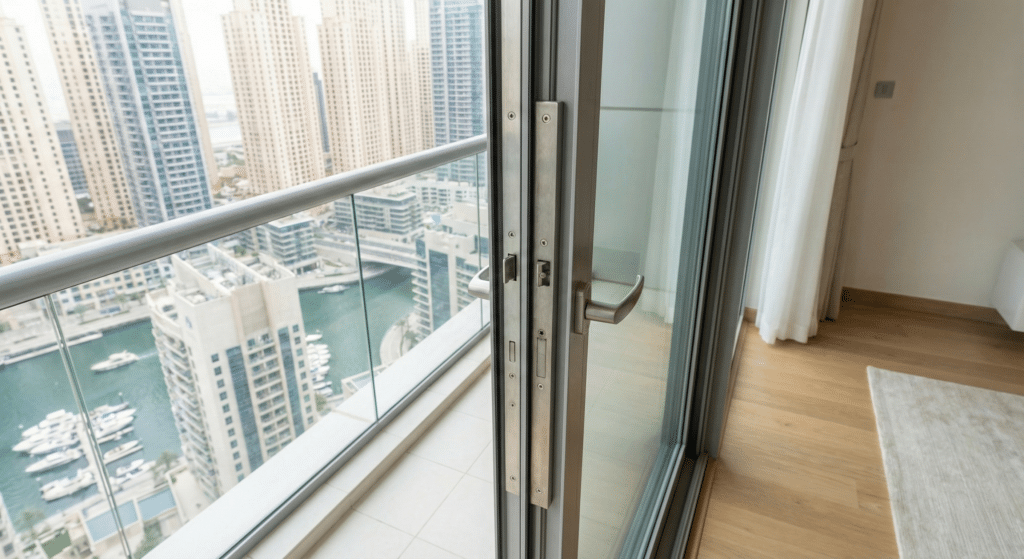
Next, examine your windows and sliding glass doors, which are common features in Dubai properties. Are the locks flimsy? Sliding doors are notoriously vulnerable, but their security can be dramatically improved by installing a “charley bar” in the track to prevent it from being forced open. For ground-floor apartments or villas, interconnected balconies can create an easy pathway for intruders. Consider adding secondary locks or sensors to balcony doors to fortify this often-overlooked entry point.
Procedural Oversights: Routines, Social Media, and Staff Access
Security isn’t just about hardware; it’s about habits. Criminologists note that predictable routines are easily exploited. Do you leave home and return at the exact same time every day? Varying your schedule slightly can make a difference.
A major modern vulnerability is social media. Broadcasting your vacation plans with real-time updates from the airport is like putting a “Welcome, Burglars!” sign on your door. Wait until you return to post your holiday photos. For extended travel, the Dubai Police offers a free ‘Home Security’ service. You can register your home via their app or website, and they will intensify patrols in your area while you are away.
Finally, if you employ domestic staff, it’s crucial to have clear security protocols. This includes conducting background checks, establishing firm rules about key management, and ensuring they understand their role in keeping the home secure.
A Multi-Layered Security Strategy for Your Property Type
Generic advice fails because villas and apartments have fundamentally different security needs. A successful strategy is built in layers—often called “rings of protection”—starting from the outside and working inward. This approach, based on best practices from security organizations like ASIS International, ensures you have overlapping defenses that are tailored to your specific property.
The Villa Fortress: Securing Your Perimeter, Garden, and Entrances
For a villa, security begins at the property line. This is your first layer of defense.
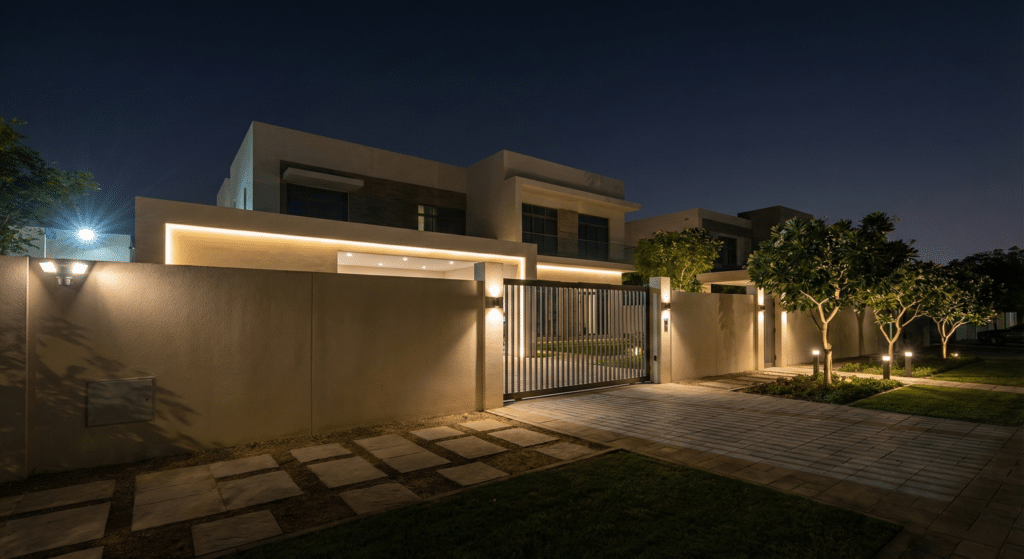
- Perimeter: Your boundary wall and gate are your first deterrents. Ensure they are in good repair and consider adding gate automation with an intercom system for access control. For advanced perimeter security, you can choose between technologies like infrared beams, which create an invisible fence and trigger an alarm when crossed, or motion-activated cameras that begin recording and send you an alert. Motion-sensor cameras are often more practical as they provide visual verification, whereas beams can sometimes be triggered by animals.
- Exterior & Garden: Good lighting is one of the most effective and affordable deterrents. Install motion-activated floodlights around your property, especially near doors and windows. When choosing outdoor cameras and sensors, it is critical to select models specifically designed for the Dubai climate. Look for devices with an IP67 rating or higher to ensure they are protected from dust and extreme heat.
- Entrances: All ground-floor doors and windows should be secured with high-quality locks and sensors. Reinforce your main entrance with a solid-core door and a solid deadbolt lock.
Before making significant modifications, always check your community management guidelines (from developers like Emaar, for example) regarding property alterations and security standards.
The Secure Apartment: A Renter-Friendly Guide to Upgrading Your Defenses
Apartment security focuses on fortifying your personal space within a larger building.
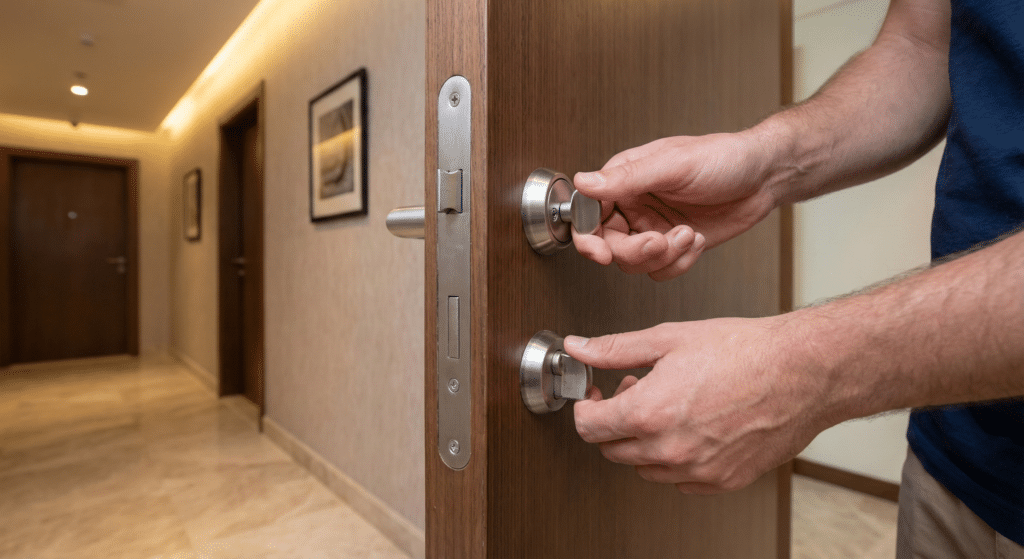
- The Front Door: This is your single most critical security point. Even if you can’t change the lock, you can reinforce it. Use a heavy-duty door jammer or a portable door lock when you’re inside. Consider a renter-friendly smart lock that installs over the existing hardware, giving you features like remote access and activity logs without altering the door.
- Balconies and Windows: If you’re on a lower floor or have a balcony that is adjacent to another, treat it as a potential entry point. Ensure the sliding door lock is functional and add a secondary locking device.
- Shared Access: A common challenge in apartment buildings is “tailgating,” where an unauthorized person follows a resident through a secure entrance. Always be mindful of who is entering behind you and never prop open main access doors. Report any suspicious activity or malfunctioning security gates immediately to your building management.
Choosing Your Arsenal: A Buyer’s Guide to Security Systems in Dubai
When you’re ready to invest in technology, the market can feel overwhelming. The primary choice you’ll face is between professionally monitored systems and do-it-yourself (DIY) smart systems.
| Feature | Professionally Monitored Systems (e.g., G4S) | DIY Smart Systems (e.g., Ring, Arlo) |
|---|---|---|
| Installation | Professional, SIRA-certified installation required. | User-installed, typically simple and wireless. |
| Monitoring | 24/7 monitoring by a central station that contacts police/emergency services. | Self-monitored via smartphone alerts. Some offer optional professional monitoring plans. |
| SIRA Compliance | Guaranteed compliance, especially for villas. | User’s responsibility to ensure compliance, especially for exterior cameras. |
| Cost | Higher upfront cost for hardware and installation, plus a monthly monitoring fee. | Lower upfront hardware cost, with optional monthly fees for cloud storage or monitoring. |
| Flexibility | Less flexible; system is professionally configured. | Highly flexible and expandable; easily add more cameras and sensors. |
| Best For | Villa owners requiring mandatory SIRA compliance; those wanting a hands-off, fully managed solution. | Apartment renters; tech-savvy users who want control and customization without long-term contracts. |
A key concern in the region is data privacy. When choosing a system with cloud storage for video footage, inquire about where the company’s servers are located to ensure you are comfortable with their data handling policies.
Smart Security Ecosystems: Integrating Cameras, Sensors, and Locks
The power of modern security lies in integration. A smart security ecosystem is one where all your devices—doorbell, cameras, door sensors, smart locks—communicate with each other and are controlled from a single app on your smartphone.
Imagine this: a motion sensor on your balcony detects movement after midnight. It automatically turns on the floodlights, your cameras start recording, and you receive an instant alert on your phone with a live video feed. This is the power of an integrated system. Key concepts to know include:
- Geofencing: Using your phone’s GPS to automatically arm or disarm your system when you leave or return home.
- Smart Alerts: Receiving notifications that can distinguish between a person, a vehicle, or an animal, reducing false alarms.
- Integration (IFTTT, Z-Wave): These are technologies and platforms that allow devices from different brands to work together, creating custom security routines.
The Telecommunications and Digital Government Regulatory Authority (TDRA) sets policies for IoT devices in the UAE, ensuring that connected products meet certain standards.
Beyond Burglary: Holistic Protection with Insurance and Liability Awareness
True property protection extends beyond just preventing break-ins. It also involves mitigating financial and legal risks. A critical, often overlooked component of your security strategy is home insurance.
A comprehensive home insurance policy protects you from financial loss due to theft, fire, water damage, and other unforeseen events. According to property insurance experts in the UAE, having a certified and well-maintained security system can sometimes lead to lower insurance premiums. More importantly, some insurance policies may have clauses that could invalidate a claim if it’s found that the property was left unsecured (e.g., doors unlocked or alarms not set).
What’s more, property owners have a degree of legal liability. Ensuring your property is secure helps prevent it from becoming a site for criminal activity, protecting you from potential legal complications. The UAE Insurance Authority regulates the industry, so always choose a reputable, licensed provider for your home insurance needs.
Your Action Plan: A Printable Dubai Home Security Checklist
This guide has provided the strategy; now it’s time for action. Use this checklist to conduct a thorough audit of your home.
Exterior & Perimeter (Villas)
- Boundary walls and gates are in good repair.
- Gate lock is functional and secure.
- Motion-activated lighting is installed and working.
- Outdoor CCTV cameras are SIRA-compliant and installed by an approved company.
- Shrubs and trees near windows are trimmed back to eliminate hiding spots.
Entry Points (All Properties)
- All exterior doors are solid-core with high-quality deadbolt locks.
- Door strike plates are secured with long (3-inch) screws.
- Sliding glass doors are secured with a charley bar or secondary lock.
- All window locks are functional.
- Balcony doors are secure, especially on lower floors.
Interior & Technology
- A home alarm system is installed and tested regularly.
- Smoke and carbon monoxide detectors are installed and have fresh batteries.
- A fire extinguisher is easily accessible.
- Important documents and valuables are stored in a fireproof safe.
Digital Security
- Home Wi-Fi network is password-protected with a strong, unique password (WPA3 protocol is best).
- Security camera and smart device firmware is updated to the latest version.
- Default passwords on all smart devices and routers have been changed.
Vacation Prep
- Registered for the Dubai Police ‘Home Security’ service.
- Arranged for mail/deliveries to be collected.
- Set indoor lights on a timer to create the appearance of occupancy.
- Informed a trusted neighbor or friend of your travel dates.
- Avoided posting real-time travel plans on social media.
Conclusion
Securing your home in Dubai is not about building an impenetrable fortress; it’s about implementing a smart, layered, and locally-aware strategy. As we’ve seen, this requires a tailored approach that moves beyond generic advice. Understanding and complying with SIRA regulations is non-negotiable. Applying a multi-layered defense specific to your villa or apartment is crucial. And integrating technology, procedures, and financial safeguards like insurance creates a truly comprehensive shield.
Use the checklist at the end of this guide to audit your own property and identify the gaps worth addressing first.
This article provides general information and recommendations. Always consult with a SIRA-certified security professional for advice tailored to your specific property and needs. Regulations mentioned are subject to change.