Part of our complete guide to Fashion in the UAE. Dubai men’s fashion is easiest to approach through three choices: the occasion, the fabric and the fit. The city has luxury boutiques, tailors and streetwear labels, but you do not need to dress like every campaign you see. Our recommendation is to start with one…
Part of our complete guide to Fashion in the UAE.
Dubai men’s fashion is easiest to approach through three choices: the occasion, the fabric and the fit. The city has luxury boutiques, tailors and streetwear labels, but you do not need to dress like every campaign you see. Our recommendation is to start with one useful outfit for your actual week, then build around it. This guide separates current shopping routes from brand background and gives practical ways to compare clothes for indoor appointments, relaxed outings and the heat.
For shopping, use specific directories and product references rather than a vague promise of “insider access”. Fashion Avenue is a place to compare luxury labels; a tailor is a different route for fit and cloth choices; streetwear can be chosen through the actual label’s catalogue. The sections below explain those distinctions. We have not conducted independent garment performance tests or interviewed every retailer named here, so the recommendations concern style and practical buying choices.
Dubai stands as a lively crossroads where cultures converge, and this diversity is the engine behind its unique position as a fashion hub. The city’s open cultural landscape and eclectic population drive a constant fusion of international trends with traditional Emirati and wider Arab aesthetics. This integration of traditional and modern styles is not just a trend; it’s the very essence of modern Arab men’s fashion in Dubai, creating a truly distinctive style narrative that resonates globally.
The city’s fashion ethos showcases how global influence in Dubai menswear is smoothly integrated, reflecting a community that is deeply rooted in heritage yet enthusiastically forward-looking. This leads to a lively cultural fusion in Dubai fashion that redefines contemporary masculinity.
The Traditional Meets Trend: Redefining Emirati Menswear
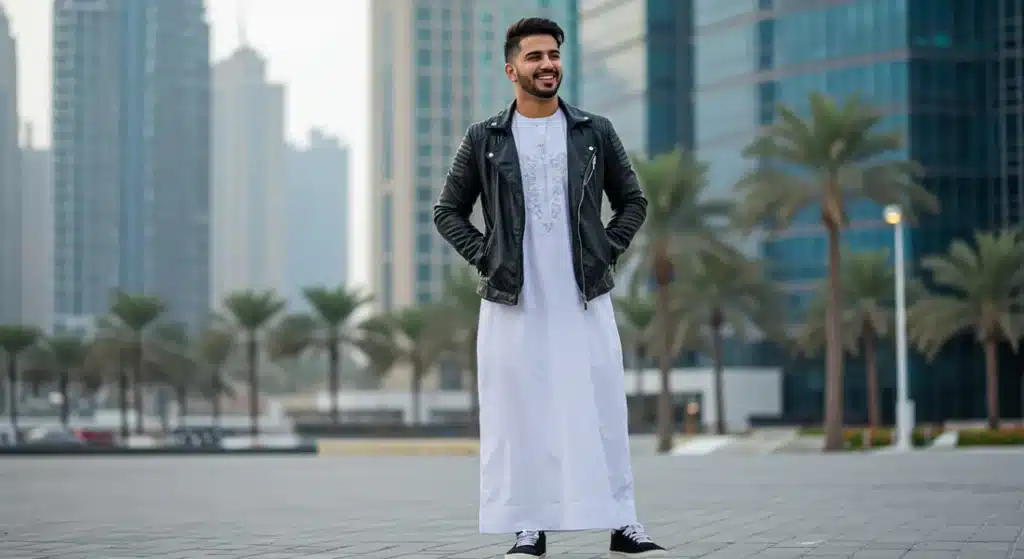
At the heart of Dubai’s menswear evolution is the compelling reinterpretation of traditional attire. The Kandura, the quintessential white garment worn by Emirati men, is undergoing a quiet yet significant transformation. While its classic form remains revered, modern cuts, premium fabrics like linen or custom blends, and subtle detailing are elevating its appeal. Designers are experimenting with collar styles, cuff designs, and even incorporating discrete embroidery, offering a refined twist on a timeless classic.
For a kandura, begin with the maker’s actual cut, measurements and cloth choices. A watch or sunglasses can be a personal styling preference without turning the garment into a luxury-status formula. Our preference is to keep the fit and occasion at the centre of the outfit. A traditional garment does not need an invented fashion revolution around it to make it relevant to contemporary Dubai.
Global Currents: How International Styles Are Integrated
Dubai’s fashion landscape is a direct reflection of its global connectivity, with styles from Paris, Milan, and New York making significant impacts. International brands in Dubai’s men’s fashion find a receptive audience eager to adopt the latest trends. However, this adoption is rarely a direct copy. Dubai men’s fashion trends are often adapted to suit the local climate and cultural context.
For warm weather, compare the whole garment, not just the fibre name. Weight, weave, lining and fit affect how a shirt or jacket works in practice. Our choice would be a lighter layer for an indoor appointment and a simpler outfit for time outside, with the venue’s actual dress code deciding the level of formality. That is a styling recommendation, not a measured claim that every linen or cotton item performs identically.
From Luxury Boutiques to Vibrant Street Style: Dubai’s Diverse Menswear Scene
The useful shopping distinction is what you want to compare. A luxury boutique gives access to one house’s collection; a multi-brand store lets you compare labels; a tailor offers a different conversation about cloth and dimensions. Streetwear adds graphic and silhouette choices. Start with that purpose before choosing a district. The location alone does not establish exclusive stock, specialist service or a particular price.
The Allure of Luxury: High-End Menswear in Dubai
The presence of luxury menswear in Dubai is unmatched. International luxury brands dominate the retail landscape, with flagship stores in iconic destinations like The Dubai Mall and Mall of the Emirates. Here, discerning consumers, often high-net-worth individuals and expatriates, seek out exclusive collections from houses like Louis Vuitton, Dior, Gucci, and Prada. The consumer profile for luxury menswear in Dubai is sophisticated, valuing craftsmanship, exclusivity, and brand heritage.
Use Dubai Mall’s Fashion Avenue directory for current brand locations. For tailoring, Kachins Couture dates its Dubai operation to 1981. Ask the tailor for the current fabric book, scope of work, fittings and written quote rather than assume one mill or a fixed historic price applies to every order. A made-to-measure appointment and a garment alteration are different services.
Street Style Reigns: The Rise of Urban Fashion
In stark contrast to the opulence of luxury boutiques, the dynamic Dubai street style men’s scene is a force to be reckoned with. Fuelled by local youth, influencers, and a thriving expatriate community, urban fashion in Dubai is rapidly gaining global recognition. This segment embraces global streetwear trends – from graphic tees and hoodies to statement sneakers and utility wear – but consistently infuses them with a distinct local flavour.
Areas like Alserkal Avenue, City Walk, and the busy Jumeirah districts are good spots to see this style up close. Here, men blend international brands with local artisanal pieces, creating ensembles that are both leading and culturally aware. The desert world often inspires colour palettes, while a relaxed yet refined aesthetic prevails. What’s Hot in UAE keeps a finger on the pulse of ‘what’s hot’ and trending locally, noting how Dubai’s street style scene is not just about following trends but creating them.
Shaping the Future: Key Players and Industry Growth in Dubai Menswear
Dubai’s ascent as a men’s fashion capital is not merely organic; it’s also a result of deliberate strategic growth, driven by visionary individuals and institutions. Understanding these key players provides comprehensive insight into the factors defining Dubai’s unique fashion identity. What’s Hot in UAE highlights the city’s expertise in identifying and nurturing emerging talent within its dynamic fashion ecosystem.
Spotlight on Emerging Designers: Dubai’s Creative Talent Pool
Qasimi describes itself as London-based with Middle Eastern heritage; it should not simply be labelled a Dubai-founded designer in a local talent list. The Giving Movement’s own account dates its UAE launch to 2020 and publishes production, charity and sustainability commitments. Those are the brand’s statements, not our independent environmental audit. For clothing, compare the actual piece and its origin story separately; regional cultural relevance does not make every label’s business base identical.
Major Events and Platforms: Dubai Fashion Week for Men
The official DFW page identifies Dubai Design District and the Arab Fashion Council as founders and currently lists SS27 for 22–26 October 2026. Do not turn the earlier February and September dates into fixed annual rules. Use the live calendar to identify the actual designers, shows and access conditions. A label’s presence in regional menswear does not establish its participation in every edition or residency at d3.
The Economic Impact: Dubai’s Growing Fashion Market
The city’s retail and tourism environment gives menswear businesses several audiences, but this guide does not provide a verified market-size dataset or prove a particular spending profile for all residents. Our useful comparison is at the clothing level: what you need, what is available and what the total offer costs. Broad claims about high disposable income are less helpful than an exact product or tailoring quote.
Navigating Dubai’s Style: Practical Tips for the Fashion-Forward Man
Our practical approach is to choose clothes by the setting first. A business meeting, a religious-site visit, a casual lunch and a beach outing are different occasions. Check the venue’s published requirements where they matter. A showroom image does not settle the dress code or your fit, and a city guide should not imply that one outfit is suitable everywhere.
Dressing for Climate and Culture: Smart Choices
Dubai’s climate dictates smart fashion choices. Lightweight, breathable fabrics such as linen, cotton, and Tencel are essential for comfort, particularly during the hot summer months. Layering is also a valuable strategy for transitioning between air-conditioned indoor spaces and the outdoor heat. Opt for light jackets, unlined blazers, or open shirts that can be easily added or removed.
Culturally, while Dubai is cosmopolitan, modesty is appreciated. When attending business meetings or visiting religious sites, choosing clothing that covers the shoulders and knees is advisable. For social occasions, smart casual or formal wear is typically expected at upscale venues. Understanding these nuances allows for smooth integration into the local scene while remaining impeccably dressed.
Curating Your Dubai Wardrobe: Key Pieces and Where to Find Them
To curate a modern Dubai wardrobe, focus on versatility and quality. Essential items include:
- Lightweight tailored suits: In neutral tones for business and formal events.
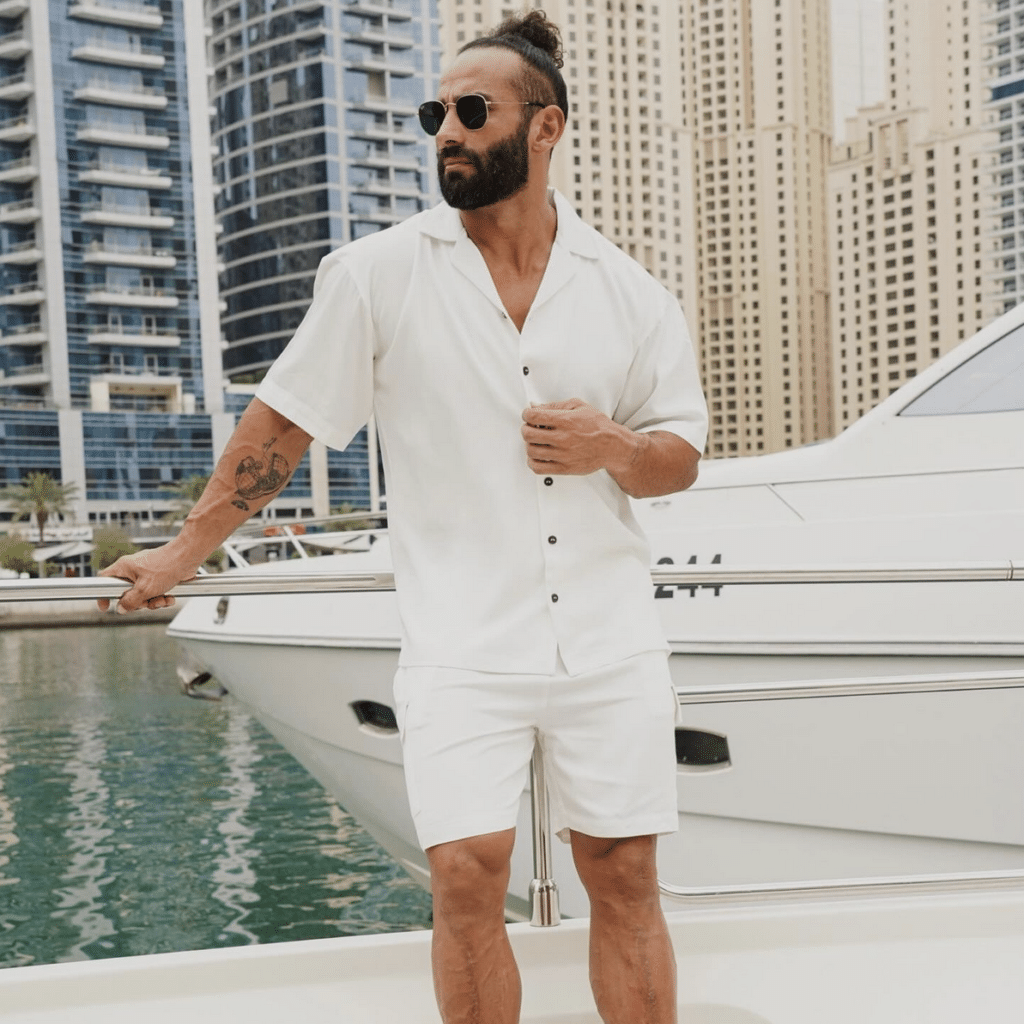
- Premium linen shirts and trousers: Perfect for both casual and smart-casual settings.
- High-quality Kanduras: For a nod to local tradition, consider custom-tailored options for a perfect fit.
- Designer sneakers and loafers: To bridge the gap between casual and elegant.
- Statement accessories: Watches, sunglasses, and subtle jewellery can raise any outfit.
- Stylish resort wear: Essential for the city’s many beach clubs and leisure destinations.
Use a current mall or brand directory to plan a shop visit, then contact the store about the actual item. For streetwear, our six-label guide distinguishes local and international roots. For tailoring, take a reference garment and request a specific fitting plan. A neighbourhood’s creative reputation does not confirm that every studio is an open retail shop or that it has your size in stock.
Conclusion
Dubai’s menswear scene reflects the city itself: a mix of global influence and strong local identity. From the sophisticated reinterpretation of traditional Emirati wear to the leading appeal of its luxury boutiques and thriving street style, Dubai offers a unique and diverse sartorial landscape. Fuelled by visionary designers, strategic events like Dubai Fashion Week, and a booming economic market, the city has firmly established itself as a forward-thinking style capital.
This revolution is not just about clothes; it’s about a cultural conversation, a blend of heritage and modernity that defines a new era of menswear. We invite you to explore more leading fashion trends and lifestyle guides on What’s Hot in UAE, or plan your next fashion-forward trip to experience Dubai’s unique style firsthand.
More in Lifestyle
Before buying a jacket, compare shoulder shape, sleeve length, closure and room for the shirt you plan to wear beneath it. Before ordering trousers, check rise, waist and usable length with the intended footwear. Ask a tailor which changes are realistic before paying for an ill-fitting garment. Our first wardrobe purchase would be the piece that solves a repeated problem in your own week, rather than an outfit chosen to represent an entire city.