


Dubai’s nightlife does not operate like anywhere else on earth. If you want to truly become a nightlife insider here, you need to understand the unique code and culture that guide its vibrant scene. It sits at an intersection that should not logically exist — a city built on conservative Islamic values that has nonetheless constructed one of the most sophisticated, lavish, and globally connected after-dark entertainment industries in the world. The result is a scene that rewards those who understand its rules and confounds those who don’t.
The difference between an average night out in Dubai and a genuinely exceptional one is rarely about money. Plenty of people spend thousands of dirhams on bottle service and still find themselves standing in the wrong section of the wrong club on a slow Tuesday. The real currency in Dubai nightlife is knowledge: knowing which nights matter at which venues, how the guest list system actually works, what gets you moved from the queue into the room, and how to build the kind of relationships with promoters and hosts that make future doors open automatically.
This guide is written for people who want that knowledge — residents, long-term expats, and regular visitors who are done with tourist-tier nights and ready to experience Dubai’s after-dark scene at the level it genuinely operates.

Background: How Dubai Built One of the World’s Great Nightlife Scenes
Twenty years ago, Dubai’s nightlife was a handful of hotel bars, a few discos catering almost entirely to business travellers, and very little else. The transformation since then has been extraordinary, driven by a deliberate government strategy to position the emirate as a global leisure destination rather than simply a transit and business hub.
The shift accelerated from around 2010 onwards. International hospitality groups began opening flagship venues — White Dubai, Soho Garden, and the arrival of globally recognised club brands that had previously been confined to Ibiza, New York, and Las Vegas. The city invested aggressively in attracting world-class DJ talent, and residencies that had previously been the exclusive domain of European festival circuits began appearing at Meydan Racecourse and the Palm Jumeirah.
The scene is now a serious stop on the global nightlife circuit. International DJs and performers tour Dubai as a matter of course, and the city consistently appears in DJ Mag’s global rankings of top club destinations. The Penthouse Dubai, for instance, has held placements in the publication’s global Top 100 Clubs and was named the top nightclub and rooftop lounge in the Middle East for three consecutive years between 2023 and 2025. That kind of recognition reflects a scene that has genuinely matured, not merely an affluent city with expensive bottle service.
The post-pandemic period accelerated the evolution further. Beach clubs that previously closed at sunset became full day-to-night operations. A new wave of immersive, experience-led venues arrived — spaces that blur the line between supper club, art installation, and nightclub. And a genuine underground current has emerged alongside the mainstream luxury tier, with venues like Gate Two enforcing no-phones policies and building audiences who are there for the music rather than the Instagram content.

Understanding Dubai’s Nightlife Rules Before You Go Out
This is not a section you can skip. Dubai’s nightlife operates within a legal framework that is meaningfully different from what residents of Europe, the United States, or Australia are accustomed to, and the consequences of misunderstanding it range from an embarrassing conversation with a bouncer to something considerably more serious.
Alcohol is legal, but strictly venue-bound. Alcohol is served in licensed establishments — hotels, licensed restaurants, and clubs. It is not available in unlicensed venues, and drinking in public spaces is illegal. This means the stretch between a nightclub exit and your taxi is not a grey area: open containers and visible intoxication outside a licensed venue can result in fines or worse. The line is not as easy to stumble across as it sounds in everyday practice, but it is worth understanding clearly.
The legal drinking age is 21. This applies to everyone, including visitors whose home countries permit drinking at 18. Bouncers and bar staff check identification routinely, and a passport or Emirates ID is the accepted form of proof. If you are in your early twenties and do not carry ID, expect to be turned away.
Zero tolerance for drink-driving. Unlike some jurisdictions with permissible blood-alcohol thresholds, the UAE applies zero tolerance. Any detectable alcohol in the blood of a driver can result in arrest. Use Careem, Uber, or a licensed taxi. This is not negotiable and is not treated as a grey area by police.
Public intoxication is an offence. Being visibly and rowdily drunk in public — outside licensed venues, on streets, on public transport — can result in arrest and fines. Dubai’s nightlife culture is genuinely sophisticated, and it expects you to match that. Loud arguments, aggressive behaviour, and public displays that disturb others can all attract the attention of authorities, even in and around licensed venues.
Dress codes are real and enforced. More on this below, but the headline is: Dubai clubs maintain genuine dress standards, and a bouncer here will turn you away without hesitation if you don’t meet them. Sportswear, shorts, flip-flops, and excessively casual attire are almost universally rejected at premium venues.
None of this is designed to intimidate — it is designed to ensure that Dubai’s nightlife remains genuinely high-end and safe, which is precisely what makes it worth experiencing. Once you understand the rules, they become background rather than obstacle.

The Nightlife Ecosystem: Dubai’s Key Venue Tiers
Dubai’s after-dark landscape is not a single thing. It stratifies into distinct categories, each with its own function in how a great night unfolds.
Pre-Club Dining and Lounge Venues
The best nights in Dubai almost always begin with dinner, and the transition from restaurant to club is a refined ritual. Venues like CÉ LA VI on the 54th floor of Address Sky View, Zuma in the DIFC, and Mimi Kakushi in Four Seasons Resort are not merely places to eat — they are the primary social gathering points for Dubai’s regular nightlife crowd. Seeing and being seen here is part of how connections are made. Promoters, club hosts, and the kinds of people whose WhatsApp messages open doors later in the evening are all found in these rooms before midnight.
Rooftop Lounges
Rooftop venues serve as the bridge between dinner and the main event. The Penthouse Dubai has built a reputation as perhaps the city’s finest example of this category — an award-winning venue where DJ sets run late and the atmosphere is consistently excellent without requiring the energy output of a full nightclub. Sky 2.0 in Dubai Design District occupies similar territory with a more design-forward aesthetic.
Open-Air Super-Clubs
White Dubai at Meydan Racecourse remains the reference point for this category. The open-air format, panoramic skyline views, world-class DJ bookings, and consistent production quality have kept it among the most talked-about venues in the city for years. It is the kind of place that defines what Dubai nightlife looks like to the outside world — spectacular, loud, and genuinely impressive.
Ushuaïa Dubai Harbour Experience brings the Ibiza super-club model to the waterfront, with large-scale productions and international DJ headliners that blur the boundary between festival and nightclub. Soho Garden DXB operates as a full entertainment complex — multiple zones, outdoor areas, different music policies in different spaces — designed to accommodate a full evening rather than just a few hours of dancing.
Indoor Clubs
For high-energy indoor clubbing, 1 OAK at the JW Marriott Marquis in Business Bay delivers a New York-inflected luxury nightlife experience with strong celebrity-and-influencer optics, premium bottle service, and a soundtrack leaning toward hip-hop and R&B. BLU Dubai on the 32nd floor of the V Hotel brings two levels of high-energy nightlife with genuinely impressive views. Billionaire Dubai combines fine dining with live entertainment and a lavish club experience for those who want the full theatrical production.
The Underground Tier
This is the part of Dubai’s nightlife that rarely appears in tourist guides. Gate Two — born from the same team behind Iris — operates on a no-photos, no-videos policy, programmes genuinely credible music, and attracts a crowd that is there for the craft rather than the content. The Avenue at Shangri-La on Sheikh Zayed Road is known for Arabic-inflected club nights with serious production values and a loyal following. These venues require a different kind of access than bottle service can buy — you need to be known, or to arrive with someone who is.
How the Guest List System Actually Works in Dubai
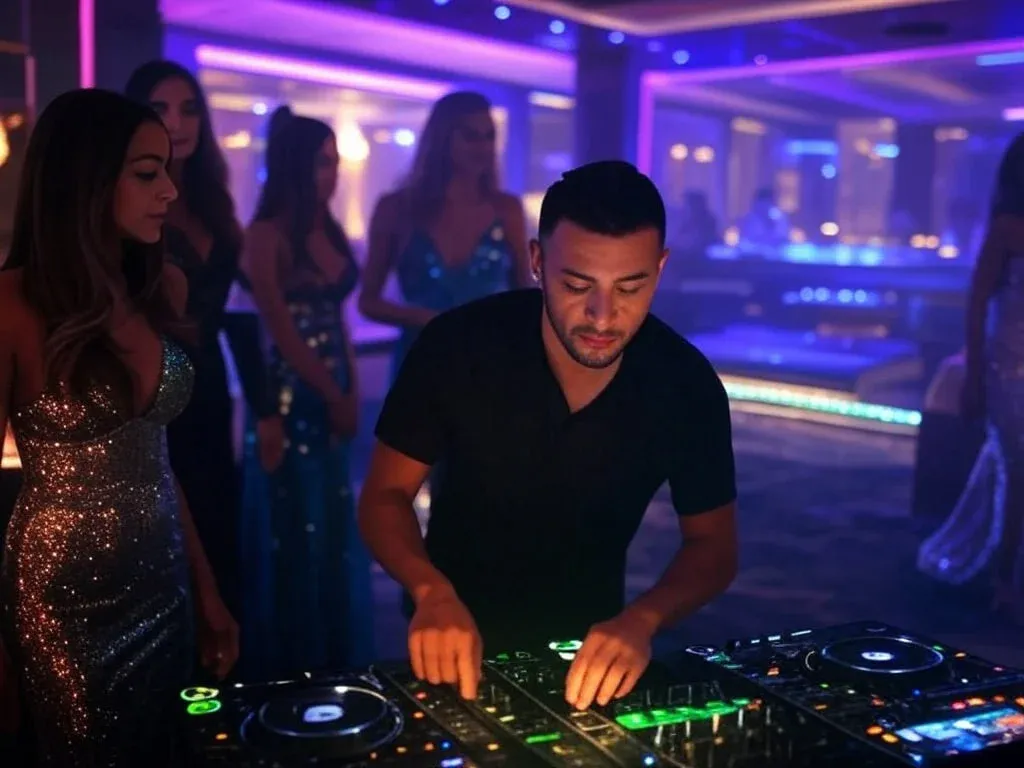
The guest list in Dubai is not a formality. At the city’s best venues, it is the primary mechanism through which the room gets built, and understanding how it operates is the single most useful piece of knowledge for anyone looking to move beyond tourist-tier access.
Every significant club in Dubai employs promoters — individuals whose job is to bring the right people into the right sections of the venue. These are not mere ticket sellers. A good promoter curates the room, manages the gender balance that almost every club requires, and maintains a personal network of regulars who reliably bring energy and spend well. They are the connective tissue of the ecosystem.
Getting on a guest list — at its most basic level — means contacting a promoter or the venue’s PR team via Instagram DM or WhatsApp before the night and registering your group. For ladies’ nights and lower-stakes evenings, this can be done with minimal prior relationship. For the best nights and the best sections, the guest list reflects a relationship built over time.
The practical mechanics: most clubs operate separate entry tiers — general queue, guest list, and VIP table booking. Guest list entry typically means expedited entry, sometimes complimentary or reduced-price admission, and occasionally a drinks package depending on the venue and night. VIP table booking is a different proposition, involving a minimum spend (commonly AED 1,500–4,000 per table for standard VIP sections, considerably more for premium positions) and a reserved area with dedicated service.
The group composition matters significantly. Dubai clubs are explicit about preferring mixed-gender groups, and a group arriving with a majority of men without a table booking will frequently be refused or made to wait. A balanced group — or one where women are the majority — will almost always receive preferential treatment at the door, guest list or otherwise.
How to Build Real Connections in Dubai’s Nightlife World
The people worth knowing in Dubai’s nightlife ecosystem are accessible, but they need a reason to value the relationship.
Follow and engage with promoters and venue accounts on Instagram. This sounds obvious, but consistent, genuine engagement — commenting on events, sharing content — puts you on the radar before you ever send a direct message. When you do reach out to ask about a specific night or event, you are not a stranger.
Be a reliable presence. Promoters in Dubai, like everywhere, value regulars above almost everything else. A person who shows up when they say they will, who brings a good group, and who behaves well is worth more to a club host than someone who spends lavishly once and disappears. Loyalty here is genuinely rewarded — with upgrades, early access to event announcements, and invitations to private pre-launch events.
Attend brand activations, hotel openings, and launch events. These are the genuine networking environments of Dubai’s nightlife world. Club owners, hospitality directors, PR managers, and the kind of promoters who can call venues on your behalf are all present at these events. The conversations that happen here are the ones that later materialise as VIP invitations.
Use concierge services intelligently. For those new to the city, a reputable hotel concierge or dedicated nightlife concierge service can provide direct table bookings and introduce you to the right contacts at multiple venues simultaneously. The relationship-building still needs to happen on your side, but a warm introduction through a trusted intermediary compresses the timeline considerably.
Dressing for Dubai: What the Dress Code Actually Means
Dubai’s club dress codes are consistently enforced and worth taking seriously. The baseline is smart-casual at minimum — meaning no sportswear, no shorts, no flip-flops, and no ripped or excessively casual denim. At premium venues, the expectation rises to smart-dressy for men (tailored trousers, a quality shirt or jacket) and cocktail-adjacent for women.
The practical challenge in Dubai is the transition between public and venue. It is entirely normal — and culturally sensible — to arrive modestly dressed for the walk from the car to the door, and to dress up once inside. Some venues have cloakrooms or courtesy areas for exactly this purpose. The interior dress code at a club like Billionaire or 1 OAK is dramatically different from what the streets around the venue require, and experienced Dubai regulars manage both registers without stress.
When in doubt, overdress rather than underdress. A bouncer who is unsure will give the benefit of the doubt to the person who looks like they belong in the room.

The Practical Calendar: When to Go Out in Dubai
The working week in the UAE runs Sunday to Thursday, which shifts the nightlife calendar in ways that catch visitors off-guard. Thursday night is the equivalent of a Friday night in most Western cities — the biggest bookings, the fullest rooms, the most impressive productions. Friday is also strong. Saturday can be excellent but tends toward a slightly different, more diverse crowd mix. Wednesday has become a significant mid-week night at several venues.
Seasonality matters too. The October-to-April period is peak nightlife season, with international acts scheduled densely and outdoor venues operating at full capacity in ideal weather. The summer months — June through August — are quieter, with reduced outdoor programming and some venues scaling back operations. Ramadan brings its own calendar: nightclubs close, licensed venues reduce operating hours, and alcohol is generally unavailable during daylight hours. The nights during Ramadan have their own character, but they are not club nights.
Expert Perspective: What Dubai’s Scene Is Becoming
The direction of Dubai’s nightlife in 2026 and beyond reflects a broader maturation. The super-club format, while still dominant, is being supplemented by smaller, more concept-driven venues that prioritise experience over spectacle. Immersive dining-club hybrids, theatrical performances alongside DJ sets, and wellness-adjacent late-night programming (premium mocktail menus, non-alcohol-forward events) are all expanding their presence in the market.
The underground tier is growing credibility faster than at any previous point. Venues that enforce no-photography policies, programme genuinely serious music, and curate their rooms carefully are filling up, reflecting a resident audience — particularly long-term expats and young Emiratis — that has moved beyond novelty and wants depth.
The beach club format continues to evolve from day destination to full day-night operation. Zero Gravity, Nikki Beach, and Barasti remain anchor points for this category, but the newer generation of waterfront venues is executing the format with more sophisticated programming and production.
For those building their position in the scene, the most useful observation is this: the venues that will matter most in two years are probably not yet in their peak prominence. Following the movements of Dubai’s serious promoters and venue developers — watching which new spaces they attach their names to — is a more reliable guide to future access than chasing wherever the current maximum crowd is gathering.
Practical Takeaways for Navigating Dubai Nightlife
The condensed version of everything above: arrive knowing the rules and dressed appropriately. Build relationships with promoters before you need them. Attend pre-club venues early in the evening to establish presence. Book tables in advance for premium nights rather than assuming walk-in access. Use Thursday nights for the headline experiences and mid-week for building more intimate connections. Give loyal custom to two or three venues rather than spreading yourself thinly across twenty.
Dubai’s nightlife rewards commitment and intelligence more than it rewards spending alone. The people who move through this scene effortlessly are almost never the ones who arrived with the most cash. They are the ones who took the time to understand how it works.
Frequently Asked Questions
Can tourists drink alcohol at Dubai nightclubs? Yes. Alcohol is legally available at licensed venues including clubs, hotel bars, and licensed restaurants. The legal drinking age is 21, and you will need valid photo ID. Drinking outside licensed venues — on streets, beaches, or public transport — is illegal and can result in fines or arrest.
What is the dress code for Dubai clubs? Most premium clubs require smart-dressy attire as a minimum. For men, this typically means tailored trousers and a quality shirt or jacket — no sportswear, shorts, flip-flops, or ripped clothing. For women, cocktail-level dressing is the standard. Dress codes are enforced at the door without negotiation, so it is better to overdress than risk being turned away.
How do I get on the guest list at Dubai nightclubs? Contact the venue’s promoter or PR team via their official Instagram account or WhatsApp before the event. Most clubs publish contact details for guest list enquiries. Arriving with a balanced mixed-gender group significantly improves your chances of preferred treatment. For the most exclusive events and sections, prior relationship with a promoter matters more than any other single factor.
What are the best nights to go out in Dubai? Thursday is the main night — equivalent to Friday night in Western cities — and draws the strongest DJ bookings and biggest crowds. Friday is also excellent. Wednesday has grown significantly as a mid-week option at several venues. Saturday works well but has a slightly different character. The outdoor super-clubs operate at their best during the cooler season from October to April.
How much does VIP table service cost in Dubai clubs? Minimum spends for standard VIP tables typically range from AED 1,500 to AED 4,000 depending on the venue and the night. Premium positions, private booths, and tables at headline events cost considerably more. Bottle prices at top venues range from around AED 500 to AED 2,000+ per bottle before service charge. Always confirm the minimum spend and pricing before booking.
Is Dubai nightlife safe for women going out alone or in groups? Yes. Dubai is consistently rated among the safest cities in the world, and clubs maintain professional security and staff standards. Women regularly attend and enjoy nightlife independently. The regulatory framework governing licensed venues supports a well-managed environment, and issues of harassment are taken seriously by both venues and authorities.
This guide is for informational purposes. Always respect local laws and cultural norms when enjoying Dubai’s nightlife. Rules and venue details are subject to change — verify specifics directly with venues before visiting.