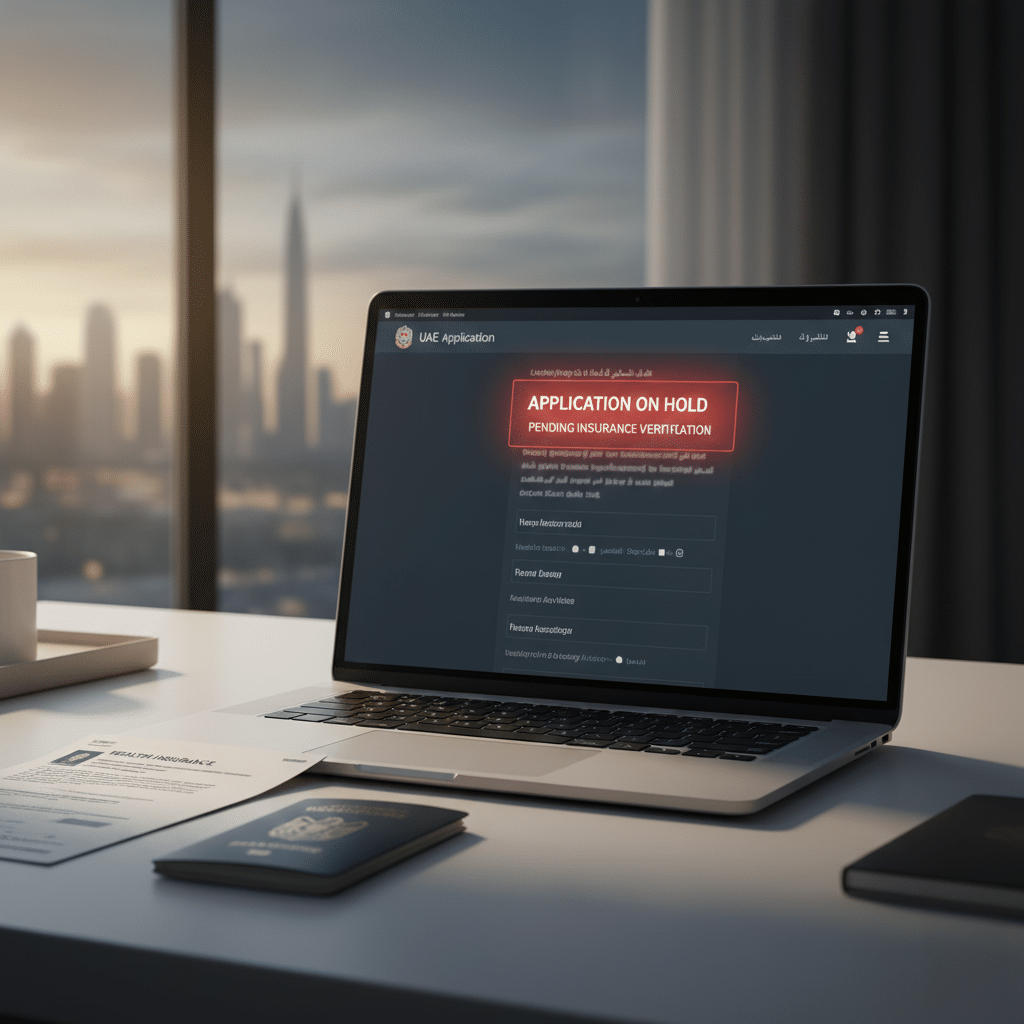
The email lands in your inbox, and your heart sinks. “Your UAE freelancer visa application is on hold pending submission of a compliant health insurance certificate.” Suddenly, your dream of being your own boss in the UAE is tangled in a web of regulations. Or perhaps you’ve just landed a major client, but the contract…
The email lands in your inbox, and your heart sinks. “Your UAE freelancer visa application is on hold pending submission of a compliant health insurance certificate.” Suddenly, your dream of being your own boss in the UAE is tangled in a web of regulations. Or perhaps you’ve just landed a major client, but the contract has a clause about “professional indemnity” that sends you scrambling. The freedom of freelancing comes with a daunting reality: you are now solely responsible for your own protection.
This guide breaks down exactly what’s mandatory for your UAE freelancer visa versus what’s essential for your business — how to get covered, and how to choose the right plan without overpaying.
Why Insurance is a Non-Negotiable for UAE Freelancers
For many new freelancers, insurance feels like an optional expense. In the UAE, this mindset is a fast track to serious trouble. Being uninsured exposes you to significant legal penalties, devastating financial risks, and an immediate halt to your business ambitions.
The most immediate roadblock is your residence visa. Official government and free zone portals, such as those managed by the General Directorate of Residency and Foreigners Affairs (GDRFA), make it unequivocally clear: for freelancers in emirates like Dubai and Abu Dhabi, valid health insurance is a mandatory prerequisite for visa issuance and renewal. Attempting to secure a freelancer visa without health insurance is not a workaround; it is a guaranteed rejection.
Beyond the visa, the legal consequences for failing to maintain mandatory health insurance are severe. The Dubai Health Authority (DHA) enforces this law strictly, and non-compliance can result in significant monthly fines. These penalties can quickly accumulate, creating a financial burden that directly undermines the profitability of your freelance business.
But the risks extend far beyond administrative penalties. As a freelancer, you are a business of one, and you are personally liable for your work. Imagine you’re a freelance marketing consultant and a campaign you designed fails to deliver, causing your client a significant financial loss. Or you’re a web developer, and a bug in your code crashes a client’s e-commerce site during a major sale. Without professional liability insurance, a client could sue you directly for damages that could easily reach AED 100,000 or more. This single event could wipe out your savings and destroy your business before it even gets off the ground.
The Two Pillars of Freelancer Insurance: Decoding What You Actually Need
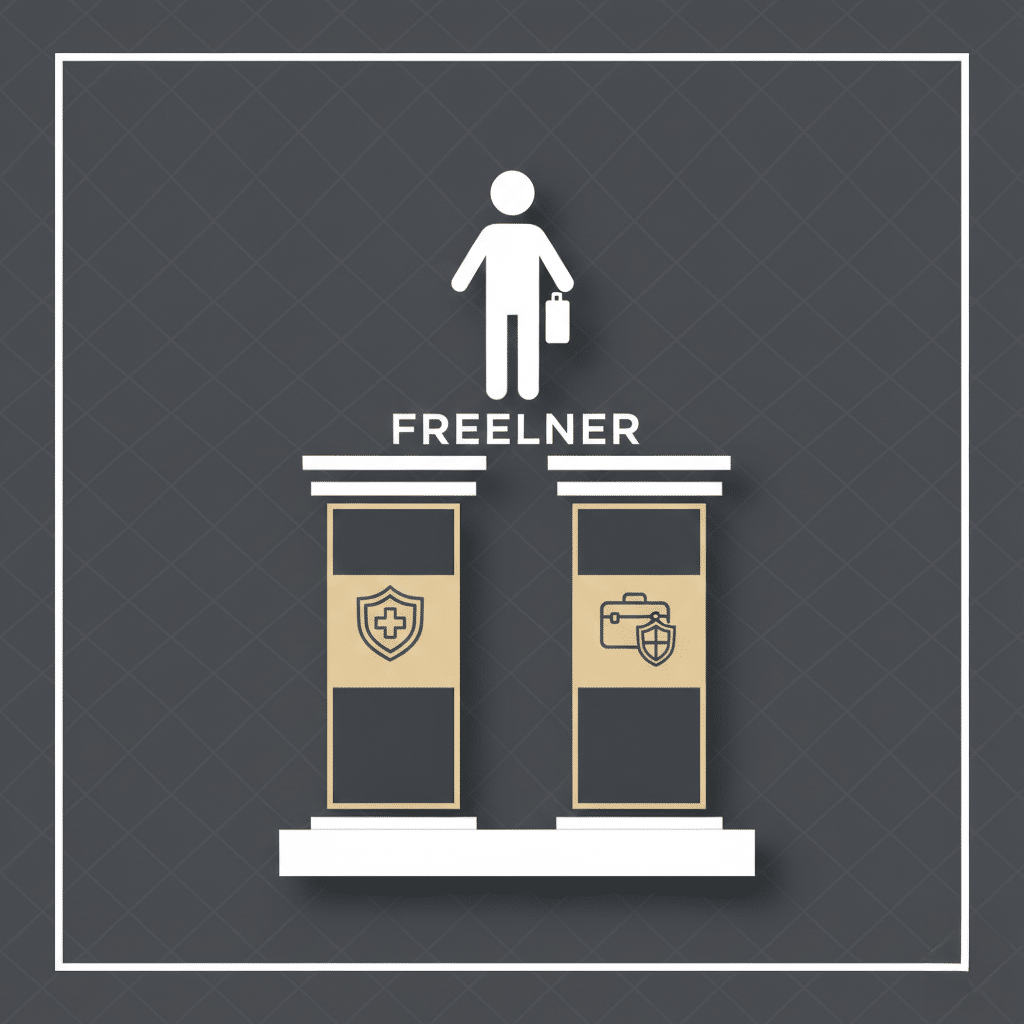
The term “freelancer insurance” can be confusing. To simplify it, think of your needs as being supported by two distinct pillars. One pillar is mandatory and secures your legal status in the country. The other is essential for protecting your business from the inherent risks of your profession. Understanding this distinction is the first step to building a comprehensive safety net.
| Insurance Pillar | Primary Purpose | Key Policies |
|---|---|---|
| Pillar 1: Visa & Legal | Fulfills mandatory government requirements for residency. | Mandatory Health Insurance |
| Pillar 2: Business Shield | Protects you from financial loss due to work errors or accidents. | Professional Indemnity & Public Liability Insurance |
The UAE Insurance Authority (IA) is the federal body that regulates the entire insurance sector, ensuring that providers meet specific standards of conduct and financial stability. Both your mandatory health plan and your business policies should be from providers licensed and regulated within the UAE to ensure they are compliant and trustworthy.
Pillar 1: Mandatory Health Insurance – Your Key to Visa Approval
This is the absolute, non-negotiable starting point for every freelancer in Dubai and Abu Dhabi. Without a compliant health insurance policy, your visa application will not be processed.
The Dubai Health Authority (DHA) is the governing body that sets and enforces these rules in Dubai. According to DHA regulations, every resident, including freelancers on self-sponsored visas, must have a health insurance plan that meets or exceeds the minimum level of coverage stipulated by the law. This minimum coverage, often referred to as an Essential Benefits Plan (EBP), includes basics like outpatient and inpatient services, emergency care, and maternity cover.
A common pitfall for new freelancers is assuming their international or home-country insurance plan will suffice. In almost all cases, it will not. For a UAE residence visa, you must have a plan from a DHA-licensed provider that is specifically designed to be compliant with local regulations. These plans are integrated into the visa processing system, and authorities can instantly verify their validity. Attempting to use a non-compliant international plan is one of the most common reasons for visa application delays and rejections.
Pillar 2: Essential Business Insurance – Your Professional Shield
Once your visa is secured, your focus must shift to protecting your business itself. As a freelancer, you lack the protective shield of an employer. If something goes wrong, the liability falls squarely on your shoulders. This is where business insurance becomes your essential professional shield.
The most critical policy for knowledge-based freelancers (consultants, designers, developers, writers) is Professional Indemnity (PI) Insurance. As defined by professional bodies like the Chartered Insurance Institute (CII), PI insurance covers you against claims of financial loss suffered by a client due to your professional negligence, errors, or omissions.
- For an IT consultant: This covers financial loss if your advice leads to a data breach or if your code breaks a client’s website.
- For a graphic designer: This protects you if you accidentally use a copyrighted image in a logo, forcing the client into a costly rebranding.
- For a marketing professional: This covers you if a typo in an ad campaign results in a significant financial loss for your client.
The second key policy is Public Liability (PL) Insurance. This covers claims of injury to a person or damage to third-party property caused by your business activities. While it may seem less relevant for those working from home, it’s crucial if you ever meet clients in person.
- Example: If you meet a client at a co-working space and accidentally spill coffee on their high-end laptop, your PL insurance would cover the cost of replacement or repair.
Having this coverage is not just about protection; it’s a powerful business development tool. High-value corporate clients will often refuse to work with uninsured freelancers. Having proof of liability coverage demonstrates professionalism and financial stability, making you a much more attractive and trustworthy partner.
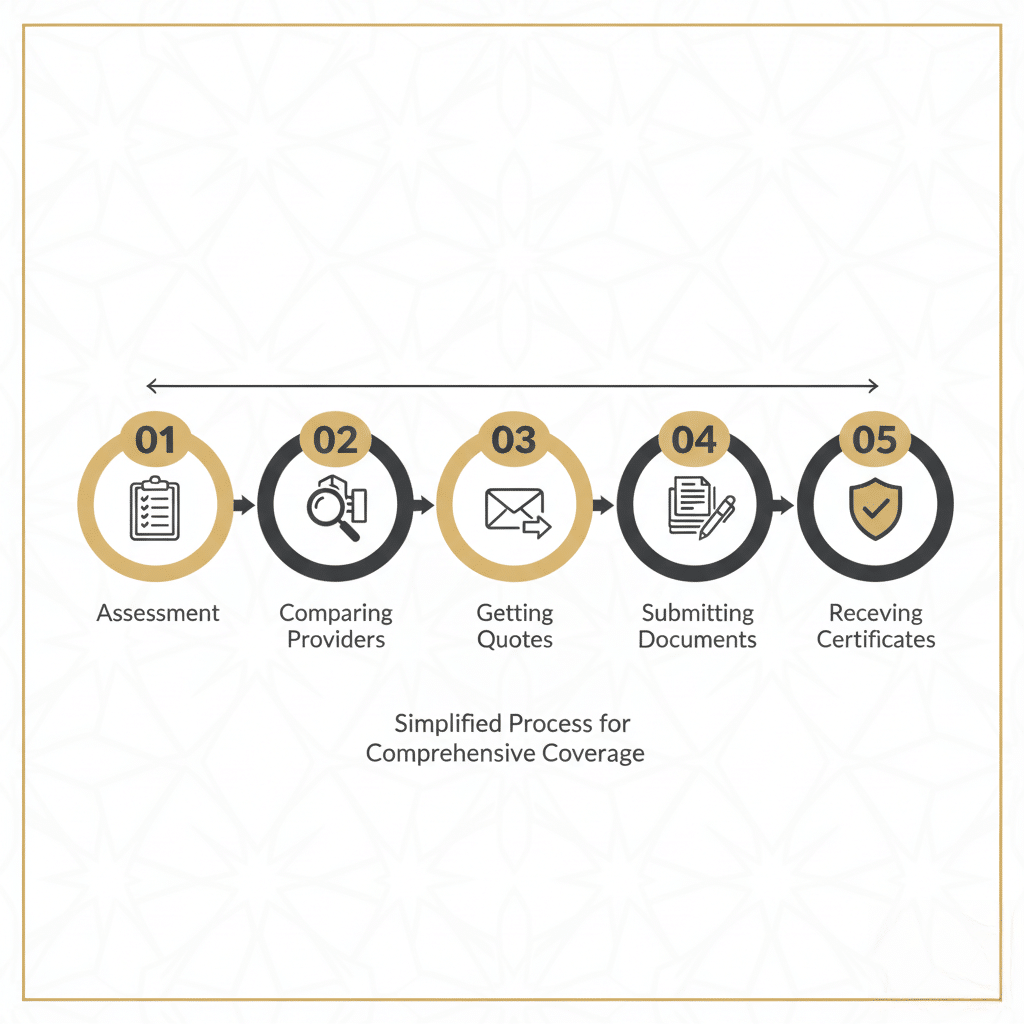
The 5-Step Playbook: How to Get Insured and Secure Your Freelance Visa
Navigating the insurance market can feel overwhelming, but it can be broken down into a clear, actionable process. Follow this five-step playbook to go from uninsured to fully protected efficiently.
Visa Rescue Tip Box: Is your visa application already on hold due to insurance? Don’t panic. The fastest solution is to contact a reputable insurance broker or go directly to the website of a major UAE provider. You can often get a compliant health insurance quote and policy certificate online within hours, allowing you to unblock your application immediately.
Step 1: Assess Your Needs (Health & Business)
First, determine the level of coverage you require. For health insurance, your primary goal is visa compliance. You must select a plan that meets the minimum requirements of your emirate’s health authority (e.g., DHA in Dubai). You can choose to upgrade for better network access or lower co-payments, but the baseline must be compliant.
For Professional Indemnity insurance, the coverage amount you need depends on your profession and the value of your contracts. A simple framework is to consider the maximum potential financial damage a mistake on your part could cause a client. While a writer may need lower coverage, an IT consultant managing a critical system implementation should opt for a higher limit. Some free zones, particularly those focused on media or tech, may also have specific recommendations or requirements for PI insurance for their registered freelancers.
Step 2: Compare Compliant Providers & Plans
Now that you know what you need, it’s time to find it. For health insurance, you must choose from the list of providers licensed by the local health authority. Major, DHA-approved providers in the UAE include companies like Cigna, Bupa, Sukoon (formerly Oman Insurance), and GIG Gulf.
You have two main avenues for comparing plans:
- Directly to Insurer: You can visit the websites of individual insurance companies to see their plans. This is straightforward but can be time-consuming.
- Broker/Aggregator: Websites like Policybazaar UAE or Bayzat allow you to compare quotes from multiple providers in one place. Brokers can offer advice and help you with the application, often at no extra cost to you.
This choice is crucial. Going direct gives you a deep dive into one company’s offerings, while a broker provides a broad market overview, which can be more efficient for finding the best value.
Step 3: Get Your Quotes Online
The easiest and fastest way to get pricing is online. To get an accurate quote, have the following information ready:
- For Health Insurance: Your age, emirate of residence, and desired level of coverage (e.g., basic visa compliance vs. comprehensive).
- For Professional Indemnity Insurance: Your specific profession, estimated annual freelance income/turnover, and the desired coverage limit (e.g., AED 1 million).
Most insurers provide an instant online quote for health insurance. PI insurance quotes are also often instant, but some providers may require a short callback to confirm details about your profession before finalizing the price.
Step 4: Submit Documents & Finalize Your Policy
Once you’ve chosen a plan, you’ll need to complete the application. The process is typically digital and requires you to upload a few key documents.
Commonly Required Documents:
- Passport copy with visa page (if you have one)
- Emirates ID copy (if you have one)
- Copy of your freelance permit or trade license
- A completed application form
Pro Tip: Always double-check that the policy start date aligns with your visa application timeline. A policy that starts too late can cause further delays. Before you pay, review the key terms in your policy documents. Look for the deductible (the amount you pay before insurance kicks in), co-payment (the percentage you pay for each visit), and the network (the list of hospitals and clinics where you can receive treatment).
Step 5: Use Your Insurance for Visa & Client Work
After payment, you will receive your official insurance certificate and health card, usually via email. The insurance certificate is the crucial document you need to upload to the visa application portal to prove you have compliant coverage.
For your business, your PI certificate is a valuable asset. While you don’t need to send it with every email, you should be prepared to provide it to clients who request it. A great way to signal your professionalism is to add a line to your proposals or contracts stating, “Proof of Professional Indemnity Insurance available upon request.” This small detail builds immense trust and can set you apart from less prepared competitors.
Demystifying the Costs: What to Budget for Freelancer Insurance in the UAE
Cost is a major concern for every freelancer. The good news is that compliant insurance is often more affordable than you think.
For health insurance, the premium is primarily influenced by your age, the plan tier (basic vs. comprehensive), and the size of the provider network. A basic, visa-compliant plan for a young, healthy individual can start from as low as AED 600-800 per year. More comprehensive plans with wider network access and better benefits can range from AED 2,000 to AED 10,000+ annually.
For Professional Indemnity (PI) insurance, the cost is driven by your profession (risk level), your annual turnover, and the amount of coverage you choose.
Sample PI Insurance Cost Scenarios (Annual Premium Estimates):
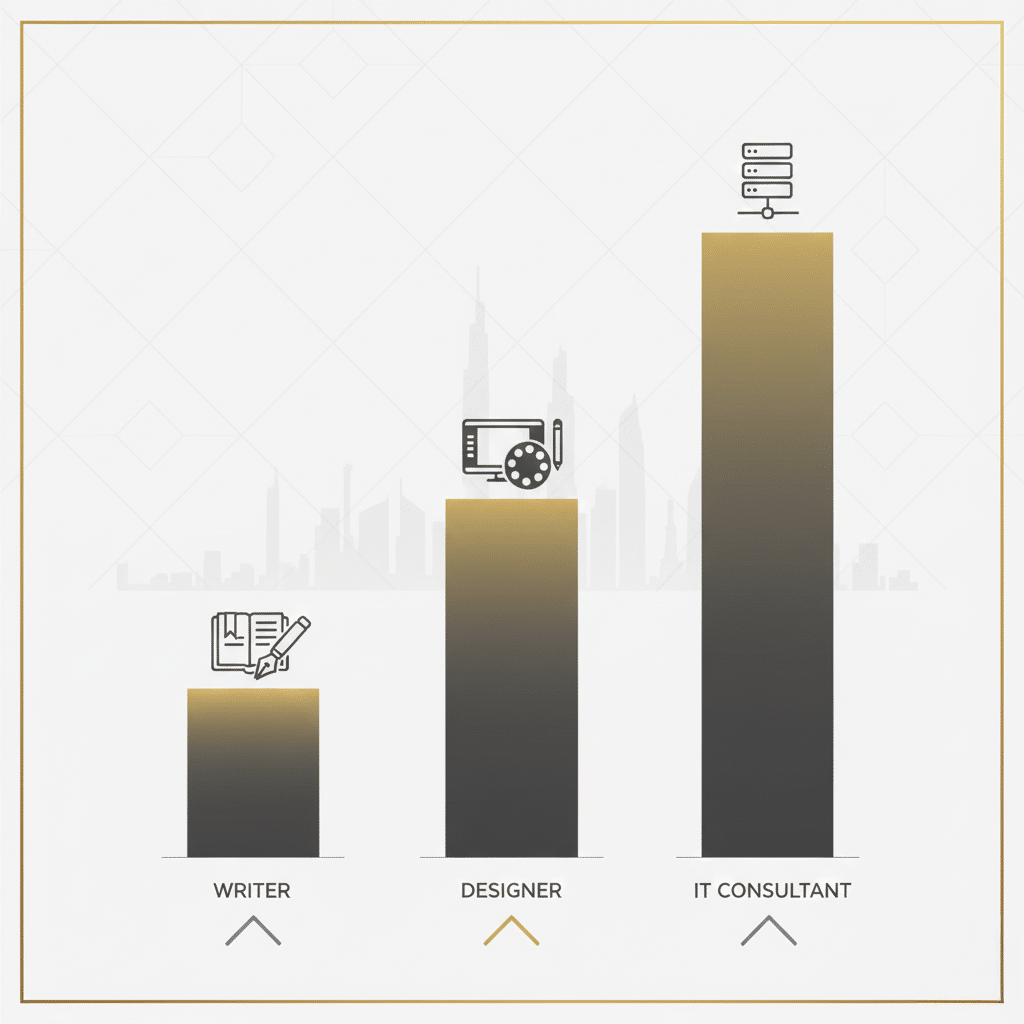
- Freelance Writer or Translator: ~AED 700 – 1,200 for AED 1M cover
- Graphic Designer or Marketing Consultant: ~AED 800 – 1,500 for AED 1M cover
- IT Consultant or Project Manager: ~AED 2,000 – 4,000 for AED 1M cover
The premium changes significantly with the level of coverage. Here is a sample breakdown to illustrate the difference:
| Indemnity Coverage Level | Estimated Annual Premium for a Marketing Consultant |
|---|---|
| AED 1,000,000 | AED 1,500 |
| AED 2,000,000 | AED 2,200 |
| AED 5,000,000 | AED 3,500 |
As you can see, doubling your coverage does not necessarily double your cost, making a higher level of protection more accessible than many freelancers assume.
Freelancer FAQs: Your Top Insurance Questions Answered
Can I get a freelance visa in the UAE without health insurance?
No. For freelance visas issued in Dubai and Abu Dhabi, having a compliant health insurance policy is a mandatory legal requirement for the visa to be issued or renewed. This is enforced by authorities like the GDRFA and DHA.
How does my free zone affect my insurance requirements?
While the requirement for health insurance is mandated at the emirate or federal level, some free zones may have specific recommendations or requirements for business insurance. For example, a media or tech-focused free zone might strongly recommend or even require consultants to hold Professional Indemnity insurance as part of their permit conditions. Always check the specific guidelines of your chosen free zone authority.
Can I pay for my insurance monthly?
Most insurance policies in the UAE, especially for individuals, are sold on an annual basis with the premium paid upfront. However, some brokers and providers are beginning to offer monthly payment plans through third-party financing, but this is not standard and may come with additional fees. It’s best to budget for insurance as an annual business expense.
The Navigation
Navigating the world of insurance is a critical rite of passage for every successful freelancer in the UAE. It’s the bridge between being just a talented individual and being a resilient, professional business owner. Remember the two pillars: health insurance is your non-negotiable key to securing a UAE visa, and business insurance is your essential shield for building a sustainable and protected career. The two pillars above give you everything you need to move forward.
Ready to get protected? Use our checklist to assess your needs and start comparing compliant insurance plans today to secure your freelance future in the UAE.
This article provides informational guidance and should not be considered legal or financial advice. Insurance regulations and requirements can change. Always consult with a licensed insurance professional and official government sources in the UAE before making any decisions.
Authoritative Sources & References
- General Directorate of Residency and Foreigners Affairs (GDRFA) & UAE Government Portals (u.ae). These official government sites outline the prerequisites for visa issuance, which consistently include mandatory health insurance for residents.
- Dubai Health Authority (DHA). The regulatory body for healthcare in Dubai. Its official website and published regulations are the definitive source for mandatory health insurance laws, minimum coverage requirements (Essential Benefits Plan), and penalties for non-compliance.
- UAE Insurance Authority (IA). The federal regulatory body for the UAE’s insurance sector. It provides the overarching framework for licensing and regulating insurance providers, ensuring market stability and consumer protection.
- Chartered Insurance Institute (CII). A global professional body for the insurance and financial planning professions. Its resources provide authoritative definitions and standards for various insurance products, including Professional Indemnity insurance.
- UAE Free Zone Authorities (e.g., GoFreelance, DDA, DMCC). The official websites and regulatory documents of these zones provide specific guidelines for the freelancers and businesses operating under their jurisdiction, including any recommendations or requirements for business insurance.