I would not buy a child an e-bike or scooter on the strength of a seller saying “everyone rides these”. First identify the vehicle and where it can legally be used. A standing e-scooter, an electric bicycle and a recreational quad bike do not share one set of rules. The widely reported Dh50,000 charge concerns vehicle impound release—it is not a blanket fine for every child riding an e-bike. Here is the distinction I’d want clear before handing over the keys. Sources checked: 19 October 2026.
The Legal Framework: Decree No. 30 of 2023 and Wadeema’s Law Explained
Three separate questions matter: which vehicle is involved, what the applicable traffic rule allows, and whether a child has been exposed to danger. I would not collapse the cycle rules, vehicle-impound decree and child-protection law into one headline penalty.
Understanding Decree No. 30 of 2023: The Dh50,000 Penalty
Decree No. 30 of 2023 amends Dubai’s vehicle-impound rules. Article 2 includes recreational motorcycles ridden on paved roads and driving a vehicle by someone under 18 among the mandatory-impound cases. Article 4 specifies AED 50,000 for release in both of those listed cases. This is different from describing every unsafe e-bike journey as an automatic Dh50,000 fine.
Gulf Today’s 20 February 2026 report attributes the warning to Dubai Police: officers stopped a child riding a recreational motorbike with another child, summoned the guardian and imposed an AED 50,000 impound-release fee. That reported case should not be relabelled as a penalty for all e-scooters. The decree itself does not establish a universal 30-day impound period for every case described in this guide.
Wadeema’s Law: Protecting Children from Neglect and Endangerment
Federal Law No. 3 of 2016 on child rights, known as Wadeema’s Law, is a separate child-protection framework. It addresses neglect and the duties of parents and custodians to protect and guide children. It is not the source of the Dh50,000 impound-release amount.
The UAE government’s child-safety guidance explains that exposing children to danger or neglect can carry criminal consequences. Whether a particular incident meets the legal test is for the authorities and courts, not a conclusion this article can make from a photograph or a general description of a ride.
What I’d check before allowing a child to ride
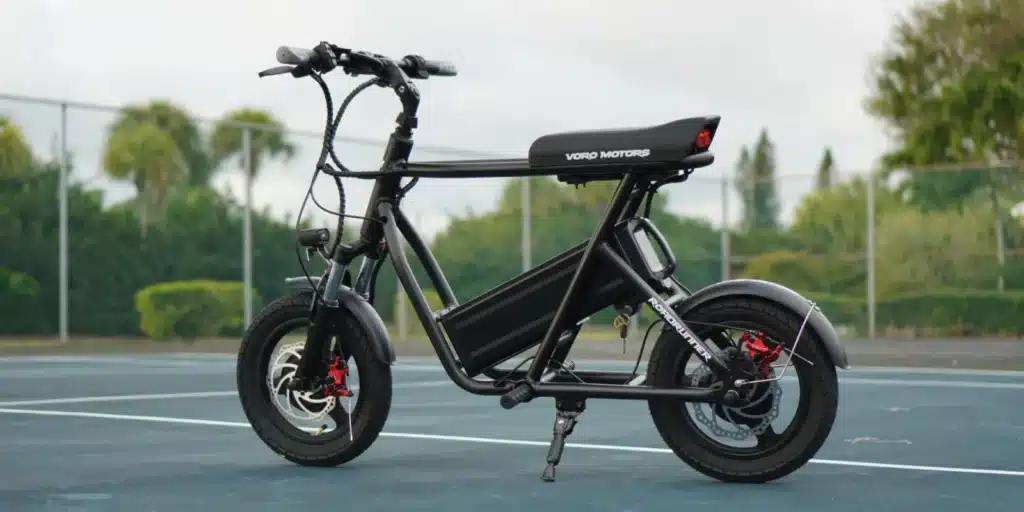
My first question would be “what is this vehicle legally?”, not “how fast does it go?”. Ask for the model specification, applicable age limit and permitted location. A small frame or an electric motor does not establish that a device is a toy, an ordinary bicycle or road-legal transport.
The February police report’s practical warning is clear: public roads are not a place for children to experiment with recreational motorbikes. I would arrange an appropriate supervised activity rather than treat a quiet residential street as a substitute track.
The Mandate for Close Supervision
I’d agree the location, boundaries and return time before any permitted ride, and check that the equipment actually fits the rider. Supervision is a responsibility, not an exemption: an adult watching cannot make a prohibited vehicle or route legal.
For an organised activity, I’d ask the operator to confirm the age and size rules, permitted vehicle, supervision and emergency arrangements before paying. “Parents accept responsibility” is not an answer to whether the activity is authorised for that child.

Age, Licensing, and Legal Requirements for Vehicle Operation in Dubai
Keep cycle eligibility separate from a motor-vehicle driving licence. Dubai’s cycle resolution prohibits riding electric bikes and standing electric scooters under 16. Children under 12 riding pedal cycles must be accompanied by a cyclist aged at least 18. The standing-scooter permit also has driving-licence exemptions, explained in our Dubai e-scooter permit guide.
For Dubai light-vehicle training, RTA’s current service page says a traffic file can be opened at 17 years and six months, with the licence issued after passing the required tests and turning 18. It lists motorcycle eligibility separately at 17. These category-specific requirements are not permission for an unlicensed child to take a recreational quad onto a public road.
The Dangers of Minors Operating Recreational Vehicles on Public Roads
I would rule out a public-road trial immediately. A quiet street can still bring junctions, reversing cars and pedestrians into the same space as the rider. The sensible decision is to choose an authorised, age-appropriate setting—not to see how long a child can ride before someone objects.
The police warning reported in February focuses on the risks to the child and other road users. I would not mistake confidence on a driveway for readiness to handle public traffic.
Confidence is not a licence or a route approval
“They know how to ride” answers only one question. It does not establish the legal age, vehicle category, approved location or ability to manage the surroundings. I’d check each requirement independently before deciding that a ride should happen.
I would not use a broad claim about every teenager’s brain to explain these rules. The practical boundary is enough: the right age, permitted equipment, an authorised location and the required supervision. None should be skipped because the rider seems confident.

High Risk of Accidents, Injuries, and Fatalities
The consequences of accidents involving minors on recreational vehicles are often severe and can be irreversible. Such incidents can result in serious injuries, including head trauma, spinal injuries, fractures, and even fatalities, not only for the child rider but also for innocent pedestrians, cyclists, or occupants of other vehicles.
The February report attributes a warning about serious accidents and fatalities to Dubai Police. My recommendation is straightforward: do not use public roads as a recreational practice area. A helmet is essential equipment, not permission to ignore the vehicle and location rules.
Designated Safe Zones and Legal Use for Recreational Vehicles by Minors
I’d book only an activity whose operator can confirm it is authorised for the child’s age and the exact vehicle. Do not assume that every private track, desert site or supervised session is legal for every minor. “Off-road” and “allowed” are different things.
The reported police advice is to keep recreational bikes in designated closed areas under direct supervision. That is not a waiver of age restrictions, operator requirements or vehicle-specific rules.
Understanding “Designated Closed Areas”
A fenced-off space is not automatically an approved riding venue. I’d ask who operates it, what activity is permitted and whether the particular child and machine qualify. A private car park, pavement or quiet residential street is not a substitute for a confirmed authorised facility.
I’d also check how riders are separated, how the operator controls the session and what happens if a rider needs help. If the venue cannot explain those arrangements clearly, I would choose somewhere else. Supervision alone does not prove a location is authorised.
Best Practices for Safe Recreational Vehicle Use
Even within approved designated areas, safety must remain the top priority when children are using recreational vehicles. Parents and guardians should implement a practical checklist of best practices:
- Protective equipment: Use the helmet and other equipment required for the activity and vehicle; check the fit before starting.
- Continuous Adult Supervision: An adult must be present and actively supervising the child at all times. This aligns directly with Dubai Police recommendations for all recreational activities involving minors.
- Age and Size Appropriateness: The vehicle should be appropriate for the child’s age, size, and skill level. Overpowered vehicles are extremely dangerous.
- Vehicle-Specific Safety Guidelines: Adhere to the manufacturer’s safety instructions and any rules set by the designated area’s operators.
- No Stunt Driving: Prohibit dangerous stunts or reckless driving.
- Basic Training: Ensure the child has received basic safety training on how to operate the vehicle responsibly.
Adherence to these practices, combined with strict adherence to legal age requirements and designated zones, is essential for a safe recreational experience.
How to Report Violations and Ensure Public Safety in Dubai
I’d report a dangerous situation without approaching or following the rider. Give the authorities a clear location and description. Do not put yourself, a child or another road user at risk to collect footage.
Dubai Police lists 999 for emergencies and 901 for other enquiries. Police Eye is also available through its official services. Use the emergency channel when someone faces immediate danger rather than waiting for an app submission to be read.
The 901 Helpline: Direct Reporting for Non-Emergencies
For reporting traffic violations, suspicious activities, or instances of minors driving illegally that do not constitute an immediate life-threatening emergency but still pose a significant risk, the Dubai Police 901 non-emergency helpline is the appropriate channel. This dedicated line ensures that such concerns are directed to the relevant authorities for investigation and action without diverting critical emergency resources.
Calling 901 allows citizens to provide details of the incident, including location, time, and any identifying information about the individuals or vehicles involved. It is confirmed as the official non-emergency contact for Dubai Police.

“Police Eye” App: Digital Reporting for Timely Action
For those who prefer a digital reporting method, the “Police Eye” feature within the official Dubai Police app offers a convenient and effective solution. This smart service allows citizens to easily and discreetly report violations directly from their smartphones. Users can upload photos or videos, along with detailed descriptions, to provide comprehensive information to the police.
Police Eye is a feature of the official Dubai Police service, not a separate promise of an immediate response. I’d provide accurate details and any material collected safely, without publishing identifying footage of children on social media.
My verdict
I would spend the effort on the right vehicle and an authorised place to use it, not gamble on a quiet road. The fee distinction matters for accuracy; it does not make the underlying risk trivial. Check the age, category and location before buying or booking, and get written confirmation from the operator when arranging a supervised activity.
This article provides general information and should not be considered legal advice. Always consult with a legal professional for specific guidance regarding UAE laws and individual circumstances.