The United Arab Emirates is at a pivotal juncture in its sustainability journey. Current UAE Sustainability Trends are influencing not only government strategy but also corporate priorities nationwide. Beyond mere ambition, the nation is now rapidly embedding environmental, social, and governance (ESG) principles into its economic and institutional infrastructure. For C-suite executives and business leaders,…
The United Arab Emirates is at a pivotal juncture in its sustainability journey. Current UAE Sustainability Trends are influencing not only government strategy but also corporate priorities nationwide. Beyond mere ambition, the nation is now rapidly embedding environmental, social, and governance (ESG) principles into its economic and institutional infrastructure. For C-suite executives and business leaders, this isn’t just about compliance; it’s a profound redefinition of operating models, capital allocation, and market competitiveness. By 2026, a series of clear sustainability trends will coalesce, demanding proactive engagement and offering significant opportunities for strategic growth.
This article will illuminate the five defining sustainability trends set to transform the UAE business landscape in 2026: mandatory climate reporting, mainstream sustainable finance, accelerated energy transition, green urban development, and the expanding circular economy. We will explore how these shifts, far from being obligations, present a roadmap for businesses to innovate, gain a competitive edge, and secure long-term value in a rapidly evolving market.
1. Mandatory Climate Reporting & UAE’s Emerging Carbon Market
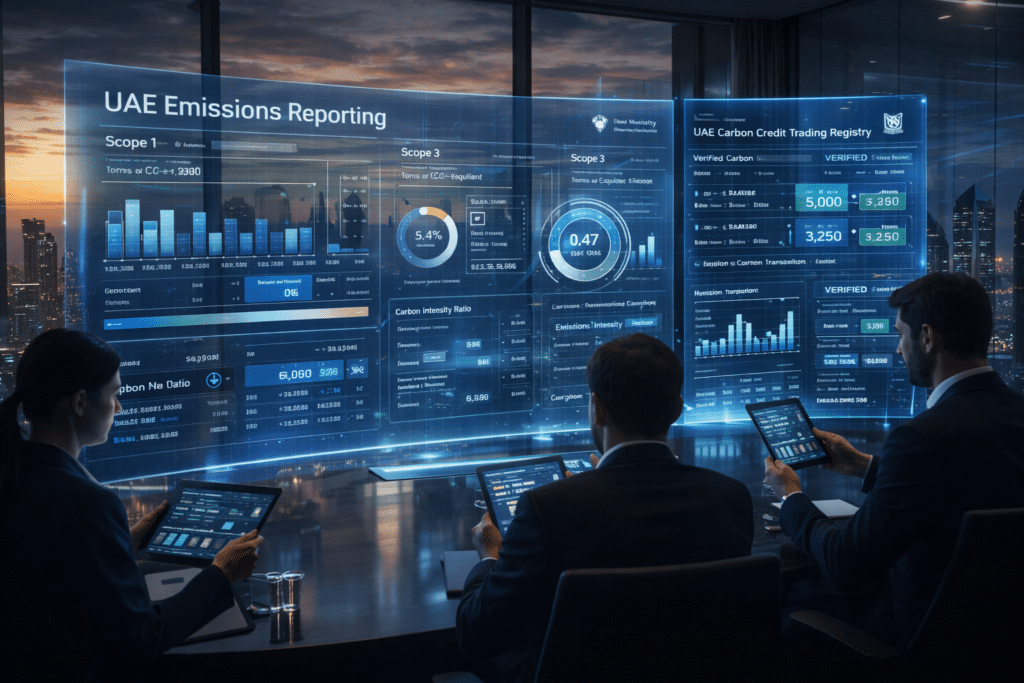
The UAE’s commitment to climate action is solidifying with a foundational regulatory shift: the introduction of mandatory climate action frameworks. At the forefront of this is Federal Decree Law No. 11, a transformative piece of legislation driving structured emissions measurement, reporting, and oversight [1]. This marks a significant pivot from voluntary disclosure to verifiable data, compelling businesses to adopt robust data collection and management practices for ESG credibility.
By 2026, this regulatory push will catalyse the emergence of a national carbon ecosystem. We anticipate the development of formal carbon credit registries and market mechanisms, providing avenues for businesses to not only track their carbon footprint but also to engage in market-based instruments for emissions reduction. Understanding these new regulations and establishing robust data infrastructure will be paramount for businesses looking to navigate the evolving landscape of UAE climate reporting and participate effectively in the nascent UAE carbon market development. This structured approach to environmental accountability ensures that the UAE’s sustainability commitments translate into measurable action across all sectors.

2. Sustainable Finance Goes Mainstream: Reshaping Capital Strategy
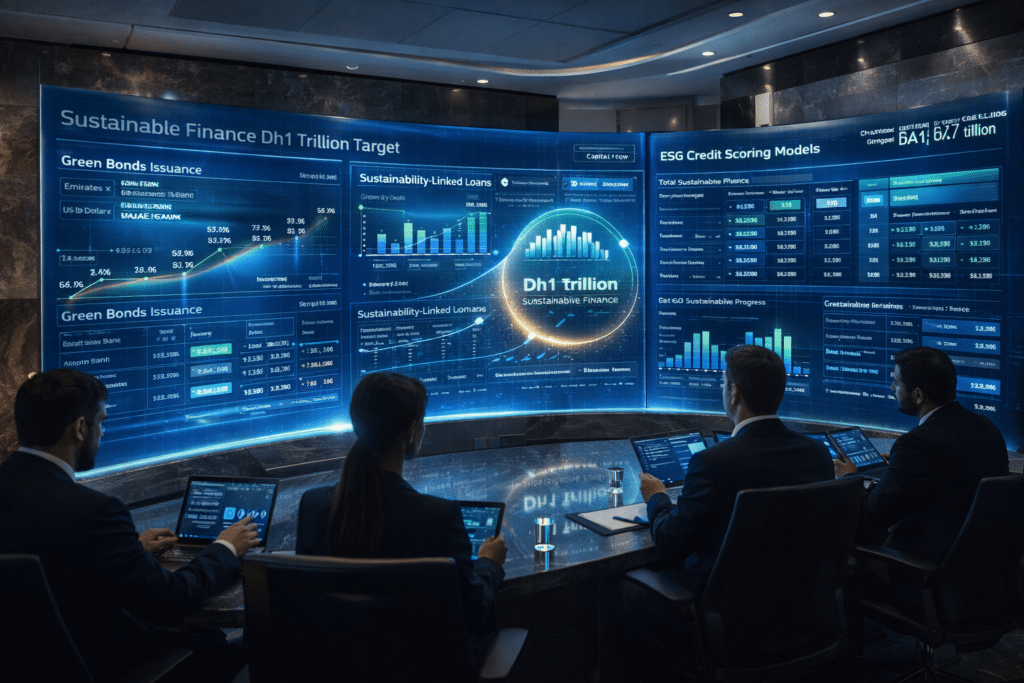
Sustainable finance is no longer a niche concept in the UAE; it is rapidly becoming a core component of capital strategy, reshaping how businesses access and deploy funding. Driven by the ambitious pledges made at COP28, the UAE financial sector has set a target of mobilising Dh1 trillion ($272 billion) in sustainable finance by 2030 [2]. This monumental goal underscores the nation’s dedication to embedding ESG considerations into its economic fabric.
The mainstreaming of sustainable finance was notably reinforced at Abu Dhabi Finance Week 2025, where discussions centred on integrating ESG performance into credit assessment and risk evaluation [3]. Consequently, access to capital and funding costs for corporates are increasingly influenced by their sustainability credentials. Financial instruments such as green bonds UAE and sustainability-linked loans UAE are gaining traction, offering attractive financing options for projects with clear environmental and social benefits. Businesses must proactively embed ESG into their financial structures, preparing for a future where sustainable finance in the UAE dictates capital allocation and investment decisions. Adhering to frameworks from entities like the UAE Sustainable Finance Working Group will be crucial for positioning businesses favourably.

3. Accelerated Energy Transition: Powering the Future with Renewables
The UAE continues its rapid advancement in clean energy, marked by significant capital investment and the integration of advanced technologies like artificial intelligence and green hydrogen. This accelerated energy transition in the UAE is fundamentally reshaping the nation’s power landscape. Industry forecasts project a robust 14% annual growth rate for renewable energy generation between 2025 and 2027, with solar photovoltaic power in the UAE emerging as the dominant driver, expected to account for nearly 70% of the renewable mix by 2027 [4].
National installed renewable capacity is projected to surge from 7.29 GW in 2025 to an impressive 12.42 GW by 2030 [5]. Anchoring this growth are flagship developments like the Mohammed bin Rashid Al Maktoum Solar Park, which exemplifies the scale and ambition of UAE renewable energy targets. Businesses, especially those with energy-intensive operations, must explore opportunities to invest in or transition to renewables in the UAE. This trend offers insights into operational complexities and guides on implementing large-scale renewable energy projects, addressing the critical need for increased clean energy deployment. The focus on green hydrogen UAE also signals future opportunities in sustainable fuels and industrial decarbonization.
4. Green Urban Development: The New Standard for Built Environments
Urban development stands as a leading area for sustainability in the UAE, with green building standards becoming the new benchmark for competitive assets. Certifications such as LEED (Leadership in Energy and Environmental Design) and Dubai’s indigenous Al Sa’fat Gold certification are no longer just aspirational; they are increasingly mandatory strategies. This shift addresses the pressing need for sustainable building practices and aims to overcome the environmental impact of traditional urban development.
Statistics highlight this commitment: nearly six in ten buildings in Dubai were compliant with green building standards by mid-2023, reflecting a widespread adoption of sustainable construction practices [6]. Furthermore, the UAE boasts over 1,500 LEED-registered and certified projects, the highest number in the Middle East, solidifying its leadership in green urban development UAE [7]. For developers and businesses in the real estate sector, integrating energy efficiency, water stewardship, and community well-being into design is becoming a prerequisite. This trend fosters a holistic approach to creating built environments that are not only economically viable but also environmentally responsible and socially beneficial.

5. Circular Economy in Action: The Expanding Single-Use Plastic Ban
The UAE’s commitment to a circular economy is gaining significant momentum, particularly through stringent policies on single-use plastics. By 2026, the nation will implement the most comprehensive phase of its nationwide single-use plastic restrictions, extending bans across a wider range of consumables [8]. This significant policy shift will compel businesses to fundamentally rethink packaging, procurement, and customer engagement strategies.
The UAE single-use plastic ban reflects a broader consumer trend towards sustainable alternatives and addresses the critical pain point of plastic waste’s environmental impact. For businesses, this means investing in innovative sustainable packaging solutions, re-evaluating supply chains, and educating consumers on eco-friendly choices. This proactive approach to the UAE plastic ban is not merely about compliance; it’s an opportunity to align with evolving consumer preferences and demonstrate leadership in the circular economy in the UAE. Businesses that adapt early will gain a significant competitive advantage by catering to an increasingly environmentally conscious populace.
Embracing ESG as a Strategic Operating System: Key Takeaways for UAE Businesses
The convergence of these five trends signals a profound shift: ESG is no longer an optional add-on but an embedded, strategic operating system for successful organisations in the UAE. These regulatory-driven sustainability initiatives and the mainstreaming of sustainable finance are not compliance burdens; they are potent strategic growth opportunities. Businesses that excel will treat ESG as an integrated framework built on verifiable data, long-term investment, and a clear understanding of economic impact and potential ROI.
For UAE businesses, this means:
- Proactive Regulatory Adaptation: Establish robust systems for mandatory climate reporting and ensure readiness for an active carbon market.
- Strategic Capital Alignment: Align financial strategies with sustainable finance principles to unlock green funding opportunities and improve access to capital.
- Innovation in Operations: Invest in renewable energy solutions and circular economy practices to enhance operational efficiency and reduce environmental footprints.
- Sustainable Infrastructure: Integrate green building standards into all new developments and retrofits, enhancing asset value and environmental performance.
By embracing a strategic ESG approach, businesses can transform these shifts into drivers of ambition and competitiveness, securing a resilient and prosperous future in the UAE’s evolving economic landscape.
Galadari Brothers: A Blueprint for Proactive Sustainability Leadership
Galadari Brothers exemplifies how a leading UAE conglomerate can proactively align with the nation’s sustainability trends, transforming mandatory shifts into strategic advantages and setting a benchmark for ESG strategy in UAE businesses. Their commitment to corporate sustainability UAE is evident through several key initiatives:
- Transparency and Reporting: Galadari Brothers publishes annual Sustainability Reports and implements detailed GHG monitoring across its operations, demonstrating exceptional transparency and readiness for mandatory climate reporting.
- Green Finance Access: The conglomerate has successfully accessed sustainability-linked loans and other green financing mechanisms, showcasing a strategic understanding of ESG finance and its benefits.
- Renewable Energy Integration: Operational investments include the installation of solar energy panels across various facilities, actively supporting the UAE’s renewable energy transition and reducing its carbon footprint.
- Sustainable Built Environments: Their upcoming sports arena complex is being developed with the ambitious goal of achieving Al Sa’fat Gold certification, integrating energy efficiency, water stewardship, and community well-being directly into its design.
- Circular Economy Leadership: Galadari Brothers has proactively phased out single-use plastics from product consumables in its F&B restaurants and cafes, aligning early with and even exceeding the most stringent phase of the national plastic ban.
Through these actions, Galadari Brothers demonstrates a clear, actionable model for ESG implementation in the UAE case study, proving that sustainability is not just good for the planet but also a powerful driver of business success and leadership.
Conclusion
The UAE’s sustainability landscape in 2026 marks a decisive shift from aspiration to tangible execution across regulation, finance, infrastructure, and consumer policy. The five defining trends—mandatory climate reporting, mainstream sustainable finance, accelerated energy transition, green urban development, and the expanding circular economy—collectively indicate that ESG is now inextricably embedded in the nation’s economic framework.
For business leaders, this means that proactive engagement and strategic integration of ESG principles are no longer optional. They are core drivers of ambition, innovation, and competitiveness. Businesses that strategically adapt will not only ensure compliance but also unlock significant opportunities for growth, enhanced reputation, and long-term value creation in an increasingly sustainable UAE.
Disclaimer: This article provides general information and strategic insights on sustainability trends in the UAE for business leaders. It is not intended as financial, legal, or specific investment advice. Consult with relevant professional advisors for specific business decisions.
References
- UAE Ministry of Climate Change and Environment. (N.D.). Federal Decree Law No. 11. UAE Government.
- Ministry of Finance, UAE. (2023). UAE Pledges Dh1 Trillion in Sustainable Finance by 2030, Accelerating Green Transition.
- Abu Dhabi Global Market (ADGM). (2025). Abu Dhabi Finance Week 2025: Green Finance at the Forefront.
- International Renewable Energy Agency (IRENA) & UAE Ministry of Energy. (2024). UAE Renewable Energy Outlook: 14% Annual Growth, Solar Dominance by 2027.
- Federal Electricity and Water Authority (FEWA), UAE. (2024). National Installed Renewable Capacity: Projections 2025-2030.
- Dubai Municipality. (2023). Dubai Municipality Report: Green Building Compliance Soars to 60%.
- U.S. Green Building Council (USGBC). (2024). UAE Leads MENA in LEED Certifications.
- UAE Ministry of Climate Change and Environment. (2025). UAE’s Phased Single-Use Plastic Ban: A Comprehensive Guide for 2026.