

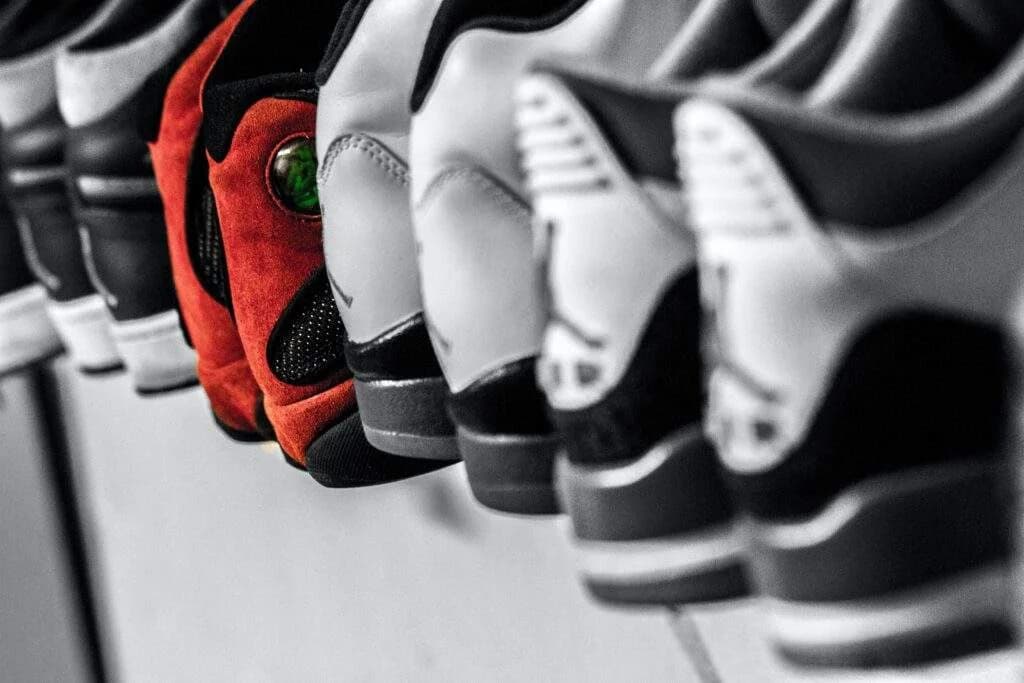
A UAE sneaker-buying checklist covering sellers, exact style codes, verification limits, condition, returns and the evidence to keep if something is wrong.
A copied style code can look convincing. A genuine pair can have an imperfect stitch. Buying authentic sneakers is therefore about building a chain of evidence, not finding one magic detail that separates every real shoe from every fake.
Start with who is selling, exactly what is offered and what happens if it arrives wrong. Then inspect the pair itself. These 15 checks reduce avoidable risk; they are not a remote authentication certificate or a guarantee that every counterfeit will be spotted.

1. Identify the actual seller
A brand’s own store and an independent marketplace are different buying routes. On a marketplace, establish who supplies the pair and who handles a complaint. Do not assume a mall address, familiar logo or polished Instagram account proves brand authorisation. Reach the retailer through its genuine website, not a payment link sent by an unfamiliar account.

2. Record the exact model, edition and style code
A name such as White Cement can refer to different release years and adult or children’s versions. Compare the full code and size category with the brand’s product page. For example, Nike identifies the 2025 adult White Cement with style FV5029-100. That helps identify the product being offered; counterfeiters can copy the same code.

3. Ask for photographs of the actual pair
Catalogue images show the design, not the condition of the seller’s shoes. Request clear photographs of both shoes, size labels, outsole, heel, toe, insoles where accessible and the box label. For a private sale, ask for a new photograph with a dated handwritten identifier. It is useful evidence of possession, not conclusive proof of authenticity.

4. Compare like-for-like materials
Use the same edition and size category as the reference. Genuine sneakers can use synthetic materials, and a different leather texture does not settle the question on its own. Compare the published specification and several details together. Avoid the shortcut that every expensive shoe must feel like soft premium leather.

5. Treat stitching as one clue, not a verdict
Inspect seams, alignment and construction, but do not turn one loose thread into a definitive fake diagnosis. Manufacturing variation and wear can affect genuine pairs. Conversely, neat stitching does not make a counterfeit genuine. Significant discrepancies should prompt further review or a decision not to buy.

6. Check branding against the right release
Heel branding, tongue labels and logo treatment can change across retros. A photograph of a different year can produce a false alarm. Our White Cement design-history guide explains why the release identity matters; confirm the exact live URL and product reference when comparing a pair.

7. Read the box and shoe labels together
Check size, model, colour code and label consistency. Establish whether the box is original, a replacement or missing. A mismatched box changes what you are buying, but a damaged or replacement box does not automatically make genuine shoes fake. A matching label can also be reproduced.

8. Compare the total price, not a suspicious-price rule
A low price deserves investigation, but no universal AED threshold establishes authenticity. Sales, condition and size can change prices. Compare the same code and condition with identifiable sellers. Include delivery, checkout charges and any applicable import costs, rather than deciding from the advertised amount alone.
For the separate question of where and how to buy, use our Dubai retail, draw and resale buying guide. Compare the purchase route and delivered total there, then use this checklist to assess the exact seller and pair; neither a shop directory nor a cheap price authenticates an individual shoe.

9. Inspect wear, repairs and missing parts
Look at heel drag, sole separation, creasing, insoles and signs of repainting or replacement components. Ask what “new”, “tried on”, “used” or “restored” means in that listing. An authentic shoe in poor condition is still a poor purchase if the description concealed the damage.
Unworn is not a promise of future wearability. In its current sneaker-condition guidance, checked on 31 October 2026, StockX warns that pairs five years or older may have structural weakness and reduced durability, and does not guarantee their long-term integrity if worn. That is a caution, not a universal five-year failure rule or proof that a newer pair is sound. Our buying criterion is to decide whether the pair is for wearing or display before accepting a “deadstock” description. For an older pair intended for wear, establish the release or production identity, request current actual-pair condition photographs and ask what the seller specifically represents about its condition. An authenticity assessment and an unworn label do not answer how the materials will hold up in use; photographs are not a physical durability test.

10. Do not use smell as an authenticity test
Odour can be affected by materials, storage, cleaning and age. It is not a reliable universal real-versus-fake test. A strong unexpected smell may be a reason to question storage or condition; it is not enough to certify or condemn the pair.

11. Understand the verification route
GOAT’s verification policy says methods can include digital checks, in-hand examination and machine learning, and that some products are verified without physical examination. StockX’s seller-verification explanation distinguishes verified marketplace fulfilment from Live Marketplace orders, which it says are not currently eligible for verification. Read the route for the actual order; do not assume every platform sale follows one identical process.

12. Keep authentication evidence in perspective
A removable tag, app result or receipt can support a review but can also be copied, transferred or misunderstood. Check who issued it, which exact pair was assessed and what the service promises if it is wrong. A photo-based opinion is not the same as a physical examination. StockX is a marketplace with order-related verification, not a blanket certificate you can infer from someone showing a green tag.

13. Read the remedy before you pay
Find the process for a suspected counterfeit, wrong item, undisclosed damage and size change. These may have different conditions. Check the reporting deadline, required evidence, return authorisation and whether a remedy is a refund or account credit. GOAT directs authenticity and description complaints to its Buyer Protection Policy; save the policy applicable to your purchase rather than relying on a social-media summary.
As checked on 28 October 2026, GOAT’s Buyer Protection Policy says to report an authenticity, wrong-item, description or missing-feature issue as soon as discovered and within 30 days of receipt. If a claim qualifies and a return label is issued, the item must be shipped within three business days of receiving that label. Approval brings GOAT Credit for the total purchase; request an original-payment-method refund when contacting support if that is what you want. This is a policy route, not an automatic approval.
The UAE-specific trap is using a freight forwarder to obtain a pair: GOAT excludes purchases received through one from that Buyer Protection Policy. Its separate standard-return terms also exclude used and final-sale items, among other categories, and normally return eligible purchases as credit less shipping. A fit change and a suspected counterfeit are therefore different claims. I would establish the delivery route and remedy before payment rather than rely on the word “verified” alone.

14. Use a traceable transaction and save the listing
Keep the seller identity, product description, photographs, invoice, payment record and written promises. Stay within the platform’s approved checkout if its protection depends on that process. Do not move a transaction into private messages just because someone offers a discount or says the platform is temporarily broken.

15. Pause when the evidence does not add up
Pressure to pay immediately is not a reason to skip checks. If the seller will not show the pair, explain a mismatch or provide written terms, walk away. An early pair is not automatically counterfeit, but a claim of advance access needs stronger evidence than a countdown and a celebrity photograph.

A UAE buyer’s pre-payment checklist
| Save this | Why it matters |
|---|---|
| Exact code, size scale and condition | Prevents a dispute about which product was ordered. |
| Seller identity and actual-pair photographs | Connects the description with the party taking payment. |
| Final checkout total and delivery terms | Makes price comparisons meaningful. |
| Verification route and complaint policy | Shows what was promised and how to raise a problem. |
| Invoice and transaction record | Preserves evidence if the item does not match the agreement. |
On arrival, compare the shoes with the saved listing before wearing them or removing anything the return terms require. Photograph discrepancies and contact the seller or platform through its official support route. Describe what you can demonstrate rather than making an unsupported public accusation.

How to use the comparison images in this guide
The retained images illustrate packaging, labels and visual comparisons. They are not a universal authentication standard, and historical prices or labels shown in an infographic are not current UAE quotations. A graphic marked “real” and “fake” does not prove the origin of a different pair offered to you. Use current manufacturer references for the exact edition and seek a suitably scoped assessment when the evidence remains uncertain.
The best purchase is not necessarily the rarest one. It is the right pair, accurately described, at a total price you understand, from a seller whose identity and remedy you can establish.


