Creatine cognitive growth is no longer a fringe idea — it’s now a powerful, evidence-backed tool for sharpening your brain. In 2025, cognitive scientists and neurologists are united in praising creatine’s role beyond the gym. Originally known as a muscle-building supplement, creatine is now emerging as one of the most reliable nootropics for mental clarity,…
Creatine cognitive growth is no longer a fringe idea — it’s now a powerful, evidence-backed tool for sharpening your brain. In 2025, cognitive scientists and neurologists are united in praising creatine’s role beyond the gym. Originally known as a muscle-building supplement, creatine is now emerging as one of the most reliable nootropics for mental clarity, memory, and resilience under pressure.
Where caffeine may jolt you awake and leave you crashing, creatine supports the brain’s energy cycle. It’s consistent, long-lasting, and safe for daily use — helping you stay mentally sharp whether you’re burning through exam notes, leading boardroom strategy, or navigating a sleep-deprived week.
How Creatine Fuels Brain Cells
Creatine is naturally made in the body and consumed in meat and fish. About 5% of it is stored in the brain, where it helps maintain ATP — the energy molecule your neurons rely on. Unlike stimulants, creatine doesn’t force your brain into overdrive. It supports metabolic processes that enhance mental stamina from the inside out.
Several clinical trials have confirmed creatine’s benefits for:
- Short-term memory
- Mental clarity under stress
- Reduced mental fatigue
- Faster information processing
- Enhanced mood and focus under sleep deprivation
This isn’t hype. MRI scans show enhanced bioenergetics in the brain following creatine supplementation — a literal fuel-up for your grey matter.
Groundbreaking Trials and Findings
Multiple studies in Europe, Japan, and the US have shown consistent findings: cognitive gains from creatine supplementation in healthy adults. In one landmark trial published in Psychopharmacology, participants given 5g of creatine daily for 6 weeks significantly improved in memory recall and reaction time tests versus a placebo group.
Creatine was also shown to reverse mental fatigue in sleep-deprived subjects. Military simulations using soldiers under stress found creatine improved decision-making speed and working memory, helping maintain performance in high-stakes situations.
One 2023 study from the University of Tokyo focused on MRI scans of older patients and found that consistent creatine use improved blood flow and neuron activation in the prefrontal cortex — the area responsible for executive function and planning.
Real-World Creatine Brain Boosters
Today’s creatine users include:
- Surgeons preparing for long shifts
- Students in exam periods
- Gamers competing professionally
- Entrepreneurs managing multi-stream workloads
- Senior adults preserving cognitive health
The common thread? Each is trying to keep their mind firing on all cylinders for longer — without crash-inducing stimulants.
In a 2024 interview with tech entrepreneur Layla Rahmani, she said: “I replaced my second coffee with creatine and my brain fog disappeared within weeks.”
Creatine vs Caffeine: The Smarter Choice
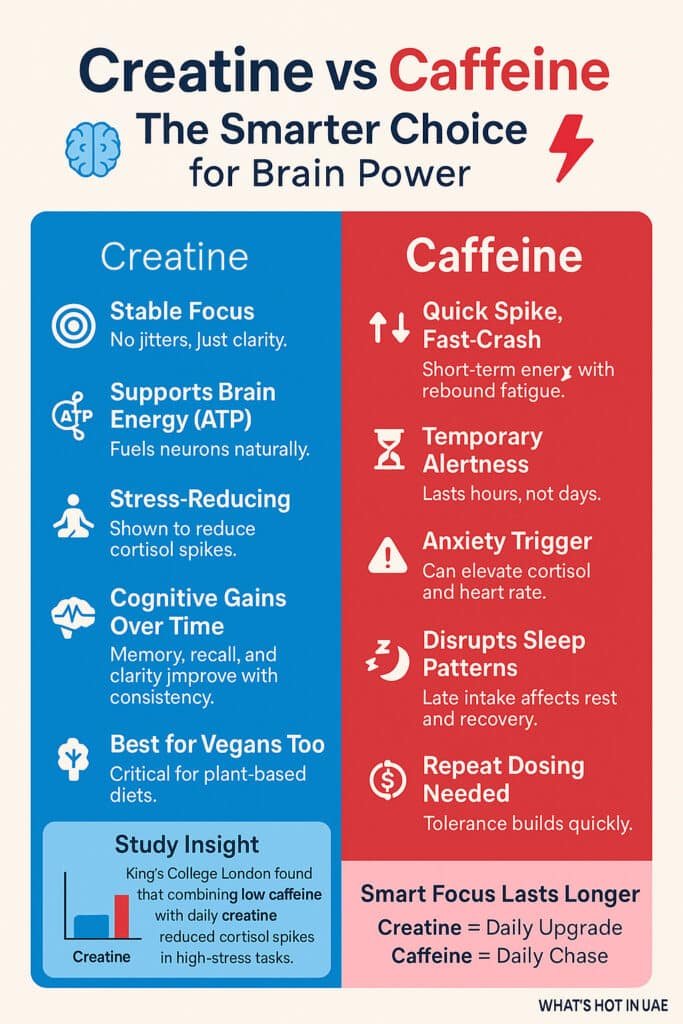
Creatine doesn’t deliver a jolt. Instead, it provides a baseline mental upgrade without anxiety or energy crashes. Where caffeine gives you a rollercoaster, creatine provides steady, high-performance focus.
A study from King’s College London found that combining low caffeine with daily creatine reduced stress-related cortisol spikes in participants, making it the smarter choice for performance under pressure.
Vegan? You’ll Benefit Even More
If you follow a plant-based diet, you’re likely deficient in creatine. Since it’s only found in animal products, vegans and vegetarians naturally have lower brain creatine levels. That’s why supplementation provides even more dramatic cognitive returns for these groups.
Studies show that vegans supplementing with creatine improve in:
- Logical reasoning tasks
- Working memory scores
- Mental fatigue resistance
In some trials, vegan participants outperformed meat-eaters after supplementing, despite starting with lower baselines. This makes creatine one of the most essential supplements for plant-based individuals looking to optimise mental performance.
A Day in the Life: Creatine for Cognitive Performance
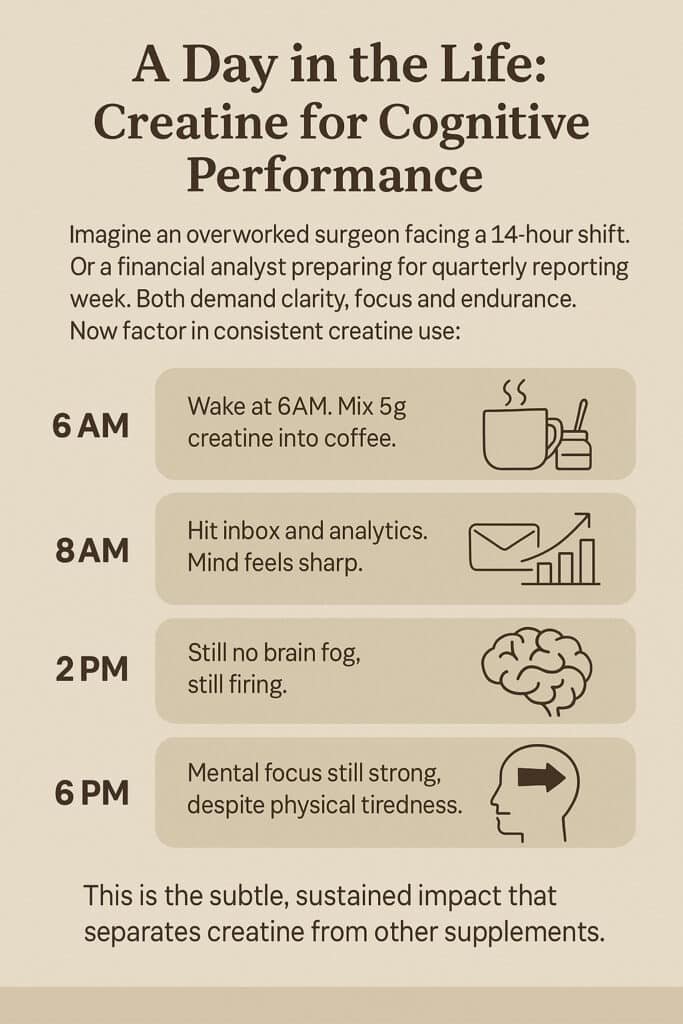
Imagine an overworked surgeon facing a 14-hour shift. Or a financial analyst preparing for the quarterly reporting week. Both demand clarity, focus and endurance. Now factor in consistent creatine use:
- Wake at 6AM. Mix 5g creatine into coffee.
- Hit inbox and analytics. Mind feels sharp.
- 2PM: still no brain fog, still firing.
- 6PM: mental focus still strong, despite physical tiredness.
This is the subtle, sustained impact that separates creatine from other supplements.
Creatine Is More Than Safe — It’s Respected
Despite persistent myths, creatine has no documented adverse effects in healthy individuals at standard doses. The European Food Safety Authority (EFSA), the US National Institutes of Health (NIH), and the NHS all classify it as safe for long-term consumption.
You do not need to cycle off creatine. And water retention concerns are typically limited to the muscles, not the brain. For the vast majority, 3–5g daily is effective, safe, and side-effect-free.
Creatine for Older Adults
In a 2022 paper published by The Journal of Clinical Nutrition, researchers showed that older patients aged 65+ using daily creatine showed measurable improvements in:
- Memory recall speed
- Verbal reasoning
- Mental agility
Ageing brains are slower to recycle ATP, so creatine supplementation helps close the energy gap — keeping minds agile well into retirement years.
Your Daily Cognitive Ritual
Taking creatine for cognitive performance is as simple as it gets:
- 3 to 5g creatine monohydrate per day
- Mix with water, juice, or coffee
- Consume any time of day (consistency matters more than timing)
- Effects build over 3–6 weeks
There’s no need to load, cycle, or complicate your routine. Creatine works through accumulation and consistent use — the way true cognitive change is built.

Creatine for Brain Injuries and Recovery
Emerging research in 2024 from Duke University shows creatine may assist in post-concussion recovery. Patients given creatine after mild traumatic brain injury showed:
- Faster reaction time recovery
- Lower markers of neuroinflammation
- Improved verbal memory retention
While still early, these findings hint at broader neuroprotective benefits.
A Supplement Backed by Time and Science
Unlike fad nootropics or expensive blends promising the moon, creatine has stood the test of decades of clinical scrutiny. Athletes have trusted it for physical performance. Now, the academic, entrepreneurial, and ageing populations are embracing it for cognition.
This isn’t a magic pill. It’s a metabolic backbone. One that powers your brain more efficiently.
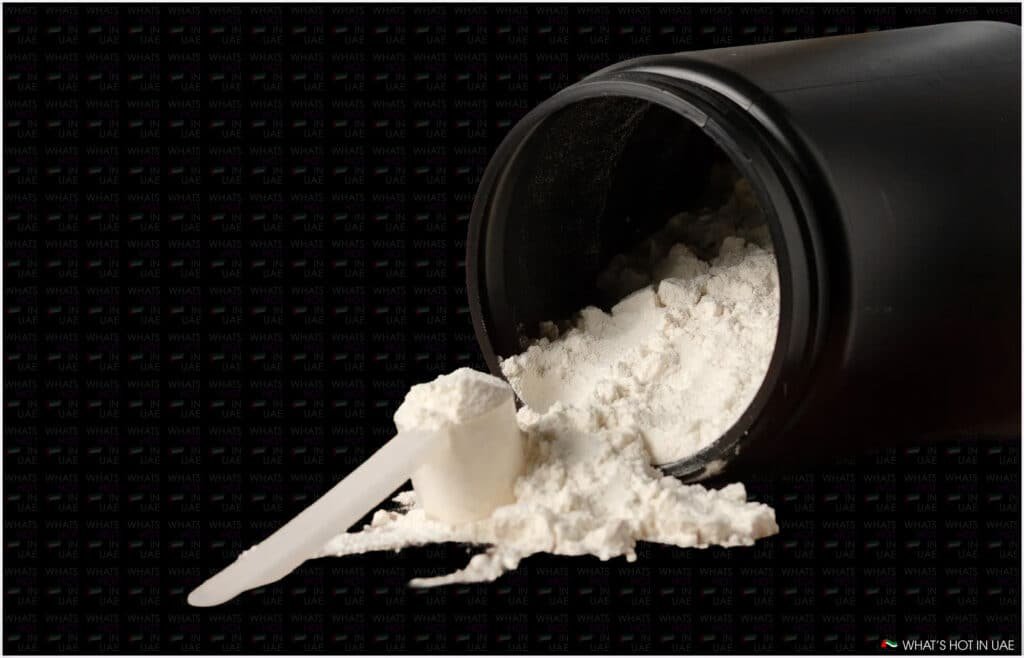
Creatine for Cognitive Growth – Why You Should Start Today
If you’re not using creatine and you care about mental performance, you’re likely under-fuelling your brain. Whether you’re trying to think faster, feel sharper, or simply get through your day without brain fog, creatine may be your most overlooked ally.
It’s one of the cheapest, safest, most reliable ways to boost cognitive function without resorting to risky stimulants or gimmicky products.
Creatine Cognitive Growth Is Real
2025 marks the year creatine became more than a gym supplement. It’s now a daily essential for everyone from university students to C-suite executives. If you want your brain to perform like an elite machine, creatine belongs on your desk as much as it does in your gym bag.
Creatine cognitive growth isn’t a trend. It’s the new baseline for high performance.