Dubai motorcycle enforcement explained: dated reports, separate impound release payments, safe-riding choices and checks before booking a track day.
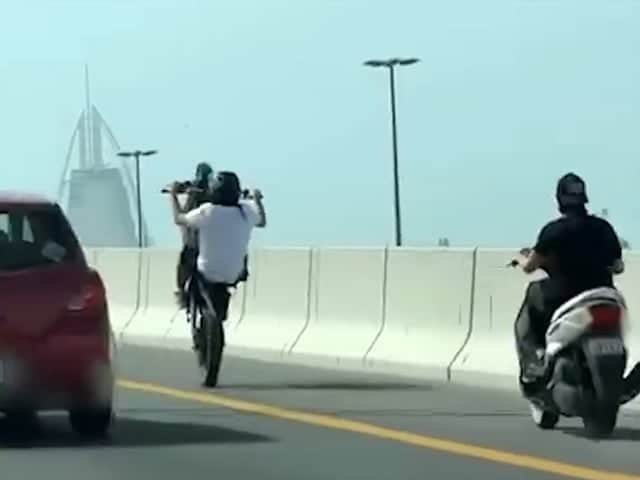
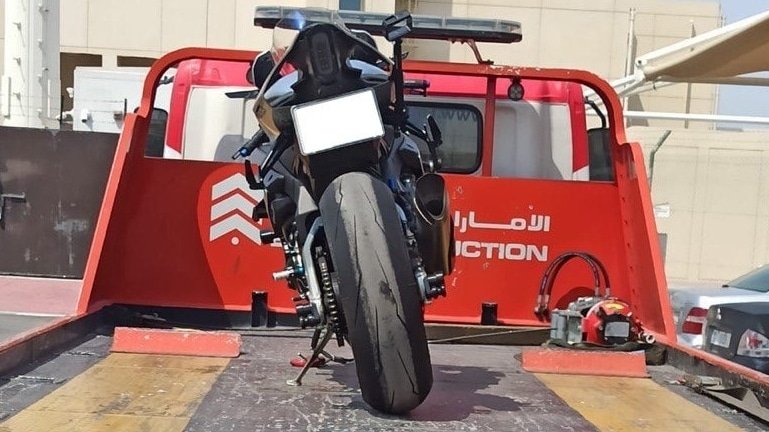
Dubai Police impounded motorcycles after dangerous road stunts in the incident reported on 24 April 2026. This page separates that dated report from the rules and practical checks a rider needs now. A traffic fine, licence points, an impoundment period and a payment required to release the vehicle are different consequences: one headline figure is not the whole bill. Public roads and residential streets are not places to practise wheelies or test a motorcycle’s speed.
TL;DR: Dubai Police are cracking down on reckless motorcycle stunts, impounding bikes and enforcing strict penalties for dangerous riding.
Use this guide to understand the distinctions, prepare questions for the issuing authority and choose an appropriate supervised riding activity. It is not a complete current schedule of every motorcycle offence or transaction-specific legal advice. Our separate e-scooter permit guide concerns a different vehicle category; its permit is not a motorcycle licence.
In This Article
- Safety on UAE Roads: Dubai Police’s Unwavering Commitment
- Understanding Dubai’s Motorcycle Laws and Penalties
- The Perils of Reckless Riding: Why Road Safety Matters for Everyone
- Beyond the Headlines: Fostering a Responsible Motorcycle Culture in Dubai
- Empowering Safe Riding: Parental Guidance and Community Role
Safety on UAE Roads: Dubai Police’s Unwavering Commitment
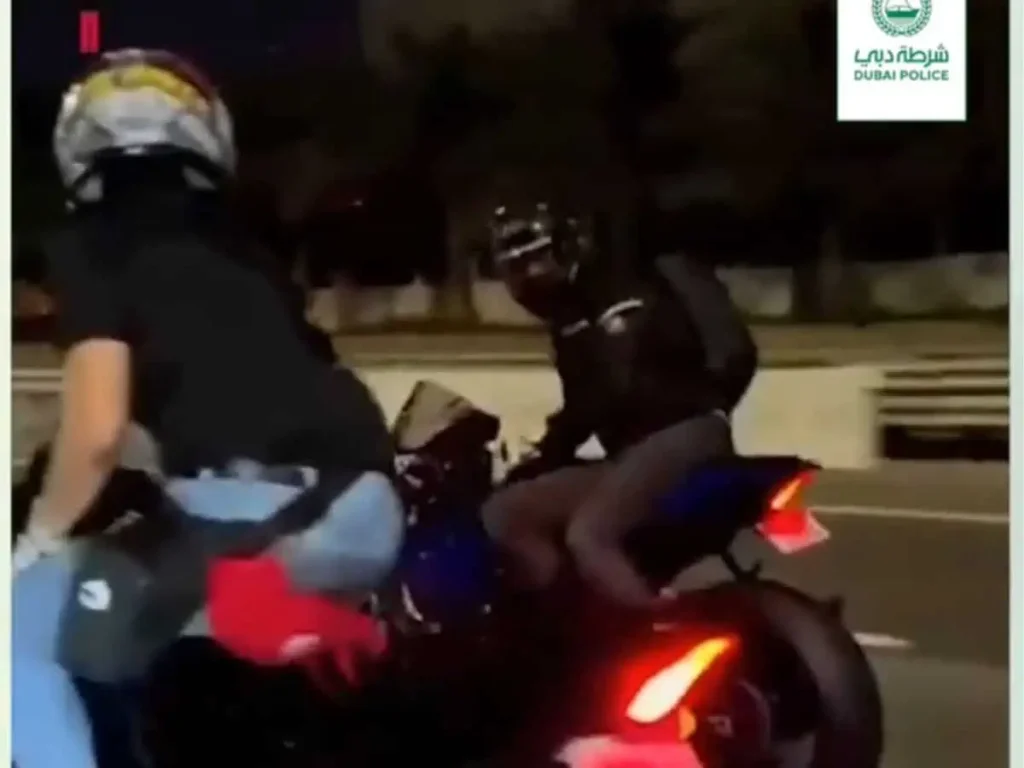
Road safety has emerged as a significant and recent focus for UAE residents, with Dubai Police consistently stepping up enforcement efforts to safeguard the community. This isn’t just about statistics; it’s about the daily lives of families and commuters. Dubai Police are actively stepping in to keep our roads safe, especially against the backdrop of dangerous motorcycle stunts.
Dubai Police are rigorously enforcing road safety, particularly against reckless motorcycle stunt riding, which endangers lives. Recent actions include impounding bikes and taking legal action against offenders. Brigadier Jumaa Salem bin Suwaidan of the General Department of Traffic has reiterated the police’s firm commitment to ensuring compliance with traffic laws for the safety of all road users in the emirate.
The April report supports a specific enforcement account: patrols detected dangerous riding, motorcycles were impounded and riders faced legal action. It does not establish how many Dubai road deaths fell in 2025 or prove that an enforcement campaign caused a particular reduction. The earlier version’s unsourced fatality trend is withdrawn. For a family deciding what riding to permit, the immediate question is whether the rider, vehicle and location are authorised—not whether a general safety statistic sounds reassuring.
The National attributed the April warning to Brigadier Jumaa bin Suwaidan, then identified as director of the Dubai Police Traffic Department. Its report described riding on one wheel, risks to other road users and calls for parental supervision. These are attributed news reports, not an interview conducted by this publication. We have not independently investigated each rider or the eventual outcome of the proceedings.
Understanding Dubai’s Motorcycle Laws and Penalties
Keep the offence and date attached to a penalty. In a September 2023 motorcycle-stunt case reported by Gulf News, police described AED 2,000, 23 traffic points and 60 days’ impoundment, plus a separate AED 50,000 release payment. That is a dated enforcement example, not proof that every April 2026 rider received the same combination. The April account does not itemise the individual charges or final payments.
Motorcyclists in Dubai must adhere to strict traffic laws to ensure safety. Violations like reckless riding, performing stunts such as wheelies, and disregarding traffic signals carry severe penalties, including substantial fines, vehicle impoundment, and potential legal action. These laws are designed to protect both riders and other road users from serious accidents, injuries, and fatalities, reflecting Dubai’s commitment to road safety.
Dubai’s Decree No. 30 of 2023 amended the emirate’s vehicle-impoundment provisions. It is distinct from the federal traffic-offence framework and should not be described as a new 2026 rule. The official English text is a translation; the original Arabic prevails for interpretation and application. Use the actual notice and competent authority for the applicable offence, any later amendments and the release conditions in an individual case.
The decree distinguishes release categories. Article 4(a) specifies AED 100,000 for an unpermitted road race; AED 50,000 for listed cases including dangerous driving; and AED 10,000 for other listed cases including road-stunt gatherings. These are not a menu from which a rider chooses the cheapest label. Several acts can occur in one incident, and police determine the applicable classification. The previous generic AED 3,000/90-day statement did not establish that classification and has been removed.
Before collecting an impounded motorcycle
| Ask for | Why it matters |
|---|---|
| Offence code and recorded conduct | A racing, dangerous-driving or other allegation may engage different provisions. |
| Fine, points and impoundment period | These are separate from a vehicle-release payment. |
| Itemised release conditions and amounts | Do not assume a quoted daily amount substitutes for a mandatory release category. |
| Reference and collection instructions | Confirm who can collect the vehicle and any documents or outstanding conditions. |
Common Motorcycle Violations and Their Consequences
Beyond the headline-grabbing stunts, a range of common motorcycle violations can lead to significant penalties in Dubai. These include, but are not limited to, speeding, dangerous lane weaving, riding without proper safety gear (like a helmet), and operating a vehicle with expired registration. Each violation carries its own set of motorcycle fines in Dubai and traffic black points in the UAE, which accumulate on a rider’s licence.
Do not combine a helmet offence, a speeding bracket, an unlicensed-riding allegation and dangerous driving into a single penalty row. Each concerns different conduct and may involve different procedures. The earlier version gave unsupported or mismatched amounts for those categories. A rider should check the exact code, speed bracket where relevant, licence status and vehicle category against the official notice rather than rely on that catalogue.
A later 8 August 2026 report described a motorcyclist filmed above 290 km/h and an AED 50,000 payment required for release, in addition to other legal procedures. It does not turn that amount into the fine for every speeding motorcycle. Before paying or collecting a bike, request an itemised explanation of the traffic fine, points, impoundment period, release payment and any storage or other charges. Keep the reference number and ask the issuing authority about an apparent mismatch; do not assume two different charge descriptions are duplicates.
The Perils of Reckless Riding: Why Road Safety Matters for Everyone
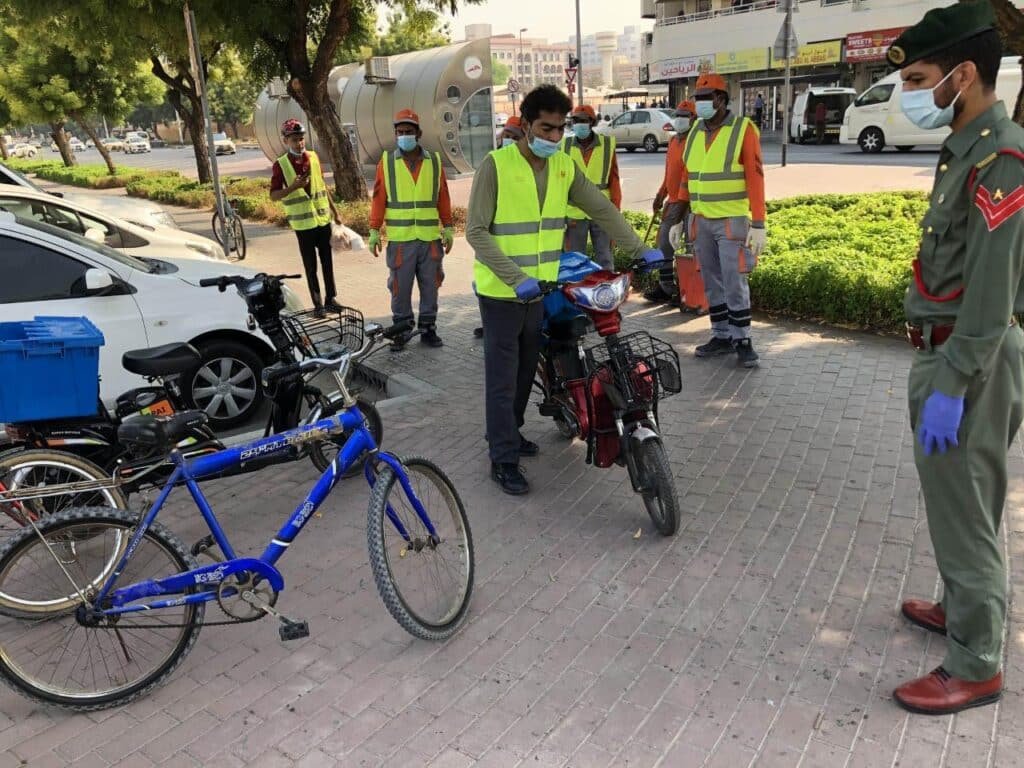
The inherent dangers and high risks associated with reckless motorcycle behaviour extend far beyond the rider themselves. Such actions dramatically increase the potential for serious accidents, leading to severe injuries and even fatalities, impacting not just the individual but also innocent bystanders and other road users. This collective responsibility for road safety comes first in Dubai.
Reckless motorcycle riding, characterised by dangerous stunts and disregard for traffic laws, poses extreme perils. It significantly increases the risk of serious accidents, leading to severe injuries or fatalities for riders and innocent bystanders. Such behaviour undermines overall road safety, making it a critical concern for Dubai Police and the community, who advocate for responsible driving practices to protect all road users.
The consequences of reckless riding are far-reaching, encompassing physical, emotional, and economic tolls. Motorcycle accident risks in Dubai are heightened by high speeds and unpredictable manoeuvres, often resulting in catastrophic injuries such as spinal cord damage, traumatic brain injuries, and multiple fractures, which can lead to lifelong disability. Beyond the immediate victims, families endure immense emotional distress and financial burdens from medical costs and lost income. The community as a whole experiences increased healthcare strain and a diminished sense of security on the roads. Preventing motorcycle fatalities and serious injuries is a collective endeavour that requires constant road safety awareness in the UAE and adherence to traffic laws by all.
A useful safety response does not require pretending we measured local crash risk. Allow enough distance to react, ride predictably and leave room for other road users to make ordinary lane changes. If a group or video encourages manoeuvres that remove that margin, do not join in. No clothing, training session or familiar route makes public-road stunts harmless.
Beyond the Headlines: Fostering a Responsible Motorcycle Culture in Dubai
A constructive alternative starts with a named organiser and an activity that actually matches the rider’s ability. A dealership purchase, a social-media group or a planned route does not itself establish permission for racing or stunts. Ask what training is offered, who supervises it and which riding is allowed before paying for a motorcycle or signing up for an event.
Fostering a responsible motorcycle culture in Dubai involves promoting safe riding practices, encouraging participation in legitimate clubs, and utilising designated riding areas. This proactive approach counters the negative influence of social media stunts, guiding enthusiasts towards legal and enjoyable motorcycling. By engaging with the community and supporting organised events, riders can contribute positively to Dubai’s road safety while pursuing their passion responsibly.
Before joining a group ride, ask about the leader, route, rider eligibility, briefing, speed discipline and response if somebody begins stunting. We have not verified the previous version’s claims that named clubs routinely partner with authorities or run particular charity and training programmes. Do not treat a club name as official approval; assess the actual event and leave if its conduct becomes unsafe.
Our preference is a supervised session with clear eligibility and rules over a road ride organised around filming. That is an editorial safety judgment, not a claim that this publication has accredited a riding club or tested its instruction. Confirm the organiser’s current details directly.
Designated Zones for Motorcycle Enthusiasts in the UAE
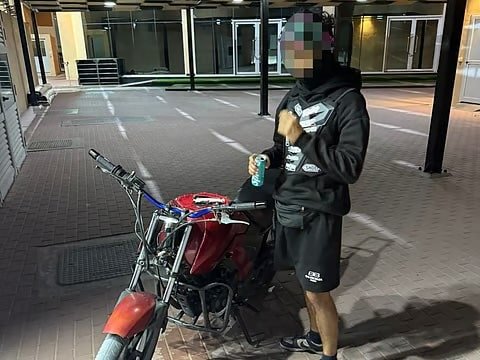
A designated venue is only useful if it permits your exact activity. Circuit riding, off-road tuition, competitive racing and a stunt demonstration are different bookings. A scenic mountain road or an open patch of land is not evidence of permission to ride there, and a public road does not become a practice area because traffic is light.
Treat permission as three separate checks: permission to enter the land or circuit, permission for that motorcycle and rider, and permission for the intended activity. An event may allow controlled laps while prohibiting other manoeuvres. Ask the operator rather than infer stunt permission from the phrase “track day”.
The Dubai Autodrome Bike Track Days page, checked on 9 November 2026, names Furiosa Racing and describes novice, intermediate and advanced sessions plus a training school. It advertises instructor and medical support, not a blanket authorisation for wheelies. The page reviewed does not substantiate the old AED 500–800 full-day price. Ask for the current event, riding group, licence and equipment requirements, bike eligibility, permitted manoeuvres, insurance position and total cost. We have also withdrawn the unsupported recommendation of Jebel Hafeet and Hatta trails as approved stunt zones; obtain location-specific permission before off-road riding.
The Influence of Social Media on Risky Riding Behaviours
The April report described clips sent by residents and a police warning against copying reckless behaviour seen online. That is enough to explain why a viral clip should not be treated as a riding lesson. It does not establish how an individual platform’s algorithm caused a specific rider’s conduct.
Social media significantly influences risky motorcycle behaviours by showcasing dangerous stunts, often without highlighting the severe consequences. This online culture can pressure youth to imitate reckless acts for validation, leading to real-world accidents and legal issues. Counteracting this requires education on digital literacy, promoting responsible riding content, and fostering positive role models within the motorcycle community to shift perceptions towards safety and legality.
Before sharing a clip with a younger rider, discuss what it leaves out: other traffic, the approach and stopping space, failed attempts and legal consequences. A video’s popularity is not evidence that the location is authorised or the manoeuvre is safe. If recording would distract a driver or require someone to leave a safe position, do not make the recording.
Keep the aim practical: a legal place to ride, suitable instruction and no pressure to perform for a camera. A private chat with a young rider about where the bike may be used is more useful than treating likes as approval.
Empowering Safe Riding: Parental Guidance and Community Role
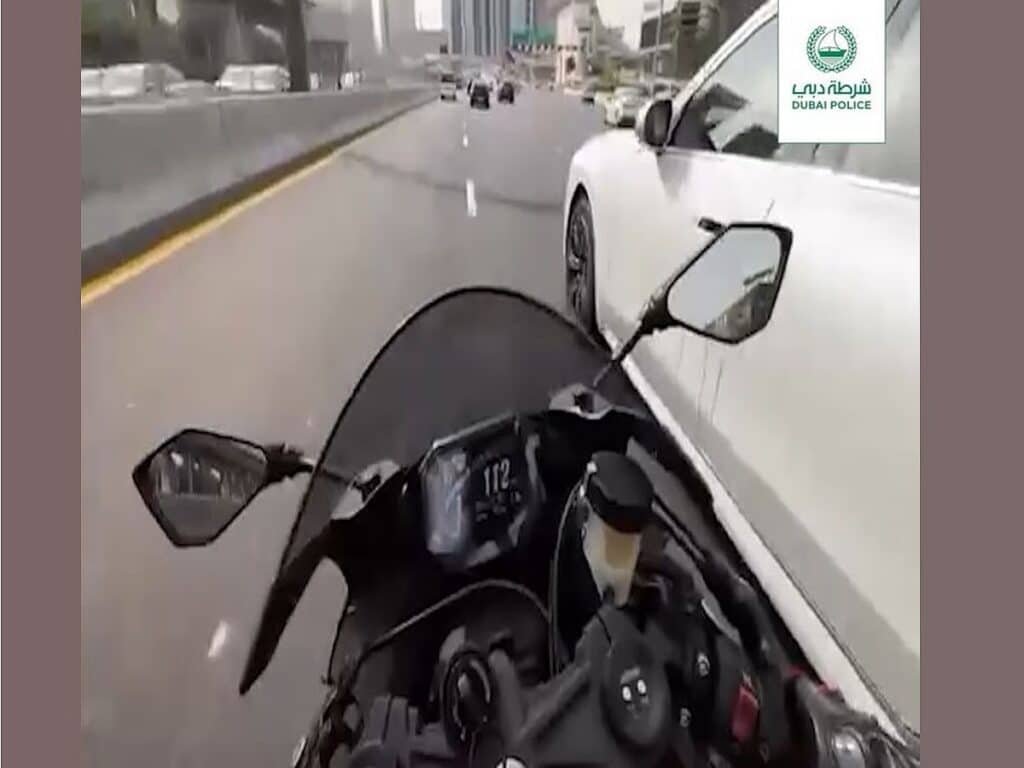
The April National report recorded a police request for parents to monitor children and explain the dangers of reckless riding on public roads. That supports a concrete family check: where will the bike be used, who will supervise, and is the rider eligible for that vehicle and activity? Buying protective equipment does not answer those permission questions.
Empowering safe riding begins with parental guidance and community involvement. Parents should actively monitor their children’s online activities and riding habits, and educate them early on road safety and the severe consequences of reckless behaviour. Encouraging participation in supervised, designated riding areas and fostering open communication about responsible choices are crucial steps to deterring dangerous stunts and promoting a culture of safety.
Parental guidance on motorcycle safety is a cornerstone of preventing reckless youth riding. Parents can set a powerful example by demonstrating responsible driving behaviour themselves and by actively engaging in discussions about road safety. This includes explaining the importance of protective gear, the legal ramifications of traffic violations, and the severe physical consequences of accidents. Family supervision of road safety extends to monitoring online content consumption and encouraging participation in legitimate, supervised riding activities. Community organisations and schools also play a vital role by offering educational programmes and promoting positive peer influence, reinforcing the message of safe and legal riding.
Agree the route and supervision before the bike leaves home. A child should know whom to contact if a group changes its plans or starts riding illegally. Do not require a young rider to follow the group into an unsafe situation simply to get home; establish a collection or other safe fallback in advance.
What UAE Residents Need to Know About Motorcycle Safety Education
For training, begin with the official licensing authority and the school’s actual motorcycle course. Check whether the course is for a new road licence, refresher instruction or a circuit session; those purposes are not interchangeable. We have not verified the old claim that language-specific police outreach makes access straightforward for every resident.
UAE residents should prioritise motorcycle safety education through official channels. This includes enrolling in RTA-approved driving schools for comprehensive training, participating in Dubai Police and RTA awareness campaigns, and staying updated on traffic law changes. These resources provide essential knowledge on defensive riding, hazard perception, and legal compliance, ensuring riders are well-equipped to navigate Dubai’s roads safely and responsibly.
Ask a provider about prerequisites, teaching language, protective equipment, motorcycle provision, session length, assessment and what happens if the learner is not ready to continue. Passing a course does not authorise road stunts. The earlier unsupported claim that studies prove a particular accident reduction from training has been removed; no effectiveness study or new rider test was conducted for this article.
Frequently Asked Questions
What are the immediate penalties for reckless motorcycle stunt riding in Dubai?
The applicable consequences depend on the offence and case. Dated motorcycle reporting describes AED 2,000, 23 points and 60 days’ impoundment alongside a separate release payment. Dubai’s decree also distinguishes release categories. Do not treat the fine alone as the full cost or assume every stunt allegation has the same outcome; check the actual notice and issuing authority.
How does Dubai Police identify and apprehend reckless riders?
The dated reports describe traffic patrols, resident reports and video footage used to identify riders. They do not prove that every road is covered by a particular camera system or establish the investigation method in every case. For an actual allegation, use the authority’s notice and reference.
Are there designated areas in the UAE where motorcyclists can legally perform stunts?
A motorcycle track day is not automatically permission to perform stunts. Dubai Autodrome publishes bike-session information through Furiosa Racing; confirm the current session’s eligibility, equipment, permitted manoeuvres and price with the organiser. This guide has not verified a public stunt zone or a current AED 500–800 full-day rate.
What role do parents play in preventing youth from engaging in reckless riding?
Parents are urged to play an active role in monitoring their children’s riding habits and online activities, educating them about road safety and the severe consequences of reckless behaviour. Dubai Police emphasise the importance of family supervision and early education to prevent serious injuries or fatalities.
How does social media influence dangerous motorcycle stunts in Dubai?
Social media platforms can normalise and promote dangerous motorcycle stunts, leading youth to imitate risky behaviours for online validation. Dubai Police actively encourage avoiding such imitation, advocating for responsible digital literacy and promoting positive role models within the riding community.
Where can UAE residents find official information on motorcycle safety and traffic laws?
Official information on motorcycle safety education, traffic laws, and penalties can be found through the Dubai Police and RTA (Roads and Transport Authority) official channels. These include their websites, awareness campaigns, and approved driving schools across the UAE.
Conclusion
The April motorcycle impoundments are a dated enforcement report, not evidence that a single new 2026 rule explains every seizure. The practical lesson is to separate safe riding choices from the legal and financial steps that follow an alleged offence. A release payment and a traffic fine are not interchangeable, and a normal track booking does not authorise every manoeuvre.
Use the source-linked distinctions above to ask better questions: which offence is recorded, which release provision applies, what remains payable, and where is the intended riding activity expressly permitted? For a disputed charge or an individual legal decision, obtain advice appropriate to the actual case rather than treating a general guide as a ruling.
Ride within the conditions that apply to your licence, vehicle, road and booked activity. Do not copy a stunt because it appears in a popular video or assume an impounded bike can be released by paying only the headline fine.
Disclaimer: This article provides general information and should not be considered legal advice. For specific legal guidance, consult with a qualified professional. Traffic laws and penalties in the UAE are subject to change.