A practical guide to manufacturer charging claims, cell-versus-pack figures and development timelines, with UAE charging-cost arithmetic and the checks I would make before buying.
Key Takeaways
- The next generation EV batteries guide emphasizes understanding specific battery types and local conditions before purchasing an EV.
- Manufacturers often present ambitious charging claims that may not reflect real-world performance, especially in the UAE.
- When considering battery technology like sodium-ion or solid-state, focus on the actual product and delivery dates rather than marketing hype.
- For a successful EV ownership experience in the UAE, verify local charging infrastructure and compatibility with your vehicle.
- Ask local suppliers for detailed battery specifications and warranties to ensure a suitable vehicle for your needs.
I would buy an EV around the car and charging access I can actually use—not a battery-launch stopwatch. Faster charging and new materials are worth following, but a manufacturer’s demonstration does not tell you what a UAE-delivered model will do at the charger beside your home.
The useful questions are specific: which battery is fitted to this variant, what charging conditions support its claim, and what local warranty and infrastructure apply? Here is how the major announcements fit together without turning development targets into showroom promises.
The developments worth separating
| Development | What the published statement establishes | What a UAE buyer still needs |
|---|---|---|
| CATL third-generation Shenxing | An April 2026 manufacturer charging claim | The actual vehicle, charging conditions and supported local equipment |
| BYD second-generation Blade and FLASH Charging | A March 2026 battery-and-charger announcement | Confirmation of the local model and relevant infrastructure |
| Higher-density packs | A specification at a stated cell or pack level | A comparable vehicle range test and usable capacity |
| Sodium-ion | Development and manufacturing plans | A named, locally supplied car with verified specifications |
| All-solid-state | Company commercialisation targets | An actual production vehicle, market date and warranty |
CATL and BYD: compare the charge window, not just the minutes
In its 21 April 2026 announcement, CATL reports 10–80% state of charge in 3 minutes 44 seconds and 10–98% in 6 minutes 27 seconds for third-generation Shenxing. Those are attributed manufacturer figures, not our road-test results.
BYD’s March 2026 announcement reports 10–70% in five minutes and 10–97% in nine minutes. Its FLASH charger is described as providing up to 1,500kW through one connector. The release describes a global infrastructure rollout planned for the end of 2026; it is not evidence that every UAE station already provides that equipment.
I would not award a universal winner from those two stopwatches. The end percentage differs, and the actual pack, conditions and equipment need matching. Nor should a 2026 announcement be described as something merely “expected by 2026” once it has already been made.
For a meaningful comparison, request the stated charge window, usable battery capacity, starting temperature, preparation requirements and the full charging curve for the model. Peak power tells you the highest point, not the sustained average throughout a stop.

Why an advertised charger rating is not your charging time
The Australian government’s charging guidance identifies charger power, vehicle charge-rate limits, state of charge and battery temperature as relevant variables. AC charging also uses the vehicle’s onboard conversion equipment; DC fast charging works differently. Do not apply one spectacular DC result to an ordinary home AC connection.
Here is a deliberately idealised calculation. An 80kWh usable pack going from 10% to 80% needs 56kWh stored: 80 × 0.70. At a constant 100kW into the battery, that is 0.56 hours, or 33.6 minutes. At a constant 200kW, it is 16.8 minutes.
That is arithmetic, not a charging prediction. Real power changes during the session, equipment can share capacity, energy is lost, and the vehicle may limit the rate. Add the real queue, access and payment time when planning a journey. A quoted maximum on the charger cabinet is not a promise that your car will hold that power.
Qilin: do not mix a 2022 pack number with a 2026 cell number
CATL’s June 2022 Qilin release reported energy density up to 255Wh/kg. Its April 2026 third-generation Qilin release instead gives a cell energy-density figure of 280Wh/kg. Generation and measurement level matter: those numbers should not be presented as a like-for-like pack improvement.
I would ask what has been measured before celebrating a bigger number. Cell density, complete pack density and the efficiency of the finished car answer different questions. A vehicle’s range also needs a named test cycle; a claimed 1,000km is not automatically a UAE motorway result with passengers, luggage and air conditioning.
Nor does a battery brand identify every installation in a manufacturer’s range. Obtain the specification of the actual model year, trim and market version. A list of famous car brands using a supplier is not evidence that the car in front of you has the same pack.
Sodium-ion: follow the actual product, not an assumed cheap-car price
CATL’s April 2026 statement sets full-scale Naxtra sodium-ion production as an end-of-2026 target. That is a manufacturing milestone to track, not confirmation of a particular UAE showroom model or an under-AED100,000 retail price.
I would keep three stages separate: a cell announcement, a vehicle manufacturer confirming its installation, and a local distributor confirming the delivered specification. The materials story can be interesting long before a UAE buyer can order the finished car.
Do not declare a chemistry automatically sufficient for everyone who drives 30km a day. The usable pack capacity, reserve, charging access, detours and longer journeys still matter. “Affordable” also needs an actual price and ownership costs, not simply a claim that one raw material is abundant.
Solid-state: commercial targets are not local delivery dates
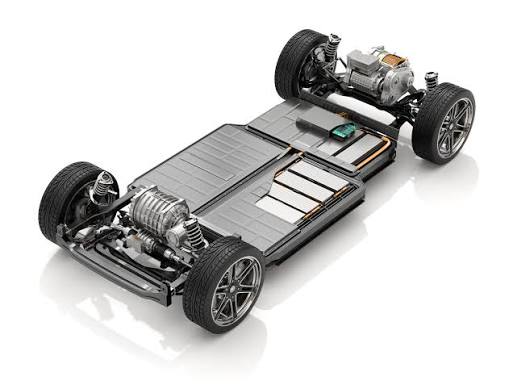
Toyota and Idemitsu’s October 2023 announcement targets commercialisation of all-solid-state batteries in 2027–28, followed by full-scale mass production. Those are the stated development ambitions; the release does not confirm a UAE consumer delivery date.
Nissan showed an in-construction pilot line in April 2024 and stated an aim to launch vehicles using its all-solid-state batteries by fiscal year 2028. That is not a claim that pilot production first begins in 2028. Pilot work, commercial launch and manufacturing at scale are different stages.
I would not turn either roadmap into “range anxiety ends” or a guarantee that fires become impossible. A design ambition is not a safety assurance for every future pack, and a demonstration is not a mass-market ownership record. Wait for the actual model’s specifications and conditions before making a purchasing decision around it.
For UAE ownership, the complete vehicle beats a chemistry slogan
The US Department of Energy’s battery overview notes that most current EVs use lithium-ion batteries and that chemistries vary. It also identifies cost, useful life and safety as ongoing research areas. That is a better starting point than pretending there is one universally best battery for every driver.
I would not recommend LFP solely because the car will be parked in UAE heat, or nickel-rich cells solely because the owner drives between Dubai and Abu Dhabi. Those labels alone do not establish the finished car’s thermal management, degradation, charging performance or warranty cover.
Ask the local supplier for the capacity warranty, duration, distance limit, relevant exclusions and the process if the battery requires repair. Check the owner’s manual for charging and storage instructions. Follow the vehicle’s requirements rather than a general article inventing one ideal percentage or routine for every chemistry.
The UAE charging check I would do before buying
- Home: can you obtain permission and suitable electrical installation for the actual parking space?
- Routine route: which compatible chargers can you genuinely access, and what happens if the preferred location is busy or unavailable?
- Vehicle: what connector and AC/DC limits apply to the UAE variant?
- Longer journeys: what reserve, charging stop and alternative fit the route rather than the brochure’s maximum range?
- Support: who handles the local warranty, diagnostics and repairs?
For Dubai public charging, consult DEWA’s EV service information and the actual charger details. Its listed registered-user energy rates are AED0.70/kWh plus VAT for AC and AED1.20/kWh plus VAT for DC. These are not a universal price for every UAE network or a home-electricity tariff.
Using the hypothetical 56kWh energy figure above, those rates produce AED39.20 for AC or AED67.20 for DC before VAT and before accounting for charging losses or other applicable charges. The AED28 difference illustrates the energy-price calculation, not an actual bill or a promise of identical session times.
My verdict
The progress is worth watching. But I would take a suitable, supported vehicle with workable everyday charging over a brilliant announcement that has not reached the local model. Get the exact specification, compare equivalent measurements, test your charging plan and read the warranty. That is how a battery story becomes a useful buying decision.