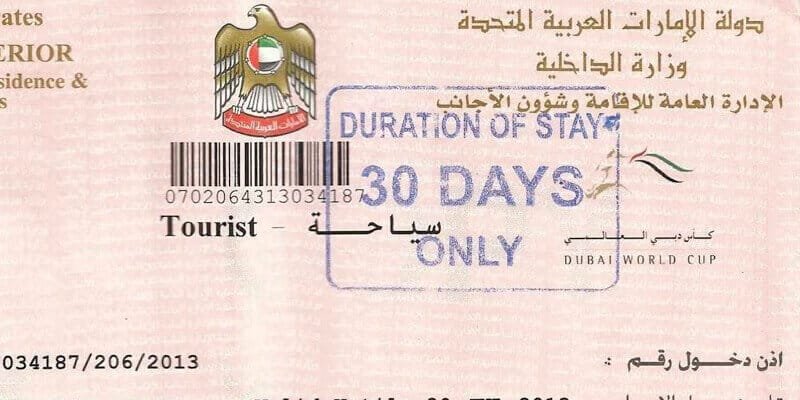
Before buying a Dubai visit visa, check whether you need to buy one at all. Your passport, any qualifying overseas residence or visa, the reason for the trip and your previous visits determine the route. A quoted “Dubai visa price” means very little until you know the duration, entry count and charges included.
I would sort those four points before paying for flights or a visa package. My priority is avoiding the expensive mismatch: buying a short permit for a longer trip, treating an entry deadline as a departure deadline, or assuming an extension is automatic. This guide separates the official categories from the bill you actually need to compare. Sources were checked on 21 October 2026; immigration approval remains with the authorities.
Start here: which route matches your trip?
| Your situation | Start with | Check before paying |
|---|---|---|
| Passport eligible for arrival entry | The current nationality and passport-type check | Permitted stay and previous visits, not a generic paid tourist package |
| Qualifying overseas documents | The conditional entry-permit category | Residence versus visa, document validity, and 14-day versus 60-day terms |
| Ordinary holiday needing advance permission | 30- or 60-day tourist route | Single or multiple entry, itemised total and extension eligibility |
| Frequent tourism visits | The five-year multiple-entry route | Financial evidence, guarantee and annual stay limit |
| Work search, study, treatment or visiting relatives | The purpose-specific service | Host, supporting documents and that category’s own conditions |

Visa on arrival: the old 30-day list is not reliable
The current Emirates nationality table places the UK, US, Australia, Canada, China, Japan, New Zealand, Singapore and South Korea in its 90-day category: multiple entry, six-month validity and 90 days total. Its 30-day list includes Ireland, Brunei, Hong Kong, Kazakhstan, Malaysia and Ukraine. Mexican passports have a separate 180-day category. These are examples, not a complete eligibility list. Check the airline’s exact passport search before travelling.
GCC citizenship is different from GCC residence. The UAE Ministry of Foreign Affairs confirms GCC citizens can visit without a visa using their GCC passport or ID card. Living in a GCC country with another nationality is not the same entitlement. For temporary, emergency or other non-standard travel documents, obtain document-specific guidance rather than relying on a nationality list.

Indian passports and other conditional-entry nationalities
ICP’s 25 June 2026 announcement covers India, Indonesia, Vietnam, Thailand, the Philippines, Kenya and South Africa. It specifies qualifying residence in the US, EU, UK, Singapore, Japan, South Korea, Australia, New Zealand or Canada. It distinguishes a 14-day category that can be extended once from a single-entry 60-day category that cannot be extended. The announced fees are AED 100 and AED 250 respectively.
Emirates separately lists qualifying US, UK and EU visas, but requires residence permits for the six newly added residence countries. Its document-validity conditions also apply. A tourist visa is not automatically interchangeable with residence.

Tourist visas: compare duration, entries and fee components
GDRFA’s single-entry tourism-establishment service and multiple-entry service publish the following fees. These are not universal travel-agent retail prices. A single-entry permit is for one entry; I would compare multiple entry if the itinerary includes leaving and returning, not buy it merely because it sounds more flexible.
| Tourist category | Published authority fee | Fee plus 5% VAT, calculated |
|---|---|---|
| 30-day single entry | AED 200 | AED 210 |
| 60-day single entry | AED 300 | AED 315 |
| 30-day multiple entry | AED 300 | AED 315 |
| 60-day multiple entry | AED 500 | AED 525 |
The single-entry page requires a passport valid at least six months, an onward or departure ticket and UAE-valid medical insurance; it says only accredited tourism offices in the emirate issue this category. Both services list conditional in-country charges. Ask the provider to separate the authority fee, VAT, insurance, service or processing charge, any guarantee and refund conditions. A lower headline with missing components is not a cheaper like-for-like quote.
My planning comparison: 30 days now or 60 days from the start?
For two applicants charged the same published components, the single-entry fee-plus-VAT subtotal is AED 420 for 30 days versus AED 630 for 60 days—a difference of AED 210 for the pair. That is an authority-component comparison, not a final booking quote or a claim about children’s fees.
I would ask for both complete quotes if a longer stay was already likely. The decision is not simply “buy the cheapest visa”: add the cost and uncertainty of a later extension, then compare against the longer initial permit. Write the intended arrival and departure dates beside each quote. Do not choose a shorter permitted stay on the assumption that paying more later guarantees approval.

Extensions: match the service to the permit
The GDRFA tourist-extension service allows extension by the issuing authority’s decision, with a 120-day total ceiling. It lists AED 600 plus 5% VAT and, where the inside-country charges apply, AED 500 plus two AED 10 charges. The listed completion estimate is 48 hours, not a guaranteed decision time.
Here is the calculation behind the larger bill: AED 600 + AED 30 VAT + AED 500 + AED 10 + AED 10 = AED 1,150 in listed components when all those conditional charges apply. That excludes any additional provider charge. I would ask the original provider which service applies, who files it, how many days are available on the actual permit and what the complete amount is. Do this before the stay deadline—not after assuming there is a grace period.
Do not carry the tourist ceiling into every other category. Conditional 60-day entry, arrival entry, relative visits and five-year tourism have different rules. Nor does an application receipt prove an extension has been granted. Keep the decision and new authorised deadline, not just proof that you paid.
The five-year option: useful for repeat trips, not permanent residence
GDRFA’s five-year multiple-entry service does not require an in-country guarantor or host. It requires financial evidence, including a USD 4,000 equivalent bank balance over the preceding six months, insurance and travel documentation. It lists a separate AED 3,000 guarantee among the charges. Five years describes the visa validity, not permission to stay continuously for five years.
Its additional information limits annual use to 90 days, with an extension for a similar period up to 180 days; the year starts at first entry and unused days do not carry over. I would keep an entry-and-exit log and use the authority’s travel report when reconciling days. The headline validity is the wrong number to use when deciding your departure date.
Other visit purposes: use the right service, not a holiday label
Friends and relatives
The GDRFA single-entry relative-or-friend service offers 30, 60 or 90 days. Relationship and visit evidence, financial documents, insurance and a guarantee can matter. Its fees and conditions differ from the tourism-establishment route above. Have the host identify the exact service and required relationship documents rather than assuming any resident can arrange any duration.
Looking for a job
GDRFA’s job-opportunity exploration service offers 60-, 90- and 120-day fee categories without an in-country host or guarantor. Qualification criteria, a degree and financial guarantees apply. A job-search visit is not itself an employment permit. If a job offer follows, have the employer arrange the correct work and immigration permissions before starting.
The old blanket claim that every successful applicant must leave and re-enter is not a sound rule. GDRFA has a separate in-country Status Amendment service, with new-permit and cancellation requirements. That does not mean every visitor automatically qualifies: ask the authority and employer how the actual file must be changed.
Study, training, business exploration and treatment
The study or training visit service is hosted by a licensed educational or research institution and requires its programme letter. GDRFA also lists distinct business-exploration, medical and treatment-escort services. Use the official visit-service directory to select the purpose before asking the institution, provider or authority for its requirements. A hospital visit, accompanying a patient and an ordinary holiday are not one document checklist.

Transit: do not confuse a government fee with an airline package
A stopover outside the airport still needs the appropriate entry permission. Etihad’s current transit service lists AED 55 for 48 hours and AED 216 for 96 hours, single entry and non-extendable, with entry within 30 days of issue. It requires a confirmed Abu Dhabi arrival and onward travel to a third destination. The page says Etihad currently accepts transit-visa applications only—not “most visa types”.
I would check the actual airline service and itinerary before calling a stopover visa free. A published government charge and a carrier’s application price can differ. For the border used, Etihad’s FAQ restricts its transit visas to entry through Zayed International Airport, while saying other visa types can enter through any UAE airport. That is an entry-channel distinction, not evidence that a Dubai permit bars a visit to Abu Dhabi.
Applications and arrival: the checklist I would keep
- Identify the route: passport type, nationality, qualifying documents, purpose, entry count and intended dates.
- Identify the actual issuer and provider: use GDRFA for the relevant Dubai service or the corresponding ICP service, not a lookalike “official” agent.
- Prepare the category’s documents: clear passport and photograph, travel and accommodation evidence, insurance and any host, relationship, qualification or financial records actually requested.
- Read the complete quote: separate fees, tax, insurance, service charges, guarantee and what happens if the application is refused or the trip changes.
- Check the issued document: name and passport details, entry-validity deadline, permitted stay, number of entries and any conditions.
- Keep copies accessible: save the permit and supporting bookings offline; do not rely on airport Wi-Fi to retrieve everything.
Emirates’ online application route is tied to an issued Emirates itinerary and states that VFS processing fees apply. Do not assume that an airline ticket on any carrier unlocks that service. Government and provider processing estimates are planning information, not a reason to leave the application until the final day. I would leave time to correct a document problem rather than pay an unverified “guaranteed approval” surcharge.
Overstay, fine enquiries and getting the record right
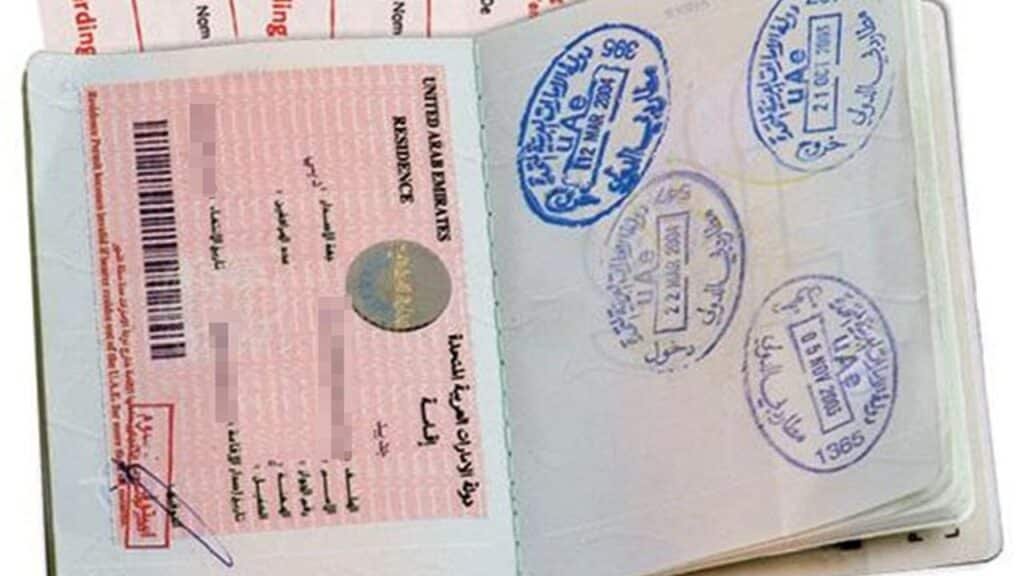
The ICP visa service lists AED 50 per day for expiry of the permitted stay. At that rate, 14 chargeable days are AED 700 before any other applicable amounts. Check the official file for the actual amount and deadline; do not treat an assumed grace period as an extension or a payment as permission to remain.
Nor is “fines can never be waived” correct. GDRFA provides a fine-reduction or exemption application, requiring supporting reasons and documents. Approval is not promised. If a disruption or difficult circumstance affects departure, contact the issuing authority promptly and preserve the evidence. I would plan around the authorised stay, not around hoping for a waiver.

Frequently asked questions
Do UK citizens need to arrange a Dubai visa in advance?
Emirates currently lists United Kingdom and Northern Ireland passports in its 90-day arrival category, not the old 30-day category. Check your exact passport type and previous use before travelling.
How much does a Dubai tourist visa cost in 2026?
GDRFA’s tourism-establishment route lists AED 200 for 30-day single entry and AED 300 for 60-day single entry, plus 5% VAT. These are authority components, not guaranteed agency or airline package totals.
Can I extend my Dubai tourist visa without leaving?
An eligible tourist permit can be extended by authority decision. GDRFA’s tourist-extension service sets a 120-day total ceiling; other visit categories have different rules. Apply through the correct route before your authorised stay ends.
What happens if I overstay my Dubai visa?
ICP lists AED 50 per day for expiry of the permitted stay. Check the actual file and resolve your status with the issuing authority. A fine-waiver application is possible through GDRFA, but approval is not guaranteed.
Can Indian passport holders get a conditional UAE entry permit?
Yes, subject to qualifying documents and the selected route. ICP’s June 2026 announcement distinguishes 14-day permits, extendable once, from single-entry 60-day permits that are not extendable. Do not assume a 60-day permit includes another 14 days.
Does a five-year tourist visa let me live in the UAE continuously?
No. Five years is the visa’s validity, not an uninterrupted five-year stay. GDRFA limits use to 90 days in the relevant year, extendable for a similar period up to 180 days, and says unused days do not carry forward.
After the paperwork: plan the visit
Once the entry route and dates are settled, our UAE trip-length guide helps plan the itinerary, and the Nol card guide covers getting around Dubai. For a later relocation rather than a holiday, start with the Living in the UAE section.
Checked 21 October 2026 against the named official service pages and airline information. General travel information, not an individual immigration assessment. Requirements and charges depend on the selected category, documents and circumstances; confirm the actual application with the issuing authority or authorised provider.