For a first UAE holiday, I would start with seven to ten days: enough room for Dubai, an Abu Dhabi day or overnight, and some time that is not spent racing between bookings. Three or four days works for a focused city break; two weeks suits a slower, multi-emirate trip. Those are my planning recommendations—not immigration allowances. How long you want to stay and how long you are allowed to stay are two different questions.
This guide puts those decisions together: a practical trip-length comparison, the main visit and residence routes, the dates to check before booking, and a cash-flow example for a move. It is general information checked against the linked sources on 21 October 2026, not a complete assessment of your passport or a personal immigration ruling. Your issuing authority decides your permission and any extension.
Choose your trip length before you choose your visa
| Your purpose | The time I would plan | What that buys you | Permission to confirm |
|---|---|---|---|
| A focused Dubai break | 3–4 days | One neighbourhood-focused day, one major attraction and a beach or desert choice—not every emirate | Your passport-specific entry route and permitted departure date |
| A first UAE holiday | 7–10 days | Dubai plus an Abu Dhabi day or overnight, with breathing room | An allowance covering the whole trip, not just a document valid for entry |
| A slower multi-emirate trip | About 2 weeks | Time for an east-coast or northern-emirate stay without constant packing | Entry count, stay limit and return-flight conditions |
| A family visit or relocation reconnaissance | A defined 1–3 month plan, only if authorised | Neighbourhood, commute, school and housing checks—not a licence to start work | Exact visa category, extension route and cost before committing |
| A paid assignment or permanent move | Match the authorised contract or residence route | A lawful basis for the work and residence you actually intend | Work permission as well as immigration status; do not substitute a longer tourist stay |
I would rather spend a week properly than spend four days collecting motorway journeys. Pick your must-do experiences, group them geographically and leave room for an ordinary meal, a walk and an unhurried evening. The table is an editorial planning framework, not a survey of how long every visitor needs.
Keep three dates separate
- Enter-before date: the deadline for using an issued entry permit. It is not necessarily your departure deadline after entry.
- Permitted stay: the allowance recorded for your entry and category. Confirm the authority’s actual date rather than calculate from a headline.
- Any approved extension or applicable grace period: confirm it on your own record. A submitted application, an agent’s promise or another traveller’s extra days is not your approval.
My practical rule is to save the permit and the official status result, then set a reminder at least a week before the confirmed deadline. That week is a planning buffer, not a legal grace period or a promise that an application will finish in seven days.
First: check the entry route for your passport
Check your passport nationality, passport type, existing residence or visas, and trip purpose before buying non-refundable travel. Airline guidance is useful for boarding preparation; the immigration authority remains the decision-maker. Do not apply an ordinary-passport list to a different travel document without checking.
On-arrival examples: Emirates’ current UAE visa information lists Ireland and Ukraine in its free 30-day group, but Australia, Canada, Japan, New Zealand, South Korea, the UK and the US in its 90-day group. Our older 30-day list was wrong for those latter passports. These are examples, not a full eligibility list.
A 90-day allowance is not six months of continuous residence. Emirates describes its listed 90-day multiple-entry route as valid for six months with 90 days’ total stay. I would check both the permitted days and the validity window before booking repeat visits; leaving briefly is not permission to ignore the cumulative limit.
GCC nationals and GCC residents are not the same category. A person holding another country’s passport and a Gulf residence permit must check the route for that passport and residence status. Do not assume a resident has a citizen’s entry entitlement.
Indian passport holders: qualifying overseas documents matter. Emirates distinguishes residence permits from visas by issuing country and lists minimum validity conditions; it offers preapproved 14- and 60-day options for eligible applicants. Do not read that as “any visa from any listed country qualifies”. Check its current document table and the authority’s conditions for your exact route before travel.
If advance permission is required, use the relevant authority or an authorised issuing channel and check the actual category being sold. Keep a copy of the application, quoted charges and approved permit. An agent’s “90 days guaranteed” slogan does not override the permission issued to you.

For a complete practical guide to life in the Emirates, explore our full Living in the UAE hub.
The Main Visa Categories and How Long Each Allows You to Stay
Tourist visas: read the category and extension terms
Tourist products have different durations, entry counts and extension conditions. Select the product that covers your intended trip rather than assume every 30-day visa extends twice or every 60-day visa gains another 30 days. ICP’s visa FAQs distinguish several tourist routes; an extension is an authority decision, not a benefit this article can grant.
For Dubai, GDRFA’s tourist-extension service card says the visa may be extended by the issuing authority one or more times, with a stated total limit of 120 days. That wording belongs to that specific service. Do not merge it with a different ICP category or use it to promise every visitor the same continuous stay. Ask the issuer to confirm how the limit applies to your record.
The same GDRFA card lists AED 600 plus VAT and additional in-country charges, and warns the total can vary. I would ask for the full written bill before paying: extension charge, tax, in-country charge, service charges and any guarantee separately. A headline fee and a final payable total are not interchangeable.
Visit Visa — For Friends, Relatives and Extended Trips
For visits to family or friends, choose the service matching the relationship, sponsor or host, and entry count. A general tourist product and a sponsored family visit are not interchangeable simply because both involve time away from home. Start with GDRFA’s category-specific extension services or ICP’s applicable service; check the sponsor requirements and permitted period before applying.
Multi-Entry Tourist Visa — Flexible Regional Travel
A multiple-entry product is worth considering when your itinerary genuinely includes leaving and returning. Check how many entries it permits, its use-by window and the stay allowance for each visit or overall period. I would not pay for flexibility I will not use, nor assume a new entry resets a cumulative allowance. Travel to another country also has its own document and entry requirements.
Five-Year Multiple-Entry Tourist Visa
The five-year multiple-entry tourist route is designed for repeated visits, not five years’ uninterrupted residence. ICP’s FAQ describes a 90-day stay with extension subject to conditions, within a 180-day annual limit. Confirm the precise terms and supporting documents through the applicable service before treating it as a solution for regular family trips.
I would choose that route for repeat visits only when its conditions fit the real plan. Tourist permission is not a substitute for the permissions needed to take employment or establish and operate a business. Five years of visa validity does not erase the stay limits on individual visits.
Job-seeker visa: 60, 90 or 120 days
The GDRFA job-exploration service lists 60-, 90- and 120-day options without a local host or guarantor. Eligibility, qualifications and financial guarantees apply; this is not an open-ended job-search entitlement for every visitor. ICP’s separate 60-day service has its own documented requirements. Use the relevant card rather than combine two authorities’ checklists.
Our earlier blanket statement that every successful jobseeker must leave the UAE to change status was too broad. GDRFA provides an in-country status-amendment service with conditions including a new visa and cancellation of the previous residence permit where applicable. That does not mean every jobseeker is approved automatically. Ask the employer and issuing authority to confirm the lawful route for your current status before starting work or buying an exit flight.
Employment residence: duration and work permission
For a move linked to employment, establish who handles the work permit, entry or status change, residence application and Emirates ID. They are connected steps, not one interchangeable document. Confirm the duration on the actual issued permit instead of assuming every employer-sponsored route lasts two or three years.
I would get a written checklist from the employer before moving: processing responsibilities, required documents, expected charges, insurance arrangements and what happens if the start date changes. A job offer is not the same as completed immigration or work authorisation, and a visa application is not evidence that every resident service is already available.
The official general residence provisions describe sponsored residence periods of one, two or three years depending on category, with other routes having different terms. They also describe a general 180-day absence rule and several exceptions. Golden Visa holders are not the only possible exception; check the conditions for your own status before a long absence.
Student Visa
Students should work through the university or the authority handling their residence route, not assume admission itself grants permission for the entire course. Dubai’s student-residence guidance describes the accredited institution’s host/guarantor role. Confirm the permit’s expiry, renewal evidence, insurance and any separate work authorisation.
There is no basis here for a universal AED 1,000 student deposit. As one institution-specific example, American University in Dubai’s published policy describes a one-year student residence visa, AED 2,000 visa fees and an AED 3,000 refundable security deposit, with additional charges in specified circumstances. Those are AUD’s listed terms—not a national quote. Ask your own institution for its complete current schedule.

Golden residence: duration, eligibility and ongoing conditions
Longer residence routes deserve a separate decision from holiday planning. Start with the category you can actually document, not the most attractive number of years in an advertisement. I would compare ongoing eligibility and renewal conditions alongside the application cost; a long validity period is useful only when the route fits your circumstances.
What Makes the Golden Visa Different
A Golden residence route can provide a different basis from ordinary employer sponsorship, but it is not unconditional immunity from job or financial changes. GDRFA’s specialised-professional service card explicitly ties its skilled-worker category to continuing conditions, including employment and salary. Its stated retention conditions directly contradict a blanket promise that any holder can leave any job without consequences.
The relevant professional service describes a ten-year permit and renewal when conditions continue to be met. Other Golden categories have their own evidence and approval routes. Read the category-specific requirements and ask the authority how a change in your circumstances affects retention, rather than rely on a general “self-sponsored” label.
For someone spending substantial time abroad, the absence rules are a real reason to examine the right residence route. But distinguish exemption from an absence rule from exemption from every other condition. A permit can still expire, and continuing eligibility still matters.
Who Is Eligible for a Golden Visa?
Investors, entrepreneurs, skilled professionals, researchers, students and people with recognised talents can fall under different routes. A qualifying asset or salary alone is not a complete application. The authority may require nominations, qualifications, licences, insurance and supporting records appropriate to that category.
The following examples show why I would keep the categories separate rather than compare them as one universal package:
Dubai property investors: Dubai Land Department’s investor service describes a ten-year renewable route for qualifying property with a purchase value of at least AED 2 million. Mortgaged-property cases require bank documentation; do not assume any AED 2 million asking price or any mortgage position qualifies. Retirement residence is a separate category to check—not an automatic cheaper version of the same investor application.
Entrepreneurs and investment routes: do not combine a fund deposit, company ownership and an innovative project into one eligibility test. ICP’s entrepreneur entry-visa service describes a route to complete Golden residency procedures and requires authority confirmation of the project’s nature plus an accredited auditor’s project-value letter of at least AED 500,000. Its application-stage document is not itself the completed residence permit.
Skilled professionals: the GDRFA card lists a minimum AED 30,000 monthly salary alongside contract, qualification and other requirements. It also states retention conditions. I would not turn that into a salary-only approval promise or attach an unverified “new from October 2025” date to it. Ask how the authority assesses your documented remuneration before applying.
Education and research: use the nomination and qualification route that applies to your profession and emirate. The GDRFA card distinguishes education, health, research and other specialised categories. Do not assume employment at an education business alone qualifies you for an exceptional-talent or educator award.
Exceptional talents: check which competent body must endorse or nominate your specific category and what evidence it requires. Recognition, a professional licence and an employment contract are different documents. I would get that route confirmed before paying an intermediary for a generic “Golden Visa package”.
Golden Visa Application Fees and Processing
There is no single AED 8,000–10,500 bill covering every Golden category and every family size. The DLD investor card, for example, lists AED 9,884.75 for its stated principal-applicant service and separate family charges. It is a category-specific schedule, not a universal quote. Obtain an itemised current total, including any medical, identity, insurance, status-change and dependent costs that apply to you.
Renewable does not mean automatically renewed. Track expiry, continuing eligibility, required evidence and the authority’s renewal process. A service card’s processing target is also not a guarantee for a complete multi-stage application; leave time for document corrections and related steps rather than book life around a generic two-to-eight-week claim.

Green, remote-work and retirement routes are separate decisions
Dubai’s visa guide describes a five-year Green route for eligible skilled professionals, freelancers and self-employed people, and a one-year virtual-work route for eligible people working remotely for an overseas employer. The latter is not permission to work for UAE companies. I would check the route matching the actual work arrangement, not choose solely by the longer duration.
The same official guide lists retirement options for people aged 55 or over, with financial criteria. That is why I would keep retirement and the DLD property-investor application separate: an AED 1 million retirement-related property criterion is not the AED 2 million investor route under another name. The retirement programme’s official information is the appropriate starting point for that decision.
Understanding UAE Overstay Rules in 2026: The Numbers That Matter
The earlier article mixed outdated fine amounts, unsupported introduction dates and blanket grace-period claims. The useful questions are simpler: what is your actual permitted deadline, when would a fine start on your record, and which authority handles the case? Check those before trying to price an overstay.
The daily fine component: AED 50
The ICP fines-payment service card lists AED 50 per day for expiry or cancellation of the relevant entry or residence permission. That is a daily fine component, not necessarily the whole amount payable for resolving a case. Check the authority’s calculation and any associated service or exit requirements; this article cannot determine an individual liability.
Grace periods: check your own category
Do not add an assumed ten days to a tourist deadline or assume every cancelled resident gets exactly thirty days. The official residence guidance describes grace periods that vary by category and can extend up to six months. That does not grant six months to every person. Obtain the period recorded for your own category and circumstances.
I would treat an unconfirmed grace period as unavailable for planning. Ask the issuing authority to confirm the final lawful date and the effect of any extension or status-change application. Filing a request is not permission to overstay while waiting. Keep the decision, not just a payment receipt or an agent’s message.
Calculating What an Overstay Actually Costs
Illustrative daily-fine arithmetic at AED 50 is AED 500 for ten chargeable days, AED 1,500 for thirty and AED 3,000 for sixty. These are examples of the daily component only, not quotations for a calendar month, an exit permit or a complete case. First establish the correct number of chargeable days and any applicable exemption or decision.
If permission to depart or another resolution step is required, ask the authority handling your file which service and documents apply. Payment, status adjustment and departure are different steps. Do not assume that buying a flight or paying one displayed amount completes all of them.
Use the official inquiry and payment channels rather than wait for an airport problem. GDRFA’s fine inquiry is a Dubai route; ICP has its own services. The existence of an overstay fine alone does not let this guide declare an automatic travel ban, nor can it promise that every case is fully resolved online.
Two date mistakes I would avoid
One avoidable planning mistake is confusing entry validity with permitted stay. Another is assuming a brief trip abroad resets a cumulative allowance. Re-entry depends on your category and the authority’s decision. I would not fund a relocation on a chain of assumed border runs or describe an unverified detection rule as established policy.
Save the actual dates and set reminders before booking extensions or departures. If your plans change, contact the issuing authority or authorised channel promptly. Make enough room in your schedule for a different outcome; a non-refundable hotel booking is a poor reason to leave an immigration question until the final day.
Matching Your Stay to Your Purpose: A Practical Framework
The Short-Term Visitor: 7 to 30 Days
For a short holiday, my starting recommendation is seven to ten days rather than an automatic month. Group Dubai’s historic districts together, give a major attraction its own workable slot and decide whether Abu Dhabi is a day trip or an overnight. I would add days for the east coast or northern emirates instead of pretend every long drive is a relaxing day trip.
Book around your actual priorities, not a promise that everything works without planning. Check timed-entry attractions, peak-day tickets, transport routes and accessibility for your group. I would leave spare time between emirates and avoid stacking a late desert return with an early Abu Dhabi start. English-language visitor information is widely available, but that does not mean every encounter or document requires no language preparation.
Permission to check: your passport-specific on-arrival entitlement, or the appropriate advance tourist product if required. A seven-day itinerary does not itself establish eligibility.
The Extended Explorer: 1 to 3 Months
For a longer family visit or relocation reconnaissance, decide what the extra weeks are for: viewing neighbourhoods, testing the school run, comparing accommodation or spending time with relatives. I would set a defined timetable and departure budget first. That is different from taking paid work, which requires the appropriate authorisation.
Compare a furnished apartment’s full terms against the hotel bill rather than assume a longer lease is always cheaper. Deposits, utilities, cleaning, cancellation terms, transport and location can change the result. Al Quoz, Mirdif, Dubai Marina and Al Raha offer different daily routines; the useful test is whether your actual commute and household needs work.
Permission to check: a suitable visit or tourist route, with the exact approved duration and any extension terms confirmed. A longer rental booking does not extend immigration permission.
The Project Professional: 3 to 12 Months
For a paid project, I would settle work authorisation before accommodation. A three-month assignment does not become lawful simply because a visit visa covers ninety days. Ask the employer or commissioning organisation and the relevant authority which permit, residence or status-change steps are required for the activity.
Separate job exploration from starting the job. Interviews and relocation research are not the same as carrying out a paid assignment. The Dubai government’s visa guide distinguishes visits without working from residence and work routes. Do not rely on a client calling the arrangement “informal” or “just a trial”.
Permission to check: the applicable work authorisation and lawful residence or entry route. For job exploration only, check the jobseeker category; do not treat it as a work permit.
The Long-Term Resident: 2 Years and Beyond
For a long-term move, put the residence route, work arrangements, household budget and dependent needs on the same page. I would secure the legal basis before signing an inflexible housing commitment. Access to banking, identity documents and other services still has its own checks and application steps.
Employer-linked residence requires planning around changes in employment, but the resulting process and grace period depend on the actual category and record. Our earlier “typically thirty days” countdown was not a safe universal rule. Obtain the cancellation record and official deadline, then plan the next permitted step.
A qualifying longer-term route can be useful, but I would assess the conditions you must keep meeting rather than buy into a promise of complete independence. Green, Golden and other residence categories are not interchangeable, and a licence to operate a business is not the same as residence permission.
Permission to check: the employment, family, investment, talent or other residence category for which you actually qualify. Seek accountable professional advice for a complex personal case, not a ranking of “best” visas for everyone.

Financial Reality: What Different Stays Actually Cost
I would compare two numbers before committing: the total cost of the stay and the cash needed at the start. A monthly average can look comfortable while the first payment is impossible. The worksheet below is an illustrative planning method, not a current market-price survey.
For a holiday, price the actual hotel nights, meals, transfers, attraction tickets and insurance for your dates. Divide a confirmed total by the number of nights if you want a daily comparison; do not use an unsupported national monthly allowance as a substitute for quotes. Include cancellation terms, not just the cheapest displayed room rate.
For a move, collect actual accommodation, utilities, transport, schooling, insurance and residence-processing figures for the household. Separate one-off deposits and setup charges from recurring costs. I would keep an emergency or departure reserve outside the rent budget rather than assume a new job or extension will arrive just in time.
Consider a hypothetical annual rent of AED 120,000. If the agreed payment schedule is one cheque, that is AED 120,000 for that rent payment; two equal cheques mean AED 60,000 each; four mean AED 30,000 each. The annual rent is still AED 120,000 and its monthly average is AED 10,000 in all three cases. The contract determines the real dates and arrangement—these are not claims that every UAE landlord uses cheques or offers those choices.
| Illustrative rent schedule | Each equal rent payment | Monthly average rent | Not included |
|---|---|---|---|
| 1 payment | AED 120,000 | AED 10,000 | Deposit, agency/admin fees, utilities, transport and other household costs |
| 2 payments | AED 60,000 | AED 10,000 | The same separate costs; payment dates still matter |
| 4 payments | AED 30,000 | AED 10,000 | The same separate costs; smaller instalments do not reduce annual rent |
That is why I would ask “what must I pay before moving in?” before “can I afford the monthly average?” For a visitor comparing a shorter stay with a move, the answer can change the entire plan. Our ‘+link(‘https://whatshotinuae.com/how-to-check-uae-visa-status/’,’visa-status guide’)+’ helps with the separate permission check; it does not replace the authority’s record.
The Practical Rules Every Visitor Should Know
Check passport validity for your exact route. Several service cards require at least six months, but ordinary visitors, residents and different travel documents can face different conditions. Use the airline’s current checker and the issuing authority instead of rely on an “without exception” claim from a general guide.
A tourist stay is not work permission. Establish the lawful route before taking an assignment. Remote-work or freelance arrangements also need their applicable permission checked; do not assume an overseas client or online payment removes immigration and licensing questions.
Long absences need a category-specific check. The official residence guidance sets out the general 180-day rule, exceptions and return-permit conditions. It specifically distinguishes some Dubai-issued cases from the ICP return-permit service. Do not buy a return flight on the assumption that every valid-looking residence record is enough.
Keep immigration, employment and business permissions separate. A residence route does not answer every work or licensing question, and a freelance licence does not itself prove your right to stay. I would get the relevant authority or a qualified adviser to confirm the combination for a remote-work, business or cross-border situation.

Frequently asked questions
How many days should I spend in the UAE on a first holiday?
I would start with seven to ten days for Dubai plus an Abu Dhabi day or overnight. Three or four days suits a focused city break; about two weeks gives a slower multi-emirate trip. These are planning recommendations, not visa entitlements. Your actual permission must cover the trip.
Can every tourist stay for ninety days with extensions?
No. Durations and extension limits depend on the specific route and issuing authority. Check your entry record and applicable service card. A multiple-entry validity window, a visit allowance and a residence permit are different things; an extension application is not an approval.
Is there an automatic ten-day grace period after my UAE visa expires?
Do not assume one. Grace periods depend on category and circumstances. Official residence guidance describes periods that can extend up to six months for eligible categories, not for everyone. Confirm the actual deadline recorded by your issuing authority.
What is the UAE overstay fine?
The ICP service card lists AED 50 per chargeable day for the relevant expiry or cancellation cases. Ten such days give AED 500 for the daily component only. The authority determines the applicable days and any other charges or resolution steps; this is not a personal bill or an automatic travel-ban finding.
Must a jobseeker leave the UAE after receiving a job offer?
Do not assume a compulsory exit in every case. GDRFA has an in-country status-amendment service with specific requirements. Ask the employer and issuing authority which route applies to your current permission and complete the required work authorisation before starting.
Does a Golden Visa guarantee I can leave any job without affecting residence?
No blanket guarantee applies. The GDRFA specialised-professional service card states ongoing conditions for its skilled-worker category, including employment and salary. Check your own Golden category’s retention, expiry and renewal conditions before changing circumstances.
My verdict and update scope
I would choose a week that fits the experiences I want, not stretch a holiday simply because a headline says I can stay longer. For a move, I would reverse the order: confirm the lawful route, price the actual commitments, then set the date. Permission first; expensive promises later.
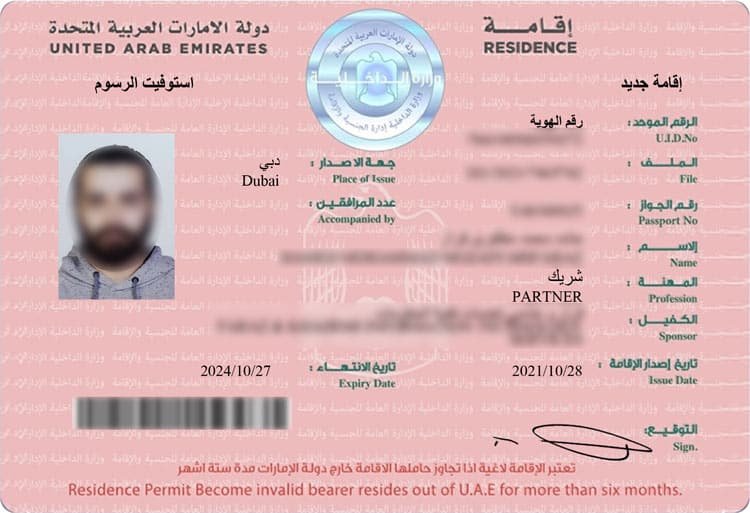
General planning information checked on 21 October 2026 against the linked public sources. This is not personal legal or immigration advice, an authority decision, a complete list of visa categories or an independent professional eligibility review. Historical document photographs are illustrations, not current application forms or evidence of anyone’s present status.