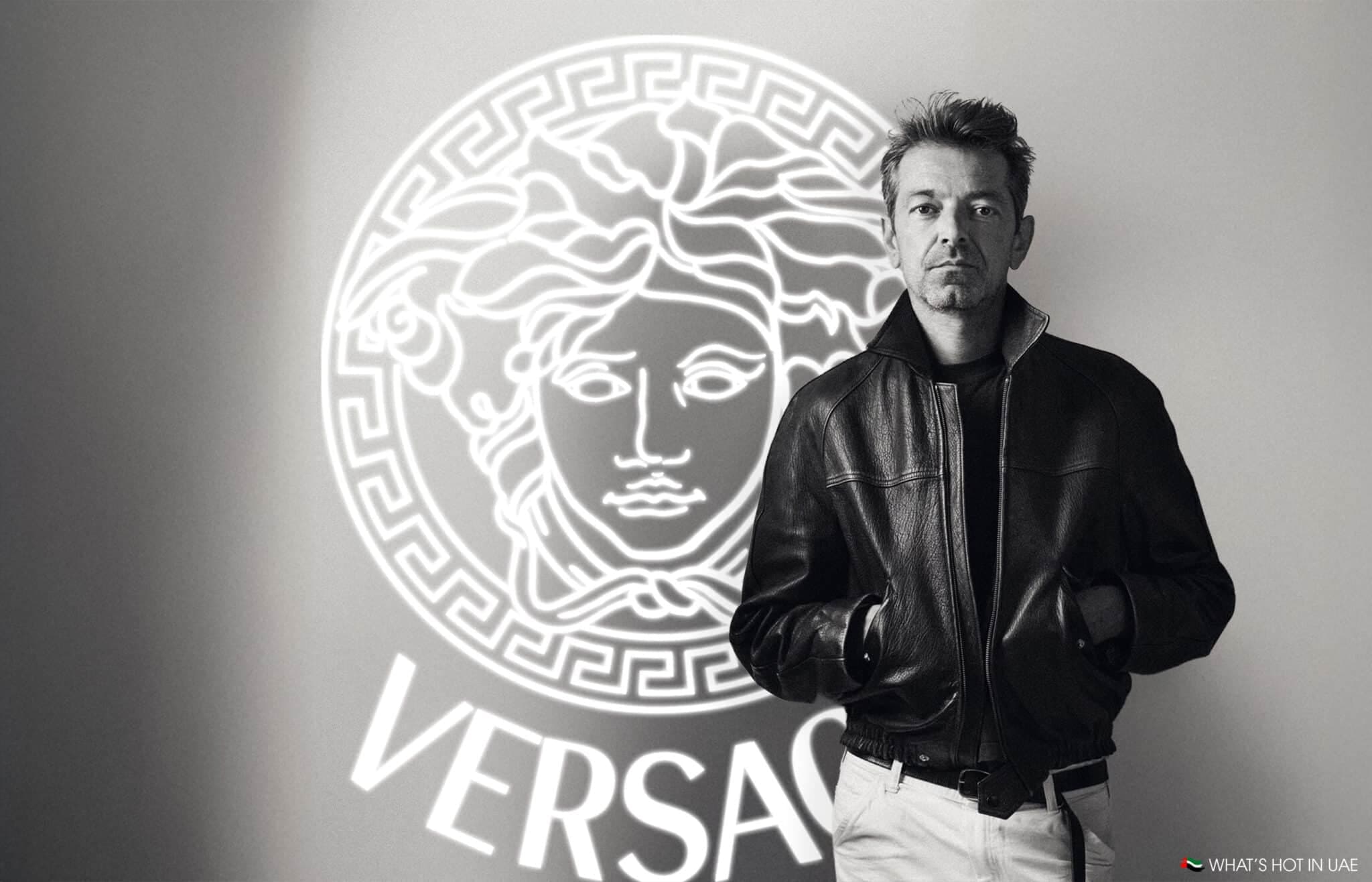
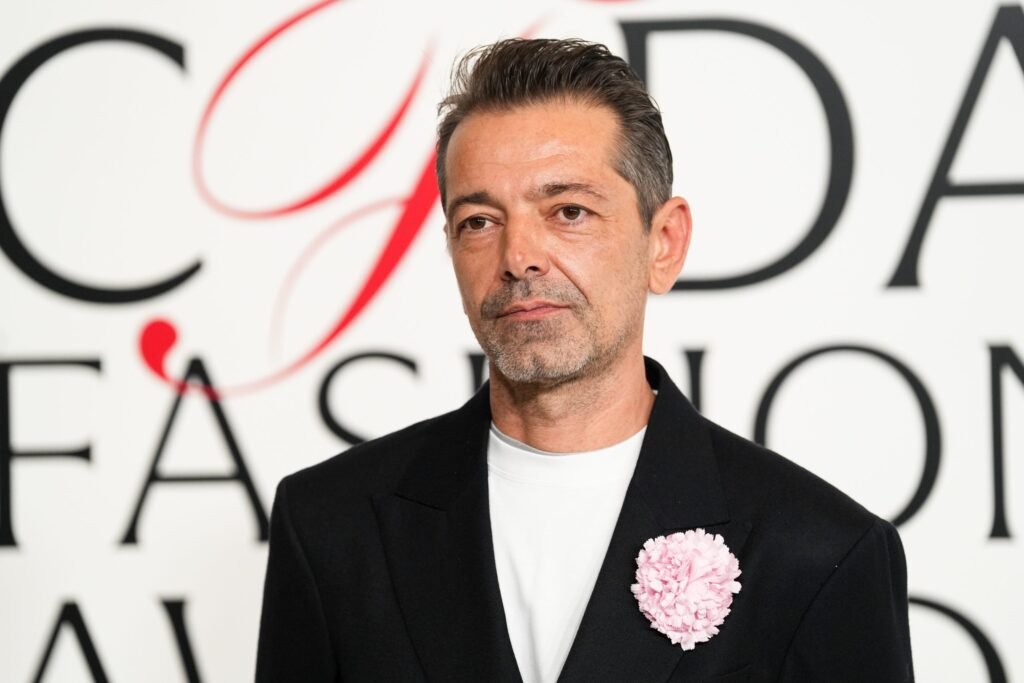
Pieter Mulier became Versace’s Chief Creative Officer on 1 July 2026, following the appointment announced by Prada Group and Versace on 5 February. The official announcement identifies his reporting line to Executive Chairman Lorenzo Bertelli. Our reading is that the interest lies in how his sculptural approach meets Versace’s glamour. This is analysis of a…
Pieter Mulier became Versace’s Chief Creative Officer on 1 July 2026, following the appointment announced by Prada Group and Versace on 5 February. The official announcement identifies his reporting line to Executive Chairman Lorenzo Bertelli. Our reading is that the interest lies in how his sculptural approach meets Versace’s glamour. This is analysis of a documented appointment, not an exclusive interview or a primary announcement by WHIUAE.
Pieter Mulier: A Résumé Forged by Modern Fashion’s Masters
Pieter Mulier brings to Versace a quietly formidable résumé, cultivated over two decades at the very vanguard of modern luxury fashion. His career timeline reads like a who’s who of influential designers and groundbreaking brands, demonstrating his extensive expertise and profound influence. Mulier’s journey began with a formative period alongside Raf Simons, serving as his right-hand man and studio director across multiple pivotal tenures. This partnership was instrumental in shaping Mulier’s meticulous approach to design and his understanding of conceptual clarity.
His trajectory continued with senior creative roles at Jil Sander, where he further refined his minimalist sensibilities, and then at Dior, during a period of significant redefinition for the iconic French maison. Mulier’s collaborative spirit and deep understanding of garment construction were evident in his work at Calvin Klein, where he again partnered with Simons to reshape the American brand’s identity. These experiences at the highest echelons of luxury fashion have not only honed his technical prowess but also endowed him with a unique perspective on brand evolution and creative leadership.
The Alaïa Chapter: Crafting a Refined Minimalism
Perhaps the most definitive chapter showcasing Mulier’s independent design philosophy and proven capabilities came during his tenure as Creative Director at Alaïa. At Alaïa, Mulier masterfully embraced the legacy of Azzedine Alaïa while infusing it with his own distinct vision. His collections were characterized by precise tailoring, sculptural silhouettes, and a deeply refined minimalism. Rather than overt extravagance, Mulier focused on the purity of form, the integrity of materials, and an inherent sensuality achieved through expert craftsmanship.
This approach garnered widespread critical acclaim, with fashion critics praising his intellectual rigor and emotional depth. Commercially, his work at Alaïa also generated significant momentum, proving his ability to balance artistic integrity with market appeal. Mulier’s Alaïa era firmly established him as a designer capable of steering a heritage brand while imprinting it with a modern, sophisticated, and ultimately desirable aesthetic. This experience reinforces his expertise and creative vision, providing a clear track record of artistic and commercial success.
Versace’s Legacy: A House Defined by Maximalism and Glamour
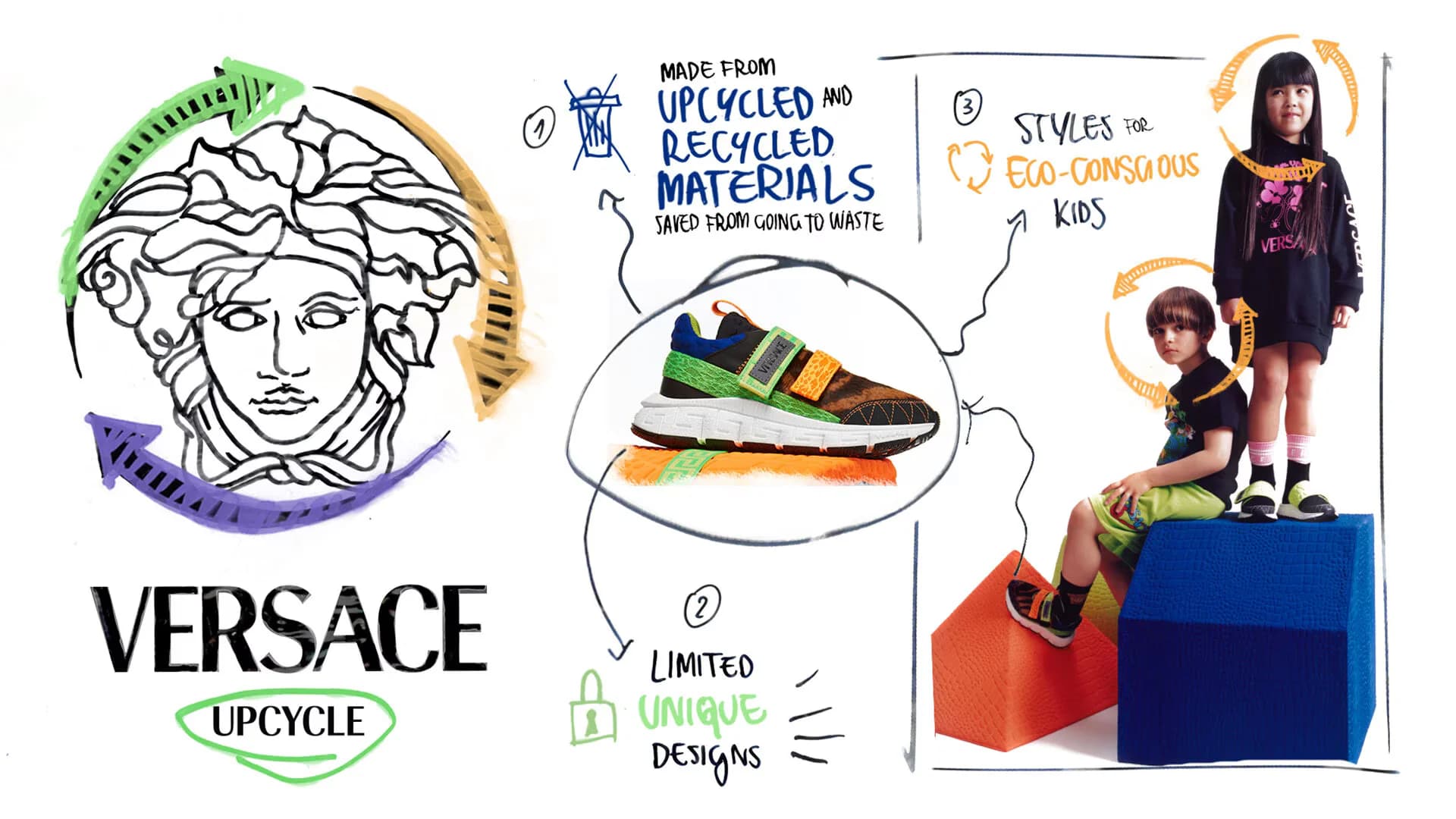
To truly understand the magnitude of Mulier’s appointment, one must appreciate the iconic brand heritage and aesthetic codes of Versace. Founded by Gianni Versace in 1978, the house swiftly became synonymous with audacious maximalism, unbridled sex appeal, and a distinctly Italian sense of glamour. Its defining characteristics include bold, often baroque prints, vivid colour palettes, luxurious fabrications, and a confident, unapologetic celebration of the female form.
Versace’s brand identity is intrinsically linked to excess, power, and a rock-and-roll sensibility. From the Medusa head logo symbolizing power and appeal to the supermodel era it largely championed, Versace has always embraced a “more is more” philosophy. This long-standing brand identity and historical significance are deeply embedded in the collective consciousness of luxury fashion, providing the essential context against which Mulier’s arrival is analyzed. The house has consistently championed a vision of confident, empowered dressing that leaves an indelible mark.
The Intriguing Collision: Mulier’s Minimalism Meets Versace’s Maximalism
The core fascination surrounding Pieter Mulier’s appointment lies precisely in the sharp contrast between his known minimalist leanings and Versace’s storied maximalist legacy. This isn’t merely a stylistic shift; it’s a creative tension that promises an intriguing narrative. Mulier, a master of subtle elegance, precision, and architectural form, now steps into a world defined by lively prints, overt sensuality, and unapologetic glamour.
The question isn’t if Versace will abandon its heritage, but how Mulier’s design philosophy will instigate a recalibration of the brand’s visual language. Will it be a radical overhaul, or a nuanced evolution? The potential synergy lies in how Mulier might distill Versace’s essence, perhaps bringing a new sense of structure and refined craftsmanship to its inherent drama. Imagine the iconic Versace silhouettes reinterpreted with Mulier’s cerebral approach, or classic prints rendered with a newfound precision. That kind of merge, rather than clash, of design philosophies is exactly what Versace’s Executive Chairman Lorenzo Bertelli — to whom Mulier will report directly — is betting on, having said he believes Mulier can “truly unlock Versace’s full potential” through dialogue with the house’s strong legacy. The reconciliation will likely involve finding the sophisticated edge within the extravagant, marrying Versace’s inherent power with Mulier’s understated strength.
Anticipating the Future: Impact on Collections and Brand Identity
The appointment of Pieter Mulier is poised to have a significant impact on Versace’s future collections and overall brand identity. Speculation abounds on how his cerebral, thoughtful approach might translate into Versace’s typically high-octane world. We can anticipate an evolution in silhouettes, potentially moving towards more streamlined, sculptural forms while retaining the house’s signature sensuality. Fabric choices might see an emphasis on luxurious textures and innovative materials that speak to Mulier’s refined sensibility, perhaps contrasting with or complementing Versace’s bold prints.
Our view is that construction and silhouette will be the useful things to watch. Mulier’s prior work provides a reference, but it is not a confirmed specification for every future Versace bag, shoe or dress. Assess his actual collections when presented, then compare the products that reach retail. We have no private briefing on unannounced releases. A prediction should not be dressed up as insider knowledge or used to promise the direction of a whole commercial range.
Broader Industry Implications: Prada Group’s Strategic Play
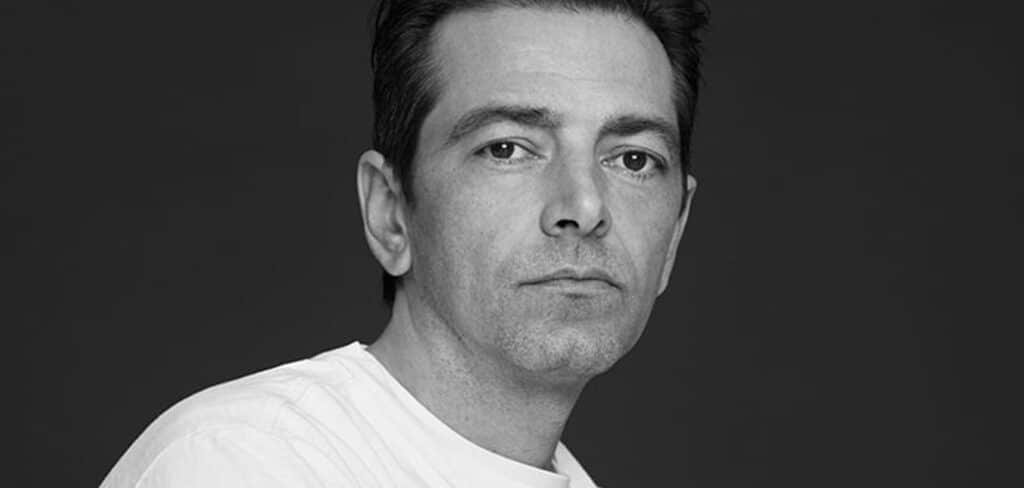
Pieter Mulier’s appointment must also be contextualized within the broader world of current luxury fashion trends and the strategic maneuvers of major fashion conglomerates like Prada Group. This move by Prada Group underscores an ongoing strategy of placing strong, design-led voices at the forefront of its portfolio. In an era where brand identity and creative vision are paramount to capturing market share, tapping a designer with Mulier’s proven track record signals a commitment to artistic integrity and directional leadership.
This is a design-led appointment within Prada Group’s newly expanded portfolio. The comparison with Mulier’s earlier work is worth making, but it does not demonstrate a market-wide return to minimalism or prove future commercial success. Our preference is to follow the cut and construction rather than assume that quieter design must replace every Versace print. The house’s identity and the new designer’s work will be judged through the collections, not the appointment headline alone.
Conclusion
Pieter Mulier’s appointment as Versace’s Chief Creative Officer marks an undeniably transformative moment for both the iconic Italian house and the luxury fashion industry at large. The powerful tension between Mulier’s signature minimalism and Versace’s storied maximalist heritage sets the stage for a compelling new chapter, promising a strategic recalibration of brand identity that respects legacy while forging a path forward. This definitive, forward-looking analysis underscores the immense potential for a fresh, sophisticated vision that could redefine modern glamour.
What are your predictions for Pieter Mulier’s Versace? Share your thoughts in the comments below, and stay tuned for our ongoing coverage as this exciting new chapter unfolds.
The announcement date and starting date should remain distinct when reading older coverage. Prada Group’s 30 July 2026 results statement subsequently welcomed Mulier’s arrival at Versace. That confirms the transition had taken effect; it does not establish a complete new-season retail range at every UAE boutique. For a purchase, check the specific collection, product reference and current local listing.