The McLaren is the lot I would spend the most time understanding—not because it was the most expensive, but because buying a future race car is a very different proposition from driving away in a classic. Its delivery terms change the story. So does the distinction between a billion-dollar display headline and actual auction proceeds.
Sotheby’s inaugural Abu Dhabi Collectors’ Week ran from 2–5 December 2025 at The St. Regis Saadiyat Island Resort, in partnership with the Abu Dhabi Investment Office. This is archive coverage of the lots and published outcomes, not an invitation to a currently open exhibition or a firsthand account of attending.
The figures worth keeping separate
The old billion-dollar headline concerned the estimated value of art and luxury on view. It was not a billion dollars of auction proceeds. RM Sotheby’s post-sale release gives a gross result of $85,064,125 for its 5 December 2025 car auction. That is one sale’s reported gross, not every Collectors’ Week category added together.
| Published figure | What it measures |
|---|---|
| About $1 billion on view | Estimated display value in the event’s promotion—not a realised sale total. |
| $85,064,125 | RM Sotheby’s reported gross for the collector-car auction. |
| $25,317,500 | Reported result for the 1994 McLaren F1 road car. |
| $11,480,000 | Published result for the future 2026 McLaren Formula 1 Team MCL40A lot. |
I would not compare an estimate, a hammer price and a published gross as though they were interchangeable. For a purchase, read the actual sale conditions and buyer’s premium, tax, delivery and import obligations. A headline result is not your complete ownership budget.
The McLaren story: two very different kinds of F1
The future Formula 1 chassis was not an immediate handover
The MCL40A lot record shows $11.48 million, sold. The offer concerned a chassis from the 2026 season, associated with Lando Norris or Oscar Piastri. It specified delivery at the end of the first quarter of 2028, with a 2025 non-running show car available on lease beforehand.
That is what makes it fascinating to me: part race-car acquisition, part future-delivery contract. I would read those conditions before getting carried away by the photograph. The catalogue itself warns that its 2025-season images do not necessarily depict the car offered. A display car, a future competition chassis and immediate ownership of a drivable road car are not the same thing.
The record also describes designated demonstration/track use with technical support, not an unrestricted road-registration promise. It included separately described team and race-hospitality experiences. Anyone analysing the transaction needs the exact contracts and applicable costs, not the phrase “money can’t buy” attached to something that was literally being sold.
The 1994 road car supplied a different headline
RM’s release identifies the 1994 McLaren F1 as the car auction’s top result at $25,317,500, rather than the roughly $21 million presale value cited in the earlier article. That distinction matters: the older number was not the final result.
I would keep the two stories side by side. The road car’s existing history and the race lot’s future delivery answer different collector interests. Neither result proves that another car—or a later resale of the same car—will appreciate.

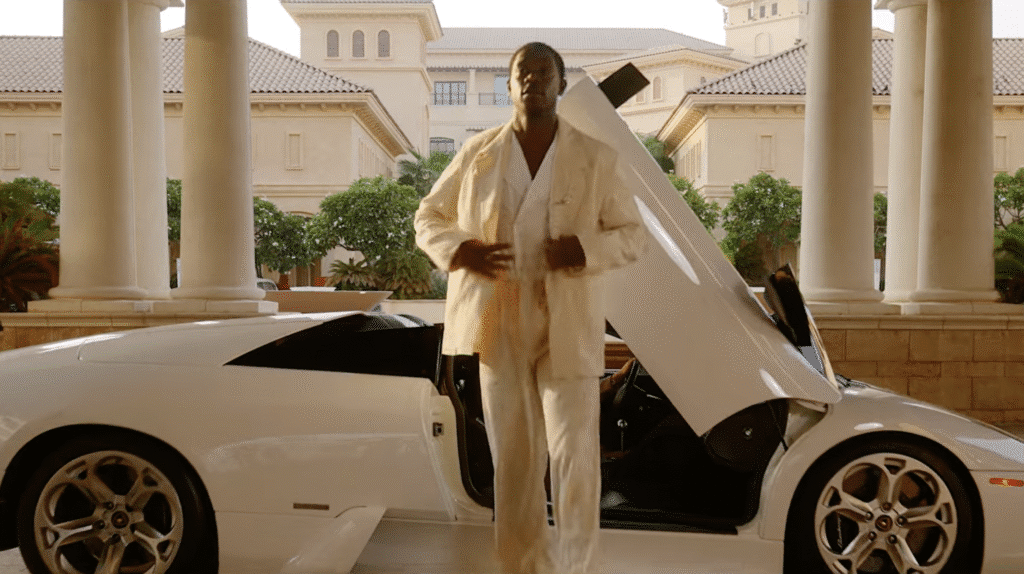
The retained white-coupe image is contextual. Its filename and inclusion in this article do not identify it as either McLaren lot or a car manufactured by Sotheby’s.
My other shortlist: a diamond, four watches and the right Birkin
The Desert Rose: the grading is the story
The Desert Rose catalogue identifies a pear-shaped 31.68-carat Fancy Vivid Orangy Pink diamond. It cites a GIA report for natural colour and VVS1 clarity. Those terms are not interchangeable with “D-colour flawless”, which appeared in older coverage.
I would start with that exact colour and report reference, not simply call it a spectacular pink stone and move on. The retrieved catalogue gives a $5–7 million estimate but requires login for the result. I am not turning that estimate into an independently verified sale price or claiming a gem examination.
Patek Philippe: a set of four, not twelve
The Star Caliber 2000 lot contains four double-dialled clock watches: yellow gold, pink gold, white gold and platinum. The catalogue identifies reference 990/1 and 21 complications per watch. It is a set of four objects, not twelve watches and not four conventional wristwatches.
This is the lot I would choose to study slowly: the relationship between the two dials, astronomical indications and chiming functions is more interesting than repeating how many millions it might cost. The public page lists a $10–20 million estimate; its logged-in result and condition report are not reproduced here. Reading a description is not inspecting the mechanisms.
Jane Birkin’s bag was a Birkin 40
The Le Birkin Voyageur catalogue describes a black Box Birkin 40 with palladium hardware, dated 2003. That corrects this article’s earlier Birkin 35 identification. It also records a personal dedication and the 2007 charity-auction provenance. The public estimate was $240,000–440,000, not a verified result on the retrieved page.
The personal history is why I would pay attention to this bag. A generic pristine Birkin and one catalogued as Jane Birkin’s own travelling bag are different stories. That does not make provenance a substitute for reading the documentation, and it certainly does not establish a resale return for an unrelated bag.
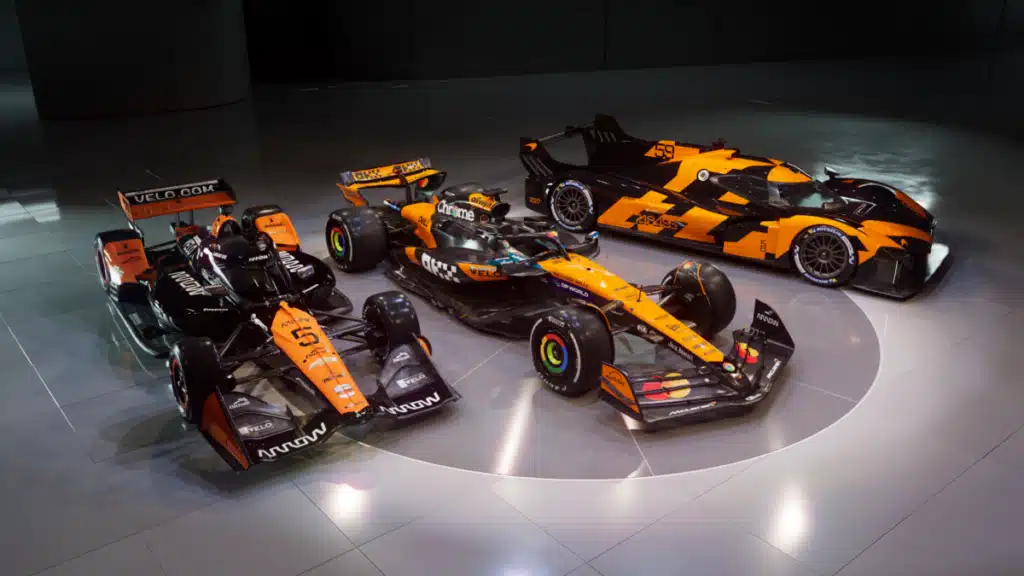
Existing McLaren racing imagery is retained. The future-car catalogue warns that illustrative vehicles need not be the exact chassis ultimately delivered.
The public programme was more useful than a parade of prices
I would have put the talks alongside the objects, rather than treat them as filler between auctions. The dated public programme lists a 2 December McLaren heritage/innovation discussion and a Rembrandt-and-wildlife conversation, followed by collecting and design sessions. That is a more specific reason for a culturally curious visitor to care than being told to dress for “luxury”.
The schedule also listed a 4 December conversation about the person behind the Birkin. I like that connection: it gives a named object a wider story without pretending that a price tag alone explains its significance. These are programme observations and editorial preferences, not claims that I attended or heard those discussions.
Capacity and registration mattered. The programme requested bookings for talks; the event page distinguished exhibition tickets from auction attendance and bidder registration. An old “book tickets” button still visible on an archived page does not make the 2025 programme open today. Nor did registering for a talk automatically make someone a bidder.
How I would research the next sale
- Identify the exact object. Start with lot number, reference, chassis or report details. “F1”, “Birkin” and “pink diamond” are not precise enough.
- Separate description from examination. Read the condition report, provenance and any addenda. Ask the specialist what is missing or qualified.
- Check what is actually delivered. Confirm timing, accessories, restrictions and support—not just what the promotional image shows.
- Define the cost measure. Keep estimate, hammer, premium-inclusive result and all-in acquisition budget distinct.
- Check access separately. Viewing, a public talk, auction spectating and bidding can have different rules.
For a complicated lot I would ask: “Which document confirms the identity and condition, what exactly transfers to the buyer and when, and which costs are excluded from the headline?” Those questions do more work than a list of superlatives. Independent specialist advice is sensible before a high-value bid; this is cultural coverage, not an appraisal or investment recommendation.
Questions answered
Did the billion-dollar figure mean auction proceeds?
No. It concerned estimated art and luxury on view, not a verified billion-dollar sale total.
What did RM Sotheby’s report after the car sale?
Its official release gives a gross result of $85,064,125 for the 5 December 2025 auction.
What is the Desert Rose diamond?
The lot identifies a 31.68-carat pear-shaped Fancy Vivid Orangy Pink diamond with natural colour and VVS1 clarity.
How many watches were in the Star Caliber set?
Four, one each in yellow gold, pink gold, white gold and platinum.
Is the 2025 public programme open today?
No. It is archive information; any new edition needs its own official dates and access terms.
My verdict: the object’s story beats its price tag
The future McLaren gets my attention because the delivery arrangement changes what ownership means; the Birkin because the recorded personal history changes what the object represents. Those are concrete reasons to explore the catalogue. A billion-dollar headline is not.
I would come back to those distinctions when researching another event, rather than repeat the claim that one auction “cements” a city’s cultural status. The December 2025 programme is a useful record with real objects, results and conditions. It does not need an expired invitation, a fictional visit or a guarantee that collecting is profitable.
Sources and review scope
Checked 19 October 2026 against the linked organiser programme, exact lot records and RM’s dated post-sale release. The Desert Rose composition is attributed to the catalogue’s cited report, not a newly obtained gem examination. Some sale results and condition reports require login and were not verified here. Three body images and the hero were viewed and preserved; two alts corrected. Original author, publication date, selected indexing/canonical settings and the five existing FAQ answers are unchanged. No attendance, authentication, mechanism test, contract advice, appraisal or investment-return assessment is claimed.