What I love about the Monaco is that it looks like it has a point of view before you know anything about Steve McQueen. The square case, blue dial and contrasting subdials do not politely disappear beneath a cuff. The film connection makes the story richer—but it is the individual watch’s paper trail, not the nickname, that turns a design story into a provenance story.
Two Sotheby’s auctions, two different Monaco watches
This story began with a December 2024 auction preview. That sale is over, and a separate example appeared in June 2026. I would start with the case identities rather than call either one a permanent “last chance.” The distinction also prevents a misleading comparison between a final price and a reported hammer price.
| Sale | Individual identity | Price evidence | How I would read it |
|---|---|---|---|
| Sotheby’s, 6 December 2024, lot 128 | Reference 1133B; case 160304 | US$1,440,000 final price in OnTheDash’s results register | Premium-inclusive result for this watch, not every Monaco |
| Sotheby’s, June 2026, lot 71 | Reference 1133B; case 159381 | US$640,000 reported by EveryWatch and described as hammer by Barrington | Separate object and price basis; not a direct percentage decline |
The 2024 Sotheby’s catalogue and 2026 catalogue establish the two case identities. Their public pages require login to view results. The result sources are identified below rather than presented as an independently accessed buyer’s invoice.

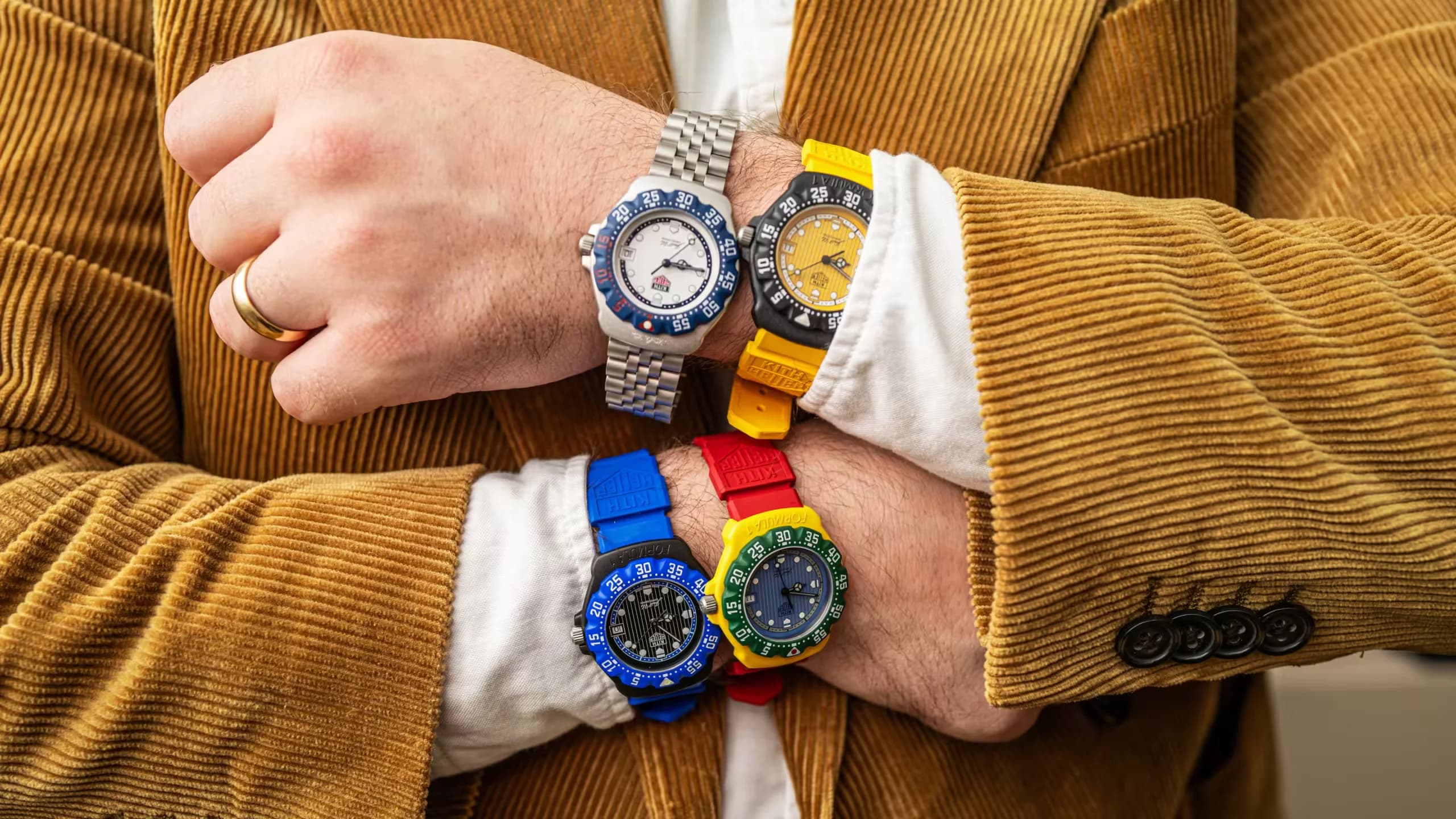
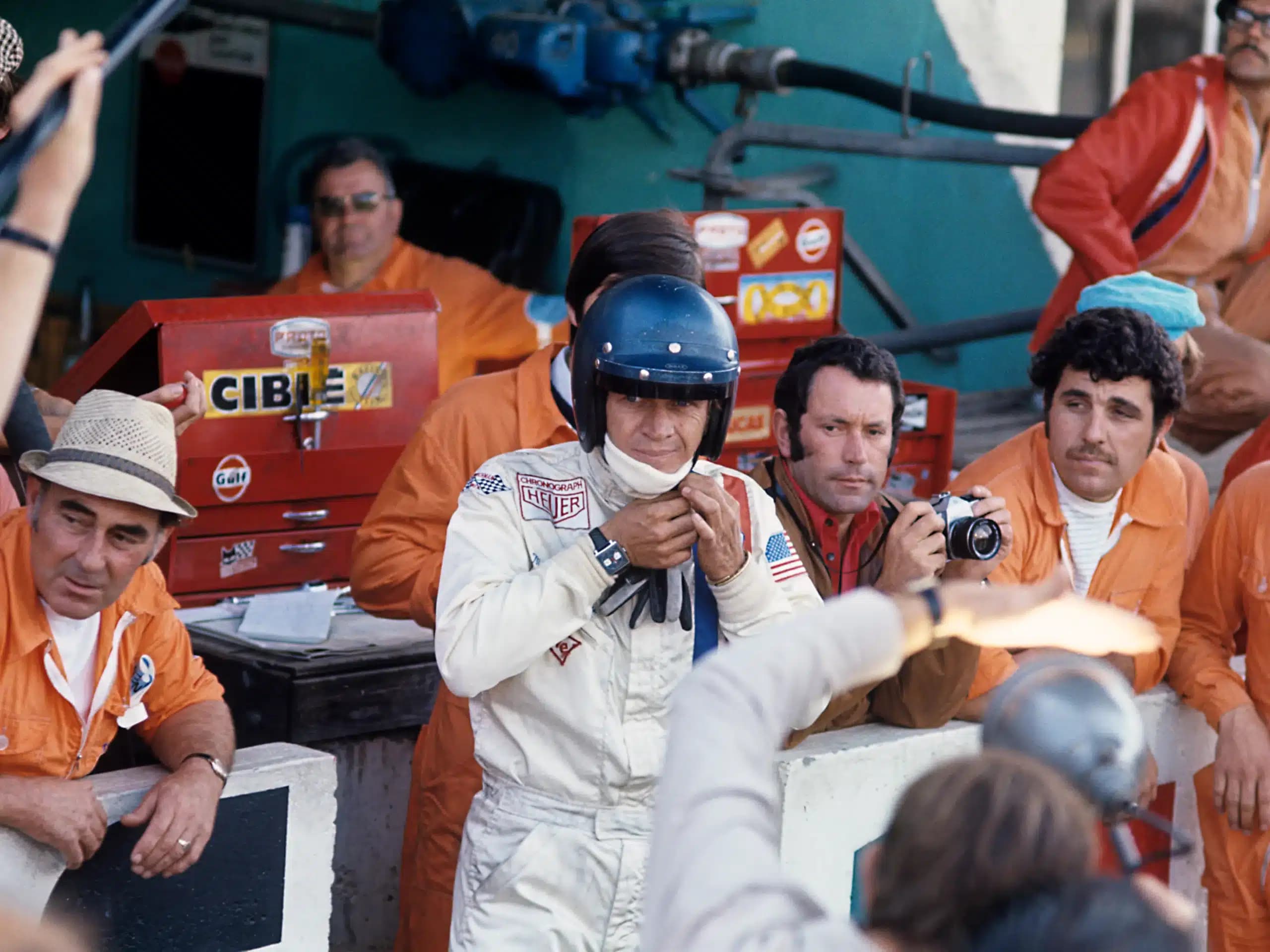
The opening collage combines a racing image with a TAG Heuer-branded Monaco. It illustrates the continuing design story; the watch on the right is not presented as either auction lot. The distinction is important when modern product photographs sit beside historic film images.
The Monaco’s legacy: a design that refuses to blend in
TAG Heuer’s historical account dates the Monaco collection to 1969 and explains its connection to McQueen’s character Michael Delaney. I find the square case more memorable than a list of celebrity adjectives. It gives the watch a stubborn, architectural quality; the blue and white dial then softens the severity.

I would choose that contrast because I enjoy the design, not because I expect a production-associated auction price to transfer to a modern watch. A model can be culturally significant and still be the wrong shape or size for someone’s wrist. The story is a reason to look closer, not a substitute for trying the actual reference.

The 2024 auction: what the catalogue and result actually establish
Sotheby’s identifies lot 128 as a blue-dial, steel reference 1133B with a Calibre 11 automatic movement, case 160304 and a 40mm width. Its listed accessories include Bevan Weston’s signed provenance letter and an additional steel bracelet. That is considerably more specific than “a watch like the one in Le Mans.”
OnTheDash’s updated sale register records the final result as US$1,440,000. It explicitly defines its final prices as hammer plus a 20% buyer’s premium. On that stated basis, the arithmetic is US$1,200,000 hammer plus US$240,000 premium. The US$1,440,000 total is not an ordinary shop price or a prediction of what the watch would sell for again.

For me, the useful detail is the chain from an identifiable object to its documents. It is easy to admire a watch photograph; it takes a different kind of work to establish which watch it is and how it moved between owners. The catalogue’s account of Weston belongs to that sourced history—not an interview conducted for this article.

The June 2026 example: a different case and archive
The later Sotheby’s lot is case 159381. Its catalogue lists an archive from Don Nunley, the film’s property master, with more than 400 documents, over 200 photographic reproductions and a sworn affidavit. Its provenance section records acquisition from Nunley on 24 April 2008. Those are details of the later lot, not extra accessories to attach to the 2024 sale.
Hodinkee’s June 2026 research report explains the distinction between the six blue-dial watches in a dispatch note and seven blue-dial examples traced to production. That is a more useful explanation than repeat an old four-worn/two-museum count as if it were a complete, permanent register.

For the later result, EveryWatch records US$640,000 and separately displays a 27% buyer’s-premium field. Barrington’s report calls US$640,000 the hammer price. These are attributed reports; the public Sotheby’s result remains behind its login.
I would not turn those two auctions into a claim that the whole Monaco market halved. They involve different watches, different documentation and a premium-inclusive total versus a reported hammer figure. A market conclusion needs comparable evidence, not just two dramatic numbers.

Steve McQueen’s enduring appeal—and the limits of the nickname
The racing imagery is terrific: overalls, machinery and a watch with a shape strong enough to register in the scene. I can see why the association endures. What I would resist is allowing that atmosphere to authenticate every blue Monaco offered under a “McQueen” label.
The earlier Phillips 2020 sale summary reports about US$2.2 million for a separate Monaco gifted to mechanic Haig Alltounian. Again, the personal history belongs to that example. It does not establish that any one of the other watches shares the same gifts, wear history or sale price.

Innovation: put the 1969 claim in context
The Monaco emerged during an important automatic-chronograph period. Hodinkee’s account places it alongside the Zenith El Primero and Seiko 6139 developments in 1969. I would not flatten that history into “the first automatic chronograph wristwatch” without qualifications. The square case and the Calibre 11 story are interesting enough without claiming every first at once.
Nor would I transfer a historical water-resistance claim to an uninspected vintage watch today. Present condition, seals and service history matter. Admiring the original engineering is different from telling a buyer that a particular old example is ready for swimming.

What I would check before buying a Monaco in the UAE
| Buying for | What matters most | What I would not accept as a substitute |
|---|---|---|
| The square-case look | Actual reference, proportions and fit | An auction headline standing in for a wrist trial |
| A vintage example | Condition, components and documented service | A nickname as proof that every part is original |
| A claimed film connection | Case identity and traceable supporting documents | A similar dial or a publicity photograph |
| A sensible purchase | Written seller terms and the complete cost | Assumed resale profit based on another watch |
I would rather buy the exact watch I want, with the right information and terms, than a weaker example wrapped in a louder story. There is no current UAE retail-price survey in this article, so the celebrity results should not become a made-up Dubai starting price. For another example of design and a limited edition needing separate treatment, see our KAWS and Audemars Piguet guide; our Lifestyle section carries the broader coverage.

My verdict
I think the Monaco earns its place in this story twice: first as an arresting design, then as an object whose individual history can genuinely matter. The documents make the story better. They also make it harder to wave around a “last ever” claim or use one exceptional sale to value every watch with the same outline.
Frequently asked questions
Was the December 2024 Monaco the final Le Mans watch ever offered?
No. The December 2024 Sotheby’s lot was case 160304. A separate June 2026 Sotheby’s lot was case 159381. Identifying the individual case is more reliable than treating a promotional “last” headline as a permanent census.
What was the 2024 result?
OnTheDash’s sale register records US$1,440,000 as the final price for lot 128 on 6 December 2024. Its register explains that final prices include the buyer’s premium. That is not the same basis as a hammer price.
What is reported for the June 2026 example?
EveryWatch lists US$640,000 for lot 71 and shows a 27% buyer’s-premium field separately; Barrington’s report describes US$640,000 as the hammer price. The public Sotheby’s page requires login for the result. Do not compare the reported figure directly with a premium-inclusive total.
Does a McQueen nickname prove a Monaco was worn in Le Mans?
No. A similar design, a modern re-edition and a watch with documented production provenance are different objects. Match the case identity and the actual supporting documents, not just the nickname.
Was the Monaco the only automatic chronograph introduced in 1969?
No. It belongs to the important 1969 automatic-chronograph period, alongside other competing developments. Calling the Monaco simply the first automatic chronograph erases that context; its square design is the clearer visual distinction here.
Do these sales establish the price of an ordinary Monaco in Dubai?
No. A film-associated watch with individual documentation is not a price guide for a standard retail or pre-owned example. Compare the exact reference, condition, service record and seller terms for the watch you are considering.
Sources and scope
Catalogue, historical and reported-result sources checked on 21 October 2026. Auction provenance is attributed to the cited records. This article does not independently authenticate a watch, inspect its movement or provide a personal valuation.