The United Arab Emirates stands on the cusp of a transformative leap in public transportation. Etihad Rail Passenger 2026 Launch is here. For years, residents and visitors alike have navigated the busy highways between emirates, often facing congestion and extended travel times. But a new era is dawning, promising to revolutionize inter-city travel with speed,…
The United Arab Emirates stands on the cusp of a transformative leap in public transportation. Etihad Rail Passenger 2026 Launch is here. For years, residents and visitors alike have navigated the busy highways between emirates, often facing congestion and extended travel times. But a new era is dawning, promising to revolutionize inter-city travel with speed, comfort, and sustainability. The Etihad Rail passenger network, a monumental infrastructure project, is set to redefine connectivity across the UAE.
This article serves as your ultimate, comprehensive guide to everything currently known about the Etihad Rail passenger network. From its highly anticipated 2026 launch to the recently unveiled 11 station locations, rapid travel times, luxurious cabin classes, and future ticketing information, we dig into the details that will shape the future of travel in the Emirates. Prepare to discover how this ambitious project will not only connect cities but also foster economic growth and embrace a greener future.
The Future is Now: Etihad Rail’s Passenger Network Launch & Vision
The groundbreaking Etihad Rail passenger network is more than just a railway; it’s a sign of the UAE’s forward-thinking vision and commitment to top-tier infrastructure. This transformative project, spearheaded by Etihad Rail, is poised to reshape national connectivity and passenger experiences.
Countdown to 2026: The Anticipated Launch of Etihad Rail Passenger Services
Etihad Rail’s passenger service launched on 30 June 2026. The first route runs between Abu Dhabi’s Mohamed bin Zayed City station and Al Hilal City in Fujairah, a journey of about 1 hour 45 minutes. Official announcements from Etihad Rail confirm that passenger services are set to commence in 2026. This highly anticipated year marks a significant milestone in the UAE’s transportation landscape, bringing a new dimension of efficiency and convenience to inter-emirate travel. When will Etihad Rail launch? The answer is firmly set for 2026, promising a revolutionary shift in how people move across the nation.
For a complete practical guide to life in the Emirates, explore our full Living in the UAE hub.
A National Vision: Revolutionizing UAE Connectivity and Travel
The vision behind the Etihad Rail project extends far beyond merely transporting people from one point to another. It’s a strategic initiative designed to bolster national development, enhance economic growth, and serve as a powerful symbol of the UAE’s progress and innovation. The Etihad Rail passenger network benefits are multi-faceted, promising to transform daily commutes and long-distance journeys alike.
Mohammed Alshehii, Chief Projects Officer at Etihad Rail, highlighted the strategic importance, stating that the project aims to “further improve connectivity around the emirates”. This UAE high-speed train system will link major population centers, fostering greater social and economic cohesion. By providing a modern, safe, and efficient alternative to road travel, Etihad Rail is set to significantly reduce traffic congestion, lower fuel consumption, and create new opportunities for tourism and business growth across the seven emirates.

Connecting Every Corner: Etihad Rail’s 11 Passenger Station Locations & Network Map
A central aspect of the Etihad Rail passenger network’s impact lies in its extensive reach, connecting major cities and facilitating smooth travel across the UAE. The announcement of its station locations has been eagerly awaited, providing clarity on the routes and accessibility of this expansive network.
The careful selection of station areas ensures key locations are connected, as emphasized by Mohammed Alshehii. This strategic planning guarantees that the Etihad Rail routes map will provide convenient access for millions.
The Latest Additions: 7 New Etihad Rail Station Locations Revealed
In a significant development on Thursday, January 8th, Etihad Rail officially unveiled seven new passenger station locations, expanding the network’s reach and accessibility. These additions bring vital areas into the fold, ensuring broader connectivity for residents and visitors. The newly announced Etihad Rail stations are:
- Al Sila
- Al Dhannah
- Al Mirfa
- Madinat Zayed
- Mezairaa
- Al Faya
- Al Dhaid
These stations are strategically positioned to serve communities in the Western Region of Abu Dhabi and Sharjah, further strengthening the national rail infrastructure and providing convenient access to a wider populace.
Strategic Hubs: The Previously Announced Etihad Rail Stations
Complementing the seven new additions are four previously announced strategic Etihad Rail station locations, forming crucial hubs within the network. These stations will facilitate connections between some of the UAE’s most populous and economically vital cities:
- Mohammed Bin Zayed City (Abu Dhabi)
- Jumeirah Golf Estates (Dubai)
- University City (Sharjah)
- Al Hilal (Fujairah)
With these previously announced stations and the seven new additions, the network will grow to 11 stations. After the June 2026 launch, Jumeirah Golf Estates (Dubai) and Al Dhaid (Sharjah) are due to open on 30 September 2026, the remaining Al Dhafra region stations (Al Sila, Al Dhannah and Al Mirfa) on 30 December 2026, and Sharjah’s University City on 30 March 2027. Update, July 2026: Etihad Rail has since brought forward the opening of two of those Al Dhafra stations, Madinat Zayed and Liwa, to 30 November 2026 — a month ahead of the original schedule. In all, the network will feature a total of 11 operational stations, connecting 11 cities across the UAE. This comprehensive network will allow for a smooth Dubai to Abu Dhabi train journey, as well as a direct Dubai to Fujairah train, amongst many other routes.
Mapping Your Journey: Understanding the Etihad Rail Network & Routes
The complete Etihad Rail map reveals an ambitious network designed to knit together the UAE’s diverse emirates. These 11 stations are set to connect 11 cities, forming a vital artery for national movement. The opening of these stations will occur in phases, ensuring a smooth rollout of services and gradually expanding the network’s operational reach.
The overarching Etihad Rail route is designed for efficiency and accessibility, dramatically reducing travel times and offering a comfortable alternative to road transport. This network will be a turning point for commuters, tourists, and businesses, providing a reliable and eco-friendly means of traversing the UAE.

Experience Excellence: Speed, Comfort & Sustainability Aboard Etihad Rail
Etihad Rail promises not just a mode of transport, but an elevated travel experience characterized by speed, comfort, and a strong commitment to environmental stewardship. These features position the Etihad Rail passenger network benefits far above conventional road travel.
Redefining Commute: High-Speed Travel & Reduced Journey Times
One of the most compelling aspects of Etihad Rail is its impressive speed. The trains are designed to travel at speeds of up to 200 km/h, making it a true high-speed rail network. This capability translates into significantly reduced journey times between key destinations, fundamentally redefining the concept of inter-emirate commute.
What will be the travel time between Dubai and Abu Dhabi on Etihad Rail? Passengers can anticipate the journey between Dubai and Abu Dhabi to be cut to a mere 50 minutes. Similarly, the travel time between Dubai and Fujairah will also be accomplished in just 50 minutes. This remarkable efficiency ensures that business travelers can maximize their day, and leisure travelers can explore more of the UAE with unprecedented ease. How fast will Etihad Rail travel? Up to 200 km/h, making it a swift and efficient choice.
Each train is expected to carry around 400 passengers, with the entire network projected to serve over 36 million people annually by 2030.
Travel in Style: A Look at Etihad Rail’s Cabin Classes
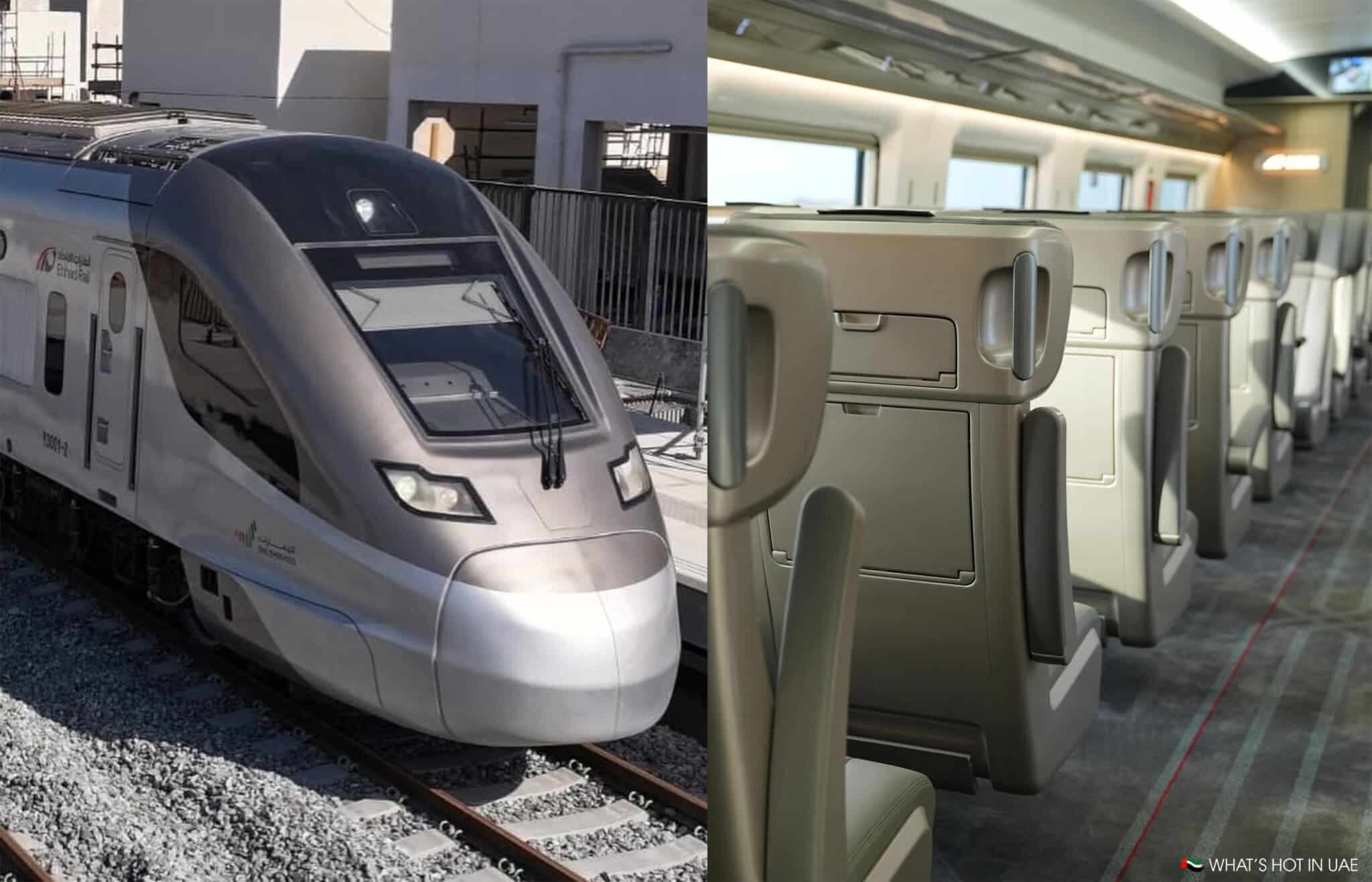
Etihad Rail is committed to providing a premium passenger experience, offering a range of cabin classes to suit different needs and preferences. Prototypes of these cabins were showcased at the Global Rail Conference in Abu Dhabi in September, giving a glimpse into the future of rail travel in the UAE.
The trains will feature three distinct cabin classes:
- Economy Class: Designed for efficiency and comfort, these cabins will feature back-to-back dark grey seats, equipped with tray tables and ample overhead luggage space.
- Family Class: Catering to groups and families, these cabins will offer facing seats around longer tables, fostering a more social and comfortable travel environment.
- First Class: For those seeking an elevated experience, First Class will boast wider, more adjustable seats, providing enhanced comfort and privacy for a luxurious journey.
What are the different cabin classes on Etihad Rail? Each class is thoughtfully designed to ensure a pleasant and productive journey for all passengers, reflecting the high standards expected of the Etihad Rail passenger experience.
A Greener Future: Etihad Rail’s Commitment to Sustainability
Beyond speed and comfort, Etihad Rail is a cornerstone of the UAE’s commitment to a sustainable future. It is positioned as a truly sustainable alternative to road travel, significantly contributing to the nation’s environmental goals.
The Etihad Rail sustainability impact is substantial. By providing an efficient rail network, the project aims to reduce carbon emissions, decrease traffic congestion, and lower the overall carbon footprint associated with transportation across the UAE. This initiative aligns perfectly with the UAE’s broader green initiatives and its vision for a more environmentally conscious future, making it a critical component of sustainable transport in the UAE.

Plan Your Ride: Future Ticketing, Fares & Payment Methods for Etihad Rail
Now the service has launched, here are the fares. On the Abu Dhabi-Fujairah route there is a 50% introductory discount: Comfort Class costs AED 55 (normally AED 109) and Premium Class AED 120 (normally AED 239). Practical details on ticketing and fares remain a key concern for future travelers. While some specifics are yet to be announced, official information provides insight into how passengers will plan and pay for their journeys.
Anticipating Ticket Prices: What We Know So Far
One of the most frequently asked questions is, “How much will Etihad Rail tickets cost?” It is important to note that specific ticket prices for the Etihad Rail passenger service are yet to be revealed. Etihad Rail is committed to making its services accessible, and pricing details are expected closer to the launch date.
However, it has been confirmed that ticketing for the Etihad Rail network will be managed by Dubai’s Roads & Transport Authority (RTA). This partnership suggests a smooth integration with existing public transport systems and a structured approach to fare management.
Seamless Payments: Potential for Nol Card & Other Options
Given the RTA’s involvement in ticketing, there is a strong potential for the integration of existing, widely used payment methods. Will Nol card be accepted for Etihad Rail tickets? Dubai’s Nol card, which is currently used across the emirate’s metro, tram, buses, and water taxis, is anticipated to be a potential method of payment for Etihad Rail services. This would offer immense convenience for millions of residents already familiar with the system.
Beyond the Nol card, other modern Etihad Rail payment methods, such as debit/credit cards and possibly digital payment solutions, are likely to be available to ensure ease of access for all passengers.
How to Book Your Etihad Rail Journey (Coming Soon)
Information on how to book Etihad Rail tickets will be made available closer to the 2026 launch. Passengers can expect details to be released through official Etihad Rail channels and the RTA. We anticipate an intuitive booking system, potentially via dedicated websites, mobile applications, and physical station counters, ensuring a smooth and user-friendly experience for all future travelers. Stay tuned for updates on Etihad Rail booking procedures.
Disclaimer: Information regarding ticket prices, specific services, and operational dates is subject to change as the Etihad Rail passenger network approaches its 2026 launch. This article consolidates currently available official announcements.