I would choose the UAE for the life I could build here—not because a skyline photograph proves it is the best country on Earth. The pull is easy to understand: ambitious cities, an extraordinary choice of food and things to do, and communities that bring different parts of the world together. But the winning move is the one that leaves room for an actual life after the rent, school run and bills.
My recommendation is straightforward: compare the job package, home, commute, healthcare and family costs as one decision. A brilliant salary headline can become an ordinary household budget; a less glamorous address can give you back time and money. This is a practical case for living in the UAE, with the trade-offs that deserve just as much attention as the attractions—not an official world ranking.
My move-or-wait checklist
| The decision | What I would confirm | What would make me wait |
|---|---|---|
| Career and residence | Written job terms, benefits and the applicable residence route | The plan depends on a verbal promise or an assumed permission |
| Home and journey | Full housing costs, payment dates and a real weekday commute | Cheaper rent is swallowed by travel costs or lost time |
| Family healthcare | Who is covered, the provider network and out-of-pocket costs | A dependant’s cover or an essential benefit is unresolved |
| School | A place, year-specific fees and the actual school run | An allowance or admission is still only an expectation |
| Everyday life | A workable summer routine, community and realistic leisure budget | The attractive lifestyle only exists on holiday spending |
A salary headline is not a household budget
I would run two calculations: what the household costs across a year, and how much cash is needed when payments fall due. They answer different questions.
| Illustrative assumption | Monthly equivalent |
|---|---|
| Take-home household income: AED 20,000 a month | AED 20,000 available |
| Assumed annual rent: AED 90,000 | AED 7,500 |
| Assumed annual school cost: AED 36,000 | AED 3,000 |
| Assumed other recurring household spending | AED 5,500 |
| Remainder before setup, travel, savings and unexpected costs | AED 4,000 |
These are invented inputs to demonstrate the calculation, not current market prices, a salary recommendation or a quote for a particular family. Replace them with your own actual offers. In this example, if the AED 90,000 rent is payable in four equal instalments, the first payment is AED 22,500—not AED 7,500. Add an assumed AED 15,000 for deposits and setup and the initial cash requirement becomes AED 37,500 before ordinary living expenses. A monthly average does not pay an upfront bill.
I would keep annual affordability, payment timing and emergency reserves on separate lines. For two school-age children, add both actual fee schedules; for employer-paid housing or education, use what the contract really covers rather than subtracting the whole bill by assumption.

For a complete practical guide to life in the Emirates, explore our full Living in the UAE hub.
Career opportunity: check the actual offer
The UAE’s business appeal deserves more than a blanket promise of uninterrupted growth. In its 17 July 2026 assessment, IMF staff described resilience alongside uncertainty affecting tourism, transport, trade and real estate. That is a more useful starting point than assuming every sector is booming. I would judge the particular employer, role and written package, not relocate on a national growth story alone.
For a career move, I would ask what is guaranteed in writing: salary, start date, probation terms, benefits, relocation support and the basis of residence. For a business, I would price the licence, premises, renewals and professional advice before treating a low headline setup fee as the entire cost. Opportunity matters; so does having enough financial breathing room to use it.

Safety: judge the route, not just the reputation
Safety is part of the UAE’s appeal, but I would judge the particular street rather than stop at a country’s reputation. For a home, I would inspect the actual access, crossings, lighting and route to work or school. Everyday crime and broader security conditions are different questions: before moving, I would check current official travel and security advice as well as the neighbourhood.
A good family routine needs more than the reassurance that a neighbourhood feels calm. I would test the school journey at the time it will actually happen, including the walk from the parking space or station. A short line on a map can still mean difficult crossings, an exposed walk or an awkward pickup. That is the level at which a location starts working for a household.

Healthcare: the policy matters as much as the hospital
I would choose healthcare access by the policy and provider network, not a country league table. Dubai’s government guidance says employers provide employee health insurance and sponsors must arrange cover for dependants. Get the actual family-cover position in writing; employee cover is not the same thing as every family member being included in the job package.
The practical questions are refreshingly specific: is the clinic or hospital you want in the network, what do you pay yourself, and what needs approval? I would obtain written answers about the benefits that matter to my household before accepting the cheapest policy. Dubai’s guidance says cost varies with benefits; rules and packages elsewhere in the UAE need their own check. A hospital photograph tells you none of this.

Luxury is an option, not an obligation
The skyline and big-ticket attractions are a genuine part of the attraction. Dubai’s Burj Khalifa and Abu Dhabi’s Sheikh Zayed Grand Mosque give very different reasons to explore. I like a place that offers both—but I would not describe luxury as the standard experience of every resident. Your own address, income and interests shape daily life far more than the most spectacular hotel in the city.
Dubai Mall and Yas Mall make it easy to combine shopping, food and entertainment in one outing. That is useful convenience, not a reason to spend every weekend buying something. I would set an entertainment budget I can enjoy without regret, then mix paid outings with the simple pleasures I actually want: a walk, a beach visit or an unhurried meal. The point of living somewhere exciting is to enjoy it, not keep up with its advertising.

Leisure, transport and the summer test
There is a broad choice of beaches, cultural outings, concerts and theme parks. I would plan from the actual event or operator’s current information, checking dates, admission and age restrictions before paying. If the outing involves Dubai public transport, our nol card balance guide helps with a useful pre-journey check.
I would be just as deliberate about the ordinary journey. Compare door-to-door travel, parking, tolls and the last stretch from a public-transport stop—not only the advertised driving time. Visit Dubai’s seasonal guide distinguishes outdoor-friendly winter activities from hot-weather indoor options. I would test whether the routine still works in summer, not choose a year-round home on a lovely winter weekend alone.

Community takes more than a postcode
The cultural mix is one of the strongest reasons I would consider the UAE: different cuisines, languages, businesses and social circles can sit close together. That variety is exciting, but I would put the effort into finding the community I want—through a hobby, work, school or a regular activity—rather than assume friendships arrive with the visa. An appealing social calendar and a dependable circle of friends are not the same thing.
My advice is to approach that variety with curiosity and respect. Learn the expectations of the places you use, ask when you are unsure, and distinguish a visitor attraction from a residential, religious or working space. A multicultural setting is not a promise that every custom or legal rule is identical to the country you left.

Make room for heritage
The heritage deserves space alongside the skyscrapers. Museums, heritage districts and cultural programmes give context to the architecture and traditions you see around you. I would choose an actual exhibition or guided programme and check its current access information, rather than race through a list of landmarks. Getting to know the place beyond its newest opening is part of making it home.

School and home belong in the same decision
For families, I would choose the school and home together. Curriculum, the right year group, an actual place and the journey matter more than a sweeping claim about educational excellence. In Dubai, KHDA’s School Fees Fact Sheet guidance explains that each private school has a sheet covering mandatory and optional charges. It is valid for one academic year and can be accessed through the school directory or parent-school contract.
I would ask for the sheet for my child’s year, separate the unavoidable charges from the extras we would actually use, and compare that total with any written employer allowance. KHDA also explains that “optional” book fees can mean a choice of supplier, not that the child does not need books. For higher education, compare the specific course, entry requirements and total cost at institutions such as UAE University, Khalifa University or NYU Abu Dhabi—not the city’s innovation branding.

Ask what a sustainable building actually does
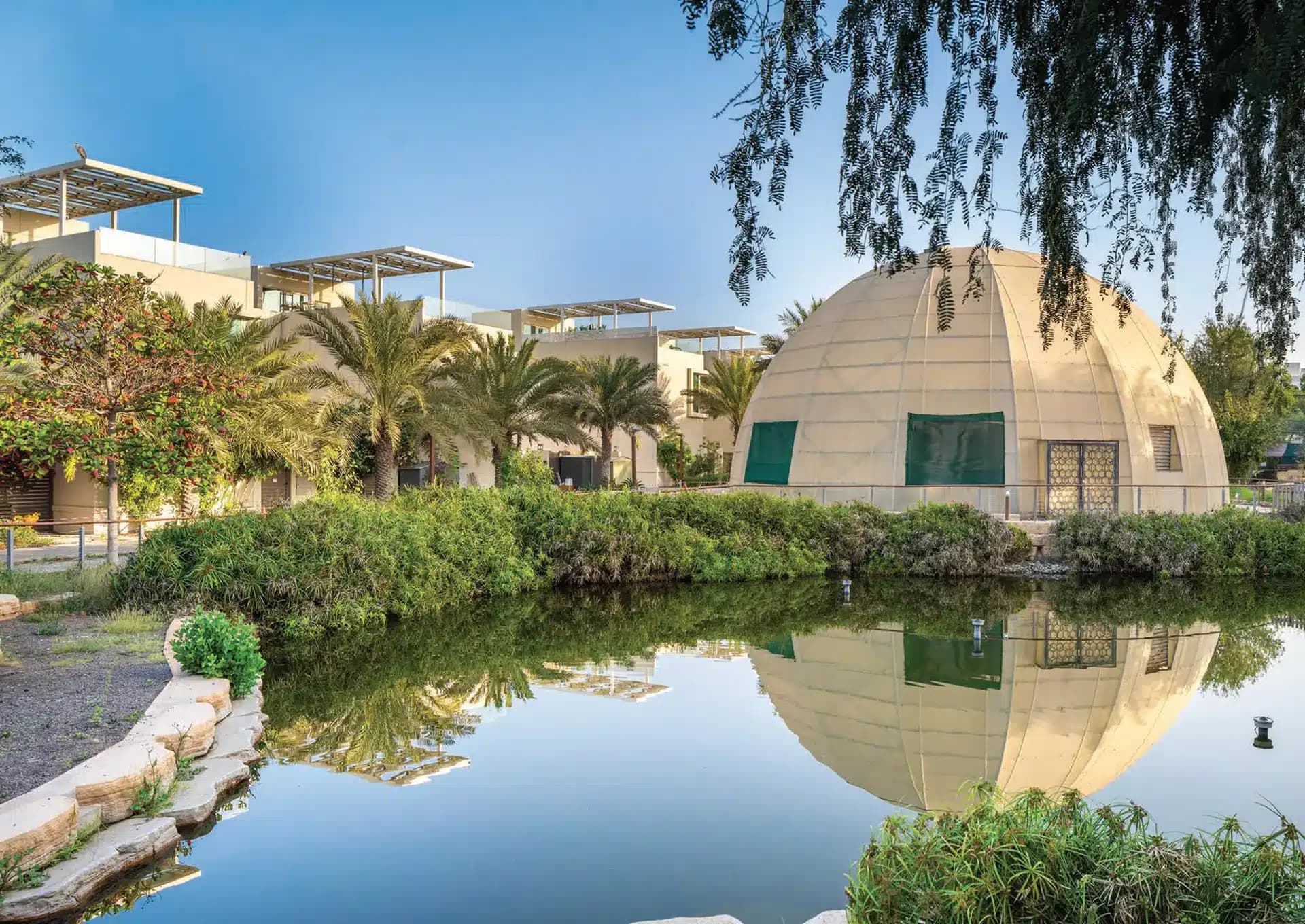
Sustainability is worth checking at building level. Masdar City describes passive design, energy and water efficiency, and more than 11 megawatts of installed solar PV. That supports a real discussion about design; it does not establish that the whole city runs primarily on renewable energy. For a home, I would ask about cooling arrangements, metering and actual charges instead of treating a green label as a utility-bill quotation.

My verdict: choose the life, not the slogan
My verdict: the UAE is a compelling choice when the package funds the routine you actually want. I would put a manageable commute, suitable school or community, dependable healthcare cover and savings ahead of the most impressive postcode. Those are the things that make a normal Tuesday enjoyable, long after the excitement of arriving has worn off.
I would pause the move if it only works with an unconfirmed allowance, a school place that does not exist yet or a budget with no margin. That is not a rejection of the UAE. It is choosing to arrive in a position to enjoy it. For the next practical steps, use our UAE relocation roadmap and visa-status guide, then confirm the current requirements for your own situation.
Sources and planning notes
Planning details checked on 21 October 2026 against the linked Dubai government, KHDA, Visit Dubai and Masdar City guidance; the IMF assessment is dated 17 July. Dubai-specific rules should not be assumed to apply identically across all seven emirates. Replace the illustrative budget with your actual quotes and written benefits before committing. Images provide lifestyle and historical context.