


I care more about getting there reliably than winning the shortest-route argument. A commute that is brilliant one morning and disastrous the next is hard to build a working day around. For Dubai traffic, my recommendation is to compare the whole journey—at the times you actually need it—rather than make another promise that leaving before seven or changing one road fixes everything.
The evidence does show pressure on the network, but it needs careful reading. Some widely repeated numbers count registered vehicles, others refer to daytime activity, and road-project savings describe particular sections rather than your front door to your desk. Below are the checked distinctions, relevant project updates and a practical way to compare routes, transport choices and costs.
What the traffic numbers actually tell us
RTA’s 3 November 2024 roads-plan announcement reported 3.5 million vehicles in Dubai during daytime hours and a 10% rise in registered vehicles over the preceding two years. Those are dated authority measures. The release does not establish that 3.5 million vehicles are all moving simultaneously, nor does it turn the difference between daytime activity and registrations into a count of inter-emirate commuters.
TomTom’s Dubai 2025 page, with City selected in the 10 November 2026 browser check, displays average congestion of 42.7%, up 2.7 percentage points on its 2024 comparison, and an average 10km travel time of 19 minutes 10 seconds. Its morning and evening rush-hour figures for 10km are 18 minutes 41 seconds and 26 minutes 33 seconds. These are historical area-level indicators, not a measured promise for your particular motorway segment or a live estimate for today.
TomTom distinguishes city and metropolitan coverage. Keep geography, year and metric consistent before comparing figures. “Congestion level”, average speed and the time for a standard-distance journey are different measures. I would not build an argument that a commute has doubled by placing an old city-centre statistic beside a newer figure with a different scope.
The previous article also used national registration totals and a 300% peak-hour increase without a sufficient supporting record. They are not retained as verified facts. The useful question is not which enormous number sounds most alarming; it is what is happening on the actual journey you must make.
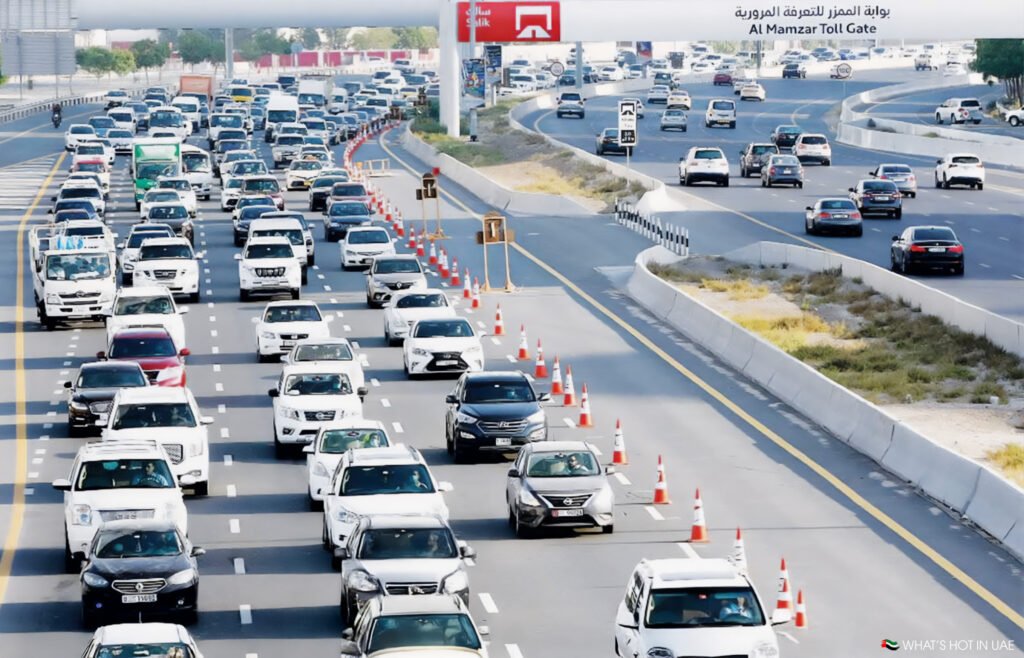
Why a citywide improvement can miss your commute
How sensitive is your weekly commute to one slow leg?
Illustrative example — not observed data
A 15-minute difference on each of ten legs adds 150 minutes a week. Compare the route you drive, not just the city average.
Methodology
Fictional five-day week with two legs a day. No observed travel-time savings or forecast.
Read chart data
| Comparison | Extra minutes per week |
|---|---|
| 5 extra per leg | 50.00 |
| 10 extra per leg | 100.00 |
| 15 extra per leg | 150.00 |
| 20 extra per leg | 200.00 |
Travel demand and road capacity do not meet evenly across a map. A route can move well until the same vehicles need a particular exit, merge or final approach. More capacity on one section does not remove every constraint downstream. That is why I want to know which movement a project improves, not just whether the road’s name appears in an announcement.
School drop-off, workplace arrival requirements, events and construction can all matter to a specific journey. Their importance should be checked against the route and date rather than attributed to broad claims about families, women-only facilities or a supposedly universal business culture. Those generalisations do not tell a commuter where the queue begins.
Compare the same journey under the conditions you actually need. An off-peak estimate is not a reliable peak-time commute budget. Use the actual starting entrance, destination, direction and required arrival time, and allow for the final approach and parking. This is a planning check, not a newly timed journey or a verified interview. The earlier anonymous banker’s unverified journey figures are not used as evidence for your trip.
For parents, shift workers, service teams and anyone with a fixed appointment, variability matters as much as a typical time. I would plan around an arrival requirement and a practical fallback, not a speed target. A delivery deadline or school bell is not a reason to use a phone while driving or take an unsafe manoeuvre.
Road works: completed sections versus future benefits
| Project reference | What the checked record says | What I would not assume |
|---|---|---|
| Al Khail Road development | RTA’s October 2024 newsletter records completion of that development across seven locations. | That the same package is still awaiting completion, or that every later Al Khail project is the same work. |
| Hessa Street: Sheikh Zayed Road to Al Khail Road | The 19 April 2026 WAM announcement carrying RTA’s account records the opening of the 4.5km section and its bridges. | That opening this section completed every later phase of Hessa Street. |
| Hessa Street Phase II | Separate 3km section from Al Khail Road to Sheikh Mohammed bin Zayed Road. In Gulf News’s 8 November 2026 report, RTA says it was 10.33% complete as of October, with sections to open in stages. | The report provides neither a full completion date nor the first staged-opening date. The planned 24-to-five-minute saving is not an already measured door-to-door result. |
| Dubai Metro Blue Line | RTA’s 3 May 2026 announcement describes a 30km, 14-station project, targeting opening on 9 September 2029. | That a future station is available for today’s commute, or that an announced district is the final entrance location. |
The Hessa opening announcement describes a reduction from 15 to four minutes for the completed section; the Phase II account describes a different 24-to-five-minute forecast. They are not interchangeable figures. I would check the section and direction against my route before using either in a housing or job decision. Neither is a guarantee of your door-to-door peak-hour time.
My view is that opening dates and named turning movements are more useful to residents than another sweeping “traffic solved” headline. If your journey uses the improved ramp, that detail matters. If the problem is the last kilometre into a car park, an extra lane elsewhere may not answer it.
Before changing your Hessa commute or choosing a home
The November report is useful progress information, not a new route to follow today. First identify whether your journey uses the already opened Sheikh Zayed Road–Al Khail section, the Phase II corridor farther inland, or a local approach outside either package. Then check which specific movement is actually open in current authority information and your journey planner. A staged-opening plan does not tell you that a particular ramp is available. Keep the existing route as the comparison until that movement is confirmed, and repeat the five-journey record below after a real layout change. Our Hessa Street project guide separates the phases and the differing published design descriptions; it is not a live diversion map.
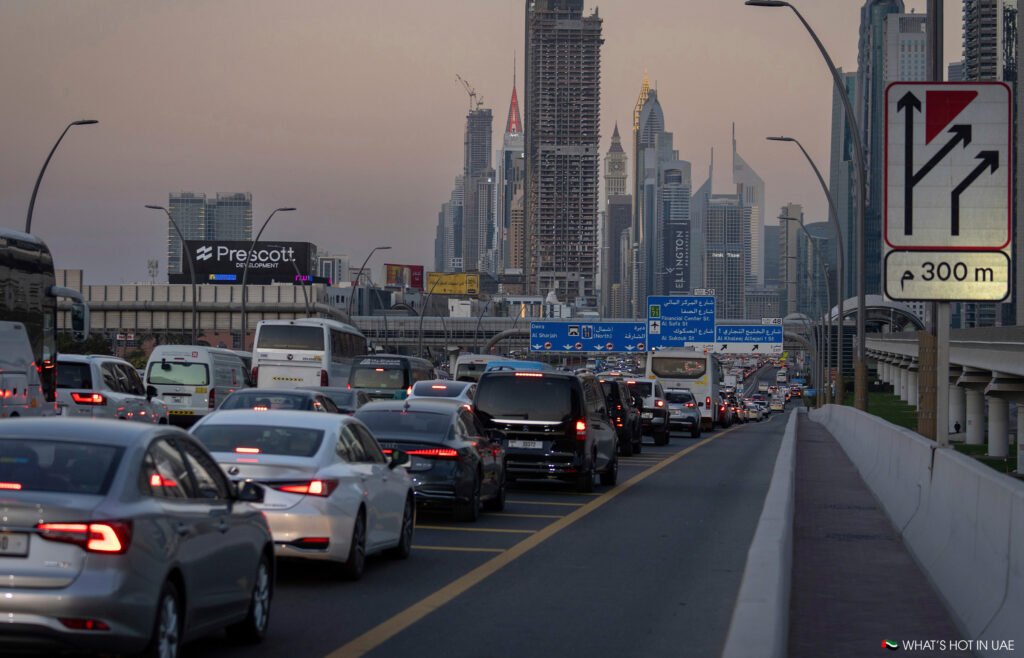
Salik: check the amount you will actually pay
Variable toll pricing is already in operation, not merely a future proposal. The normal schedule in Salik’s 2025 annual report, printed page 48, gives underlying weekday tariffs of AED 6 from 6–10am and 4–8pm, AED 4 from 10am–4pm and 8pm–1am, and zero from 1–6am. Its Sunday row gives AED 4 in the paid periods, with public-holiday and event exceptions. Ramadan uses a separate timetable; check the applicable dated schedule rather than reuse the normal one.
A separate Salik disclosure dated 22 May 2026 confirms 5% VAT on toll tariffs and tag activation from 1 June 2026, while the underlying tariff structure stays unchanged. On that basis, an AED 6 charge becomes AED 6.30 and AED 4 becomes AED 4.20. A timetable quoting base tariffs alone is not the whole current cost calculation.
Illustrative budget, not a route quotation: forty chargeable crossings at AED 6.30 total AED 252; forty at AED 4.20 total AED 168—a difference of AED 84. This assumes the same number of chargeable crossings and the stated bands apply. Check the actual gate sequence, direction, linked-gate rules, day classification and any exemption; counting every visible gantry as an independent charge can be wrong.
I would compare the toll saving with the extra distance, fuel, parking and time of an alternative. Avoiding a charge is not automatically good value if it adds a journey you dislike twice a day. For the actual debit, use your Salik trip record and current operator information.
The five-journey comparison I would start with
Keep a small record of the journeys that matter. Record the day, departure, arrival, route or mode, unusual disruption, tolls and parking. Do it when safely stopped, not by handling a phone while driving. Start with comparable workdays rather than compare a Sunday afternoon with a school-day morning.
| Record | Why it belongs in the comparison |
|---|---|
| Door-to-door duration | Includes reaching the car or station, parking and the final walk—not only time moving. |
| Required arrival | Distinguishes a flexible office start from school pickup, a shift or a flight. |
| Typical time and worst observed trip | Shows the early sample’s centre and variation, not just its fastest morning. |
| Paid costs | Separates fares, tolls, fuel, parking and any last-mile taxi. |
| Constraints | Records an inaccessible entrance, difficult transfer, school stop, luggage or other real requirement. |
| Fallback | Identifies a realistic alternative if the usual option is disrupted. |
Five journeys are a starting comparison, not a scientific forecast. Repeat after a schedule, route or road-layout change, and keep exceptional disruptions visible instead of deleting an inconvenient bad day. I would rather know the range than collect a reassuring average that conceals the trip that makes me late.
Why I would sometimes choose the slower typical route
This is a hypothetical example, not our commute data. Suppose five door-to-door trips take 42, 48, 47, 65 and 53 minutes on option A. Option B takes 45, 46, 49, 51 and 50 minutes.
| Five-trip illustration | Option A | Option B |
|---|---|---|
| Median | 48 minutes | 49 minutes |
| Longest observed | 65 minutes | 51 minutes |
| Shortest-to-longest spread | 23 minutes | 6 minutes |
For a fixed pickup time, I would investigate B first: its median is a minute longer, but the longest trip in this tiny example is fourteen minutes shorter. That does not prove B will always be reliable. It shows why choosing the best single time on a navigation screen can answer the wrong question.
Try an alternative departure window only if work and family arrangements allow it. Change one main variable at a time so the comparison remains readable. An earlier start that merely replaces the drive with an hour waiting outside a locked office has not necessarily improved your day.
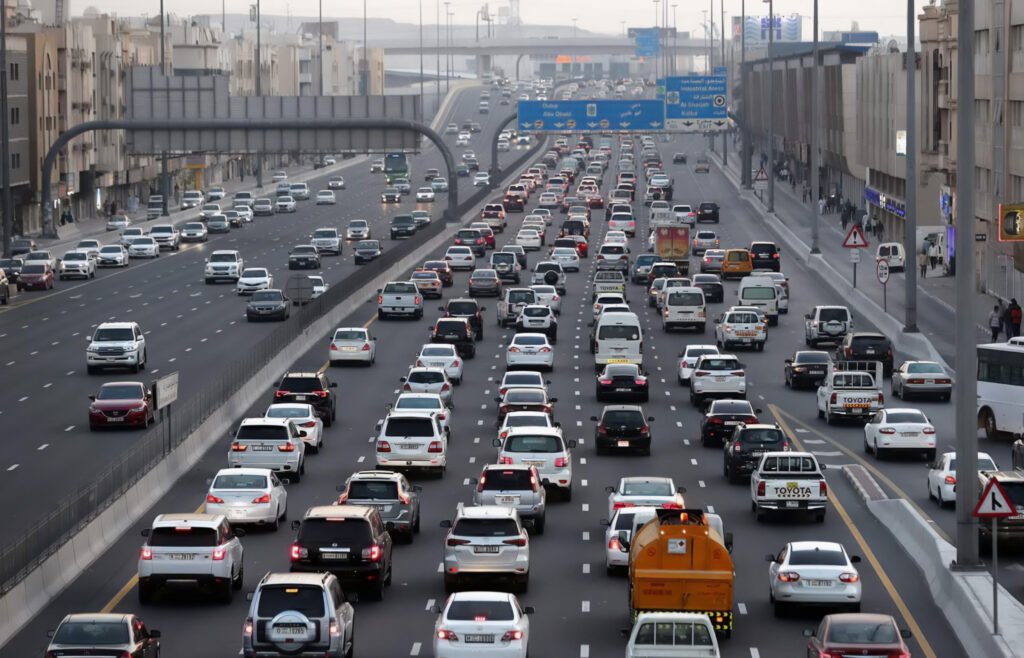
Metro versus car: compare both ends of the journey
I would use the RTA journey planner for the actual start, destination, day and arrival requirement, then include access and waiting in the comparison. A route alongside a Metro line is not the same thing as a front door beside a usable station entrance. For related card information, see our nol balance guide.
Here is another hypothetical comparison: 36 minutes on a train plus 12 minutes reaching the station, eight waiting/transferring and seven at the destination totals 63 minutes. A 45-minute drive plus twelve finding parking and eight walking totals 65 minutes. These are invented planning inputs, not actual service times between named stations. The point is that the headline in-vehicle difference has almost disappeared.
My preference would then depend on cost, accessibility, luggage, school stops and how I want to spend the trip. I would not recommend an uncomfortable or inaccessible last kilometre just to make a train option win on paper. Nor would I reject public transport because the rail leg alone looks longer than a best-case drive.
What employers and households can change
Before a dramatic move or a second car, I would examine the schedule. Is there permission to stagger a start, combine appointments or work remotely on a particular day? Treat those as arrangements to discuss, not benefits every employer offers or a guaranteed citywide cure.
For a household, map the linked commitments: work, school, care and appointments. A car-free journey that fails the pickup requirement is not the right plan. For a business, leave realistic intervals between appointments and distinguish an on-site meeting from one that can be handled remotely. Do not pass the pressure down as an unsafe delivery deadline.
An electric car changes the powertrain; it does not remove the car from the queue. Autonomous-transport plans, signal systems and future infrastructure also need their own delivery and performance evidence. I would not budget today’s commute around a technology promise or assume every junction already has the same control system.
Policy ideas are not announced rules
The earlier copy discussed registration caps, higher fees for multiple cars, special carpool lanes and EV toll exemptions as if they formed an established current policy debate. This review did not establish a specific operative announcement for those claims. They should not guide a purchase, route choice or legal assumption.
The checked RTA plan does describe road investment, dedicated bus/taxi-lane expansion and studies involving new transport systems. A study, target and opened service are different stages. My test for a policy claim is a named authority, dated announcement, clear scope and effective date—not a plausible-sounding suggestion.
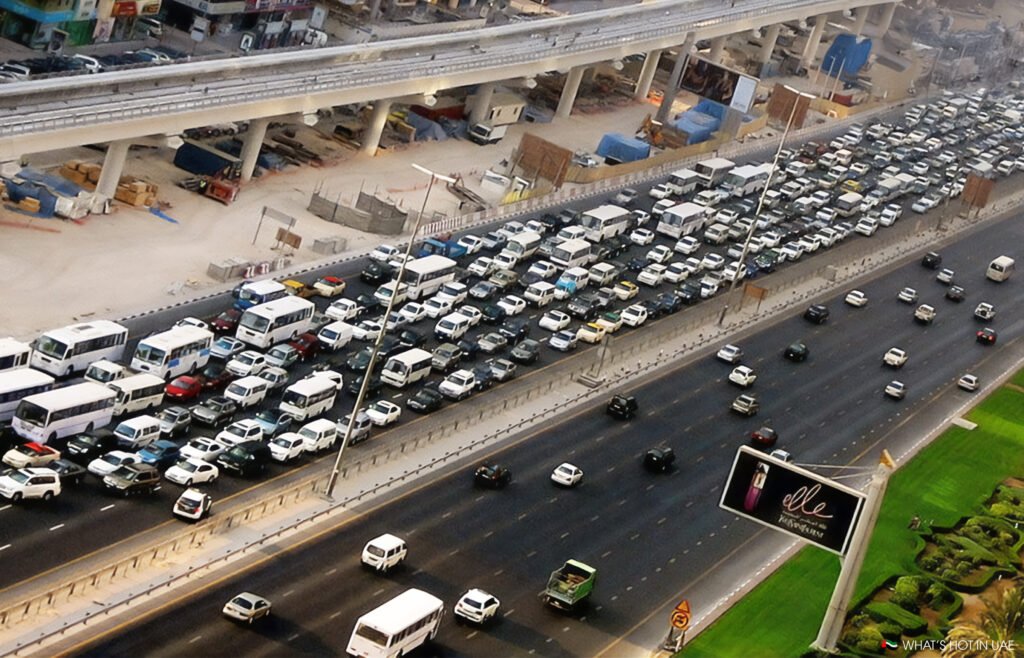
Put the time cost into a decision you can use
If an option genuinely reduces a round trip by twenty minutes on twenty workdays, the arithmetic is 400 minutes, or six hours forty minutes. That is an illustration, not a measured saving for Dubai residents. Decide what the time would actually replace: another cost, an earlier alarm, a missed meal or simply a less predictable day.
I would not convert every minute into a salary figure and call it money recovered. For a household, predictability can matter more than a theoretical hourly value. For a business, use actual delivery, staffing and fuel records rather than a sweeping claim about congestion destroying productivity or tourism.
Questions about Dubai traffic
Why is Dubai traffic so bad in 2026?
Growing travel demand, the concentration of journeys at similar times and constraints along particular corridors are relevant factors. Historical citywide statistics do not establish the cause of a delay on your route today; check current conditions and the exact project or incident affecting it.
What are the worst traffic times in Dubai?
There is no single worst window for every route and direction. Compare the same journey across the days and departure times you actually need, including the return trip. Salik peak-charge hours are not a guarantee of when every road is most congested.
Which roads in Dubai have the worst traffic congestion?
This guide does not establish a current road-by-road ranking. Sheikh Zayed Road, Al Khail Road and cross-emirate approaches need a direction, segment, day and time before a comparison is meaningful. A citywide average cannot identify your worst junction.
How can I avoid traffic in Dubai during peak hours?
Compare an alternative departure time, route or public-transport combination using current journey information and your own door-to-door records. Include parking, walking, transfers, fares and tolls. Do not assume a suggested shortcut or earlier start always saves time.
Is the Dubai Metro a faster option than driving during rush hour?
Compare the whole trip, not only time on the train. Access to the station, waiting, transfers and the final walk can change the result. Use the RTA journey planner for the actual day, direction and arrival requirement.
Are there any new Dubai road projects planned to ease traffic?
Yes. The announced improvements include a completed Sheikh Zayed Road–Al Khail section of Hessa Street and a separate Phase II towards Sheikh Mohammed bin Zayed Road. The Metro Blue Line has a published target opening of 9 September 2029; it is not an operating alternative now.
My verdict: choose a commute you can live with
I would take a repeatable journey over a heroic shortcut. Check the project section, count the entire trip and use the amount you will actually pay. Then compare an alternative against your own constraints. Dubai’s network is changing, but no road announcement can decide the right journey for your household.
For related practical coverage, see our driving-in-rain guide, dashcam evidence guide and Living in the UAE articles.
Research and correction scope
Base research: 20 October 2026 UAE time. On 10 November, TomTom’s actual City-selected 2025 figures were rechecked in a normal browser, and the whole 8 November Gulf News report carrying RTA’s October 10.33% Phase II progress and staged-opening statement was read. These bounded updates do not supply an opening date, live road-access test or new travel-time measurement. Other dated source reviews retain the scope below. RTA’s November 2024 plan and May 2026 Blue Line announcement, WAM’s April 2026 Hessa account, TomTom’s 2025 page, the relevant Salik annual-report spread and its one-page VAT disclosure were reviewed. The Al Khail completion record was available through RTA’s indexed newsletter. No new commuter interview, drive, travel-time experiment or live personalised route/charge quotation was performed; the earlier anonymous Al Nahda journey figures were withdrawn on 10 November 2026 because their source record was not verified. All five images were visually checked and retained as archived context. Six previously hidden FAQ entries are now visible and corrected in the matching metadata and script. Original author, publication date, media, indexing and canonical remain preserved.


