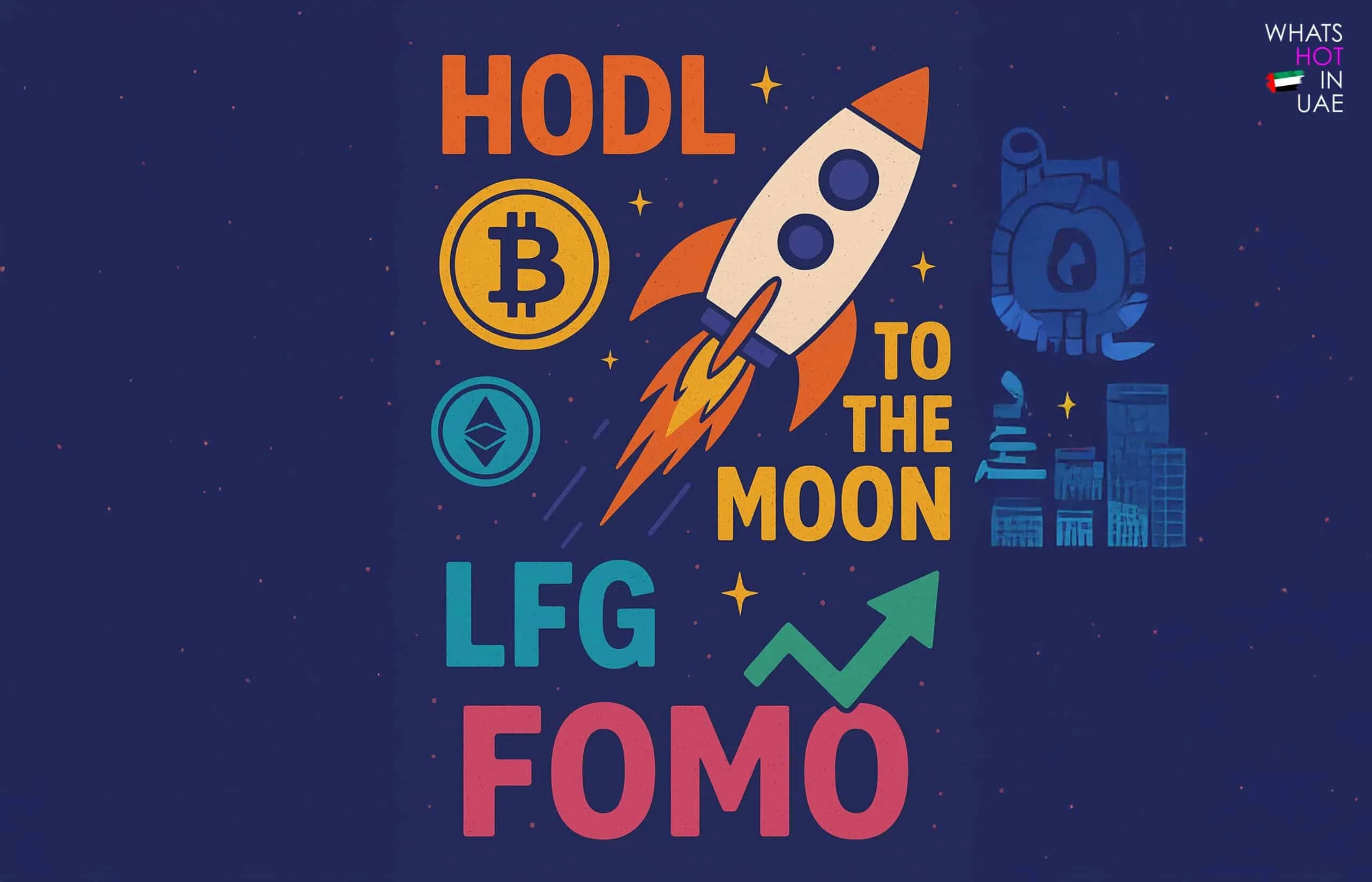
Venturing into the world of cryptocurrencies can feel like stepping into a linguistic labyrinth. With slang terms like HODL, vaporware, and DYOR being tossed around like crypto confetti, it’s easy to feel like a complete outsider.
What is alpha in crypto slang? Why are people calling me a normie? Why do I keep seeing people shout WAGMI or LFG like it’s a war cry?
This guide breaks it all down. It decodes the acronyms, memes, slang, and buzzwords that populate the fast-moving, meme-rich, often chaotic world of crypto.
Now, let’s get fluent.

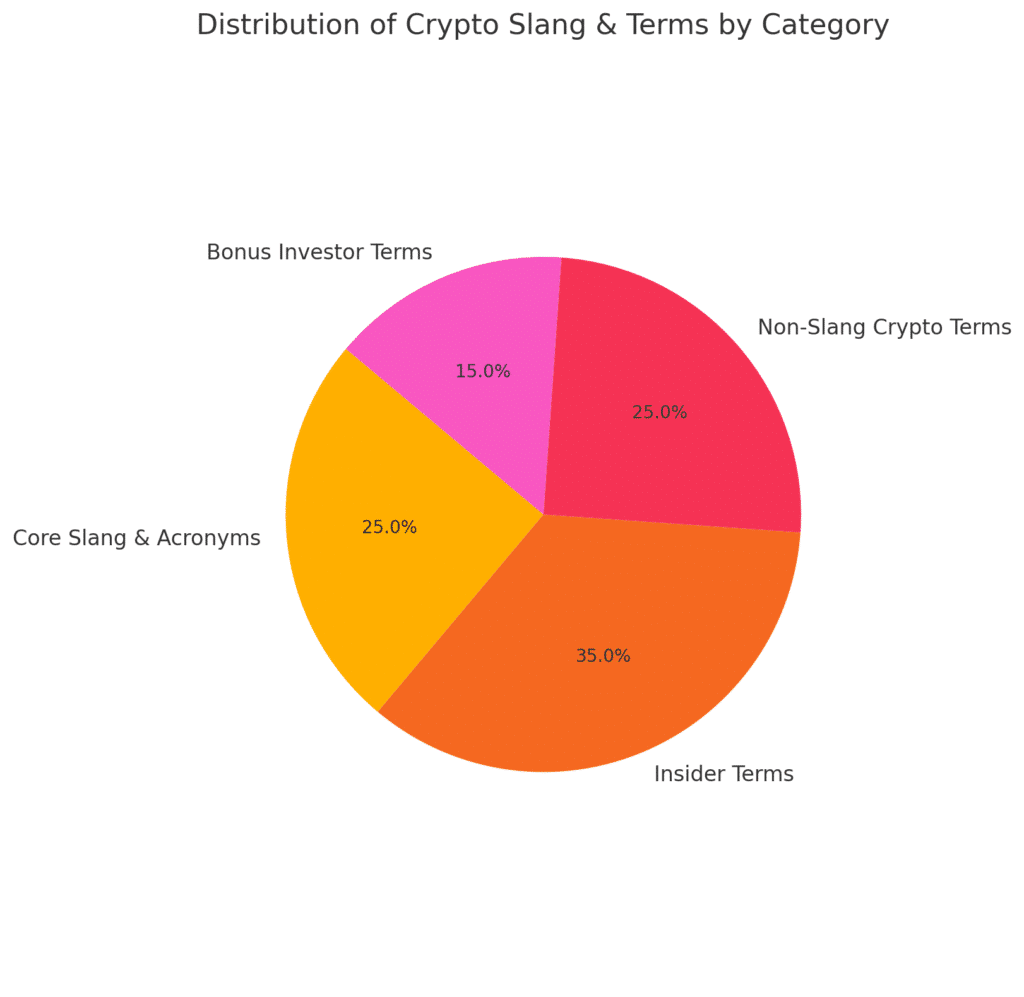
🧠 Core Crypto Slang & Acronyms
AMA: Ask Me Anything
Think Reddit-style Q&A sessions hosted by projects, influencers, or founders. They’re a chance for direct engagement and community-building. Got questions? Fire away.
BTD / BTFD: Buy The (F***ing) Dip
This one’s a rallying cry. When prices crash, brave (or reckless) investors swoop in. BTFD has become both a meme and a mindset.
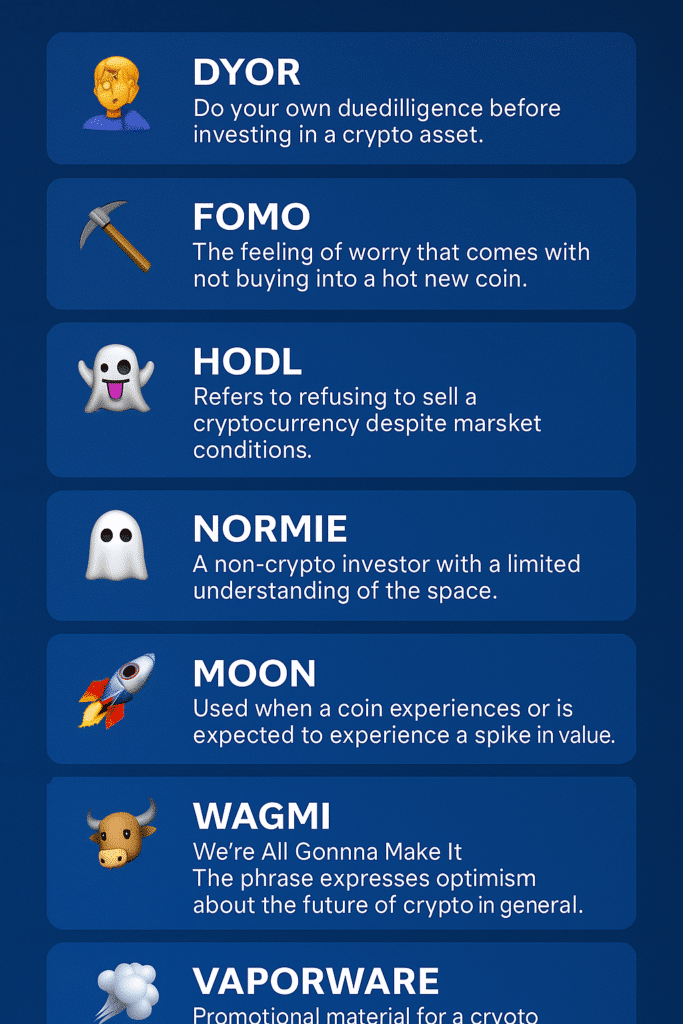
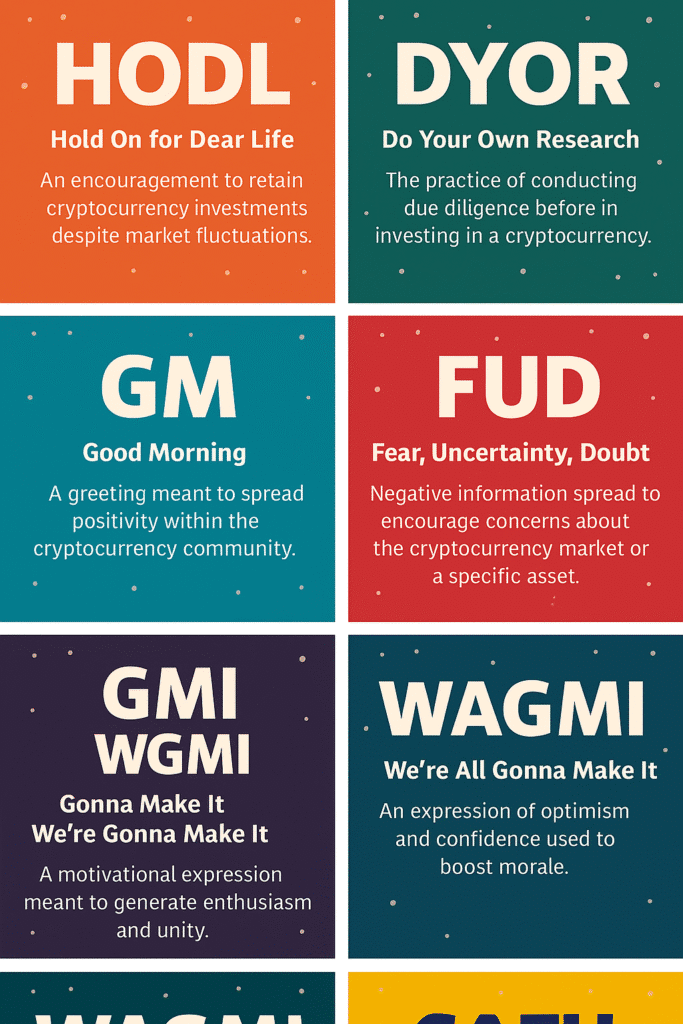
DYOR: Do Your Own Research
A mantra, a warning and sometimes a promoter’s favourite sign-off. DYOR means checking a claim for yourself: who made it, what supports it and what they stand to gain. Our scam-awareness guide tackles suspicious pitches. Tacking four letters onto a sales pitch does not settle the speaker’s responsibilities.
FML: F*** My Life
Markets dipped 40% overnight? Gas fees wiped your profit? A perfect time to drop an FML.
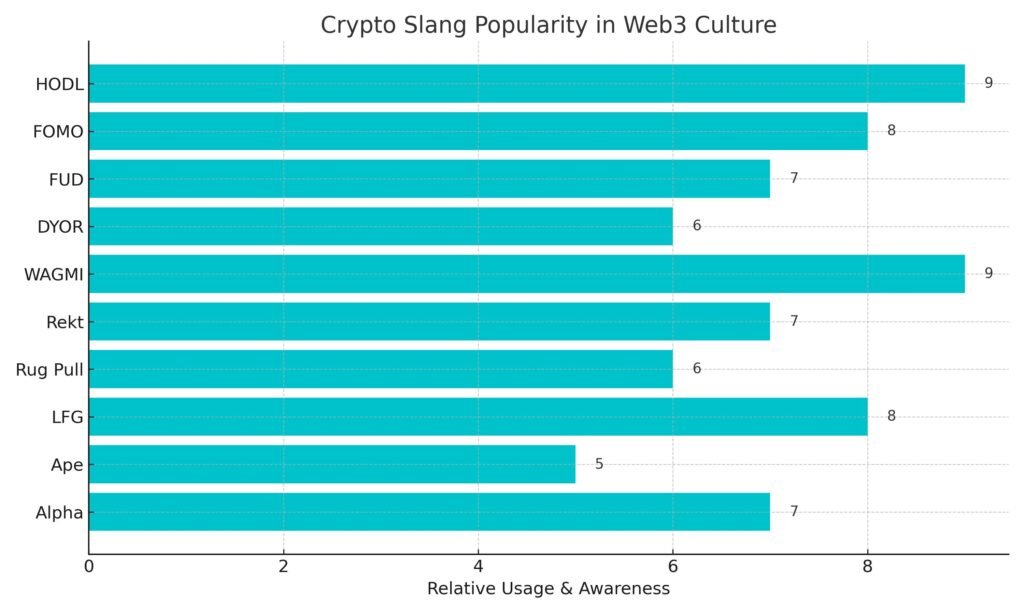
FOMO: Fear Of Missing Out
Greed meets impatience. Don’t let FOMO push you into bad trades. Use logic over hype.
FUD: Fear, Uncertainty, Doubt
FUD means fear, uncertainty and doubt. People use it to describe negative claims about a project, but calling something FUD does not establish that it is false. A documented security incident, licence restriction or financial concern deserves checking. Ask for the original evidence rather than dismiss criticism because a community dislikes it.
GM: Good Morning
A simple “good morning” from crypto Twitter, Discord or a project chat. Often more of a daily wave to the community than a comment on the market.
Check out: UAE CRYPTO: THE FUTURE OF FINANCE
GMI / WGMI / WAGMI: Gonna Make It, We’re Gonna Make It, We’re All Gonna Make It
During market crashes, this crypto chant rallies spirits. It’s about community. Belief. Copium.
GOAT: Greatest Of All Time
Reserved for game-changing protocols, devs, or influencers. Think: Satoshi. Vitalik. CZ.
HODL: Hold On for Dear Life
A typo with staying power. GameKyuubi’s 18 December 2013 “I AM HODLING” post described holding through a falling Bitcoin market instead of trying to out-trade it. “Hold On for Dear Life” became the memorable expansion. HODL describes holding through volatility, not a promise that holding any asset will pay off.
IYKYK: If You Know, You Know
Used when referencing insider alpha or niche events. Often seen on NFT Twitter or DAO governance threads.
LFG: Let’s F***ing Go
Crypto pumps? Bullish news? Meme coin mooning? Spam LFG in all caps.
NGMI: Not Gonna Make It
The opposite of WAGMI. Used to call out bad investments, poor decisions, or failed projects.
PFP: Profile Picture
In NFT land, PFP = your avatar identity. Think Bored Apes or CryptoPunks.
SAFU: Secure Asset Fund for Users
Binance established the Secure Asset Fund for Users in July 2018, according to its original announcement. It later used SAFU in response to the May 2019 security breach. “Funds are SAFU” also became a community expression, but slang is not a contractual guarantee that every loss is covered. Check the provider’s actual fund terms and the circumstances of a claim.
WAGBO: We Are Gonna Be Okay
A calming signal when prices crash. Less aggressive than WAGMI, but just as optimistic.

🧩 Crypto Phrases & Insider Terms
Alpha
Hot tips. Market insights. Insider info. True alpha gives you a competitive edge. But beware: it’s often diluted by wannabe influencers shouting “Alpha!” at basic advice.
Ape / Apeing
FOMO-fuelled investing without research. Don’t ape in—DYOR.
Bagholder
The person left holding a position after its price has fallen sharply. The “bag” can still have value; the joke is about being stuck with the loss, not a precise zero-price threshold.
Bitcoin Maximalist
They believe Bitcoin is the only crypto worth owning. Everything else? Trash.
Cryptojacking
Secretly using someone else’s computer power to mine coins. A stealthy form of theft.
Cryptosis
The obsession with all things crypto. Reading charts, watching videos, checking prices… every 15 minutes.
Degen
Short for “degenerate.” Risk takers who ape into low-cap coins hoping to 100x. They thrive on volatility.
Diamond Hands
Unshaken. Steadfast. Willing to HODL through hell and back. Often used with 💎🙌.
Flippening / Flappening
Flippening imagines Ethereum overtaking Bitcoin by market capitalisation. Flappening is a related Litecoin-versus-Bitcoin-Cash joke. These are comparisons of total market value, rather than one coin’s unit price.
Floor is Lava
In NFT markets, when the floor price (lowest price) surges fast—it’s said to be lava.
Going to the Moon / Mooning
When a coin’s price skyrockets. “Wen moon?” = “When will we get rich?”
No-Coiner
Someone who owns no crypto and often bashes it. The crypto world’s version of a sceptic.
Normie
Your uncle who says, “Bitcoin is just a fad.” Anyone outside the crypto bubble.
Not Your Keys, Not Your Coins
This slogan is about control of private keys, not an instruction that every reader should withdraw from an exchange. With self-custody, you control the keys and take responsibility for backups and transaction security; losing access or exposing recovery information can mean losing the assets. With third-party custody, the provider controls the keys, so its security, withdrawal terms and failure risk matter. Neither arrangement removes the risk of loss.
The SEC staff’s custody education bulletin explains these trade-offs. It is general education, not UAE law or a recommendation for a particular wallet. Our Tangem Pay explainer is a separate product discussion; a card or brand name does not settle which custody arrangement suits your situation.
Paper Hands
The opposite of diamond hands. Nervous investors who sell at the first red candle.
Pump and Dump
Market manipulation 101. Inflated hype → price pumps → early holders dump → chaos.
Rekt
Financial ruin. “Bro I got rekt buying that meme coin at the top.”
Rug Pull
When devs vanish with investors’ funds. A Web3 exit scam. Protect yourself by verifying teams and contracts.

Scamcoin
Useless crypto launched with hype, no utility. Only goal: enrich the founders.
Shill / Shilling
Pushing a coin or project (usually for personal gain). Trust no one. DYOR.
Sweeping the Floor
Buying up the cheapest NFTs in a collection, often to boost perceived value.
Vaporware
A loudly promoted product that has not materialised. A glossy roadmap can be part of the pitch; the missing ingredient is the delivered product.
Whale
An individual or entity that holds enough crypto to move markets. Their buy/sell decisions ripple across the space.
When Lambo?
A meme meaning “When will I get rich enough to buy a Lamborghini?” It represents moon-mad dreams.
🧾 Essential Non-Slang Crypto Terms You Must Know
Altcoin
Any cryptocurrency that isn’t Bitcoin.
ATH: All-Time High
The highest price a token has ever reached.
ATL: All-Time Low
The lowest price ever. Often used to find “bottoms” or entry points.
Bearish
Expecting prices to fall.
Bullish
Expecting prices to rise.
CEX: Centralized Exchange
Centralised venues such as Binance, Bybit and Kraken. The operator supplies the account and trading service and commonly holds assets in custody. The actual entity, permissions, products and withdrawal terms matter more than the familiar logo.
DAO: Decentralised Autonomous Organisation
A decentralised autonomous organisation: an organisation using on-chain rules and member governance, often involving token votes. Voting power can be concentrated, and teams or delegates can still have important roles. “DAO” does not mean every member has equal influence or that nobody leads the work.
dApp
Decentralised Application. Runs on blockchain. Examples: Uniswap, OpenSea.
DeFi
Decentralised finance: services such as trading, lending and borrowing built around smart contracts. DeFi changes where transactions execute and who controls parts of the system; interfaces, developers, oracles and administrators can still matter.
DEX: Decentralised Exchange
A decentralised exchange uses smart contracts to facilitate swaps or trading. Wallet-based access is common, but interface restrictions, token permissions, liquidity and transaction fees vary. “DEX” is a technical category, not a universal access promise.
KYC: Know Your Customer
The verification process required by most CEXs. Usually involves submitting ID.
Mint
The process of creating a new token or NFT.
NFA: Not Financial Advice
NFA means “not financial advice”. It signals how the speaker describes their commentary, but the phrase does not automatically remove legal duties, make a promotion compliant or turn unsupported claims into reliable information. Judge the evidence, incentives and substance of a statement rather than treating the acronym as a legal shield.
P2E: Play-to-Earn
Games where you earn crypto rewards. Combines fun with income potential.
📊 Bonus Terms for the Observant Investor
Gas Fees
The cost of executing a transaction on a blockchain, especially Ethereum. Can spike during high activity.
Layer 1
A base blockchain like Ethereum or Solana.
Layer 2
Built on top of Layer 1 to improve scalability (e.g., Arbitrum, Optimism).
Tokenomics
The economic design of a cryptocurrency, including supply, distribution, and incentives.
Hash Rate
The total computational power used in mining a cryptocurrency.
Smart Contract
Code that runs on blockchains to automate actions (like a vending machine that pays out only when conditions are met).
Staking
Participating in proof-of-stake network security, directly or through a service or delegation arrangement, with possible rewards. Lockups, custody and withdrawal conditions differ by network and product; delegating Cardano and running an Ethereum validator are different jobs.
Halving
Bitcoin’s block subsidy halves every 210,000 blocks, roughly four years. That slows the issuance of new coins; it does not halve the coins already in circulation. Our archived Bitcoin forecast guide distinguishes protocol events from price expectations.
Three Crypto Posts, Translated
The following messages are invented examples of how the slang works—not quotes from a real project or a set of trading signals.
- “GM frens. WAGMI. Paper hands out.” Translation: a greeting, a rallying cry and a jab at sellers. It tells you about the group’s mood, not the asset’s accounts or value.
- “Fresh alpha. 100x. DYOR. NFA.” Translation: a claimed information edge, a dramatic return pitch and two responsibility-related abbreviations. The missing pieces are the evidence, the promoter’s interests and the actual conditions behind the number.
- “Not your keys. Move it now.” Translation: an argument about custody. Before acting, establish who controls the keys, which network and address would receive the asset, and who would handle backups and mistakes.
For the technical vocabulary behind the jokes, Ethereum.org’s glossary expands on DAOs, smart contracts and proof-of-stake terms.
🧭 Final Words: Talk the Talk, Walk the Wallet
Crypto is more than tech and tokens—it’s culture. From WAGMI memes to HODL chants, this world communicates through layered language. Learning the slang helps you connect, stay safe, and avoid rookie mistakes.
So whether you’re deep in DeFi, minting NFTs, or just here for the vibes—now you speak the lingo.
And remember: always DYOR. Because in crypto, knowledge is alpha.
Crypto Slang Is Not Evidence
What “buy the dip” leaves out
Hypothetical example — not market data
An entry after a 20% drop can still lose half its value if the price falls from 80 to 40.
Methodology
Illustrative WHIUAE calculation. Linked references provide context, not observations for these inputs. Fictional indexed prices; 40/80 − 1 = −50% for the example buyer. Slang is not a risk control.
Read chart data
| Scenario | Illustrative price |
|---|---|
| Before drop | 100.00 |
| Example dip entry | 80.00 |
| Further drop | 40.00 |
“Alpha”, “SAFU”, “diamond hands” and “WAGMI” describe how people talk. They do not prove a token’s value, a provider’s solvency or a promised return. For UAE readers, distinguish a community’s vocabulary from the facts needed for a transaction: the actual token contract, the provider’s legal entity and permitted service, fees, custody and withdrawal terms. A warning labelled FUD may still be accurate; a message labelled NFA may still be promotional. Use this glossary to understand the conversation, then verify the claim behind it.
For the longer cultural meanings, read Wen Lambo and crypto culture. For choosing a provider, use our UAE licensing and fee checks.