If you’ve ever tried to fill in an online checkout form from Dubai, you’ve probably stared blankly at the postcode field for longer than you’d like to admit. The UAE doesn’t use postcodes, zip codes, or any equivalent system — and there’s a specific reason for that. Here’s everything you need to know about how mail actually works in Dubai, including how to send and receive post, what to type when a website demands a postcode, and the two address systems that replaced traditional postal codes.
Key Takeaways
- Dubai doesn’t use postcodes because its postal system evolved without needing them.
- Instead of postcodes, Dubai relies on PO Boxes and Makani codes for mail delivery.
- A PO Box serves as a delivery address, while a Makani code points directly to a building’s GPS location.
- When online forms require a postcode, enter 00000 as there’s no postcode system in place.
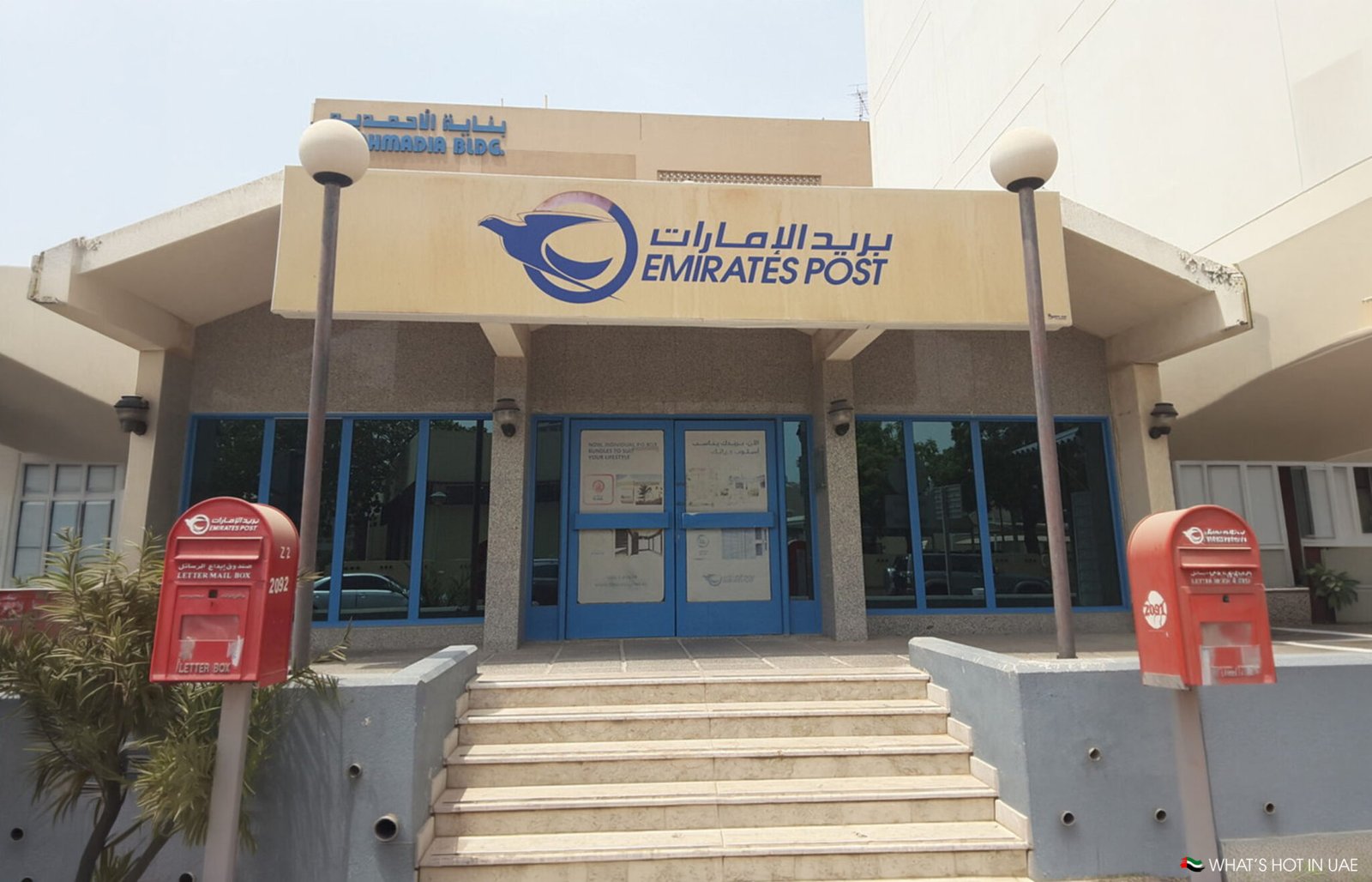
- To send mail, visit an Emirates Post branch or use couriers like DHL or Aramex, as no street postboxes exist.
Why Doesn’t Dubai Have Postcodes?
The short answer: Dubai simply never needed them.
Postcodes were developed in countries with large, dispersed populations where centralised sorting of enormous mail volumes was essential. Dubai’s postal history is relatively recent — according to Emirates Post, the city’s first postal service dates to 1932, when the population and the mail volume were both tiny.
By the time Dubai began its rapid urban expansion in the 1970s and 1980s, modern courier infrastructure and electronic communications were already becoming the norm. The city essentially leapfrogged the era of high-volume letter mail entirely. Today, the vast majority of official correspondence in the UAE is handled electronically or via direct courier delivery, and physical junk mail is virtually non-existent. There was never a moment where the volume of letters demanded a postcode grid.
What Does Dubai Use Instead of Postcodes?
Dubai uses two systems that between them cover everything a postcode traditionally does: PO Boxes and Makani codes.
PO Boxes
A PO Box (Post Office Box) is a numbered mailbox at an Emirates Post office. In Dubai, all registered businesses are required to have one, and individuals can apply for a personal PO Box through Emirates Post. When you receive mail in Dubai, the PO Box number replaces what a postcode does in other countries — it tells the postal system exactly where to route your delivery.
If you don’t have a personal PO Box, your employer’s business address and PO Box is a common fallback for receiving parcels and correspondence. Many Dubai residents never apply for a personal one because their apartment building has a centralised mailroom that handles incoming deliveries under a single address.
Makani Codes
Introduced by Dubai Municipality in 2015, the Makani system assigns a unique 10-digit code to every building in Dubai. Each code corresponds to a precise GPS location, meaning couriers and delivery drivers can navigate directly to any building in the city without needing a street address.
“Makani” means “my location” in Arabic. The system is more geographically precise than a postcode — a postcode covers an area, while a Makani code points to a single building entrance. You can find your building’s Makani code on the blue number plates attached to most Dubai buildings, via the Makani app (available on iOS and Android), or at makani.ae.

How to Address a Letter or Parcel to Dubai
When addressing mail to someone in Dubai, include the following elements in this order:
| Line | What to Write | Example |
|---|---|---|
| 1 | Recipient name | John Smith |
| 2 | PO Box number | PO Box 12345 |
| 3 | Building name and flat/unit number | Flat 802, Marina Diamond 4 |
| 4 | Street name or area | Dubai Marina |
| 5 | Emirate | Dubai |
| 6 | Country | United Arab Emirates |
| 7 | Phone number (highly recommended) | +971 50 XXX XXXX |
A phone number is not technically required, but adding one dramatically improves your chances of successful delivery. Dubai couriers regularly call recipients to confirm addresses, especially for first-time deliveries to a building. Without a number, parcels are more likely to be returned or held at a depot.
What to Type When a Website Asks for a Postcode
This is one of the most common frustrations for residents ordering online from international retailers. Most global checkout systems have a mandatory postcode field that won’t accept a blank entry. Here’s what to do:
| Situation | What to Enter |
|---|---|
| UK-format postcode required | 00000 or 0000 |
| US zip code required (5 digits) | 00000 |
| Generic international postcode | 00000 or 000000 |
| Site specifically asks for UAE postcode | Leave blank or enter 00000 |
All major international couriers (DHL, FedEx, Aramex, UPS) are aware that the UAE does not use postcodes. As long as the rest of your address is complete — building name, area, emirate, phone number, and PO Box if available — your delivery will reach you without issue.
How to Apply for a Personal PO Box in Dubai
If you receive regular post or want a permanent, official delivery address in Dubai, applying for a PO Box through Emirates Post is straightforward:
- Visit emiratespost.ae or any Emirates Post branch
- Choose your preferred post office location (your PO Box will be housed there)
- Select a box size — Small, Medium, Large, or Extra Large
- Submit your Emirates ID and payment
- Collect your key and PO Box number
Annual PO Box fees in Dubai start at around Dhs180 per year for a small box and go up depending on size and location. Premium locations (Dubai Mall post office, for example) cost more than suburban branches.

Where to Send Mail and Parcels From Dubai
There are no red postboxes on Dubai’s streets. To send a letter or parcel, you have several options:
| Service | Best For | Notes |
|---|---|---|
| Emirates Post | Standard letters, documents, small parcels | Government-operated; nationwide and international coverage |
| Aramex | E-commerce parcels, regional deliveries | Strong regional coverage across GCC and MENA; popular with online shoppers |
| DHL Express | International urgent shipments | Premium pricing; fastest international transit times |
| FedEx | Business documents, international parcels | Strong US and Europe routing |
| iMile | E-commerce and same/next-day parcel delivery | UAE and GCC-focused; widely used by online retailers for GPS/Makani-based last-mile drop-off |
Rates are based on weight, dimensions, and destination. For sending within the UAE, Emirates Post and Aramex are the most economical. For international shipments, compare rates online before committing — prices vary significantly between providers for the same package.
How to Find Your Makani Code
There are three easy ways to find the 10-digit Makani code for your building:
- Blue building plate: Look for the small blue number plate near the main entrance of your building — most Dubai buildings have one
- Makani app: Download the free Makani app (iOS/Android), search by building name or browse the map
- Website: Visit makani.ae and search by area or building name
Once you have your Makani code, add it to your delivery addresses for all UAE-based orders. Couriers familiar with the system will use it to navigate precisely to your entrance, which reduces failed delivery attempts significantly.
Dubai Postcodes: FAQs
Does Dubai have a postcode?
No. Dubai and the wider UAE do not use postcodes, zip codes, or any equivalent numbering system. Instead, the UAE uses PO Box numbers for mail routing and Makani codes (10-digit GPS-linked building identifiers) for physical delivery navigation.
What postcode do I enter for Dubai on online forms?
Enter 00000 in any mandatory postcode field when ordering to a Dubai address. All major international couriers are aware the UAE has no postcode system, and a five-zero entry is universally accepted by checkout systems. Make sure the rest of your address (building name, area, emirate, phone number) is complete.
What is a Makani code in Dubai?
A Makani code is a unique 10-digit number assigned to every building in Dubai by Dubai Municipality. Each code links to a precise GPS coordinate, allowing couriers and navigation apps to locate any building entrance in the city. You can find your building’s code on the blue number plate near the entrance, via the Makani app, or at makani.ae.
How do I get a PO Box in Dubai?
Apply through Emirates Post at emiratespost.ae or at any branch. You’ll need your Emirates ID and payment for the annual fee, which starts at around Dhs180 per year for a small box. You choose the post office location where your box will be held. All UAE businesses are legally required to have a PO Box.
Where can I send letters and parcels in Dubai?
There are no street postboxes in Dubai. To send mail, visit an Emirates Post branch, book a courier pickup through Aramex, DHL, FedEx, or use a service like iMile for UAE-only deliveries. Rates depend on the size, weight, and destination of your shipment.
Why doesn’t Dubai have postcodes?
Dubai’s postal history only dates to 1932, and the city expanded rapidly during an era when electronic communications and direct courier delivery had already replaced high-volume letter mail. The volume of physical post never reached a level that required a centralised sorting system like postcodes. The PO Box system and, more recently, Makani codes handle all the functions that postcodes serve elsewhere.