Key Takeaways
- Dubai’s Sustainable City integrates social, environmental, and economic pillars, prioritizing resilience over luxury.
- The community achieves net-zero ambitions through solar energy and inclusive design, making high-density living eco-friendly.
- Economic resilience focuses on self-sustaining infrastructure, reducing costs and stabilizing businesses during downturns.
- Visitors can explore pedestrian-friendly streets with integrated green spaces and retail areas, promoting a connected community.
- Overall, Dubai’s Sustainable City serves as a proven framework for the region’s future development.
Unlike traditional developments focused solely on luxury, Dubai’s Sustainable City integrates social, environmental, and economic pillars. Developed by SEE Holding, it uses a holistic model to ensure community resilience against both climate change and economic volatility, making sustainability a functional part of daily life rather than an afterthought.
Dubai usually builds for scale. We have the tallest towers and the largest malls. Faris Saeed, the founder and chairman, took a different path when he launched this community in 2016. He shifted the focus from building big to building resilient.
The model stops treating “green” as a luxury add-on. It is the core infrastructure. I have seen how most developments treat sustainability as a marketing badge. Here, it is a functional requirement for the community to operate.
This project moved from a proof-of-concept to a working blueprint over the last decade. It tests how people actually live when the environment and the economy are linked. It is a shift in how we think about urban planning in the UAE.
How does the community achieve environmental resilience?
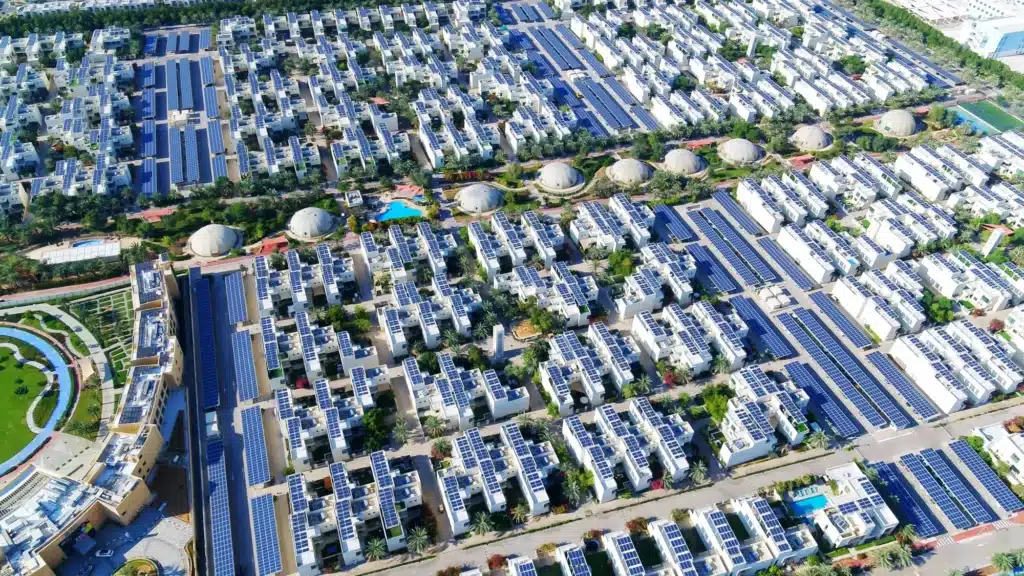
The community achieves net-zero ambitions through integrated renewable energy systems, primarily solar power, and inclusive design. By prioritising natural cooling and resource efficiency, the development proves that high-density urban living in a desert climate can significantly reduce its carbon footprint without sacrificing comfort.
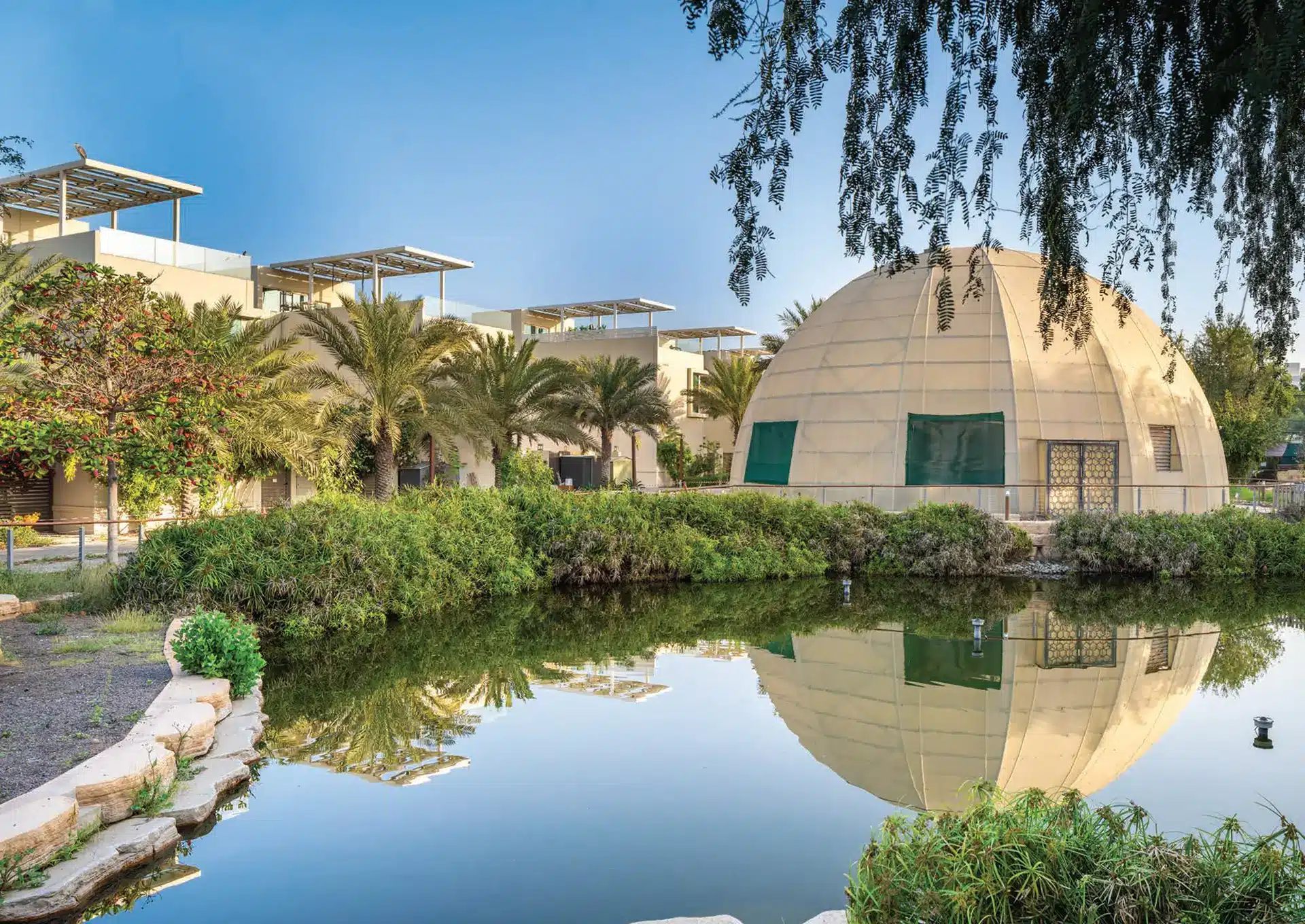
Solar panels are the most visible part of the system. They provide the energy needed to run the homes and the public spaces. This reduces the reliance on the main grid.
The design focuses on natural cooling. In a city where AC runs 24 hours a day for half the year, reducing heat gain is the only way to hit net-zero. The layout uses inclusive design to make sure the environment works for everyone, regardless of their physical needs.
It proves that high-density living in the desert does not have to mean high emissions. The goal is to maintain comfort while cutting the waste that usually comes with GCC urban sprawl.
The economic logic behind sustainable urbanism
Born from the lessons of the 2008 financial crisis, the project focuses on economic resilience. By creating a community that is less dependent on external resource shocks and more focused on efficient, self-sustaining infrastructure, it offers a stable model for long-term residency and business operations in the GCC.
Faris Saeed designed this in the aftermath of the 2008 crash. That period taught us that over-reliance on external systems is a risk. When the market dips or resource costs spike, the most efficient systems survive.
Economic sustainability here means lowering the cost of living over the long term. Solar energy and resource efficiency reduce monthly overheads for residents. This creates a buffer against inflation and price volatility in energy markets.
For businesses, this model offers a stable environment. A community that can sustain itself is less likely to see the sudden vacancies or operational failures that hit traditional developments during a downturn.

Practical guide to visiting and experiencing the community
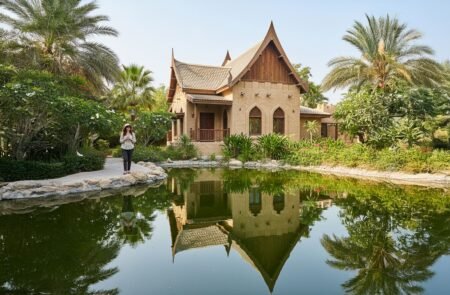
To experience the Sustainable City, residents and visitors can explore its pedestrian-friendly streets and green spaces. While primarily a residential community, its layout is designed for connectivity. Check local community guidelines for access to specific amenities and retail areas located within the development.
The community is built for walking. The streets are designed to keep cars separate from pedestrians. This makes it a practical place to move around without a vehicle.
If you visit, focus on the connectivity of the layout. The green spaces are not just for show. They serve as cooling corridors and social hubs for the people living there.
Retail areas are integrated into the plan. You can access these zones without needing to drive across the community. Check the current guidelines before visiting to see which amenities are open to the public.
Dubai’s Sustainable City has transitioned from an ambitious experiment into a proven framework for the region’s future.
Follow our business and economy beat for more deep dives into the UAE’s evolving urban landscape.