
The 2026 Reality: How the Iran War Changed Everything
Before diving into the growth data, there is a critical context that any honest 2026 analysis must address. Most statistics largely reflect data from 2023, 2024, and 2025 — years of record-breaking growth. In early 2026, the escalation of the US-Iran-Israel conflict fundamentally altered conditions on the ground.
The impact on Dubai’s hospitality and nightlife sector has been severe:
- Hotel occupancy collapsed from 84.8% in January–February 2026 to 22.8% by the week of 14 March 2026. Moody’s forecasted occupancy to fall as low as 10% in Q2 2026 — levels not seen since the COVID-19 pandemic.
- Dubai International Airport (DXB) handled just 2.5 million passengers in March 2026 — a 66% year-on-year decline from March 2025.
- 30,000+ flights across the Middle East were cancelled in the weeks following the conflict’s escalation.
- Tourism revenues across Dubai dropped between 50% and 80% in the immediate aftermath.
- The World Travel and Tourism Council (WTTC) estimated the region was losing $600 million per day in visitor spending.
- Strategy firm Redseer Middle East projected UAE tourism to contract 30–40% for the full year 2026, assuming the current ceasefire holds.
- A return to pre-conflict occupancy and visitor levels is widely considered unlikely before early 2027.
Dubai’s nightlife districts — which depend almost entirely on international visitors — have been among the hardest hit. JBR, the Marina, and Downtown venues that were operating at capacity in late 2025 have seen sharp footfall declines. Some hotels have used the lull to accelerate planned renovations rather than operate at near-zero occupancy.
The structural data and growth projections in the sections below reflect the trajectory Dubai was on entering 2026 and the trajectory it is expected to return to once stability is restored. They should be read as long-term market fundamentals, not a description of current trading conditions.
Dubai is one of the world’s most visited cities — and after dark, it shows. From rooftop bars on the Palm to beachfront clubs at JBR, the emirate’s nightlife scene has grown into a billion-dirham industry that attracts millions of visitors each year. If you’re curious about Dubai Nightlife Statistics 2026, you’re not alone. But how big is it, exactly?
This article compiles the latest official statistics, market research, and industry data into a single comprehensive resource. Whether you’re planning a night out, researching the hospitality market, or trying to understand where Dubai’s entertainment sector is heading — the numbers tell a compelling story.
Dubai International Visitor Growth: The Foundation
You cannot understand Dubai’s nightlife industry without first understanding its tourism engine. The two are inseparable. Every major club, rooftop bar, and beach club in Dubai is primarily dependent on the city’s ability to keep attracting international visitors year after year.
According to official data from the Dubai Department of Economy and Tourism (DET), Dubai has consistently broken its own visitation records for three consecutive years, culminating in a new all-time high in 2025.
Dubai International Visitor Arrivals (2015–2025)
| Year | International Visitors | Year-on-Year Change |
|---|---|---|
| 2015 | 14.20 million | — |
| 2016 | 14.90 million | +4.9% |
| 2017 | 15.79 million | +6.0% |
| 2018 | 15.92 million | +0.8% |
| 2019 | 16.73 million | +5.1% |
| 2020 | 5.51 million | −67.1% (COVID-19) |
| 2021 | 7.28 million | +32.1% |
| 2022 | 14.36 million | +97.3% |
| 2023 | 17.15 million | +19.4% |
| 2024 | 19.59 million | +9.2% |
| 2025 | 19.59 million | +4.7% |
Sources: Dubai Department of Economy and Tourism Annual Visitor Report 2025; DET Tourism Performance Reports 2023–2025; DTCM Annual Visitor Report 2025
The 2020 collapse, caused by global travel restrictions during the COVID-19 pandemic, was the most severe disruption the sector has ever faced. Yet Dubai’s recovery was faster than almost every comparable global city. By 2022, the emirate had already returned to near-2019 levels, and by 2023 had surpassed its pre-pandemic peak.
The 2025 figure of 19.59 million overnight international visitors marks a third consecutive record year, cementing Dubai’s position as one of the ten most-visited cities on earth.
Where Visitors Come From
Understanding the source market mix matters for the nightlife industry because spending habits, entertainment preferences, and average visitor budgets vary significantly by nationality.
Top Source Regions for Dubai Visitors (2025)
| Region | Share of Total Arrivals | Estimated Visitors |
|---|---|---|
| Western Europe | 20% | 3.92 million |
| South Asia | 17% | 3.33 million |
| GCC | 15% | 2.94 million |
| CIS & Eastern Europe | 14% | 2.74 million |
| MENA | 11% | 2.16 million |
| Americas | 7% | 1.37 million |
| North & SE Asia | 9% | 1.76 million |
| Africa | 4% | 0.78 million |
| Australasia | 2% | 0.39 million |
Source: Dubai Department of Economy and Tourism Annual Visitor Report 2025
At a country level, India consistently leads all source markets, contributing over 2.2 million visitors in 2023 and an estimated 2.4 million in 2024. Oman, Saudi Arabia, and the United Kingdom round out the top four.
The UK, Russian, and Western European contingents are particularly relevant to the nightlife economy. These markets produce visitors who are culturally accustomed to bar and club culture, have comparatively high spending power, and typically stay longer — the average length of stay in 2025 was 3.7 nights, generating outsized F&B spend.
Dubai Airport Traffic: The Nightlife Pipeline
Dubai International Airport (DXB) is the gateway to every bar, club, and beach venue in the emirate. Its passenger numbers are a useful proxy for the overall health of the hospitality and entertainment economy.
DXB Passenger Traffic (2013–2026)
| Year | Passengers |
|---|---|
| 2013 | 66.4 million |
| 2014 | 70.5 million |
| 2015 | 78.0 million |
| 2016 | 83.7 million |
| 2017 | 88.2 million |
| 2018 | 89.1 million |
| 2019 | 86.4 million |
| 2020 | 18.2 million |
| 2021 | 29.1 million |
| 2022 | 66.1 million |
| 2023 | 87.0 million |
| 2024 | 92.3 million |
| 2025 | 95.2 million |
| 2026 (Q1 only)* | 18.6 million |
2026 update (Q1 confirmed): DXB handled 18.6 million passengers in Q1 2026 — a 20.6% year-on-year decline — as UAE airspace restrictions came into effect from 28 February following the US-Iran-Israel conflict escalation. March was the worst single month: 2.5 million passengers, down 65.7% year-on-year. Over 30,000 regional flights were cancelled across the Middle East. Full-year 2026 figures are not yet published. Q1 data: Dubai Airports Corporation, April 2026. *The 2026 row above reflects Q1 only.
Source: Dubai Airports Authority; Global Media Insight Research
The 92.3 million passengers recorded in 2024 is the highest figure ever at DXB, surpassing the previous peak of 89.1 million in 2018, itself recorded before the opening of Al Maktoum International Airport (IATA: DWC) began to siphon capacity from DXB. By comparison, Heathrow handles approximately 79 million passengers annually.
Dubai’s Hotel Sector: The Home of Licensed Nightlife
In the UAE, the vast majority of licensed bars and nightclubs operate as part of, or directly attached to, hotel properties. This is a direct consequence of the emirate’s licensing framework, which ties alcohol service licences to hospitality establishments. Understanding the scale of Dubai’s hotel sector is therefore an essential context for understanding the nightlife market.
Dubai Hotel Inventory (2019–2025)
| Year | Hotels | Rooms | Avg. Daily Rate (AED) | Occupancy Rate |
|---|---|---|---|---|
| 2019 | 740+ | 127,814 | 343 | — |
| 2021 | 755 | 137,950 | 451 | 67% |
| 2022 | 804 | 146,496 | 536 | — |
| 2023 | 821 | 150,291 | 536 | — |
| 2024 | 832 | 154,016 | 538 | 78.2% |
| 2025 | 827 | 154,264 | ~560+ | 80.7% |
2026 update: The figures above reflect performance through end-2025. The escalation of the US-Iran-Israel conflict in early 2026 caused severe and rapid deterioration. Occupancy fell from 84.8% in January–February 2026 to 22.8% by mid-March, with Moody’s projecting Q2 2026 occupancy of approximately 10% — unprecedented outside of the COVID-19 period. Full-year 2026 data will be added when published by the Dubai Department of Economy and Tourism.
Sources: Dubai Department of Economy and Tourism; Emirates NBD Research 2025
Hotel occupancy reached 80.7% for the full year 2025, up from 78.2% in 2024 — an exceptionally high rate for a city of Dubai’s scale. Revenue per available room (RevPAR) climbed 16% year-on-year in early 2026, reaching USD 182.02, driven by both higher rates and greater volume.
With over 827 hotels and 154,000+ rooms, virtually every major property hosts at least one licensed F&B outlet. The largest resort properties — JW Marriott Marquis, Atlantis The Palm, Jumeirah Beach Hotel, and the Waldorf Astoria Palm Jumeirah, among them — each operate multiple bars, restaurants, nightclubs, and pool venues.
The UAE Alcohol Market: Scale and Trajectory
The UAE Alcoholic Drinks Market is one of the fastest-growing in the Middle East, driven by tourism growth, liberalising regulation, and a large, cosmopolitan resident population.
UAE Alcoholic Drinks Market Overview
| Metric | Value | Notes |
|---|---|---|
| Market size (2025 est.) | USD 3.76 billion | IMARC Group; 7.5% CAGR applied to 2024 baseline |
| Projected market size (2033) | USD 6.70 billion | IMARC Group projection |
| CAGR (2025–2033) | 7.5% | Compound annual growth rate |
| Total alcohol volume (2025 est.) | ~104.6 million litres | All categories combined |
| Out-of-home volume (2025 est.) | ~13.8 million litres | Bars, restaurants, venues |
| At-home/off-trade volume (2025 est.) | ~90.8 million litres | Licenced stores |
Sources: IMARC Group UAE Alcoholic Drinks Market Report 2024; Custom Market Insights UAE Beverages Report 2024. 2025 figures are estimates derived by applying the reported 7.5% CAGR to the 2024 baseline. Actual 2025 data to be published by IMARC Group in 2026.
The market’s 7.5% compound annual growth rate — which applied through 2025, pushing the market to an estimated USD 3.76 billion — significantly outpaces global alcohol market growth of approximately 3–4% CAGR, reflecting Dubai’s structural advantages: year-round tourism, a wealthy expat demographic, and increasingly streamlined licensing.
In 2023, the UAE government removed the personal alcohol licence requirement that had previously been required for non-Muslim residents to purchase alcohol for home consumption. This regulatory liberalisation, combined with reduced taxation on alcohol imports, has further stimulated market growth.
The UAE F&B Market: The Broader Context
Nightlife venues — bars, clubs, beach clubs, rooftop lounges — operate as part of Dubai’s much larger food and beverage ecosystem.
UAE F&B Market at a Glance
| Metric | Figure |
|---|---|
| UAE F&B market value (2024) | USD 18.78 billion |
| UAE F&B market projected value (2025) | USD 23.21 billion |
| Projected value by 2033 | USD 84.85 billion |
| New venues opened in Dubai (Jan–May 2024) | 1,500+ (pre-conflict baseline; 2026 pipeline impacted by regional demand disruption) |
Source: Stratrich UAE F&B Industry Report; Middle East Briefing UAE F&B Market Analysis
The figure of over 1,500 new venues opening in Dubai between January and May 2024 alone illustrates the pace of pre-conflict expansion. Notable additions to the landscape in 2025–2026 include Voco Dubai Nice (January 2026, five dining and nightlife concepts), Novikov Beach at The Meydan Hotel (early 2026), and DOTS at Al Fattan Currency House (2026) — a Vienna-born concept blending gallery dining and late-night club programming. A number of planned 2026 openings have since been delayed or placed on hold due to the conflict-related demand collapse. This growth encompasses the full spectrum from fine dining to casual cafés, but the hospitality infrastructure it creates — kitchen capacity, service staff, supply chains, venue fit-outs — directly supports the nightlife economy.
Dubai’s Nightlife Districts: Where the Scene Lives
Dubai’s nightlife is not evenly distributed across the emirate. It concentrates in a handful of defined districts, each with its own character, venue mix, and target demographic.
Dubai Marina and JBR (Jumeirah Beach Residence)
The most visitor-dense nightlife corridor in the city. JBR’s The Walk and beach promenade host dozens of licensed venues, most operating seven nights a week. Key venues include Bla Bla Dubai — a sprawling beachfront complex comprising 20+ bars, a rooftop, restaurants, and a pool area — making it one of the largest licensed entertainment complexes in the Middle East.
Downtown Dubai
Home to the city’s most recognisable landmarks, Downtown is the premium nightlife address. The district clusters around Burj Khalifa and Dubai Mall, with high-end hotel bars, rooftop cocktail lounges, and supper clubs targeting the luxury segment. Average spend per head is notably higher here than in any other district.
Palm Jumeirah
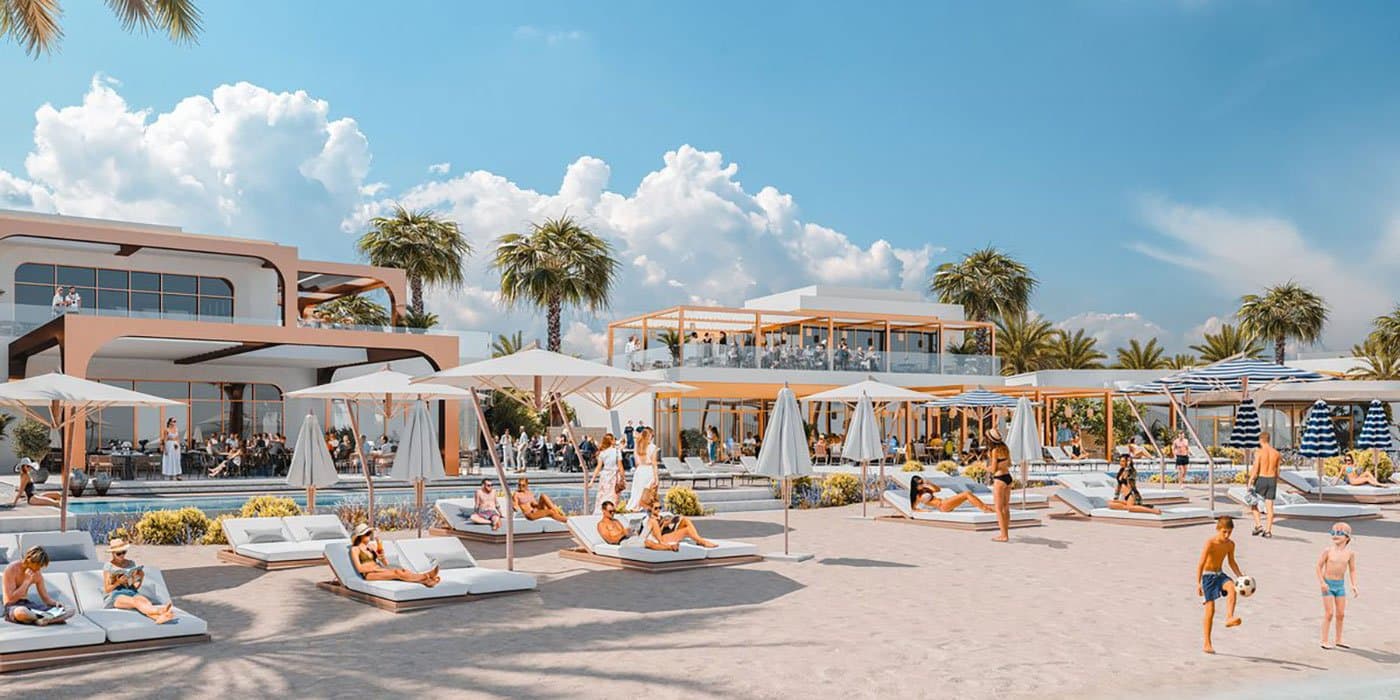
The Palm is where beach clubs have reshaped UAE nightlife culture. White Beach at Atlantis, Drift Beach Club, and Drift Beach Dubai set a standard for poolside and oceanfront entertainment that has drawn international comparisons with Mykonos and Ibiza. Beach club day-to-night programming — which blends afternoon lounging with evening DJ sets and live entertainment — has become one of Dubai’s most distinctive nightlife export concepts.
DIFC (Dubai International Financial Centre)
The DIFC is Dubai’s late-night dining and cocktail bar district, concentrated in Gate Village and the nearby streets. The area targets the professional expat and business traveller demographic and typically operates a later, more sophisticated night economy than the beach districts.
City Walk and Business Bay
Emerging entertainment precincts have grown rapidly since 2020, adding a mid-market licensed venue layer to complement the premium positioning of older districts.
Dubai’s Key Venue Categories
The nightlife landscape in Dubai has diversified significantly over the past decade. Where the early-2010s scene was dominated by hotel discotheques, today’s market spans a much broader range of formats.
Beach Clubs: The fastest-growing category in Dubai nightlife since 2017. Typically, hotel-affiliated or stand-alone licensed venues on Palm Jumeirah, JBR, or La Mer operate day-to-night programming with DJ residencies, live acts, and F&B minimums. Dubai now ranks among the top three global beach club markets alongside Ibiza and Mykonos.
Rooftop Bars: Nearly every major hotel development built since 2015 includes a rooftop bar component. The category benefits from Dubai’s climate — viable roughly eight months of the year for outdoor operation. Rooftop bars contributed significantly to the growth in visitors seeking “Instagram-worthy” hospitality experiences.
Nightclubs: Traditional nightclubs in Dubai operate on a more concentrated calendar than their European counterparts, with Thursday and Friday nights carrying the bulk of weekly volume (Friday is the traditional weekend in the UAE). International DJ residencies are common, with Dubai attracting talent from across the global club circuit for regular sets.
Live Music Venues: A growing segment, supported by government policy encouraging the development of live entertainment infrastructure. Venues like Dubai Opera, The Agenda at Media City, and the concert-capacity halls within major hotel resorts regularly host international touring acts.
Sports Bar and Pub Formats: Targeting the large resident expat population, sports bars serving the British, Australian, and South Asian communities are distributed across residential and commercial neighbourhoods outside the main tourist corridors.
Visitor Spending: What the Numbers Mean for Nightlife
Dubai International Tourism Revenue (2022–2025)
| Year | Visitor Spending | Visitors | Avg. Spend Per Visitor |
|---|---|---|---|
| 2022 | AED 117.6 billion (~USD 32B) | 14.36 million | ~AED 8,190 |
| 2023 | AED 180.6 billion (~USD 49B) | 17.15 million | ~AED 10,530 |
| 2024 | AED 217.5 billion (~USD 59.2B) | 18.72 million | ~AED 11,620 |
| 2025 | AED 228.5 billion (~USD 62.2B) | 19.59 million | ~AED 11,660 |
Note: All figures represent direct international traveller expenditure as reported by the World Travel and Tourism Council (WTTC) and the Dubai Department of Economy and Tourism. The 2025 figure of AED 228.5 billion is sourced from the WTTC UAE International Traveller Spend Report (February 2026) and represents a record — 37% above the UAE’s 2019 pre-pandemic peak.
Sources: WTTC UAE International Traveller Spend Report, February 2026; Dubai Department of Economy and Tourism Annual Report 2025; Emirates NBD Research
Using the 2025 figure of AED 228.5 billion in direct visitor spending across 19.59 million visitors — an average of approximately AED 11,660 per trip — F&B and entertainment represent a significant share. Conservative estimates from global travel industry benchmarks suggest nightlife, bar, and entertainment spend accounts for approximately 15–20% of total tourist expenditure in premium leisure destinations, implying annual nightlife-adjacent spend of AED 34–46 billion in Dubai in 2025 terms — a figure that represents significant growth from AED 27–36 billion estimated in 2023.
The Regulation Landscape
Dubai’s nightlife sector operates under a licensing framework administered by the Dubai Department of Tourism and Commerce Marketing (DTCM) in coordination with the Department of Economy and Tourism. Alcohol service licences are issued exclusively to hotels and private members’ clubs, which effectively means almost every licensed nightlife venue in Dubai is hotel-affiliated.
Key regulatory developments in recent years:
- 2023: The UAE government removed the personal alcohol purchase licence requirement for non-Muslim residents, removing a significant regulatory barrier to off-trade consumption.
- 2023: Excise duty on alcohol reduced from 50% to 30% for Dubai-based sales, stimulating venue-level F&B economics.
- 2024: Continued licensing expansion, with Dubai recording over 1,500 new hospitality venue openings between January and May.
- 2025: Dubai positioned itself as a competitor to regional leisure alternatives by continuing to extend venue operating hours and expand licensing eligibility to standalone entertainment venues in designated zones.
These regulatory shifts represent a deliberate policy direction: the UAE government understands that nightlife and entertainment hospitality are core to the emirate’s competitive positioning as a tourist destination, and has systematically reduced friction for operators.
The DJ and Resident Artist Economy
Beyond venues, Dubai’s nightlife is shaped by its resident and internationally touring DJ culture. The city has attracted and platformed internationally recognised acts — from veterans of London’s 1990s pirate radio scene who built long-term UAE residencies, to global headline acts who anchor beach club and New Year’s Eve programming. Regular weekly residencies across the major beach clubs, rooftops, and hotel venues create a year-round programming calendar that distinguishes Dubai from more seasonal club markets and provides a significant secondary revenue stream for licensed operators.
2026 conflict impact: The escalation of the US-Iran-Israel conflict from late February 2026 has had a severe and direct impact on Dubai’s live performance economy. With hotel occupancy collapsing to single digits in some properties, venue revenues down 50–80%, and a wave of temporary closures and staff reductions across JBR, the Marina, and Downtown, operators have cut entertainment budgets sharply. Weekly DJ residencies — which represent a significant portion of regular income for both resident and touring artists based in the UAE — have been suspended, reduced to one-off bookings, or cancelled outright. Internationally touring acts have pulled UAE dates from their schedules as promoters are unwilling to guarantee fees against uncertain footfall. Dubai-based booking agents and artist managers report booking volumes down significantly from the October–March season high of 2024/25, with many performers absorbing financial losses or relocating temporarily. The structural demand for live entertainment in Dubai remains intact — but the near-term pipeline for artists and their teams has contracted materially since March 2026.
Seasonality: When Dubai Nightlife Peaks
Unlike European nightlife markets, which concentrate in summer, Dubai operates on an inverse seasonal model. The outdoor entertainment season runs from October to April, when temperatures are suitable for rooftop and beach programming (25–35°C). May to September — when temperatures exceed 40°C — sees reduced outdoor activity but sustained indoor venue performance, driven by resident spending and the summer tourism push targeting air-conditioned luxury experiences.
December consistently records the highest nightlife volume, coinciding with:
- Peak tourist arrivals (school holidays across the UK, Europe, India, and Russia)
- New Year’s Eve programming across every major venue
- Dubai Shopping Festival launch
- Festive corporate hospitality events
December 2025 was one of the strongest months in nearly two decades for Dubai’s hotel and hospitality sector, with hotel occupancy exceeding 84% and room rates reaching multi-year highs, according to Emirates NBD Research.
Looking Ahead: Dubai Nightlife in 2026 and Beyond
Important context: The long-term structural factors below represent Dubai’s pre-2026 growth trajectory and are expected to remain relevant once regional stability is restored. They should not be read as a description of current (2026) trading conditions, which have been severely disrupted by the US-Iran-Israel conflict. Redseer Middle East projects a 30–40% contraction in UAE tourism for the full year 2026. A full recovery to 2025 peak levels is not anticipated before 2027.
Several structural factors support continued growth in Dubai’s nightlife and entertainment economy through 2026 and beyond:
Wynn Al Marjan Island (Ras Al Khaimah, 2027): The first licensed casino resort in the UAE topped out its 71-storey tower (299 metres) in December 2025, with 83% of façade installation complete as of early 2026. CEO Craig Billings confirmed in May 2026 that the project faces a “modest delay” to its planned Spring 2027 opening, attributed to logistical and shipping disruptions caused by the Iran conflict. The Wynn Bridge — a 548-metre road link connecting the resort to the E311 and E611 highways — is approximately 48% complete. Construction is ongoing and the resort remains on track to be the UAE’s first licensed integrated casino property.
Expo City Dubai Legacy: The Expo 2020 site in Dubai South continues to develop as an entertainment and events precinct, expanding the city’s capacity for large-scale live events.
Dubai 2040 Urban Master Plan: Government urban planning explicitly includes entertainment precincts and F&B districts as strategic economic infrastructure, with dedicated zones for nightlife and leisure investment.
Growing MICE Sector: Dubai’s meetings, incentives, conferences, and exhibitions (MICE) sector contributes directly to weekday nightlife spending. As the Arabian Travel Market, Gitex, and other major events grow in scale, the corporate hospitality spend they generate flows directly into licensed venues.
Key Stats at a Glance
| Statistic | Figure | Source |
|---|---|---|
| Dubai international visitors 2025 | 19.59 million | DET Annual Report 2025 |
| Dubai hotel occupancy 2025 | 80.7% | Emirates NBD Research |
| Dubai hotels 2025 | 827 | DET |
| Dubai hotel rooms 2025 | 154,264 | DET |
| DXB passenger traffic 2025 | 95.2 million | Dubai Airports Corporation |
| UAE alcoholic drinks market 2025 (est.) | USD 3.76 billion | IMARC Group |
| UAE alcohol market CAGR (2025–2033) | 7.5% | IMARC Group |
| UAE F&B market 2025 (proj.) | USD 23.21 billion | Stratrich |
| Top visitor source country | India (2.6M+ est. 2025) | DET 2025 |
Sources and Further Reading
- Dubai Department of Economy and Tourism: Annual Visitor Report 2025
- Dubai Department of Economy and Tourism: Tourism Performance Report H1 2025
- Emirates NBD Research: Dubai tourism sector hit new records in 2025
- World Travel and Tourism Council (WTTC): UAE International Traveller Spend Report, February 2026
- IMARC Group: UAE Alcoholic Drinks Market Size & Report Analysis 2033
- Global Media Insight: Dubai Tourism Statistics 2025
- Middle East Briefing: The UAE F&B Market: Opportunities for Businesses
- Stratrich: UAE Food & Beverage Industry Investment Opportunities