Key Takeaways
- The Mercedes Benz C Class 2027 facelift features a new illuminated grille and updated star-shaped LED headlights to align with the electric lineup.
- It integrates advanced MB.OS software for AI assistance, while returning tactile controls for usability.
- Expect the standard 2.0-litre turbo engine to produce 255 hp with a 48-volt mild hybrid system enhancing efficiency and performance.
- The facelift aims to modernize the ICE sedan look, keeping it relevant alongside electric models without fully switching powertrains.
- Pricing details for the UAE are pending, but the US base model starts around $51,000, with local configurations expected to adapt to regional needs.
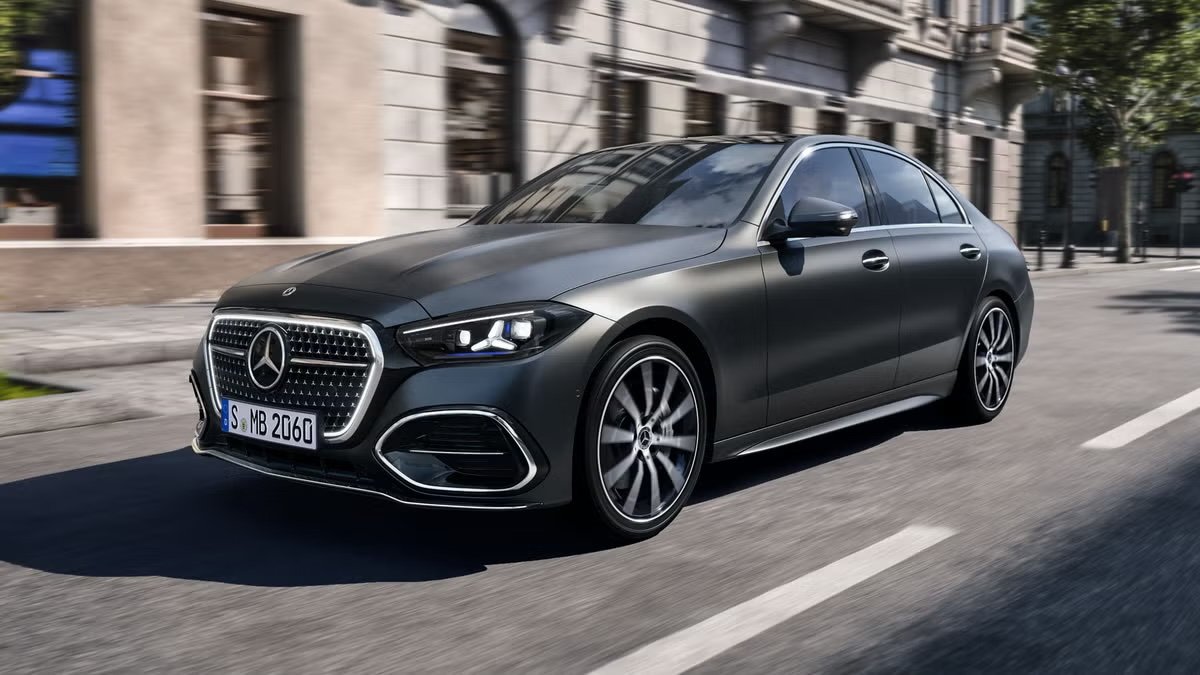
The 2027 C-Class receives a significant visual and technological overhaul designed to mimic the brand’s electric lineup. Key updates include an illuminated six-point grille, star-shaped LED headlights, the new MB.OS software architecture, and the return of physical tactile controls on the steering wheel.
Mercedes-Benz is playing a strategic game. They are unifying the look of their cars so the petrol models do not look dated next to the new electric ones. It is a transition. The 2027 refresh focuses on the internal combustion engine (ICE) sedan, bringing it closer to the battery-powered siblings without fully switching the powertrain.
The changes are not just skin deep. The update integrates new software and a shift in how the driver interacts with the car. It is about making the traditional engine feel like it belongs in the 2027 tech landscape.
A design language that blurs the lines between petrol and electric
Mercedes-Benz is strategically aligning the C-Class’s aesthetics with its battery-powered models. By introducing star-pattern headlights and triangular taillight graphics, the brand ensures the traditional internal combustion engine (ICE) sedan looks modern even when parked alongside the latest Mercedes-Benz electric vehicles.
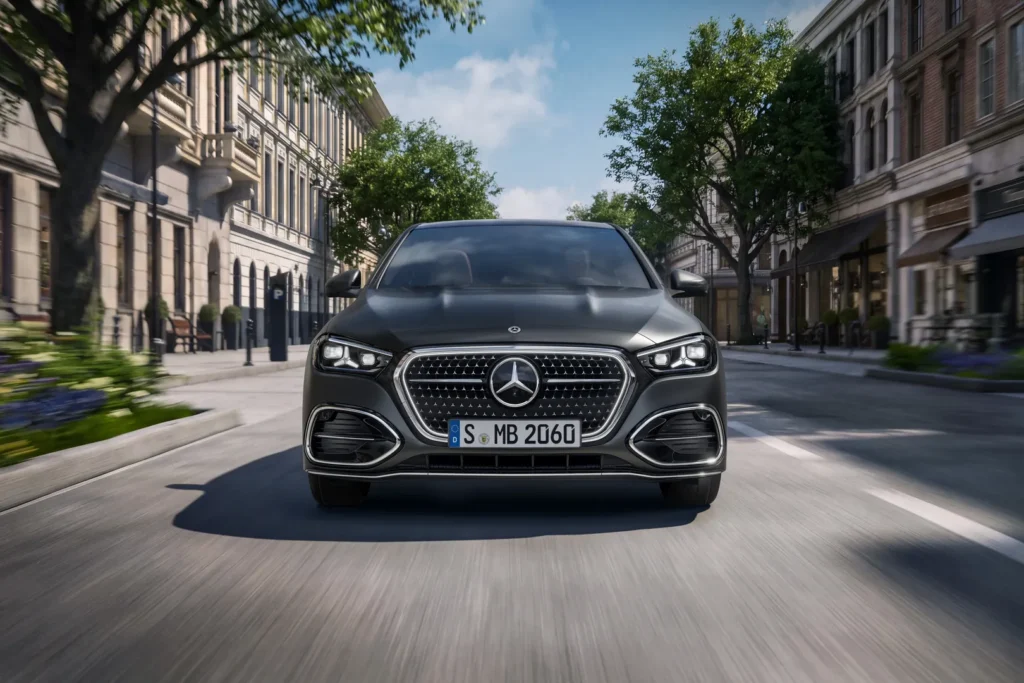
The front of the car has the most visible changes. An illuminated six-point grille now takes centre stage. It mirrors the bright face seen on the GLC EV that launched last year. The star-shaped LED headlights are no longer just for high-trim models. They are now standard across the base versions.
At the back, the profile stays familiar. The update is in the details. Triangular lighting elements have been integrated into the taillights. These small shifts create a unified visual signature across the range.
Buyers can also choose from new wheel designs. Fresh paint colour options are being added to the palette to further distinguish the 2027 model from previous years.
Interior tech: MB.OS and the return of tactile usability
Inside, the C-Class avoids the massive Superscreen found in EVs, opting for a more practical iPad-like central touchscreen. However, it gains the advanced MB.OS system for AI-backed assistance and over-the-air updates, alongside a premium 15-speaker Burmester 3D surround sound system with Dolby Atmos.
The move to MB.OS is the real story here. This architecture allows the car to receive updates over the air. It also powers the MBUX Virtual Assistant, which uses AI to be more responsive to driver needs. The interface is fast. It is designed to feel like a modern smartphone.
Mercedes is also admitting that too many screens can be a distraction. They have brought back physical controls on the steering wheel. You can now use tactile buttons for volume adjustments and adaptive cruise control. It is a return to usability.
For those who care about audio, the Burmester 3D surround sound system is an available spec. With 15 speakers and Dolby Atmos, it targets a high-end listening experience in the cabin.
Performance and the 48-volt mild hybrid system
The standard 2.0-litre turbocharged inline-four engine produces 255 hp and 295 lb-ft of torque. This is supplemented by a 48-volt mild hybrid system that adds 23 hp and 151 lb-ft of torque at low speeds, improving efficiency during stop-start city driving.
The heart of the US-spec model is the M254 Evo engine. The 48-volt system is not about raw speed. It is about smoothness. It fills the gaps in power during low-speed acceleration, which is where petrol engines usually struggle with efficiency.
The chassis has been tweaked. Engineers revised the suspension tuning to make the car feel more agile. It should feel sharper in the corners than the outgoing model.
AMG is keeping things quiet, but the direction is clear. Industry expectations suggest a six-cylinder C53 will arrive. This would replace the current plug-in hybrid C63.
Driving Mercedes-Benz in the UAE
Mercedes-Benz is a staple of the UAE automotive landscape, with the G-Class dominating local roads. For those looking at the C-Class, expect local dealership availability to align with global rollouts, though specific UAE pricing in AED and local trim configurations will be confirmed closer to the 2027 launch.
The G-Class has been the king of UAE roads for decades. It is the default choice for those wanting presence and prestige in Dubai or Abu Dhabi. The C-Class serves a different purpose. It is the executive choice for the city commute.
Timing is everything for local buyers. The car hits US showrooms in the first half of 2027. Typically, UAE arrivals follow shortly after global launches. We expect the local specs to be tailored for the heat, as is standard for the region.
Pricing is not yet official for the UAE. In the US, market estimates suggest the base model will start slightly above $51,000. This gives us a baseline to watch as we wait for the AED price lists from local distributors.
The 2027 C-Class represents a clever middle ground for drivers who want the futuristic look of an EV without committing to a full battery-electric lifestyle.
Keep an eye on our automotive updates as we track the official UAE arrival dates and local pricing for the 2027 C-Class.